

Indian Men's Football Squad Seeks Immediate Tactical Reset Against New Zealand
Head coach Khalid Jamil and captain Anirudh Thapa demand accountability and structural discipline following a defeat to New Zealand during the international window.
By The Global Wire Newsroom · Reported from SECTIONS 'We need; Fight Back' Jamil Urges India
Link preview · horizonglobalnews.com
Indian Men's Football Squad Seeks Immediate Tactical Reset Against New Zealand
Head coach Khalid Jamil and captain Anirudh Thapa demand accountability and structural discipline following a defeat to New Zealand during the international window.
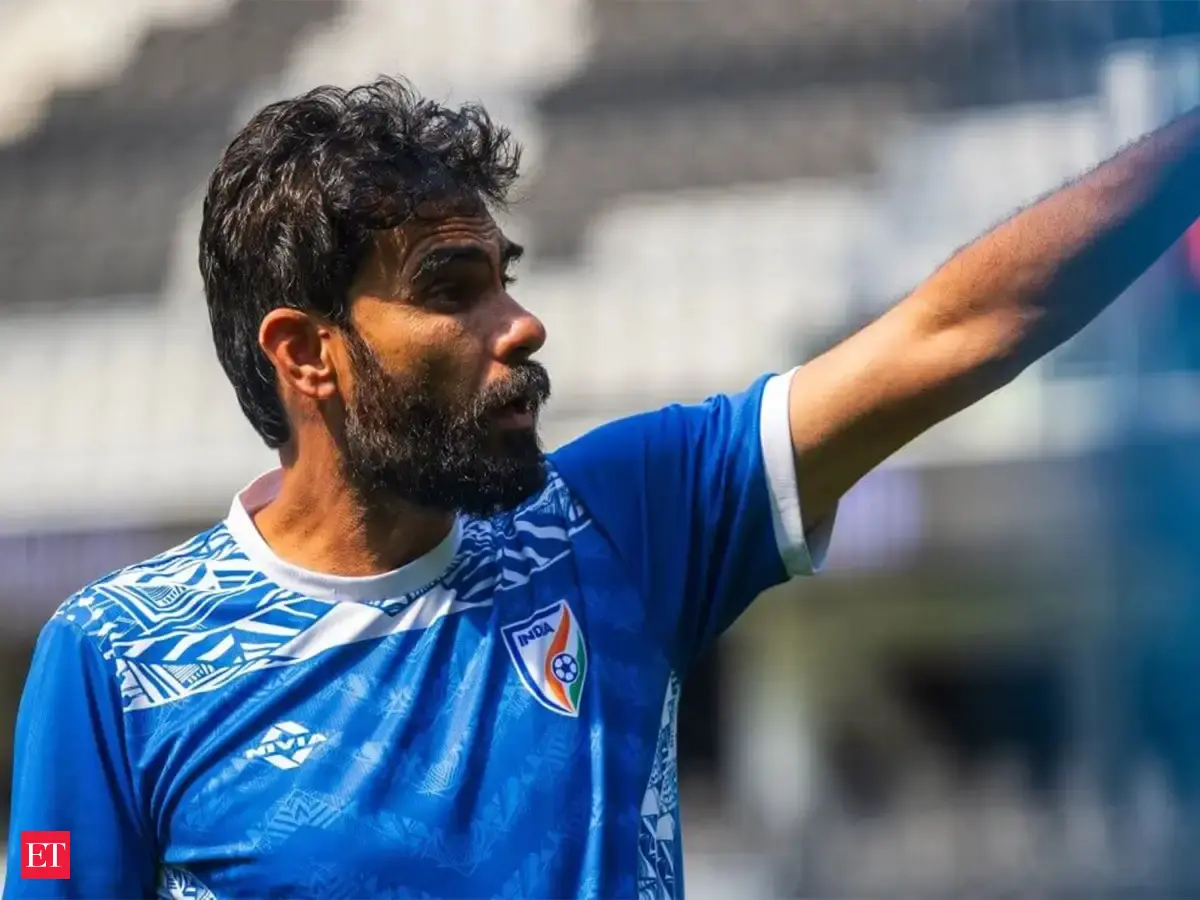
The Indian men's national football team is confronting an urgent need for tactical refinement and mental fortitude as it attempts to rebound from a recent loss to New Zealand, according to reporting by SECTIONS. Facing scrutiny following the setback, head coach Khalid Jamil called upon his squad to take direct ownership of their shortcomings on the pitch and make immediate corrections ahead of their subsequent fixture. Reinforcing the technical staff's message, team captain Anirudh Thapa highlighted that sharper positional discipline and clearer tactical communication among players must serve as the foundation for any competitive turnaround against the physical Oceania side.
Key facts
What happened
Following a disappointing performance that resulted in a loss to New Zealand, India's team leadership held a critical debrief to address structural deficiencies exposed during the contest. Head coach Khalid Jamil delivered a direct mandate to his players, demanding that every member of the roster accept responsibility for individual errors and collective execution failures rather than shifting blame or dismissing the outcome as routine variance.
Captain Anirudh Thapa echoed the head coach's firm stance in his own evaluation of the match. Thapa, operating as the team's on-field leader from central midfield, pointed to a breakdown in fundamental game management. He explicitly underlined that the squad suffered from inconsistent tactical communication across the lines and a drop in positional discipline, which allowed New Zealand to assert control and capitalize on defensive vulnerabilities. The squad's leadership framed the upcoming contest not merely as a standard fixture, but as an essential test of character and resilience required to stabilize the national team's trajectory.
Why it matters
For Indian football, every senior international fixture carries disproportionate weight in the broader quest to elevate the nation's standing in continental and global competition. Operating in a high-stakes environment where competitive results directly influence FIFA World Ranking points, international friendlies and tournament matches serve as the structural backbone for official seeding in Asian Football Confederation (AFC) qualification draws. A downward slide in ranking points regularly exposes a national team to far more punishing qualification pathways for both the AFC Asian Cup and the FIFA World Cup, pitting lower-seeded sides against regional heavyweights in early group stages.
Beyond ranking arithmetic, the performance of the men's national team plays a decisive role in shaping domestic fan engagement, commercial sponsorship valuations, and grassroots participation across the country. Over the past decade, Indian football stakeholders, including commercial partners and broadcast rights holders, have invested substantial financial resources into professionalizing the sport through the Indian Super League (ISL) and restructured youth development pathways. When the national team struggles against non-Asian opposition such as New Zealand, it reignites widespread public and administrative debate regarding whether domestic league progress is translating into international competitiveness. For supporters and domestic players alike, the team's ability to correct basic structural flaws under adversity is a direct indicator of whether India's tactical development is stalling or maturing.
The background
India and New Zealand share a limited but significant competitive history in international football, typically crossing paths in invitational tournaments and neutral-venue friendly windows. Contextually, one of their most prominent past meetings occurred in June 2018 during the Intercontinental Cup in Mumbai, where a youthful New Zealand side secured a 2-1 victory over the hosts despite India ultimately progressing to lift the trophy. New Zealand, operating under the Oceania Football Confederation (OFC) umbrella, consistently presents Asian teams with a distinct challenge characterized by superior aerial prowess, physical duels, and disciplined defensive organization honed against international competition.
For India, the current competitive cycle represents a profound transitional period overseen by the All India Football Federation (AIFF), headquartered at Football House in Dwarka, New Delhi. Following the conclusion of the long-term tenure of previous foreign managers and the international retirement of iconic striker Sunil Chhetri in June 2024 after 151 caps and 94 international goals, the national setup has been forced to forge a completely new operational identity. The federation's reliance on domestic coaching acumen brought Khalid Jamil into the national limelight. Jamil previously established his managerial pedigree by guiding underdog side Aizawl FC to an unprecedented I-League championship in 2017 before serving in senior managerial roles across multiple ISL clubs, earning a reputation for pragmatic, defensively organized setups that demand relentless work rate.
Simultaneously, the appointment of Anirudh Thapa to a central leadership role reflects a generational shift on the field. Having accrued extensive top-flight experience with Chennaiyin FC and Mohun Bagan Super Giant, Thapa represents the core group of domestic midfielders tasked with establishing tempo and defensive cohesion against technically and physically demanding opponents. However, translating domestic club dominance into international control has historically posed a hurdle for Indian squads, particularly against non-continental sides possessing physical advantages.
Reaction
The immediate aftermath of the defeat generated urgent deliberations among India's coaching personnel, squad members, and the broader football community. The primary documented reactions centered on the candid self-appraisals delivered by Jamil and Thapa, who chose public accountability over deflecting tactical responsibility. Inside the camp, the technical staff's primary focus shifted toward immediate analytical review, dissecting video footage to demonstrate how breakdowns in tracking runners and disorganized line spacing directly facilitated New Zealand's scoring opportunities.
While formal administrative statements from the AIFF executive committee were not immediately released following the match, domestic commentators and former national team players frequently scrutinize such performances on digital sports forums and national broadcast panels. The reaction among followers of the Blue Tigers has consistently emphasized impatience with persistent tactical errors, with supporters urging the technical team to adopt bolder attacking schemes while preserving structural integrity in defensive transitions.
What we don't know yet
Several vital details regarding the encounter and its immediate aftermath remain unverified in available disclosures. The initial reporting did not publish the precise final scoreline, the specific venues of the fixtures, or the exact chronological breakdown of match events such as goalscorers, cards, or in-game injuries. Consequently, it is not yet clear whether India's tactical breakdown occurred primarily during open play or originated from static set-piece situations, which have historically troubled Indian defenses against physically imposing teams.
Furthermore, the extent of tactical or personnel alterations Jamil intends to implement for the subsequent match remains an open question. It is currently unconfirmed whether the coaching staff plans to alter India's tactical formation—such as shifting from a standard four-man defensive backline to a more conservative five-defender shape—or whether underperforming starters will be replaced by bench options in the attacking third. The logistical framework of the series, including whether the return meeting represents a closed-door training fixture or a fully recognized official FIFA tier-one international contest, also remains unclarified.
What to watch
The immediate focus shifts to the upcoming rematch against New Zealand, where the team's tactical execution will be tested under heightened scrutiny. Observers should watch closely for measurable improvements in India's defensive organization, particularly during the opening 20 minutes and late stages of each half, phases where defensive concentration typically wavers under physical pressure.
Key checkpoints to monitor include the starting lineup selected by Jamil to determine whether the coach issues benchings to enforce his demand for player accountability. In central midfield, Thapa's distribution accuracy, vocal coordination, and defensive screening alongside his central midfield partner will serve as a bellwether for whether communication issues have been effectively resolved. Finally, the post-match statistical profile—specifically India's ability to limit New Zealand's set-piece opportunities, reduce unforced turnovers in their own defensive third, and generate sustained shots on target—will provide a clear verdict on whether this call for resilience produced a tangible tactical recovery.
This report incorporates reporting originally published by SECTIONS.
How this story was produced
This report was written by The Global Wire newsroom from reporting first published by SECTIONS 'We need; Fight Back' Jamil Urges India. We verify the core facts against the original report, write our own account, and add the background and consequences a short wire item leaves out. Drafting is AI-assisted inside an editor-supervised pipeline, and every story is checked for accuracy of attribution, structure and duplication before it appears — full detail in our AI and funding disclosure.
Spotted an error? Tell us at corrections@horizonglobalnews.com and read our corrections policy or editorial standards.






Reader comments
Loading comments…