

Heisuke Hironaka, Fields Medalist Who Transformed Algebraic Geometry, Dies
Japanese mathematician Heisuke Hironaka, whose 1964 proof of the resolution of singularities solved a central problem in geometry, has died, according to an obituary by Allyn Jackson.
By The Global Wire Newsroom · Reported from Jackson; Allyn
Link preview · horizonglobalnews.com
Heisuke Hironaka, Fields Medalist Who Transformed Algebraic Geometry, Dies
Japanese mathematician Heisuke Hironaka, whose 1964 proof of the resolution of singularities solved a central problem in geometry, has died, according to an obituary by Allyn Jackson.
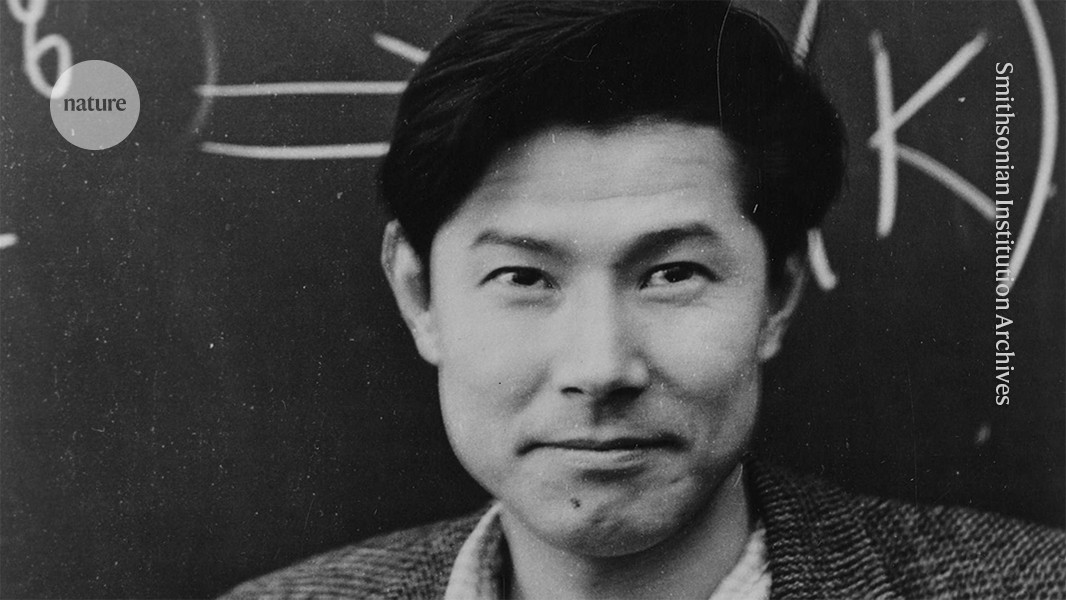
Renowned Japanese mathematician Heisuke Hironaka, whose foundational contributions to algebraic geometry reshaped modern geometry and earned him the Fields Medal in 1970, has died, according to an obituary published by writer Allyn Jackson. Hironaka achieved international prominence in 1964 through his proof of the resolution of singularities for algebraic varieties of any dimension over fields of characteristic zero. By demonstrating that geometric spaces plagued by sharp points, self-intersections, and structural folds can be systematically replaced by smooth mathematical spaces without altering their fundamental global algebraic structure, Hironaka resolved a problem that had challenged geometer for generations. His work provided an essential framework that modern geometers, topologists, and theoretical physicists continue to rely upon when analyzing complex multidimensional surfaces.
Key facts
What happened
According to reporting by Allyn Jackson, the death of Heisuke Hironaka marks the passing of one of the twentieth century's most formidable mathematical minds. Hironaka's landmark achievement came in 1964 with his resolution of singularities, a problem concerning the geometry of spaces defined by polynomial equations.
In algebraic geometry, geometric objects known as algebraic varieties are formed by the zero sets of polynomial equations. While many such varieties form smooth surfaces where standard techniques of calculus apply effortlessly, others contain singularities—points where the surface crosses itself, pinches down to an infinitely sharp peak, or forms crease-like edges. At these singular points, standard concepts such as tangent planes, derivatives, and vector fields become undefined or behave erratically.
Hironaka developed a systematic method known as a sequence of blow-up transformations. Through a delicate and extraordinarily rigorous inductive process, he proved that any singular algebraic variety defined over a field of characteristic zero—such as the real numbers or complex numbers—can be transformed into a smooth variety through a birational morphism that leaves the smooth portions of the original space intact. His proof resolved a conjecture that had resisted the efforts of leading mathematicians for decades.
Following his breakthrough, Hironaka maintained an active research and teaching career spanning institutions in both the United States and Japan. After completing his doctoral studies at Harvard University in 1960, he served on the faculty at Brandeis University and Columbia University before returning to Harvard as a professor of mathematics. He later returned to Japan to take up a professorship at Kyoto University's Research Institute for Mathematical Sciences, where he mentored generations of scholars and helped establish Japan as a major center for advanced geometric research.
Why it matters
The resolution of singularities is not merely an abstract geometric exercise; it is a foundational pillar supporting vast domains of contemporary mathematics and theoretical physics. In algebraic geometry, many natural geometric constructions—such as moduli spaces and projection mappings—spontaneously introduce singular points. Without a reliable mechanism to eliminate these singularities, researchers were severely restricted in their ability to apply topological invariants, differential operators, and integration techniques to these spaces.
Hironaka's theorem provided mathematicians with an absolute guarantee: any algebraic variety in characteristic zero can be studied via an equivalent smooth model. This capability enabled the development of modern algebraic topology, Hodge theory, and intersection theory on singular spaces. In theoretical physics, particularly superstring theory and quantum field theory, space-time models often utilize multidimensional geometric spaces known as Calabi-Yau manifolds and orbifolds. When these physical models undergo phase transitions or geometric collapse, singularities arise naturally. Physicists utilize techniques derived from Hironaka's resolution of singularities to desingularize space-time geometry, allowing physical laws to remain well-defined across phase boundaries.
Furthermore, Hironaka's proof introduced novel combinatorial invariants and algorithmic concepts that catalyzed the development of constructive geometry and computer algebra systems. His techniques demonstrated how local geometric modifications could be globally controlled without introducing chaotic cascading singularities elsewhere on a surface.
The background
To understand the magnitude of Hironaka's achievement, it is necessary to examine the state of algebraic geometry in the mid-twentieth century. The problem of resolving singularities had been solved for low-dimensional objects by earlier generations of mathematicians. In the nineteenth century, geometers established methods to desingularize algebraic curves (one-dimensional varieties). By the 1930s and 1940s, Italian-American geometer Oscar Zariski, who would later become Hironaka's doctoral advisor at Harvard, successfully proved the resolution of singularities for algebraic surfaces (two-dimensional varieties) and made significant progress on three-dimensional varieties in characteristic zero.
However, moving from three dimensions to an arbitrary dimension n presented exponential technical barriers. Geometric intuition fails in high dimensions, and simple sequence transformations often create secondary singularities that are more severe than the originals.
During the late 1950s and 1960s, French mathematician Alexander Grothendieck overhauled the foundations of algebraic geometry by introducing scheme theory. Hironaka synthesized Grothendieck's abstract structural framework with Zariski's classical geometric techniques. Working with meticulous precision, Hironaka invented intricate tracking invariants to monitor how singularities altered under successive blowing-up operations, ensuring that the process was guaranteed to terminate in a finite number of steps.
His result, titled "Resolution of Singularities of an Algebraic Variety over a Field of Characteristic Zero," was published in the Annals of Mathematics in 1964. The paper's length, density, and technical complexity were legendary; for years, only a small group of specialists fully comprehended every step of the proof. In recognition of this work, the International Mathematical Union awarded Hironaka the Fields Medal at its 1970 congress in Nice, France.
In addition to his pure mathematical contributions, Hironaka played a major role in educational policy. He established foundation programs and summer workshops in Japan designed to foster mathematical interest among high school and undergraduate students, advocating for creativity and original thinking in mathematics education.
Reaction
The mathematical community has long viewed Hironaka's proof as one of the definitive intellectual monuments of twentieth-century mathematics. Upon the announcement of his death, tributes were expected across leading academic institutions including Harvard University, Kyoto University, the International Mathematical Union, and the Mathematical Society of Japan.
Mathematicians and historians of science frequently cite Hironaka's work alongside that of contemporaries such as Alexander Grothendieck, Michael Atiyah, and David Mumford as defining the golden age of modern algebraic geometry. Colleagues have frequently noted Hironaka's humility, technical persistence, and lifetime devotion to mathematical inquiry. In Japanese academic circles, Hironaka is celebrated not only as a Fields Medalist but as a figure who demonstrated that Japanese scholars could lead the world in pure theoretical science during the post-war era.
What we don't know yet
While Hironaka's 1964 proof permanently settled the resolution of singularities for fields of characteristic zero (such as the real and complex numbers), it left open the problem for fields of positive characteristic p (such as finite fields used in modular arithmetic and coding theory). In positive characteristic, subtle phenomena such as wild ramification cause standard desingularization algorithms to fail.
The resolution of singularities in positive characteristic has been established for dimensions 1, 2, and 3, but it remains open for dimensions 4 and higher. Throughout the later decades of his life, Hironaka continued to work intensively on extending his resolution proof to positive characteristic, producing extensive manuscripts detailing proposed inductive strategies. It remains unknown whether his late-career notes contain the necessary keys to complete the proof in positive characteristic, or if entirely new paradigms will be required.
What to watch
In the coming months, mathematical societies and research institutes worldwide are expected to announce commemorative symposia, special journal issues, and memorial lectures celebrating Hironaka's life and work. Key indicators of his continuing impact include:
This report is based on coverage and obituary reporting authored by Allyn Jackson.
How this story was produced
This report was written by The Global Wire newsroom from reporting first published by Jackson; Allyn. We verify the core facts against the original report, write our own account, and add the background and consequences a short wire item leaves out. Drafting is AI-assisted inside an editor-supervised pipeline, and every story is checked for accuracy of attribution, structure and duplication before it appears — full detail in our AI and funding disclosure.
Spotted an error? Tell us at corrections@horizonglobalnews.com and read our corrections policy or editorial standards.


Reader comments
Loading comments…