

Genomic Study Tracks 600 Million Years of Animal Evolution Across Thousands of Species
Researchers analyzing thousands of chromosome-level genomes have uncovered ancestral genetic structures that survived 600 million years of animal divergence.
By The Global Wire Newsroom · Reported from TOI Science Desk
Link preview · horizonglobalnews.com
Genomic Study Tracks 600 Million Years of Animal Evolution Across Thousands of Species
Researchers analyzing thousands of chromosome-level genomes have uncovered ancestral genetic structures that survived 600 million years of animal divergence.
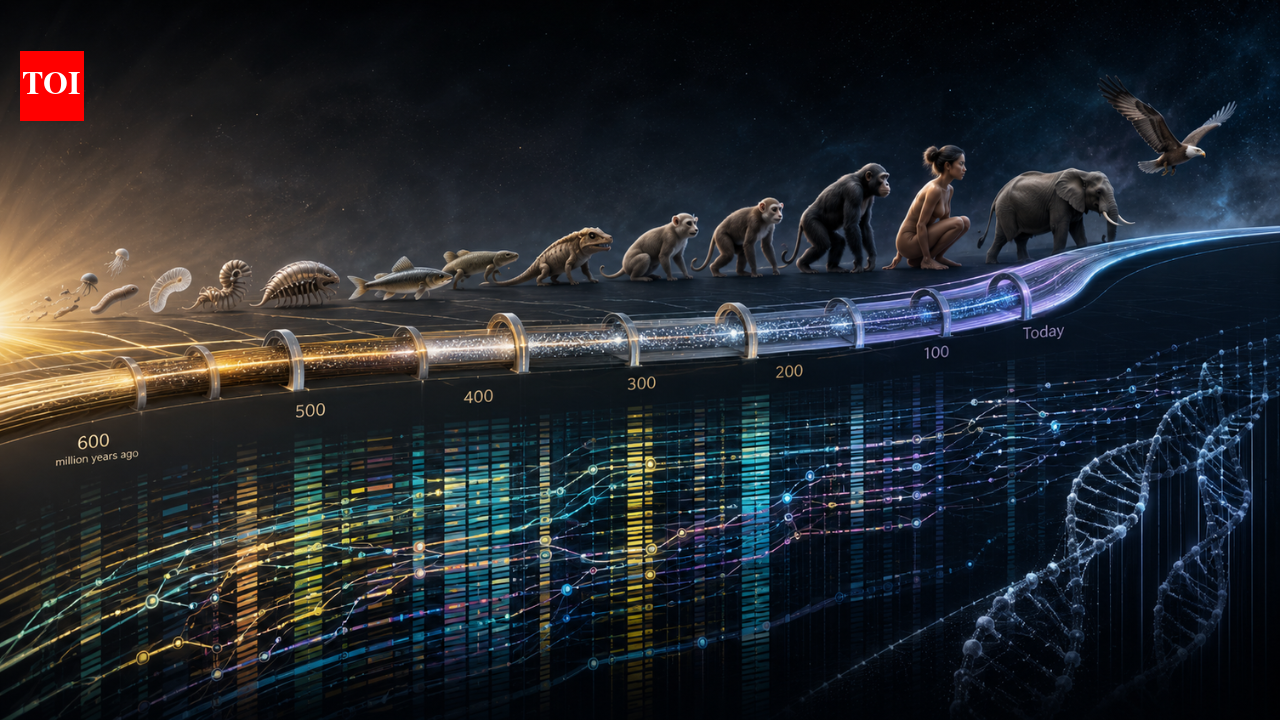
Researchers conducting a massive comparative genomic survey have mapped structural pathways in animal DNA that have remained intact for roughly 600 million years. By analyzing thousands of high-resolution genome assemblies spanning diverse animal lineages, the study identified ancestral chromosomal blocks that survived hundreds of millions of years of evolutionary change. The findings provide a comprehensive structural map of animal genome evolution from the dawn of complex multicellular life to the present day.
Key facts
What happened
To construct a comprehensive picture of structural genome history, scientists analyzed chromosome-scale genetic data on a scale previously unachievable. The research team gathered and evaluated 5,821 high-quality genome assemblies, representing 4,454 species across 19 animal phyla, according to reporting by TOI Science Desk. Rather than focusing solely on individual gene sequences, which frequently mutate, duplicate, or disappear over deep time, the investigation focused on large-scale chromosomal architecture.
By comparing the positions of orthologous genes—genes in different species that evolved from a common ancestral sequence—the researchers mapped out blocks of DNA that have consistently stayed together on the same chromosomes throughout evolutionary history. The team identified 29 ancient linkage groups (ALGs), which serve as structural templates representing the ancestral chromosome configuration of early bilaterians, the common ancestors of organisms with bilateral symmetry.
Tracking these 29 ALGs across nearly 6,000 genomes revealed distinct evolutionary routes—referred to by the researchers as structural pathways—that modern genomes followed as animals diversified. While some lineages underwent extensive chromosomal mixing, breaking apart ancient gene groupings through translocations and fusions, others preserved large intact segments of ancestral chromosomes over hundreds of millions of years. The analysis demonstrated that chromosomal rearrangement is not entirely random; instead, specific structural configurations have been preserved, merged, or split in predictable patterns across vast evolutionary distances.
Why it matters
Understanding the structural dynamics of genomes across 600 million years provides essential insights into the rules governing genome stability and evolution. For decades, evolutionary biology relied heavily on comparing individual gene sequences or anatomical traits. However, gene sequences alone do not capture how physical genomic structure influences gene regulation, organismal complexity, and evolutionary potential. By demonstrating that 29 ancient linkage groups underpin the genomes of modern animals, this research establishes a foundational framework for structural genomics.
This structural mapping has direct implications for functional genetics and biomedical research. Genes that remain linked together across hundreds of millions of years often share co-regulatory mechanisms or participate in identical biological pathways. Identifying these conserved syntenic blocks helps scientists isolate critical regulatory regions that govern embryonic development and fundamental cellular processes. Disruptions to such ancient linkage blocks in humans can be linked to developmental disorders, chromosomal fragile sites, or cancer-associated genomic instability.
Furthermore, the study provides biodiversity researchers and evolutionary biologists with a high-resolution baseline for understanding how major animal body plans emerged. By establishing how ancient chromosomes fused, fragmented, or rearranged during major evolutionary transitions—such as the emergence of vertebrates, insects, or mollusks—researchers can better reconstruct the genetic innovations that accompanied the radiation of complex life.
The background
The origin of complex animal life dates to the late Ediacaran and early Cambrian periods, between 540 million and 600 million years ago. During this era, early metazoans diverged into the primary phyla recognized today, giving rise to bilaterians—animals characterized by bilateral symmetry, three germ layers, and a defined anterior-posterior body axis. Reconstructing the genetic composition of these early ancestral organisms has long posed a significant challenge because soft-bodied ancestors left limited fossil records, and DNA degrades rapidly over geological timescales.
To overcome the absence of physical ancestral DNA, geneticists rely on comparative genomics and synteny analysis. Synteny refers to the conserved order of genes on chromosomes across different species. In the late 20th and early 21st centuries, genomic comparisons were constrained by short-read DNA sequencing technologies, which could assemble individual genes but struggled to reconstruct whole chromosomes accurately. Consequently, early genomic comparisons were limited to fragmented contigs, making it difficult to detect large-scale chromosomal preservation over deep time.
Over the past decade, advancements in long-read sequencing technologies—such as Pacific Biosciences and Oxford Nanopore platforms—combined with chromatin conformation capture techniques like Hi-C have transformed the field. These innovations enabled international research initiatives, such as the Earth BioGenome Project and regional sequencing programs, to generate thousands of true chromosome-scale assemblies. With full chromosome maps available for thousands of diverse organisms, researchers gained the computational capacity to trace ancient linkage groups across the entirety of the animal tree of life.
Prior studies had identified ancestral linkage groups in specific, narrower subsets of organisms, such as chordates or insects. However, comparing 5,821 genomes across 19 phyla provides an unprecedented macro-evolutionary perspective, confirming that a discrete set of ancestral chromosome building blocks anchored the evolution of virtually all bilaterian life.
Reaction
The release of the comprehensive genomic analysis is expected to prompt broad engagement across the international scientific community, particularly among evolutionary biologists, bioinformaticians, and structural genomicists. Researchers specializing in animal development and macroevolution are likely to use the identified 29 ancient linkage groups as reference tools for analyzing newly sequenced animal species.
Bioinformatics groups and comparative genomics consortia are expected to incorporate these structural pathways into ongoing phylogenomic pipelines. Further discussions are anticipated within scientific forums and conferences regarding the precise selective pressures or structural constraints that allowed certain ancient linkage groups to survive intact while others underwent severe fragmentation. The genomic datasets generated and aggregated for the study will also serve as open-access resources for scientists investigating specific genetic diseases linked to chromosomal fragile sites and structural rearrangements.
What we don't know yet
While the identification of 29 ancient linkage groups marks a significant advance, several critical questions remain unaddressed. The current study maps the presence and preservation of structural blocks, but it does not fully explain the functional mechanisms that enforce synteny over 600 million years. It remains unclear whether conserved gene order is maintained primary by shared long-range regulatory elements, physical constraints within the cell nucleus, or purifying selection against harmful structural mutations.
Additionally, despite the large sample size of 5,821 genomes, gaps persist in the representation of certain animal lineages. While major phyla like Arthropoda, Chordata, and Mollusca are heavily represented in public databases, obscure or deep-sea phyla—such as gastrotrichs, loriciferans, and certain parasitic worm groups—remain underrepresented in chromosome-scale genome initiatives. Resolving whether these less-studied groups conform to the same 29 ancient linkage groups will be essential for verifying the universality of the proposed evolutionary model.
Finally, the exact sequence of chromosomal fusions and fissions that occurred during the earliest stages of animal divergence remains partially uncertain. Resolving the precise timeline of these structural events requires even denser sampling of basal animal lineages, including sponges, ctenophores, and placozoans.
What to watch
In the coming months and years, several developments will indicate how this structural framework shapes evolutionary research:
This news report is based on original reporting and genomic data analysis summarized by TOI Science Desk.
How this story was produced
This report was written by The Global Wire newsroom from reporting first published by TOI Science Desk. We verify the core facts against the original report, write our own account, and add the background and consequences a short wire item leaves out. Drafting is AI-assisted inside an editor-supervised pipeline, and every story is checked for accuracy of attribution, structure and duplication before it appears — full detail in our AI and funding disclosure.
Spotted an error? Tell us at corrections@horizonglobalnews.com and read our corrections policy or editorial standards.

Reader comments
Loading comments…