

F1 Drivers Raise Safety Alarms Over 'Crazy' New Madring Circuit in Spain
Formula 1 drivers warn that Madrid's new street layout presents extreme crash risks and likely red flags ahead of the Spanish Grand Prix.
By The Global Wire Newsroom · Reported from Laurence Edmondson
Link preview · horizonglobalnews.com
F1 Drivers Raise Safety Alarms Over 'Crazy' New Madring Circuit in Spain
Formula 1 drivers warn that Madrid's new street layout presents extreme crash risks and likely red flags ahead of the Spanish Grand Prix.
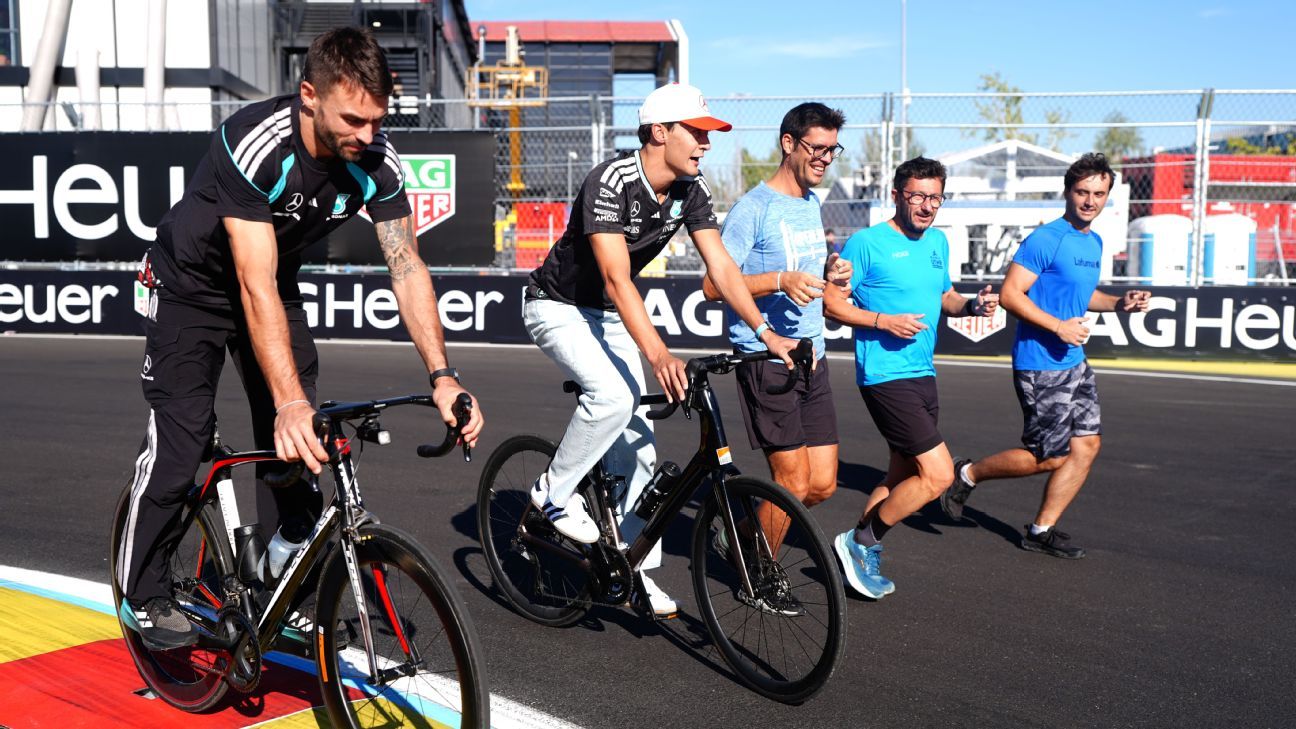
MADRID — Formula 1 competitors have raised urgent safety warnings ahead of the upcoming Spanish Grand Prix, characterizing the newly introduced Madring track as the most hazardous venue on the current world championship calendar. Following their initial inspections of the layout on Sept. 10, 2026, drivers expressed alarm over the circuit’s tight design, narrow margins for error, and proximity to concrete barriers, openly predicting that the race weekend will be marred by severe collisions and frequent red-flag stoppages. The sharp driver pushback comes as the venue prepares to make its official debut on the Formula 1 schedule, replacing the traditional flow of permanent European tracks with a challenging semi-street environment.
Key facts
What happened
The collective alarm among the grid materialized as drivers and team engineering personnel completed their preliminary track walks and simulator correlation work at the new Madring venue in Madrid. According to reporting by Laurence Edmondson, the immediate consensus among drivers was one of profound unease regarding the circuit's structural features and safety profile.
Upon examining the physical layout, competitors described the track configuration as exceptionally dangerous, with several drivers categorizing it as the single most risky circuit currently featured on the global race calendar. Key areas of concern include blind, high-speed corner entries lined with concrete retaining walls, restrictive runoff zones that offer minimal deceleration distance in the event of mechanical failure, and abrupt transitions between surface materials.
The layout’s technical design combines high-speed straightaways with technical, low-speed sectors that leave almost no allowance for driver error. During pre-event media sessions, several drivers warned that the combination of narrow track width and high kinetic energy would inevitably lead to heavy impacts. Drivers explicitly forecasted that the upcoming sessions—spanning Friday practice, Saturday qualifying, and Sunday’s Grand Prix—would experience numerous red flags as recovery crews clear stranded vehicles and repair damaged safety barriers.
Engineers and team managers spent much of Thursday reviewing setup options to accommodate the track's erratic demands. With limited historical telemetry available for the new facility, teams were forced to rely heavily on virtual simulation data, which drivers noted failed to fully capture the claustrophobic nature of the physical barriers. As driver briefings got underway with the International Automobile Federation (FIA), safety concerns dominated discussions between the grid and race direction, establishing a tense atmosphere ahead of the opening practice sessions.
Why it matters
The driver pushback against the Madring layout carries significant implications for sporting integrity, safety management, and financial risk across the Formula 1 paddock. Modern Formula 1 cars are the largest and heaviest in the sport's history, operating under technical regulations that mandate a minimum weight of 798 kilograms without fuel and a width of 2,000 millimeters. Navigating vehicles of these dimensions through tight, barrier-lined street layouts severely restricts overtaking lines and drastically reduces emergency avoidance space.
From a championship perspective, a high-attrition race filled with red flags introduces immense strategic volatility. Neutralizations via safety cars or red flags disrupt fuel calculations, tire management strategies, and pit window planning, potentially allowing secondary teams to gain opportunistic advantages while championship contenders face catastrophic damage. Under Formula 1's strict financial cost cap, which imposes a baseline operational limit near $135 million per team (adjusted annually for inflation and race count), heavy crash damage incurred on a high-risk circuit directly threatens a team's ability to fund vehicle development later in the season.
Furthermore, red flags present operational hurdles for race organizers and broadcasters. Extended track stoppage periods to replace TecPro barriers or concrete blocks can push television broadcasts past scheduled programming windows and strain event timetables. For the FIA and local organizers, managing a track layout that drivers deem overly hazardous elevates scrutiny on regulatory approval processes, highlighting the delicate balance between promoting dramatic urban racing and safeguarding driver well-being.
The background
The introduction of the Madring venue marks a major shift in the long-term structure of the Spanish Grand Prix. Historically, the Spanish Grand Prix spent decades anchored at the Circuit de Barcelona-Catalunya in Montmeló, a purpose-built permanent facility that hosted the race continuously from 1991 through 2025. Known for its wide runoff areas, sweeping turns, and extensive testing history, Barcelona served as the traditional benchmark for aerodynamic balance and vehicle safety in European motorsport.
However, Formula 1’s commercial rights holder, Formula One Group (owned by Liberty Media), has increasingly prioritized hybrid street circuits situated in major international metropolitan centers. This strategy, visible in the addition of venues like Baku (2016), Miami (2022), and Las Vegas (2023), aims to integrate racing directly into urban landscapes and entertainment districts. The Madrid project was negotiated under a multi-year deal designed to anchor the event in the Spanish capital around the IFEMA exhibition center and surrounding districts, bringing high-speed competition to a semi-permanent layout built specifically for modern commercial requirements.
To receive an FIA Grade 1 license—the mandatory standard required to host a Formula 1 event—a circuit must fulfill strict safety protocols dictated by Appendix O of the FIA International Sporting Code. These requirements govern kerb profiles, barrier placement, debris fencing height, medical center proximity, and runoff distances. While computer-modeled simulations ensure that modern track designs theoretically absorb impact energy according to established physics models, real-world street circuits frequently test those boundaries due to the spatial constraints of existing municipal infrastructure. Historical precedents, such as the initial driver complaints regarding the high-speed Jeddah Corniche Circuit in Saudi Arabia during its 2021 debut, underscore how initial track designs often require post-debut modifications to address real-world visibility and collision risks.
Reaction
The immediate reaction inside the Formula 1 paddock focused on potential contingency plans and driver solidarity. According to reporting by Laurence Edmondson, drivers expressed unanimous concern regarding the track's layout, using strong terms such as "crazy" to characterize the level of exposure inherent in the design.
While race organizers in Madrid emphasized that the circuit successfully passed all required structural certifications and safety inspections prior to the event weekend, team principals acknowledged the necessity of preparing their garages for severe repair work. Team strategy divisions spent late hours on Thursday recalculating emergency pit stop strategies to account for an unusually high statistical probability of safety car deployments.
The Grand Prix Drivers' Association (GPDA), which represents the collective safety interests of the grid, traditionally uses Thursday driver briefings to present unified feedback to FIA Race Director delegates. Drivers are expected to demand heightened vigilance from track marshals, immediate cleanup protocols for carbon fiber debris, and potential minor kerb or barrier adjustments ahead of competitive sessions. Should driver concerns prove prescient during initial practice runs, pressure on the FIA to implement emergency safety modifications—such as adjusting barrier angles or revising pit-lane entry lines—will intensify dramatically before qualifying.
What we don't know yet
Despite driver predictions, several critical variables remain unverified ahead of track activity:
The resolution of these unknown factors over the course of practice sessions will determine whether driver fears translate into reality or if the circuit stabilizes as rubber lays down on the racing line.
What to watch
The progression of the Spanish Grand Prix weekend will depend on several key operational checkpoints:
This report is based on original reporting by Laurence Edmondson.
How this story was produced
This report was written by The Global Wire newsroom from reporting first published by Laurence Edmondson. We verify the core facts against the original report, write our own account, and add the background and consequences a short wire item leaves out. Drafting is AI-assisted inside an editor-supervised pipeline, and every story is checked for accuracy of attribution, structure and duplication before it appears — full detail in our AI and funding disclosure.
Spotted an error? Tell us at corrections@horizonglobalnews.com and read our corrections policy or editorial standards.





Reader comments
Loading comments…