

European Bison Herd Reaches 90 in Azerbaijan's Shahdag Park Under Rewilding Push
Nearly a century after regional extinction, Azerbaijan's Caucasus herd nears 100 animals at Shahdag National Park as cross-border rewilding programs expand.
By The Global Wire Newsroom · Reported from TOI Science Desk
Link preview · horizonglobalnews.com
European Bison Herd Reaches 90 in Azerbaijan's Shahdag Park Under Rewilding Push
Nearly a century after regional extinction, Azerbaijan's Caucasus herd nears 100 animals at Shahdag National Park as cross-border rewilding programs expand.
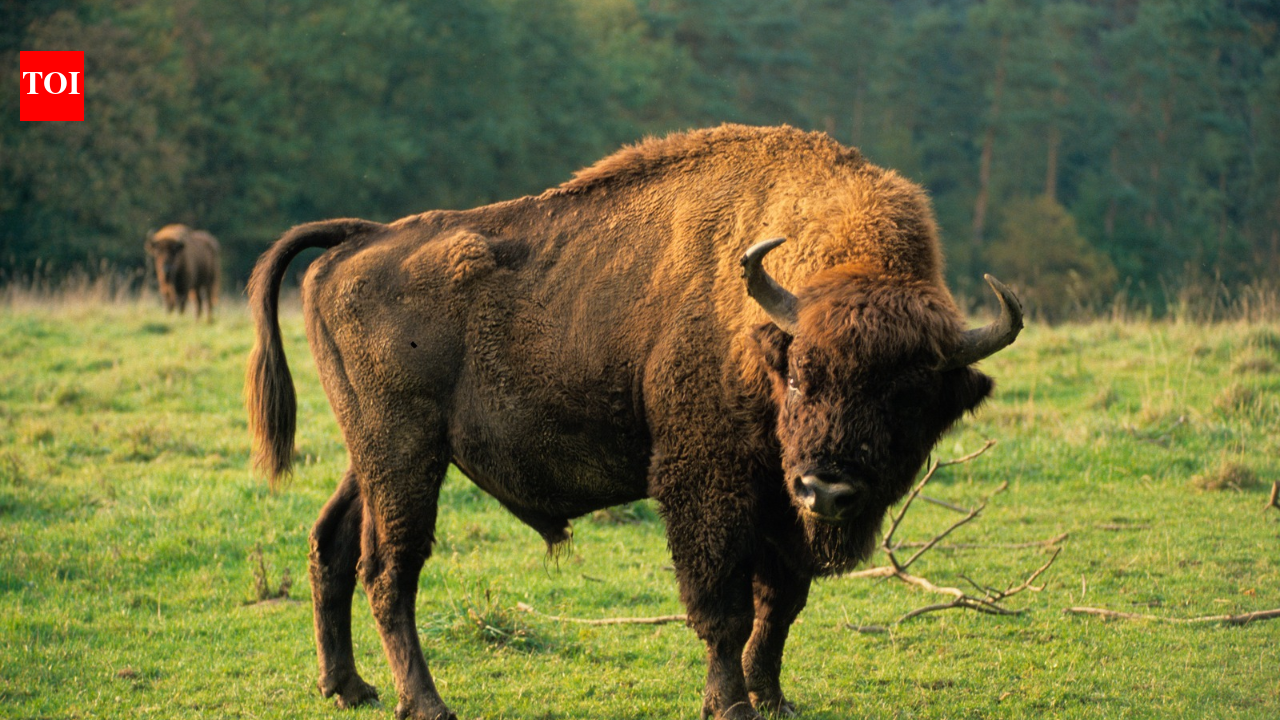
BAKU — Nearly a century after the last indigenous wild European bison was hunted to extinction in the Caucasus Mountains, conservationists in Azerbaijan have established a free-ranging herd that now stands at approximately 90 animals, advancing toward a benchmark of 100 released individuals by 2029. The animals roam within Shahdag National Park, a protected reserve spanning northern Azerbaijan along the Greater Caucasus range. The milestone represents a major step in restoring Europe’s heaviest native land mammal to historical ranges across Eurasia, reversing a collapse that once reduced the global population to merely a dozen individuals surviving in zoological institutions.
Key facts
What happened
According to reporting by the TOI Science Desk, conservation teams working in the Caucasus mountains of Azerbaijan have expanded the resident European bison population to roughly 90 individuals, putting an international reintroduction effort on pace to achieve 100 releases by 2029. The initiative focuses on Shahdag National Park, a sprawling expanse of montane woodland and alpine meadows bordering Russia.
The repopulation effort involves transporting captive-bred bison from specialized breeding centers across Europe, acclimating them inside fenced acclimatization enclosures within the park, and subsequently liberating them into unmanaged wilderness zones. Over multiple transfer cycles, wildlife specialists have monitored the released ungulates as they adapt to natural forage, establish social herd structures, and reproduce under wild conditions.
The project marks a dramatic turnaround for the species within the South Caucasus. The historical Caucasian bison (*Bison bonasus caucasicus*), an adapted mountain subspecies, saw its numbers plummet throughout the 19th and early 20th centuries due to unconstrained poaching, habitat clearing, and wartime disruptions. By 1927, the regional population vanished entirely when the final known specimen was killed by poachers. The contemporary herd in Shahdag represents the return of the species after an absence of nearly 100 years, relying on carefully managed lines descending from the small pool of captive survivors.
Why it matters
The re-establishment of European bison in Azerbaijan carries significant ecological, economic, and managerial consequences for the South Caucasus. As classic mega-herbivores, bison function as keystone ecosystem engineers. Adults can weigh up to 1,000 kilograms (2,200 pounds), requiring large volumes of vegetation daily. Their feeding behavior, which combines grass grazing with browsing on shrubs, tree bark, and saplings, prevents high-altitude forest canopies from choking out understory flora. This browsing creates a shifting mosaic of dense forest, open glades, and transition zones, maintaining high biodiversity across plant, bird, insect, and small mammal communities.
Furthermore, the physical movement of large herds creates pathways through dense brush, helps disperse seeds across vast distances via their coats and digestive systems, and supplies dung that supports specialized invertebrate communities and enriches mountain soils. In regions where natural disturbance regimes such as regular wildfires or extensive pastoral cattle grazing have diminished, wild bison restore essential ecological disturbances that sustain open-canopy habitats.
For Azerbaijan and neighboring regional administrations, the project demonstrates the viability of large-scale rewilding in post-Soviet protected landscapes. It positions Shahdag National Park as a vital node in continental conservation networks, creating potential avenues for ecological tourism and scientific field research. On an administrative level, maintaining megafauna requires national park authorities to build operational capacity in anti-poaching surveillance, veterinary monitoring, and community outreach to balance conservation with local agricultural livelihoods.
The background
The European bison (*Bison bonasus*), colloquially known as the wisent, once ranged across the vast deciduous forests of western, central, and eastern Europe, extending into Siberia and the Caucasus. Long-term human encroachment, deforestation, agricultural conversion, and intensive hunting severely restricted their habitat over centuries. By the turn of the 20th century, only two wild populations endured: the lowland wisent (*Bison bonasus bonasus*) in the Białowieża Forest of Poland and Belarus, and the Caucasian wisent (*Bison bonasus caucasicus*) in the Greater Caucasus.
World War I, the Russian Civil War, and severe local economic hardship accelerated the extermination of both remaining pockets. The last wild lowland bison was killed in Białowieża in 1919, followed eight years later by the shooting of the final Caucasian bull in 1927. At that juncture, the wild species was officially classified as extinct in the wild.
Conservationists, led by the International Society for the Protection of the European Bison founded in Germany in 1923, launched an inventory of all surviving specimens in menageries and zoological gardens. They identified only 54 captive animals, of which a mere 12 individuals (four bulls and eight cows) produced surviving progeny. A captive breeding program using rigorous genealogical tracking via the European Bison Pedigree Book succeeded in multiplying the population. The modern wisent gene pool is divided into two distinct genetic lines: the Lowland (Białowieża) line, descended from only seven founders, and the Lowland-Caucasian line, which incorporates genetic material from a single surviving Caucasian bull known as Caucasus No. 100 alongside lowland specimens.
Because the pure Caucasian mountain subspecies was lost, modern restoration programs in the Greater Caucasus rely on Lowland-Caucasian animals selected for their ecological adaptability. Azerbaijan’s rewilding initiative in Shahdag represents an effort coordinated alongside international groups such as the World Wide Fund for Nature (WWF) and European zoological institutions, which have facilitated cross-border transfers to re-establish the species in protected mountain terrain.
Reaction
While official ministerial statements were not detailed in the initial report, regional conservation organizations and ecological researchers have historically welcomed herd expansions in the Caucasus as crucial milestones in international rewilding. Wildlife groups active in Eurasia emphasize that establishing separate, genetically viable herds across disjointed mountain ranges minimizes the danger of localized catastrophes, such as disease outbreaks or severe climate events, decimating the global population.
Agrarian communities and rural district councils adjacent to Shahdag National Park are expected to monitor the herd's ongoing expansion closely. In other European regions where bison have been reintroduced, such as the Polish Bieszczady mountains or the Southern Carpathians of Romania, farmers and foresters have expressed mixed perspectives. While many benefit from ecotourism, concerns frequently emerge regarding potential crop depredation, damage to commercial tree plantations, or collisions on rural roads. Regional forestry and agricultural agencies in Azerbaijan are anticipated to review herd management protocols to address co-existence frameworks before the herd reaches its full 2029 target.
What we don't know yet
Several substantive details regarding the long-term viability of the Shahdag bison project remain unclarified in the available reporting. Most critically, the report does not detail the exact genetic composition or the effective population size of the current 90 animals, leaving it unclear how much inbreeding depression poses an immediate threat to subsequent generations born in the park.
Additionally, the report does not specify the precise geographical range occupied by the herd within the park’s vast territory, nor whether the animals remain semi-contained within fenced buffer zones or have full, unassisted migration access into contiguous Russian protected territories across the northern border. Cross-border movements would necessitate coordinated bi-national park management to prevent cross-border hunting or conflict with livestock grazing leases.
Another significant gap involves the status of natural predation and mortality rates. The Caucasus supports native large carnivores, including brown bears and gray wolves, which can prey on bison calves. The degree to which natural predation, winter mortality, or veterinary interventions have shaped the growth curve from the initial releases up to the current count of roughly 90 animals remains undocumented in the available account.
What to watch
Over the coming months and years leading to the 2029 target, several observable milestones will determine the project’s overall success:
This account is based on original reporting by the TOI Science Desk.
How this story was produced
This report was written by The Global Wire newsroom from reporting first published by TOI Science Desk. We verify the core facts against the original report, write our own account, and add the background and consequences a short wire item leaves out. Drafting is AI-assisted inside an editor-supervised pipeline, and every story is checked for accuracy of attribution, structure and duplication before it appears — full detail in our AI and funding disclosure.
Spotted an error? Tell us at corrections@horizonglobalnews.com and read our corrections policy or editorial standards.





Reader comments
Loading comments…