

EU Faces Trade Challenge as Chinese Investment Expands in Morocco and Turkey
European policymakers are evaluating trade defense tools as Beijing leverages investments in Morocco and Turkey to gain access to the EU market, according to reporting by Peggy Corlin.
By The Global Wire Newsroom · Reported from Peggy Corlin
Link preview · horizonglobalnews.com
EU Faces Trade Challenge as Chinese Investment Expands in Morocco and Turkey
European policymakers are evaluating trade defense tools as Beijing leverages investments in Morocco and Turkey to gain access to the EU market, according to reporting by Peggy Corlin.
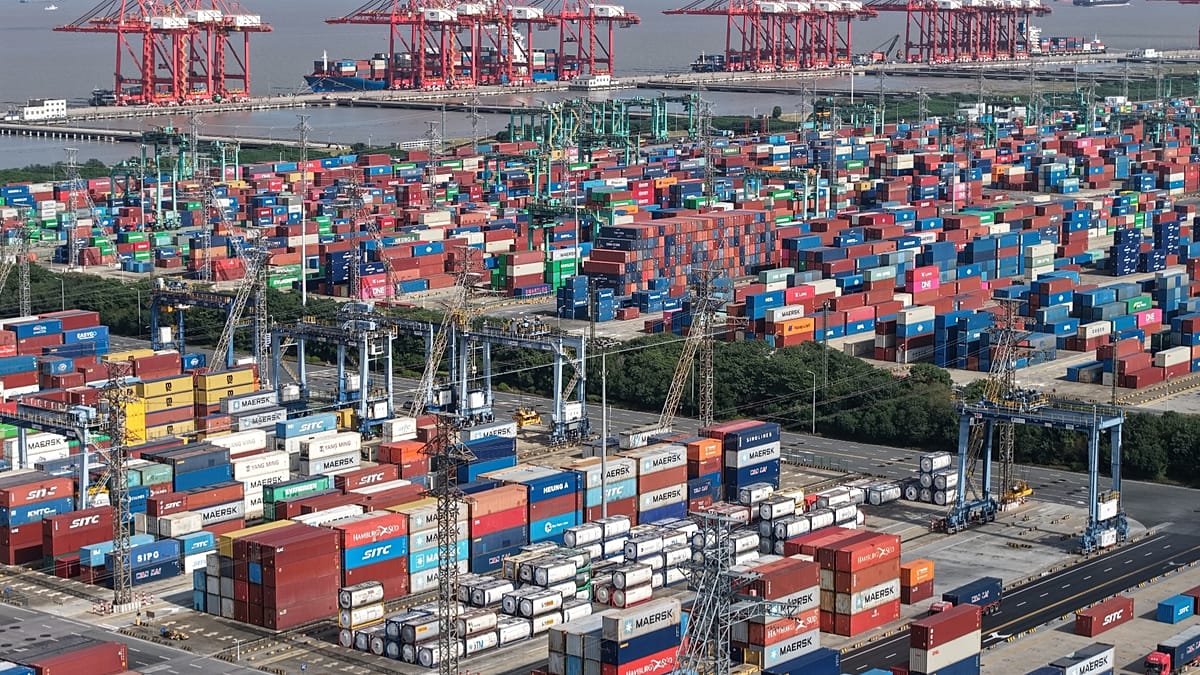
European Union trade officials are facing a complex regulatory challenge as Chinese companies expand direct investments into Morocco and Turkey, establishing secondary manufacturing and trade hubs designed to access the EU single market. According to reporting by Peggy Corlin, this shifting investment strategy by Beijing is creating indirect pathways into Europe, compelling policymakers in Brussels to consider new countermeasures while highlighting the limitations of the bloc's current trade defense mechanisms.
Strategic investments in neighboring markets
Beijing's economic strategy in North Africa and Southeastern Europe has increasingly focused on developing production capacity close to the European continent. By placing capital directly into industrial sectors within Morocco and Turkey, Chinese enterprises are positioning themselves to utilize established regional supply networks. Morocco benefits from close proximity to Western Europe and a robust network of commercial agreements, while Turkey maintains a long-standing customs union with the European Union that facilitates the movement of industrial goods.
According to Corlin's reporting, this investment drive allows Chinese firms to establish operational bases that can export finished or semi-finished products into the European single market. For Beijing, channeling capital into these intermediate jurisdictions serves dual commercial objectives: expanding global market reach while mitigating the impact of trade measures that European authorities apply directly to shipments originating from mainland China.
Regulatory friction and trade defense limits
The emergence of these indirect trade routes presents significant structural difficulties for trade regulators in Brussels. Historically, the European Union's trade defense instruments—such as anti-dumping duties, anti-subsidy measures, and safeguard tariffs—were designed to target direct trade flows between the EU and specific exporting nations. When production processes are fragmented across third countries, attributing state subsidies or unfair pricing models becomes significantly harder to establish under international trade law.
As detailed in Corlin's report, the EU's existing trade defense toolbox is increasingly struggling to keep pace with these evolving commercial tactics. Evaluating whether an item exported from Morocco or Turkey is genuinely a product of those nations, or primarily the result of Chinese capital and components undergoing minimal processing, requires extensive oversight and legal analysis. Under standard rules of origin, goods must undergo sufficient transformation within a country to claim that country as their official point of origin. However, proving that local assembly operations are merely circumvention tactics involves complex, resource-intensive investigations.
Broader context of EU-China trade dynamics
The tension over Chinese investments in Morocco and Turkey comes amid broader efforts by the European Union to recalibrate its economic relationship with China. Brussels has increasingly adopted policies aimed at de-risking key supply chains, securing critical raw materials, and protecting domestic industries from heavily subsidized foreign competition. These efforts have included heightened scrutiny of foreign direct investment within EU member states and targeted anti-subsidy probes into key manufacturing sectors.
However, as direct barriers between the EU and China tighten, corporate entities often respond by reorganizing global supply chains. By establishing industrial footprints in third countries that enjoy preferential or low-tariff trade access to Europe, companies can navigate around bilateral trade barriers. Morocco and Turkey have thus become attractive destinations for foreign direct investment, offering lower labor costs, strategic geographic locations, and access to European consumers without the full weight of tariffs applied directly to Chinese exports.
The mechanism of transshipment and origin rules
The friction between Brussels and Beijing over intermediate production hubs underscores the critical role of rules of origin in global commerce. To benefit from preferential tariff rates under trade agreements with the European Union, goods processed in partner countries like Morocco or exported under the EU-Turkey Customs Union must meet defined criteria regarding local content and substantial transformation.
When foreign capital funds large-scale production facilities in these transit hubs, European authorities must determine whether the value added locally satisfies legal thresholds or if the operations constitute circumvention. If an operation relies heavily on imported Chinese components, raw materials, or state-backed subsidies, European manufacturers argue that the resulting products gain an unfair competitive advantage inside the single market. Tracking these value chains requires coordinated customs verification and administrative cooperation, which can stretch regulatory capacity.
Strategic outlook and next steps
As Brussels prepares its response to Beijing's expanding footprint in Morocco and Turkey, European policymakers are evaluating several potential adjustments to their trade apparatus. Among the measures under consideration are updated anti-circumvention provisions, stricter enforcement of rules of origin, and broader applications of foreign subsidy regulations to cover cross-border financial support provided by third countries.
Nevertheless, implementing stricter measures presents diplomatic and economic trade-offs for the European Union. Both Morocco and Turkey are critical strategic partners for Brussels across multiple policy areas, including energy security, regional stability, and migration management. Imposing tighter restrictions or trade monitoring on goods originating from these nations risks straining broader diplomatic relations.
At the same time, failing to address potential trade loopholes could expose key European domestic industries to increased competitive pressure from state-subsidized capital operating through third-party nations. As Corlin's reporting indicates, the ongoing shift in Chinese outward investment strategies ensures that trade defense will remain a central focus for European policy planning in the coming years.
This article is based on original reporting published by Peggy Corlin.
How this story was produced
This report was written by The Global Wire newsroom from reporting first published by Peggy Corlin. We verify the core facts against the original report, write our own account, and add the background and consequences a short wire item leaves out. Drafting is AI-assisted inside an editor-supervised pipeline, and every story is checked for accuracy of attribution, structure and duplication before it appears — full detail in our AI and funding disclosure.
Spotted an error? Tell us at corrections@horizonglobalnews.com and read our corrections policy or editorial standards.


Reader comments
Loading comments…