

Elena Rybakina Defeats Aryna Sabalenka at US Open as Post-Match Frustration Escalates
Elena Rybakina claimed victory over Aryna Sabalenka at the U.S. Open, taking the world No. 1 ranking after a dramatic conclusion that saw Sabalenka smash her racket.
By The Global Wire Newsroom · Reported from Shubhanshu Dwivedi
Link preview · horizonglobalnews.com
Elena Rybakina Defeats Aryna Sabalenka at US Open as Post-Match Frustration Escalates
Elena Rybakina claimed victory over Aryna Sabalenka at the U.S. Open, taking the world No. 1 ranking after a dramatic conclusion that saw Sabalenka smash her racket.
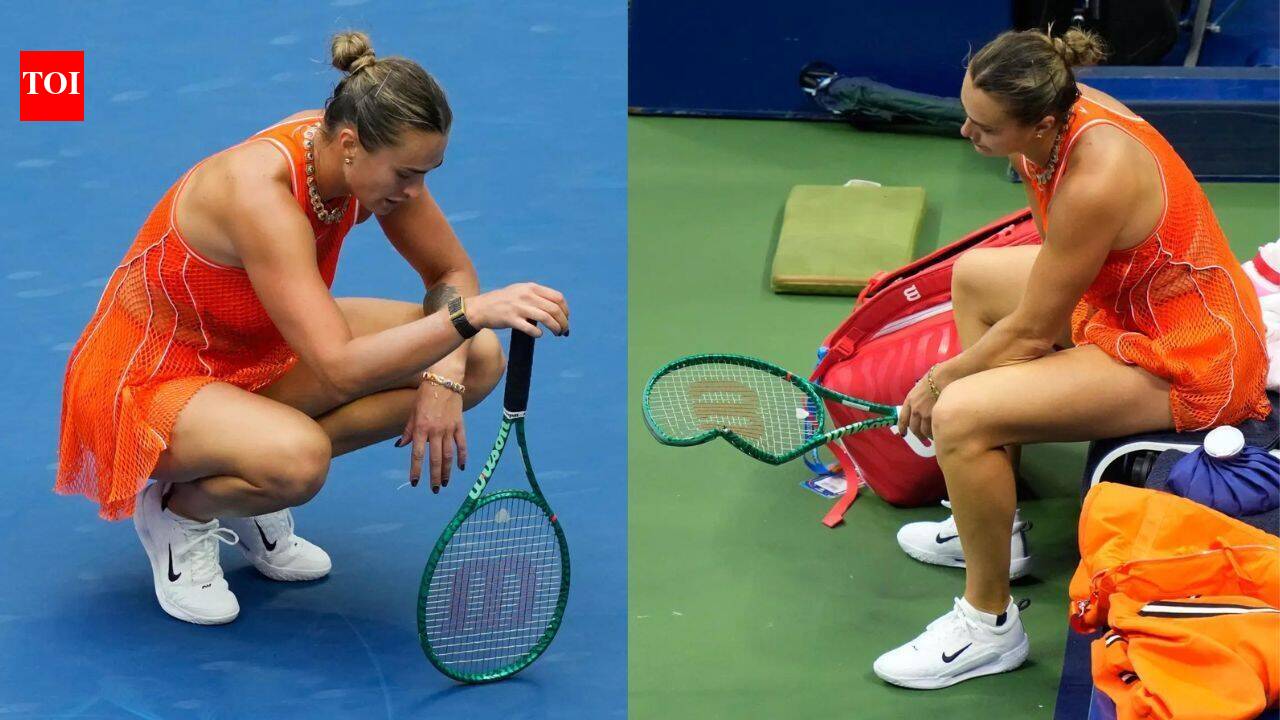
NEW YORK — Kazakh tennis player Elena Rybakina secured a high-stakes victory over Aryna Sabalenka at the U.S. Open in Flushing Meadows, New York, capping off a major shift at the top of women's professional tennis. Following the final point of the match, an emotional Sabalenka smashed her tennis racket against the court surface and struck a ball into the spectator seating area, according to reporting by Shubhanshu Dwivedi. The defeat not only ended Sabalenka’s tournament run at the USTA Billie Jean King National Tennis Center but also resulted in Rybakina taking over the world number one ranking from Sabalenka in the Women's Tennis Association (WTA) standings.
Key facts
What happened
The marquee matchup between two of the most powerful ball-strikers in women's tennis ended with Elena Rybakina earning a victory over Aryna Sabalenka on the hard courts of Flushing Meadows, according to reporting by Shubhanshu Dwivedi. The outcome concluded a contest between two Grand Slam champions competing at the highest tier of the sport.
Immediately following the final point, Sabalenka's frustration broke through her composure on court. As detailed by Dwivedi, Sabalenka repeatedly struck her racket against the court surface, destroying the frame, before striking a tennis ball directly into the crowd assembled in the stadium stands.
In professional tennis, post-match etiquette typically involves players approaching the net to shake hands with their opponent and the chair umpire, followed by the customary wave to the crowd and gathering of personal equipment before leaving the court area. However, the high-pressure environment of Grand Slam competition frequently leads to intense emotional releases, particularly when major career milestones and ranking points are surrendered.
By securing the win, Rybakina accomplished a dual triumph in New York: advancing her position in the tournament while simultaneously overtaking Sabalenka for the top position in the WTA world rankings. The transition at the pinnacle of the rankings marks one of the most significant shifts in women's tennis during the season, ending Sabalenka's tenure at number one and establishing Rybakina at the summit of the women's game.
Why it matters
The victory by Rybakina over Sabalenka carries major structural consequences for professional women's tennis, affecting tournament seedings, financial bonuses, and historical standing. Reaching the world number one ranking represents the ultimate individual achievement in the WTA system, providing top seed status at future events and securing substantial commercial sponsorship incentives.
For Sabalenka, losing both the match and the top ranking in a single defeat represents a severe setback. The visible display of frustration on court highlights the immense psychological burden borne by top-tier athletes under the global spotlight of Grand Slam competition. Beyond the athletic loss, Sabalenka's actions post-match subject her to automatic disciplinary review under professional tennis regulations.
The incident underscores the strict boundaries enforced by international tennis governing bodies regarding on-court behavior. When a player strikes a ball into the stands or smashes equipment, tournament officials must assess whether the action jeopardized the safety of spectators, ball kids, or match officials. Financial penalties for racquet abuse and ball abuse are standard under ITF guidelines, and severe instances can lead to probation or suspension depending on the severity and precedent.
From a competitive standpoint, Rybakina's ascent to world number one alters the dynamics of the WTA Tour. It validates her position among the game's elite champions and shifts the pressure of maintaining the top ranking onto her shoulders heading into the final stretch of the tour calendar.
The background
To understand the significance of the match between Sabalenka and Rybakina, it is necessary to examine the background of both players and the regulations governing professional tennis.
Sabalenka, born in Minsk, Belarus, in 1998, built her career around aggressive baseline power, heavy serving, and high-intensity court presence. She broke into the absolute elite of women's tennis by winning back-to-back Australian Open singles titles in 2023 and 2024, alongside a victory at the U.S. Open in 2024. Throughout her career, Sabalenka has been known for wearing her emotions openly during matches, a characteristic that fans and commentators often cite as a source of both her formidable momentum and occasional court frustration.
Rybakina, born in Moscow in 1999 and representing Kazakhstan since 2018, presents a stark contrast in court demeanor. Known for her calm demeanor, composure, and one of the most effective serves on the WTA Tour, Rybakina achieved her major singles breakthrough by winning the Wimbledon championship in 2022. She subsequently reached the final of the Australian Open in 2023, where she faced Sabalenka in a three-set final won by the Belarusian.
The rivalry between Sabalenka and Rybakina has grown into one of the premier matchups in contemporary women's tennis. Prior to their meeting in New York, the two had contested multiple high-profile matches across Grand Slams and WTA 1000 events, often trading titles and deep tournament runs on fast hard courts and grass.
The institutional framework governing on-court conduct at the U.S. Open is managed by the Grand Slam Board, comprising representatives from the International Tennis Federation (ITF), the Lawn Tennis Association, the French Tennis Federation, Tennis Australia, and the United States Tennis Association (USTA). Under the Grand Slam Code of Conduct, section III covers Player On-Site Offenses. Specifically, "Racquet or Equipment Abuse" is defined as intentionally and violently destroying or damaging racquet or equipment, carrying fines up to $5,000 per offense. "Ball Abuse" is defined as intentionally hitting, kicking, or throwing a tennis ball violently or dangerously outside the enclosure of the court or into the stands, carrying similar fine thresholds.
Historical precedents for court behavior sanctions at Grand Slams are well established. At the 2020 U.S. Open, world No. 1 Novak Djokovic was default-disqualified from the tournament after accidentally hitting a line judge in the throat with a ball hit in frustration between points. Serena Williams received major fines and warnings during the 2009 and 2018 U.S. Open finals for verbal code violations. Fines levied during Grand Slams are routinely deducted directly from a player's official tournament prize money winnings.
Reaction
Following the conclusion of the match, official reactions from tournament referee office and tennis governing bodies are expected as standard administrative procedure. While immediate post-match quotes from press conferences were not included in the initial report by Shubhanshu Dwivedi, both players are mandated by WTA and Grand Slam rules to participate in post-match media obligations.
During these press conferences, Rybakina is expected to address her achievement in securing the world number one ranking and her performance against Sabalenka. Sabalenka is routinely questioned by journalists regarding the emotional climax of the match, her physical execution during critical points, and her actions involving the racket and ball.
The Grand Slam Board referee is tasked with reviewing match footage to formalize any financial penalties assessed against Sabalenka for code violations. Commentators and former professional players appearing on international broadcast networks such as ESPN and Eurosport typically evaluate such emotional outbursts, analyzing the balance between competitive passion and sportsmanship standards in professional sport.
What we don't know yet
Several specific details regarding the match and its immediate aftermath remain unconfirmed in the initial reporting by Shubhanshu Dwivedi.
First, the exact set scores, match duration, and statistical breakdowns—such as service percentages, unforced errors, and break point conversions—have not been detailed. These metrics provide essential technical context for how Rybakina navigated the victory over Sabalenka.
Second, the formal disciplinary assessment from the U.S. Open tournament referee has yet to be publicly announced. It remains unknown what exact dollar figure Sabalenka will be fined for racquet abuse and ball abuse, or whether the ball hit into the spectator stands made physical contact with any fan or stadium worker.
Third, the exact point differential in the upcoming WTA official ranking list remains to be finalized. While it is confirmed that Rybakina has overtaken Sabalenka for the number one spot, the precise numerical margin separating the top players will depend on the final point totals calculated at the conclusion of the tournament fortnight.
What to watch
In the days following the event, several concrete milestones will track the fallout and future trajectory of this outcome:
This report is based on original news reporting published by Shubhanshu Dwivedi.
How this story was produced
This report was written by The Global Wire newsroom from reporting first published by Shubhanshu Dwivedi. We verify the core facts against the original report, write our own account, and add the background and consequences a short wire item leaves out. Drafting is AI-assisted inside an editor-supervised pipeline, and every story is checked for accuracy of attribution, structure and duplication before it appears — full detail in our AI and funding disclosure.
Spotted an error? Tell us at corrections@horizonglobalnews.com and read our corrections policy or editorial standards.



Reader comments
Loading comments…