

ECB Signals Persistent Near-Term Inflation as Lagarde Notes Contained Second-Round Pressures
European Central Bank President Christine Lagarde warned price pressures will linger in the near term, while noting that secondary wage-price effects have avoided worst-case scenarios.
By The Global Wire Newsroom · Reported from thestar.com.my
Link preview · horizonglobalnews.com
ECB Signals Persistent Near-Term Inflation as Lagarde Notes Contained Second-Round Pressures
European Central Bank President Christine Lagarde warned price pressures will linger in the near term, while noting that secondary wage-price effects have avoided worst-case scenarios.
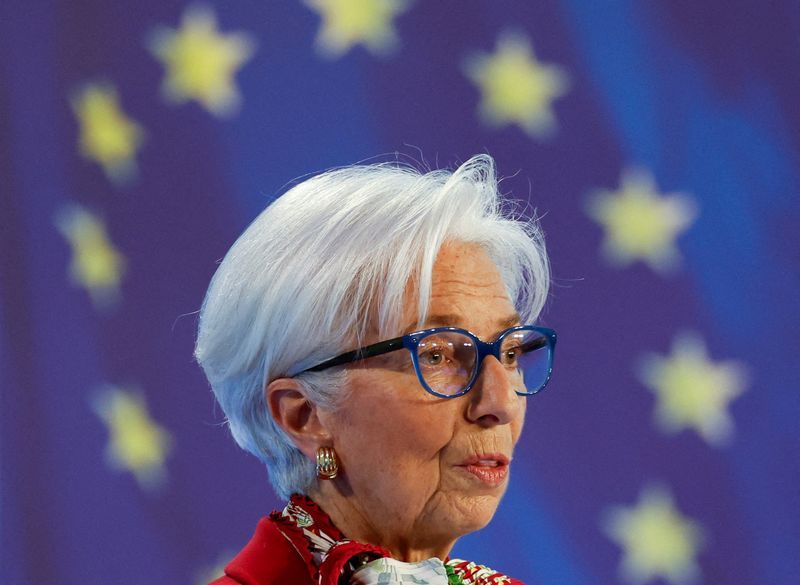
FRANKFURT — European Central Bank President Christine Lagarde has signaled that consumer price pressures across the 20-nation euro area are poised to remain elevated over the immediate horizon, while indicating that secondary inflationary effects have not deteriorated beyond monetary officials' baseline projections. Speaking in an interview with the Japanese daily newspaper Yomiuri Shimbun, Lagarde outlined the Frankfurt-based institution's ongoing assessment of the eurozone's economic trajectory, underscoring that while headline and underlying pressures will take time to subside toward the central bank's medium-term objective, the risk of a self-reinforcing wage-price spiral has so far remained bounded within expected parameters.
Key facts
What happened
In detailed comments delivered to Yomiuri Shimbun, Christine Lagarde offered an appraisal of the European Central Bank's inflation outlook, cautioning households, financial markets, and fiscal authorities that price stability remains an ongoing operational challenge. Lagarde explained that consumer inflation across the eurozone will probably remain higher than desired over the short term, requiring monetary policymakers to maintain vigilant oversight of economic indicators.
Crucially, Lagarde addressed the phenomenon of second-round effects, an economic process where an initial inflation shock—traditionally triggered by volatile energy or commodity markets—permeates collective bargaining agreements, labor negotiations, and corporate price-setting strategies. According to Lagarde, these secondary feedback loops have so far aligned broadly with the central bank's internal expectations rather than taking on a destabilizing momentum of their own. The observation provides critical context for the Governing Council’s rate-setting path, suggesting that while price pressures are entrenched, they are not currently exhibiting the runaway behavior that would force an emergency re-escalation of monetary policy.
The public communication serves as an integral component of the ECB's broader forward messaging. Central bankers frequently use interviews with prominent international outlets to communicate baseline expectations to global market participants, reinforcing the institutional narrative ahead of upcoming Governing Council rate decisions at the ECB's headquarters in Frankfurt am Main, Germany.
Why it matters
Lagarde’s remarks carry direct implications for sovereign debt markets, corporate borrowing rates, mortgage holders, and national treasuries throughout the European monetary union. When the leader of the euro area's single monetary authority signals that inflation will remain elevated over the near term, it effectively pushes back against premature expectations of rapid, aggressive monetary easing. For financial institutions and fixed-income investors, persistent price pressure means that benchmark borrowing costs must remain high enough for long enough to guarantee that restrictive monetary policy successfully compresses aggregate demand.
For businesses and households, elevated near-term inflation translates into continued erosion of real disposable income and sustained operational cost burdens. Enterprises that absorbed severe utility, transportation, and raw material cost spikes must determine whether they can continue to defend profit margins through retail price adjustments without destroying consumer volume. Simultaneously, labor unions representing millions of workers across major industrial economies such as Germany, France, and Italy face complex decisions in wage negotiations. If workers demand catch-up compensation to offset cumulative purchasing power losses, those increases could theoretically ignite the very second-round effects that Lagarde currently categorizes as contained.
Furthermore, European sovereign issuers face elevated refinancing yields on sovereign bonds. Governments carrying high public debt-to-gross domestic product ratios—including Italy, Greece, and France—must service their debt burdens against a backdrop of prolonged higher interest rates, which tightens national budget allocations for public infrastructure, defense commitments, and social welfare programs.
The background
The European Central Bank was established under the Treaty of Amsterdam in 1998, commencing operational responsibility for the single currency on January 1, 1999. Governed by its 26-member Governing Council—comprising the six members of the Executive Board and the governors of the 20 national central banks of the eurozone—the institution is bound by a primary mandate: maintaining price stability within the euro system. In July 2021, the Governing Council updated its monetary policy strategy, establishing a symmetric 2.0 percent inflation target over the medium term, measured by the Harmonised Index of Consumer Prices (HICP).
Between 2021 and 2023, the global economy was buffeted by a historic confluence of macroeconomic shocks. Disruptions in global supply chains following the COVID-19 pandemic, coupled with the dramatic energy price crisis sparked by Russia's full-scale invasion of Ukraine in February 2022, drove euro area inflation to unprecedented double-digit peaks, surpassing 10 percent in late 2022. Natural gas prices, electricity tariffs, and food commodities spiked simultaneously, forcing European governments to deploy hundreds of billions of euros in emergency fiscal energy shields.
In response to these runaway pressures, the ECB embarked on the most aggressive monetary tightening campaign in its modern history. Beginning in July 2022, the central bank abandoned a decade-long policy of negative interest rates, lifting its key deposit facility rate from minus 0.50 percent through a succession of unprecedented 50- and 75-basis-point hikes, eventually pushing the benchmark to an all-time record peak of 4.00 percent in late 2023. Over the subsequent quarters, central banks across the developed world, including the United States Federal Reserve and the Bank of England, confronted the transition from headline supply shocks to sticky core services inflation.
Central bankers monitor second-round effects with intense scrutiny because historical tightening cycles demonstrate that once inflation expectations become unanchored in wage growth, reversing price trends requires inducing substantial economic slack, often at the cost of rising unemployment or outright recession. The ECB's staff macroeconomic projections consistently model whether wage growth per employee, negotiated wages, and corporate profit unit margins are absorbing or amplifying upstream price impulses.
Reaction
While external market actors and political figures have not immediately issued formal communiqués regarding the specific Yomiuri Shimbun interview, institutional observers and macroeconomic analysts routinely parse Lagarde’s deliberate vocabulary for subtle shifts in policy bias. The acknowledgment that inflation will persist in the short term, juxtaposed against reassurance regarding second-round effects, reflects a calculated compromise between the Governing Council's policy factions.
Within the ECB's decision-making apparatus, hawkish members—traditionally drawn from central banks in northern and eastern Europe, such as Germany’s Deutsche Bundesbank, the Netherlands’ De Nederlandsche Bank, and the central banks of the Baltic states—have continuously expressed concern that robust services inflation and resilient nominal wage settlements could cause price growth to plateau uncomfortably above the 2.0 percent objective. These policymakers regularly argue that monetary policy must retain a restrictive posture until empirical data provides conclusive proof of disinflation.
Conversely, dovish policymakers—predominantly representing southern European economies—frequently emphasize the mounting economic toll of prolonged monetary restriction. Industrial production indicators, particularly in export-heavy sectors such as German manufacturing and European automotive production, have faced prolonged stagnation. Financial analysts and investment strategists are expected to dissect Lagarde's characterization of wage dynamics during scheduled financial panel appearances, parliamentary hearings before the European Parliament's Committee on Economic and Monetary Affairs in Brussels, and customary post-meeting press conferences.
What we don't know yet
Significant gaps remain regarding the precise numerical trajectory underlying Lagarde’s broad public assessment. The public remarks did not specify an exact calendar horizon for when headline and core inflation measures are modeled to durably reach the ECB's 2.0 percent target, nor did they quantify the threshold at which wage growth would breach the central bank's comfort zone.
Moreover, the full extent of corporate profit margin absorption remains an open empirical question. While second-round effects are currently evaluated as running within expected bands, central bank economists have repeatedly pointed out that the degree to which companies will continue to absorb higher labor costs within profit margins, rather than passing them through to retail consumers, depends entirely on domestic consumer demand elasticity. The resilience of consumer spending across differing member states remains uneven, leaving open the question of whether divergence among national inflation rates will complicate the uniform transmission of ECB monetary policy.
Additionally, the interview did not outline specific policy implications for the timing and magnitude of future changes to the deposit facility rate, the main refinancing operations rate, or the marginal lending facility rate. Observers cannot ascertain from the comments whether the central bank is inclined to pause, cut, or adjust its quantitative tightening operations under the Asset Purchase Programme (APP) and Pandemic Emergency Purchase Programme (PEPP).
What to watch
Market participants and economic analysts will track several concrete milestones over the coming months to verify whether Lagarde's assessment of controlled second-round effects holds true:
1. **Eurostat Flash Inflation Releases**: The statistical office of the European Union publishes monthly flash estimates of the Harmonised Index of Consumer Prices, typically at the end of each reference month. Observers will focus particularly on the services component of the core HICP measure, which provides the cleanest reading of domestic labor cost pressures.
2. **ECB Negotiated Wage Indicator**: Central bank analysts follow this quarterly metric, which tracks collectively bargained wage agreements across Germany, France, Italy, Spain, and other member nations. A marked reacceleration above 4.0 to 4.5 percent would challenge the view that second-round effects are subdued.
3. **Governing Council Monetary Policy Meetings**: The ECB convenes eight scheduled policy-setting meetings per year in Frankfurt. Each session concludes with an official monetary policy statement, updated macroeconomic staff projections (published in March, June, September, and December), and an extensive press conference led by Lagarde and ECB Vice-President Luis de Guindos.
4. **Geopolitical and Commodity Market Dynamics**: Shifts in global crude oil benchmarks (such as Brent crude) and European natural gas benchmarks (such as the Dutch Title Transfer Facility) will determine whether fresh upstream shocks risk resetting the baseline for domestic consumer prices.
This report incorporates information originally published by the Japanese newspaper Yomiuri Shimbun and reported by The Star.
How this story was produced
This report was written by The Global Wire newsroom from reporting first published by thestar.com.my. We verify the core facts against the original report, write our own account, and add the background and consequences a short wire item leaves out. Drafting is AI-assisted inside an editor-supervised pipeline, and every story is checked for accuracy of attribution, structure and duplication before it appears — full detail in our AI and funding disclosure.
Spotted an error? Tell us at corrections@horizonglobalnews.com and read our corrections policy or editorial standards.






Reader comments
Loading comments…