

Dolphins Coach Jeff Hafley Shifts Focus From Win-Loss Record to Process Ahead of 2026 Season
Miami Dolphins coach Jeff Hafley says success this season will be evaluated on organizational progress and player development rather than strictly by win-loss results.
By The Global Wire Newsroom · Reported from Marcel Louis-Jacques
Link preview · horizonglobalnews.com
Dolphins Coach Jeff Hafley Shifts Focus From Win-Loss Record to Process Ahead of 2026 Season
Miami Dolphins coach Jeff Hafley says success this season will be evaluated on organizational progress and player development rather than strictly by win-loss results.
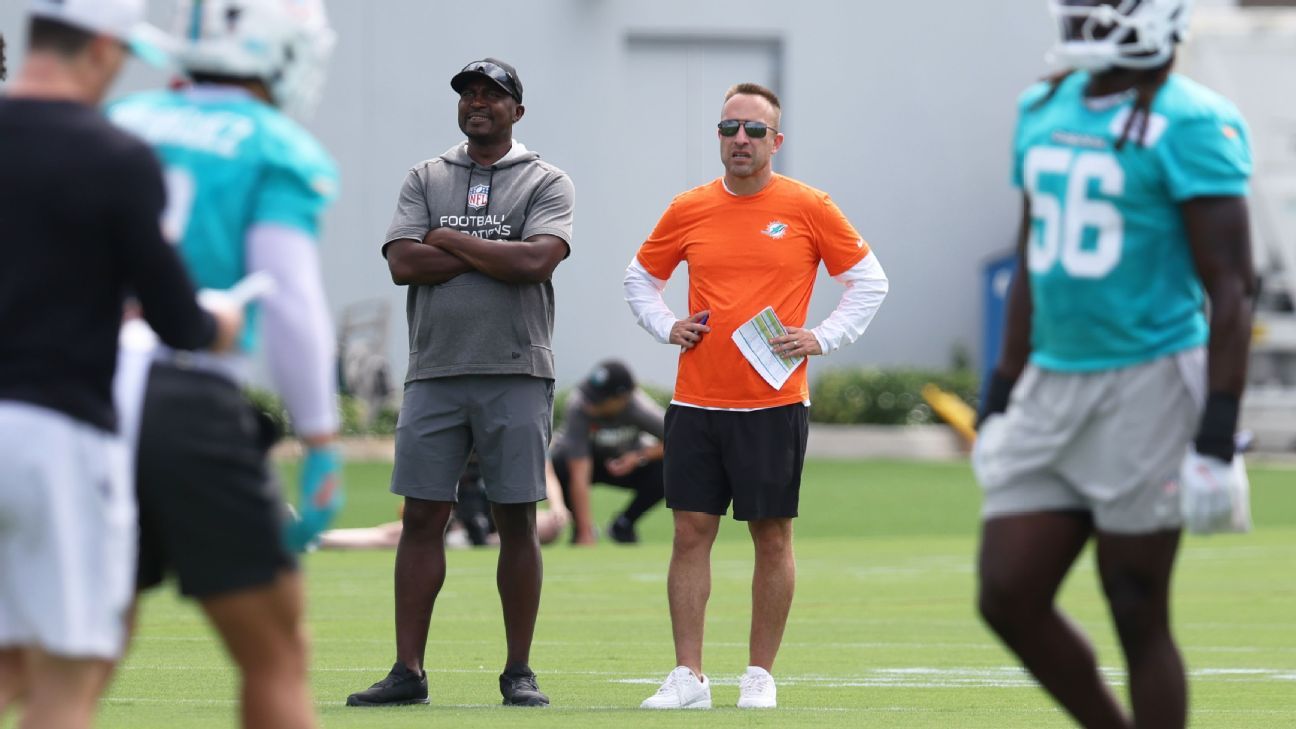
MIAMI GARDENS, Fla. — Miami Dolphins coach Jeff Hafley declared that the organization will not measure its success in the upcoming National Football League season solely by its win-loss record, signaling a process-oriented philosophy as the team completes its late-August preparations for the 2026 campaign. Speaking to reporters on August 29, 2026, Hafley outlined an approach that emphasizes foundational progress, player evaluation, and structural execution over immediate scoreboard outcomes, according to reporting by Marcel Louis-Jacques. The statement comes at a pivotal juncture in the NFL calendar, as franchises across the league transition from preseason roster cutdowns to final game planning ahead of the 17-game regular season schedule.
Key facts
What happened
On August 29, 2026, Miami Dolphins coach Jeff Hafley addressed the media to establish internal and external benchmarks for the franchise's upcoming season. According to reporting by Marcel Louis-Jacques, Hafley explicitly rejected the conventional standard that a football team's single-year performance must be evaluated exclusively through its final tally of wins and losses.
In public remarks delivered at the team's facility in South Florida, Hafley framed the upcoming campaign around incremental development, tactical consistency, and organizational culture. Rather than issuing win-total mandates or setting explicit postseason targets, Hafley indicated that evaluation criteria will prioritize qualitative progress, structural discipline, and the growth of individual players within the team's tactical schemes.
The remarks were delivered during the final week of August, a crucial window in the NFL calendar when coaching staffs finalize their 53-man active rosters and establish practice squads following preseason exhibition games. During this transitional period, head coaches routinely balance long-term organizational building against the immediate pressure of Week 1 game preparation. By publicly redefining success beyond the win-loss column, Hafley established a narrative framework intended to manage expectations among fans, players, and executive leadership as the regular season approaches.
Why it matters
While professional sports franchises are ultimately judged by standings, playoff berths, and championship trophies, a coach publicly decoupling evaluation from win-loss records represents a distinct philosophical stance with practical ramifications across multiple levels of an NFL organization. In the immediate term, establishing process-oriented standards can shield a developing roster from early-season adversity or morale collapse if victories prove difficult to secure in a competitive conference.
From a roster management perspective, prioritizing long-term development over immediate win maximization often dictates tactical decisions on the field. Coaches focused on foundational growth may opt to play younger, unproven talent to accelerate their learning curve, even if veteran alternatives offer a marginally higher probability of winning a specific game in September or October. It also alters how coaching staffs evaluate game tape, shifting focus toward execution of responsibilities, effort, and situational awareness rather than simply celebrating victorious outcomes achieved through opponent errors or unsustainable luck.
For front offices and ownership, accepting a non-record-based definition of success requires alignment across executive leadership. In the modern NFL, where executive tenure is frequently tied to rapid turnarounds and media-driven narrative cycles, coaches who ask to be judged on culture and progression must maintain explicit backing from general managers and team owners. If internal expectations align with Hafley's public messaging, the coaching staff will gain leeway to implement structural systems without facing immediate job insecurity during rough stretches. Conversely, if fans or media hold the team to strict win-loss standards—particularly given the competitive dynamics of the AFC East—a disconnect between official public messaging and outside expectations can generate significant scrutiny.
The background
To fully contextualize Hafley's comments, it is necessary to examine how NFL coaching transitions operate and the historical benchmarks surrounding the Miami Dolphins franchise. Under standard NFL operating procedures, teams undergo multi-year cycles where coaching philosophies dictate player acquisition, draft strategy, and scheme implementation.
Jeff Hafley entered high-level NFL coaching following an extensive career in both collegiate football and professional defensive instruction. After serving as co-defensive coordinator at Ohio State University in 2019, Hafley spent four seasons as the head coach of Boston College from 2020 through 2023, compiling an overall record of 22-26 while establishing a reputation for defensive scheme design and player recruitment. In January 2024, he departed Boston College to return to the NFL as the defensive coordinator for the Green Bay Packers, overseeing defensive overhaul efforts before taking on coaching leadership with the Dolphins.
Historically, the Miami Dolphins occupy a prominent place in professional football history. Founded in 1966 as an American Football League expansion franchise before joining the NFL in the 1970 merger, Miami achieved its greatest era under Hall of Fame head coach Don Shula. The 1972 Dolphins remain the only team in NFL history to complete a perfect season, finishing 17-0 and winning Super Bowl VII, followed by a victory in Super Bowl VIII the following year.
However, in the modern era, the franchise has endured extended periods of postseason frustration. Miami's most recent playoff victory occurred on December 30, 2000, when the team defeated the Indianapolis Colts 23-17 in a wild-card matchup. Across the subsequent quarter-century, the Dolphins have managed multiple head coaching changes and rebuilding initiatives in an attempt to re-establish sustained championship contention within the AFC East, a division long dominated by the New England Patriots and more recently by the Buffalo Bills.
In professional football, when leadership takes over a franchise facing tough divisional opposition, coaches frequently utilize their initial training camps to deemphasize record-based pressure. Comparable approaches have been employed by coaches across the league during structural overhauls, aiming to establish measurable operational metrics—such as reducing pre-snap penalties, improving red-zone efficiency, and increasing turnover margins—before expecting consistent win totals.
Reaction
The public response to Hafley's statement reflects the traditional divide between process-focused coaching staff strategies and result-oriented fan expectations. Within professional football analytical circles and executive coaching networks, deemphasizing short-term win totals during developmental phases is broadly understood as a pragmatic strategy, particularly when rebuilding roster depth or installing new offensive and defensive systems.
However, sports broadcasting commentators, media outlets, and fanbases typically view win-loss outcomes as the primary definitive metric of professional sports performance. Neither the Miami Dolphins front office nor individual team leadership issued formal counter-statements following Hafley's media session, indicating general organizational harmony regarding public messaging ahead of the season opener. Opponents within the AFC East and wider NFL coaching ranks generally refrain from commenting on rival training camp press conferences, focusing instead on their own final roster cuts and Week 1 preparations.
What we don't know yet
Several critical details surrounding Hafley's statements remain unspecified in the initial reporting by Marcel Louis-Jacques and available public disclosures.
First, the specific internal metrics that Hafley and his staff intend to use to gauge success have not been publicly detailed. While rejecting win-loss records as the sole benchmark, it remains unknown which quantitative performance indicators—such as expected points added (EPA), turnover differential, point differential, or third-down conversion rates—will serve as the primary yardsticks for organizational growth.
Second, it is unclear how team ownership, led by Stephen Ross, and executive leadership evaluate this timeline internally. Whether ownership has granted an explicit multi-year grace period that accommodates lower win totals during systemic rebuilding, or whether patience could diminish if on-field results lag significantly behind divisional rivals, remains an unconfirmed aspect of the team's internal dynamics.
Finally, the exact impact of this philosophy on veteran contract decisions, starting lineup selections, and weekly game management strategies will only become apparent once regular-season competition begins across the league's 18-week calendar.
What to watch
In assessing how Hafley's definition of success translates into reality, several key checkpoints and milestones will provide clear verification during the 2026 NFL season:
This account is based on original reporting by Marcel Louis-Jacques.
How this story was produced
This report was written by The Global Wire newsroom from reporting first published by Marcel Louis-Jacques. We verify the core facts against the original report, write our own account, and add the background and consequences a short wire item leaves out. Drafting is AI-assisted inside an editor-supervised pipeline, and every story is checked for accuracy of attribution, structure and duplication before it appears — full detail in our AI and funding disclosure.
Spotted an error? Tell us at corrections@horizonglobalnews.com and read our corrections policy or editorial standards.





Reader comments
Loading comments…