

Deshaun Watson Signals Desire to Remain in Cleveland Beyond Current Contract
Cleveland Browns quarterback Deshaun Watson expressed his affection for the city and openness to extending his tenure past the 2026 season.
By The Global Wire Newsroom · Reported from Kayode Akinwumi
Link preview · horizonglobalnews.com
Deshaun Watson Signals Desire to Remain in Cleveland Beyond Current Contract
Cleveland Browns quarterback Deshaun Watson expressed his affection for the city and openness to extending his tenure past the 2026 season.
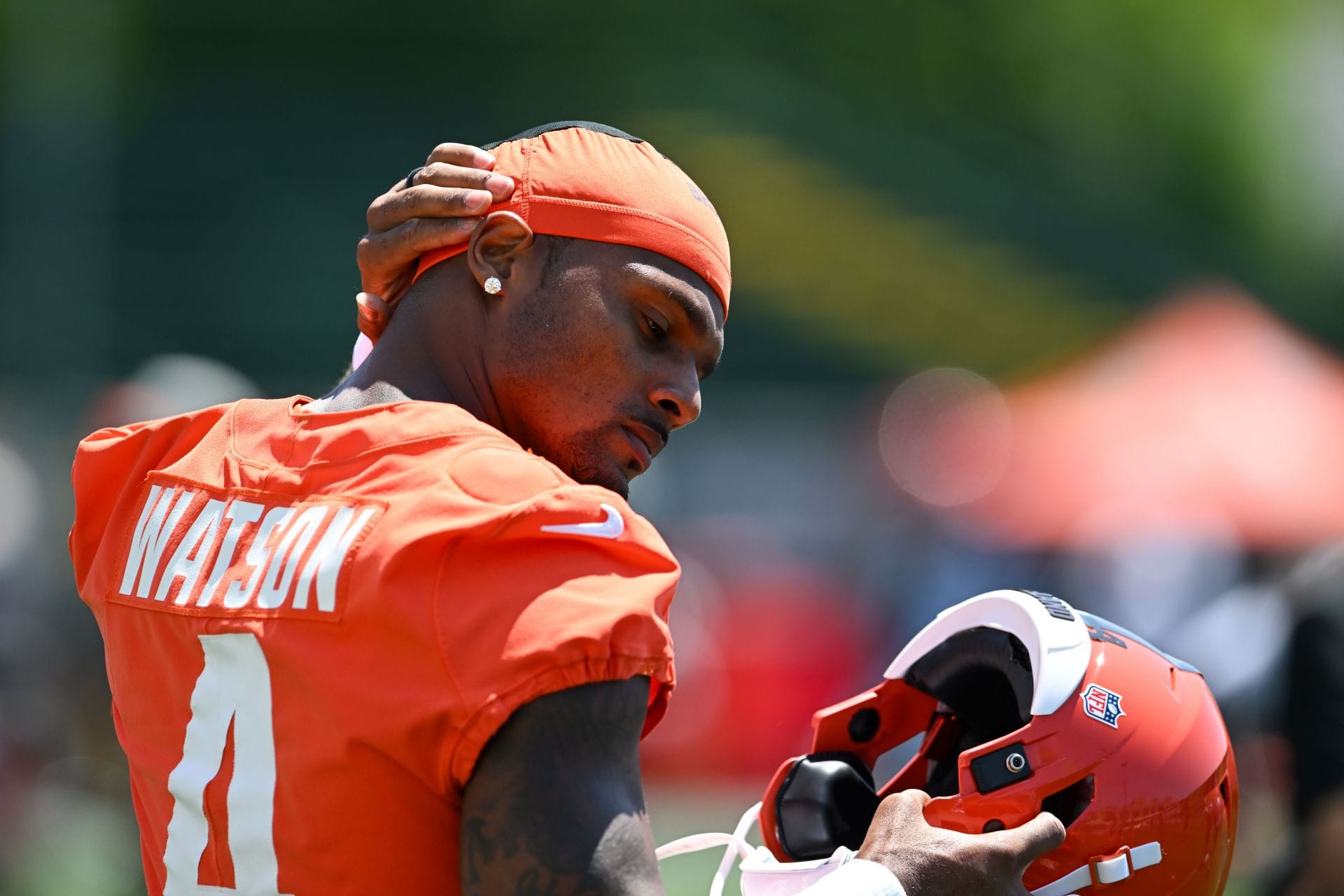
Cleveland Browns quarterback Deshaun Watson has publicly expressed his affection for the city of Cleveland and indicated a willingness to remain with the National Football League franchise beyond the expiration of his current contract, according to reporting by Kayode Akinwumi. The comments, delivered during recent media availability as the organisation prepares for its upcoming campaign, have reignited widespread discussion regarding the long-term trajectory of the quarterback position in Cleveland and the evolving dynamic between the player, the front office, and the local fanbase.
Watson’s explicit statement of commitment to the region comes as the franchise approaches pivotal years in managing its roster architecture and long-term financial commitments. With his current contractual agreement set to run through the 2026 season, the passer's openness to extending his tenure beyond that window places renewed scrutiny on his standing within the organisation and the broader sentiment among supporters who follow the team.
Statements of commitment to Cleveland
During his comments, Watson emphasised his personal connection to the city and his positive experiences residing in Northeast Ohio since joining the team. According to reporting by Kayode Akinwumi, the quarterback made a point to articulate his affection for Cleveland as a football market and a community, affirming that he would be receptive to remaining with the organisation past the conclusion of his active contract in 2026.
Expressing an affinity for a host city is a standard practice among top-tier professional athletes, yet Watson’s public insistence on his desire for a long-term future in Cleveland carries significant weight given the historical scrutiny surrounding his arrival. By openly discussing a desire to stay beyond 2026, Watson signaled a wish to establish lasting roots with the organisation rather than viewing his current multi-year agreement strictly as a bounded arrangement.
Fanbase response and public skepticism
The quarterback's public expressions of devotion to the city met immediate pushback and intense skepticism from portions of the team’s national and local fan base. Reporting by Kayode Akinwumi highlighted a wave of critical reactions across digital platforms, where observers characterized Watson's remarks as an attempt to garner public sympathy or repair a fraught public image amid ongoing performance and off-field discussions.
Fans and analysts alike routinely examine public declarations from high-priced athletes through a critical lens, particularly when on-field results and team success are weighed against massive financial commitments. The negative reception to Watson's comments underscores a persistent disconnect between the player's attempts to foster goodwill and the broader public perception surrounding his tenure in Cleveland. For many spectators, vocal professions of loyalty carry little weight in the absence of consistent team achievements and championship contention.
Contractual framework and financial implications
Watson’s long-term future with the Browns is inextricably linked to the landmark contract he signed upon his arrival in Cleveland. In March 2022, the Cleveland front office executed an unprecedented five-year, $230 million fully guaranteed contract to acquire the former Houston Texans signal-caller. That agreement marked a watershed moment in professional football economics, setting a precedent for fully guaranteed compensation that remains a central topic of debate among league executives and player agents.
Because the entirety of the $230 million sum was guaranteed upon signing, the Browns committed an extraordinary portion of their annual salary cap allocations to the quarterback position through the 2026 season. Under modern NFL financial rules, managing a contract of this magnitude requires continuous administrative restructuring, converting base salaries into signing bonuses to spread cap hits across future years. As the 2026 mark approaches, any prospective extension would necessitate a complex recalibration of the team's cap structure, balancing Watson's compensation expectations against the need to surround him with high-caliber talent across other positional groups.
The historical search for quarterback stability
The ongoing dialogue surrounding Watson occurs against the backdrop of Cleveland’s decades-long search for enduring stability at the quarterback position. Since the franchise returned to the NFL in 1999, the Browns have cycled through dozens of starting quarterbacks, struggling to maintain consistent play under center across successive coaching regimes. The acquisition of Watson was explicitly designed to resolve this perpetual vulnerability and anchor the franchise alongside top contenders in a highly competitive AFC North division.
However, high-profile quarterback additions in the modern NFL bring elevated expectations that extend beyond individual performance metrics. When an organisation invests top-tier financial and draft resources into a single player, the expectation is immediate and sustained postseason competitiveness. For Cleveland, evaluating whether to extend a quarterback beyond an initial five-year window involves assessing team chemistry, leadership continuity, and the ability to win crucial divisional matchups against well-established rivals.
Roster construction and future decision-making
As the Browns navigate the remainder of Watson’s current contract, the front office faces complex decisions regarding roster construction and long-term planning. Managing a modern NFL roster requires balancing veteran star contracts with affordable talent acquired through the draft and cost-effective free agency. Committing major financial resources to an aging quarterback beyond 2026 would limit the team’s ability to retain key defensive leaders, offensive linemen, and primary playmakers.
NFL front offices typically evaluate quarterback extensions twelve to eighteen months before a contract expires, assessing both on-field health and trajectory. For Cleveland executive leadership, determining whether Watson remains the long-term answer past 2026 will depend on measurable team progress and sustained elite play under center. While Watson has expressed a clear desire to remain in Cleveland, the final decision will rest on the front office's assessment of his ability to elevate the franchise to championship contention.
This article was developed using reporting originally published by Kayode Akinwumi.
How this story was produced
This report was written by The Global Wire newsroom from reporting first published by Kayode Akinwumi. We verify the core facts against the original report, write our own account, and add the background and consequences a short wire item leaves out. Drafting is AI-assisted inside an editor-supervised pipeline, and every story is checked for accuracy of attribution, structure and duplication before it appears — full detail in our AI and funding disclosure.
Spotted an error? Tell us at corrections@horizonglobalnews.com and read our corrections policy or editorial standards.





Reader comments
Loading comments…