

Chicago Cubs Pitcher Ben Brown Encounters Setback in Neck Injury Rehabilitation
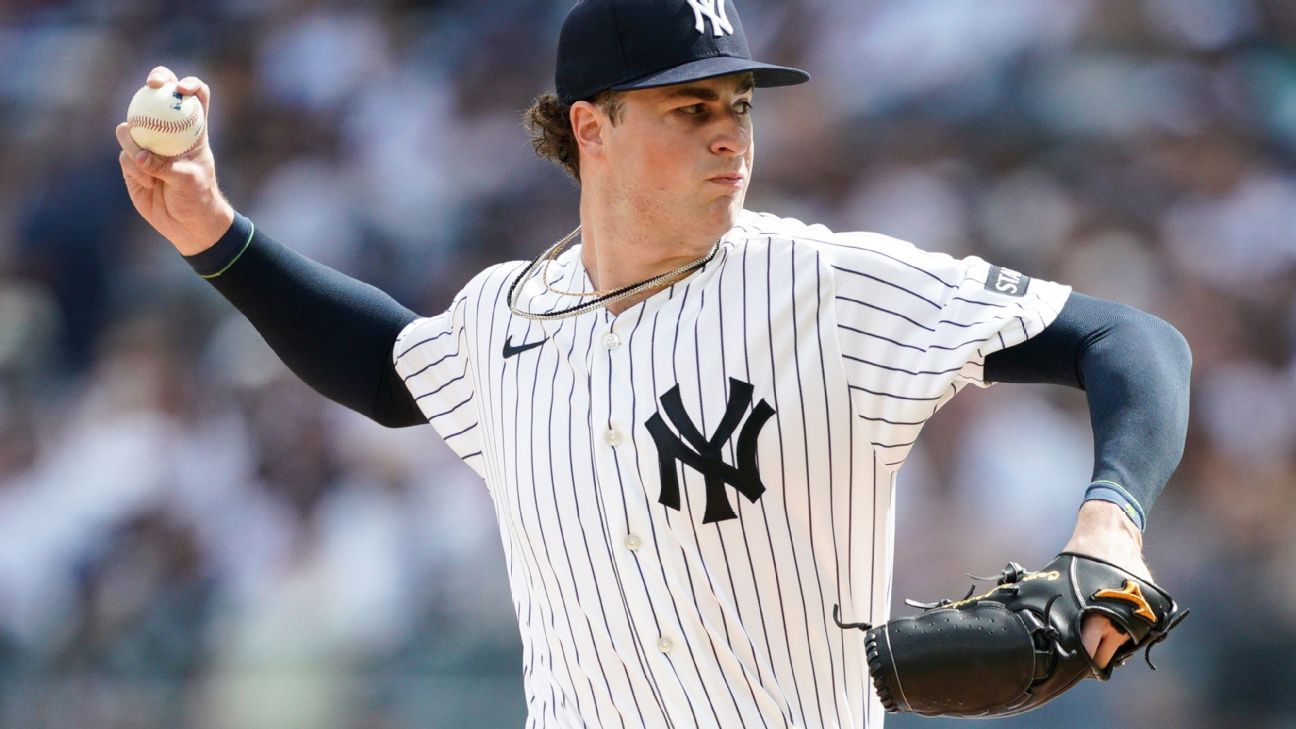
Chicago Cubs right-handed pitcher Ben Brown has suffered a setback in his recovery from a neck injury, throwing his availability for the late-season pennant chase into doubt.
By The Global Wire Newsroom · Reported from espn.com
Link preview · horizonglobalnews.com
Chicago Cubs Pitcher Ben Brown Encounters Setback in Neck Injury Rehabilitation
Chicago Cubs right-handed pitcher Ben Brown has suffered a setback in his recovery from a neck injury, throwing his availability for the late-season pennant chase into doubt.
The Chicago Cubs' pitching depth suffered a significant blow heading into the final stretch of the regular season as right-handed pitcher Ben Brown experienced a setback during his rehabilitation from a neck injury, according to reporting by ESPN on August 26, 2026. The complication halts Brown’s progression back to active competition and casts substantial uncertainty over whether the high-velocity pitcher will be able to contribute to the club's pitching rotation or bullpen during the closing weeks of the regular season campaign.
Key facts
What happened
According to reporting published by ESPN on August 26, 2026, right-handed pitcher Ben Brown suffered an unexpected setback while undergoing a structured rehabilitation protocol for a neck injury. The initial recovery program was designed to systematically return the pitcher to full competition through a series of progressive throwing phases, which typically include flat-ground throwing, bullpen sessions, live batting practice, and formal minor league rehab assignments.
While specific medical details regarding the exact moment or mechanism of the setback were not immediately disclosed, an interruption of this nature typically requires an immediate cessation of throwing activities. In professional sports medicine, a rehabilitation setback occurs when a patient experiences a return of original symptoms, increased localized inflammation, structural fatigue, or secondary compensation discomfort as physical workloads increase.
For a pitcher recovering from a neck condition, the rehabilitation pathway requires careful monitoring because the cervical spine and surrounding muscular tissue sustain tremendous rotational torque during the throwing motion. When a player encounters a setback at this stage of the baseball calendar, the standard protocol involves temporarily shutting down physical activity, reassessing the anatomical region through diagnostic imaging, and resetting the multi-week timeline required to rebuild elite throwing endurance and arm strength.
Why it matters
The loss or delayed return of a capable arm during late August carries immediate and tangible consequences for a Major League Baseball organization. During the final six weeks of the regular season—often referred to as the stretch run—pitching management becomes one of the primary determinants of competitive success. Starting rotations frequently experience workload fatigue from the cumulative stress of a 162-game season, placing an elevated burden on relief pitchers and flexible swingmen who can handle multiple innings.
Brown's potential absence deprives the Chicago Cubs of a power arm capable of working in high-leverage bullpen situations or serving as a primary starting option. From a roster construction standpoint, Major League clubs operate under strict roster constraints. Under Major League Baseball rules, active rosters are capped at 26 players for the majority of the season, with a hard limit of 13 pitchers. Although rosters expand slightly to 28 players on September 1, clubs are restricted to carrying a maximum of 14 pitchers on the active roster.
When a key pitcher encounters a rehabilitation delay in late August, management loses the ability to integrate that player into minor league rehabilitation games before affiliate seasons conclude in September. Furthermore, if a player is unable to build up their pitch count before the end of the regular season, relying on them in high-stakes environments becomes high risk due to the heightened probability of secondary strain or mechanical breakdown. For the athlete, persistent neck and upper back issues present long-term structural risks if compensated for by altering delivery release points, which can subsequently transfer excessive pressure to the medial elbow or anterior shoulder joint.
The background
Ben Brown's journey through professional baseball underscores the volatile nature of pitching development and health management. Originally selected by the Philadelphia Phillies in the 33rd round of the 2017 Major League Baseball First-Year Player Draft out of Ward Melville High School in East Setauket, New York, Brown built a reputation as an imposing physical presence on the mound, standing 6-foot-6 and utilizing a high-velocity fastball paired with a sharp breaking ball.
Brown was acquired by the Chicago Cubs in August 2022 in exchange for veteran relief pitcher David Robertson during the MLB trade deadline. Following the trade, Brown progressed rapidly through the upper levels of the Cubs' minor league system, earning a promotion to the Triple-A Iowa Cubs before making his Major League debut with Chicago. Throughout his ascension, Brown demonstrated an ability to generate high strikeout rates through a combination of a mid-90s four-seam fastball and a tight knuckle-curveball.
In professional baseball, neck injuries among pitchers—while less publicised than Tommy John surgeries or rotator cuff tears—represent intricate diagnostic challenges. The human pitching motion transfers rotational kinetic energy from the lower extremities through the core, back, and neck before delivering force through the shoulder and arm. The cervical spine, along with surrounding musculature such as the levator scapulae, upper trapezius, and rhomboids, stabilizes the head and neck to maintain visual focus on the catcher's mitt during extreme trunk rotation.
When structural tightness, nerve compression, or cervical strain occurs, a pitcher's head alignment and posture during foot contact can be compromised. This mechanical disruption often leads to erratic command, reduced velocity, or heightened stress elsewhere in the kinetic chain. Under Major League Baseball guidelines, players recovering from substantial injuries are placed on the 15-day or 60-day injured list. A player on the 60-day injured list does not count against the team's 40-man roster, providing front offices with roster flexibility. However, returning from the 60-day injured list requires clearing a roster space, a maneuver that becomes increasingly complicated during late-season roster management when options are limited.
Reaction
The initial report of Brown's rehabilitation setback by ESPN did not include immediate public statements from Chicago Cubs President of Baseball Operations Jed Hoyer, Manager Craig Counsell, or Brown himself. In accordance with Major League Baseball protocol, organizational updates concerning player health status are typically disseminated during pre-game media availabilities conducted in the dugout or press conference room at Wrigley Field or visiting venues.
When rehabilitation delays occur, team medical personnel—led by primary orthopedists and athletic trainers—typically consult with external medical specialists to evaluate secondary treatment options. Pitching coaches and front office strategists are required to adjust short-term depth charts immediately. Teammates, particularly bullpen colleagues who absorb additional workload burdens when a pitcher fails to return on schedule, must manage increased workload responsibilities during high-stress late-season series. Media outlets covering the Chicago Cubs anticipate further clarification regarding the results of any diagnostic scans during upcoming scheduled press sessions.
What we don't know yet
Several critical questions remain open following ESPN's report on Brown's rehabilitation setback. First, the specific anatomical diagnosis surrounding the setback has not been publicly specified. It remains unconfirmed whether the setback represents simple muscular soreness and stiffness, nerve-related inflammation, or a structural issue within the cervical vertebrae.
Second, the length of the pause in Brown's rehabilitation program is currently unknown. It has not been clarified whether Brown has been placed on complete rest or if he is continuing light conditioning while halting mound progression. Third, the timeline for Brown's potential return remains ambiguous. Given that rehabilitation assignments in Minor League Baseball require sufficient ramp-up time for a pitcher to build endurance, any multi-week delay in late August creates severe logistical challenges for an in-season return before the regular season concludes in late September.
Finally, the organizational decisions regarding Brown's roster status stay unresolved. It remains to be seen whether the Chicago Cubs will formally transition Brown to the 60-day injured list if they have not already done so, or how his status impacts the team's eligible roster pool for postseason play should the club qualify.
What to watch
In the immediate aftermath of this development, several key markers will indicate the direction of Ben Brown's recovery and the Chicago Cubs' strategic roster adjustments:
This news report is based on original reporting published by ESPN on August 26, 2026.
How this story was produced
This report was written by The Global Wire newsroom from reporting first published by espn.com. We verify the core facts against the original report, write our own account, and add the background and consequences a short wire item leaves out. Drafting is AI-assisted inside an editor-supervised pipeline, and every story is checked for accuracy of attribution, structure and duplication before it appears — full detail in our AI and funding disclosure.
Spotted an error? Tell us at corrections@horizonglobalnews.com and read our corrections policy or editorial standards.




Reader comments
Loading comments…