

Carson Hocevar Highlights Spire Motorsports Evolution After Securing 2026 Playoff Berths
NASCAR driver Carson Hocevar reflects on Spire Motorsports securing two spots in the 2026 Cup Series playoffs, marking a major milestone for the Jeff Dickerson-co-owned team.
By The Global Wire Newsroom · Reported from Yash Soni
Link preview · horizonglobalnews.com
Carson Hocevar Highlights Spire Motorsports Evolution After Securing 2026 Playoff Berths
NASCAR driver Carson Hocevar reflects on Spire Motorsports securing two spots in the 2026 Cup Series playoffs, marking a major milestone for the Jeff Dickerson-co-owned team.
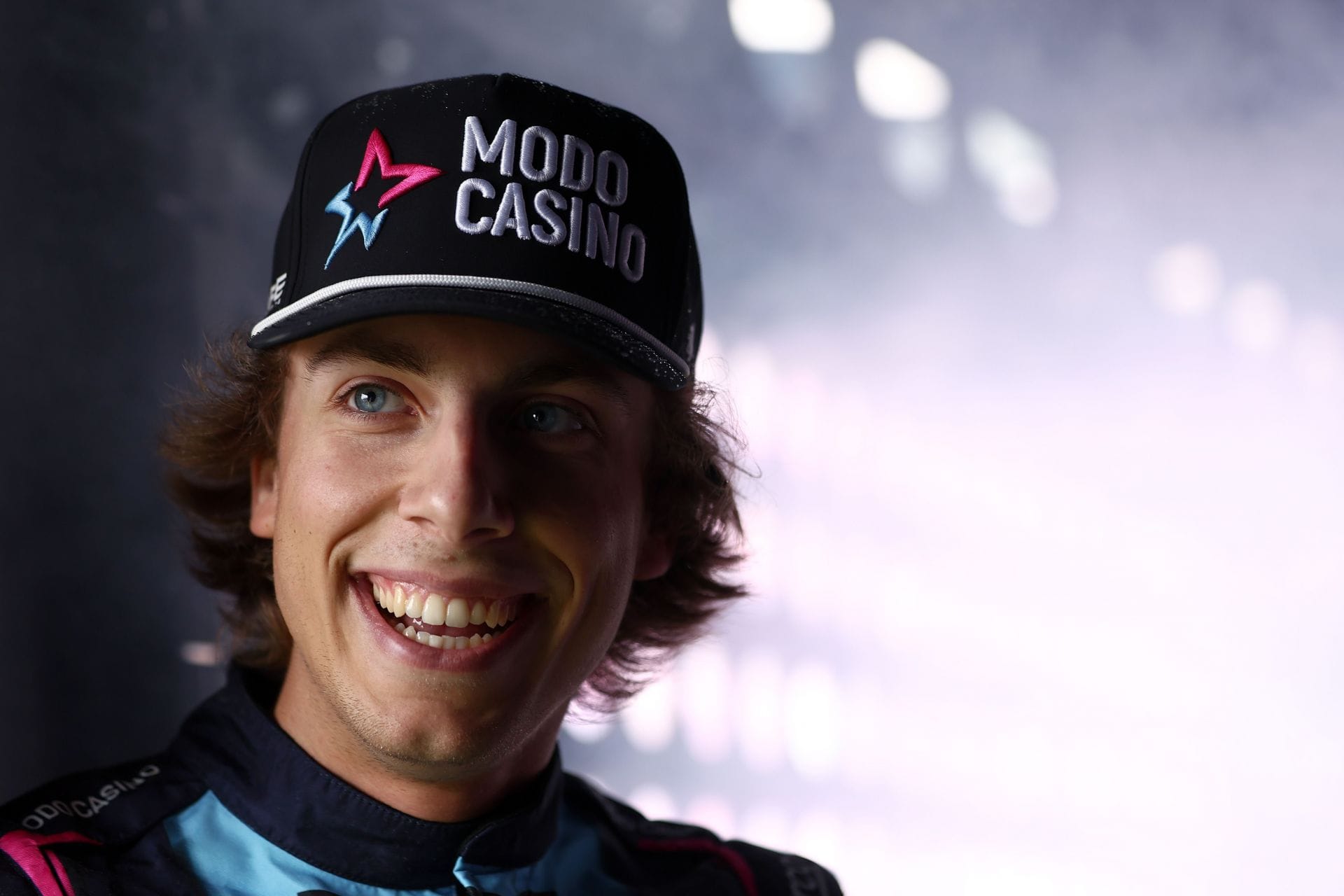
Carson Hocevar, driver for Spire Motorsports, publicly praised the growth of his racing organization after the team successfully secured two playoff positions for the 2026 NASCAR Cup Series postseason. The achievement marks a key milestone for the stock car organization co-owned by Jeff Dickerson, highlighting its transition from a start-up entry into a multi-car contender in North America's premier motorsport championship. Reporting by journalist Yash Soni detailed Hocevar’s perspective on the progress made by ownership, management, and shop personnel ahead of the ten-race playoff stretch that concludes the Cup Series schedule.
Key facts
What happened
Carson Hocevar reflected on the developmental arc of Spire Motorsports after the organization finalized its qualification for two berths in the 2026 NASCAR Cup Series playoffs. According to reporting by Yash Soni, Hocevar emphasized that placing two entries into the 16-driver postseason field serves as evidence of the structural progress accomplished under the leadership of co-owner Jeff Dickerson and the team’s executive management.
Hocevar indicated that the accomplishment carries significant weight for everyone within the organization, from shop technicians and engine builders to pit crew members and administrative staff. Building an organization capable of putting multiple cars into playoff contention requires extensive logistical coordination, financial investment, and technical refinement. Hocevar noted that the garage area and industry observers should acknowledge the trajectory of the team, which began as a single-car outfit leasing driver seats and has now established itself among the teams competing for the Cup Series championship.
The qualification was secured as the regular season wrapped up, validating the performance gains made across the team's Chevrolet entries throughout the 26-race regular season schedule.
Why it matters
Securing two positions in the NASCAR Cup Series playoffs carries immediate financial, competitive, and strategic implications for Spire Motorsports. Under NASCAR’s charter system, introduced in 2016, team revenues are significantly determined by postseason performance and final standings in the Owner Championship. Teams that qualify for the 16-car playoff grid earn higher shares of end-of-season TV rights revenue distributions, purse monies, and performance bonuses distributed by the sanctioning body.
Qualifying multiple cars for the postseason places Spire Motorsports in an elite tier of stock car teams. In the modern era of NASCAR, multi-car playoff representation is typically dominated by deeply funded legacy organizations such as Hendrick Motorsports, Joe Gibbs Racing, Team Penske, and Roush Fenway Keselowski Racing. For a mid-tier organization to secure two playoff spots validates its technical investments, engineering hires, and manufacturing support alliances, particularly with General Motors and Chevrolet.
From a corporate standpoint, playoff participation guarantees heightened television broadcast coverage, national media attention, and sponsor exposure across the ten-race postseason stretch. Corporate sponsors evaluate postseason visibility when deciding whether to renew multi-year sponsorship contracts, making playoff entries vital for long-term commercial sustainability. For drivers like Hocevar, competing in the postseason offers crucial experience in high-pressure elimination racing while demonstrating individual racecraft against the sport's top veterans.
The background
Spire Motorsports was established in late 2018 by Jeff Dickerson and T.J. Puchyr, executives who originally co-founded Spire Sports + Entertainment, a talent management, representation, and sports marketing agency. The founders purchased their initial NASCAR Cup Series charter from Furniture Row Racing, the 2017 championship team that ceased operations at the conclusion of the 2018 season. Spire debuted in the 2019 Cup Series season running the No. 77 Chevrolet.
In July 2019, Spire achieved an unexpected landmark victory at Daytona International Speedway when driver Justin Haley won a rain-shortened Coke Zero Sugar 400. Despite the early victory, the team operated on a modest budget during its first few seasons, frequently rotating drivers and utilizing shared engineering resources to maintain financial solvency while learning the operational demands of full-time Cup Series racing.
The organization initiated an aggressive expansion strategy as NASCAR introduced the Next Gen car platform in 2022. Spire acquired additional charters to build out a multi-car program, including purchasing charter assets from Leavitt Family Racing in 2020 and acquiring a third charter from Live Fast Motorsports in late 2023 for a reported sum of $40 million. To support its expanding operations, the team purchased the former Kyle Busch Motorsports facility in Concord, North Carolina, providing modern engineering bays, chassis assembly areas, and administrative headquarters.
Simultaneously, NASCAR's playoff framework has evolved into a primary benchmark of team success. Originally introduced in 2004 as the "Chase for the Nextel Cup" with ten drivers, the playoff system was restructured into its current 16-driver format in 2014. Under the format, the regular season consists of 26 races, with race winners automatically earning playoff eligibility alongside top regular season points finishers. The ten-race postseason is divided into four rounds: the Round of 16, Round of 12, Round of 8, and the winner-take-all Championship 4 finale. Drivers are eliminated in batches of four after every three-race round based on cumulative playoff points and race victories.
Reaction
While specific public commentary from team co-owner Jeff Dickerson was not detailed in the original reporting, executive leadership at Spire Motorsports has consistently maintained that long-term investments in engineering staff, trackside pit performance, and manufacturer alignment are designed to establish the team as a perennial playoff contender.
Within the NASCAR garage area, competing team owners and manufacturer representatives regularly assess the performance of expanding organizations. Technical support from General Motors and key engine suppliers is heavily contingent on track performance metrics, and placing two cars into the postseason field is expected to strengthen Spire’s standing within Chevrolet’s technical hierarchy.
Industry analysts and broadcast commentators are expected to evaluate how Spire Motorsports manages crew resources and strategic decision-making under the heightened pressure of three-race playoff elimination cycles, where minor operational errors or mechanical failures can lead to immediate elimination.
What we don't know yet
Several critical questions remain open as Spire Motorsports enters the 2026 Cup Series postseason. The available reporting does not detail the exact track-by-track setup choices, tire management strategies, or specialized aero packages prepared by Spire’s engineering staff for the upcoming Round of 16 tracks.
It also remains unconfirmed how long-term commercial contract negotiations will be impacted by the double playoff qualification, including whether current primary sponsors will extend multi-year commitments or if new corporate sponsors will join the team for the 2027 Cup Series campaign. Additionally, the exact point buffer each Spire driver holds relative to the 12th-place elimination threshold heading into the opening playoff race will depend on final regular season playoff points re-sets and stage points adjustments.
What to watch
This account is based on original reporting by journalist Yash Soni published on August 24, 2026.
How this story was produced
This report was written by The Global Wire newsroom from reporting first published by Yash Soni. We verify the core facts against the original report, write our own account, and add the background and consequences a short wire item leaves out. Drafting is AI-assisted inside an editor-supervised pipeline, and every story is checked for accuracy of attribution, structure and duplication before it appears — full detail in our AI and funding disclosure.
Spotted an error? Tell us at corrections@horizonglobalnews.com and read our corrections policy or editorial standards.



Reader comments
Loading comments…