

Bruce Power Gains Regulatory Approval to Streamline Production of Medical Isotopes
Nuclear authority approves streamlined workflows for Bruce Power's medical isotope production, cutting transit needs, boosting worker safety, and lowering operational emissions.
By The Global Wire Newsroom · Reported from Prabhat Ranjan Mishra
Link preview · horizonglobalnews.com
Bruce Power Gains Regulatory Approval to Streamline Production of Medical Isotopes
Nuclear authority approves streamlined workflows for Bruce Power's medical isotope production, cutting transit needs, boosting worker safety, and lowering operational emissions.

Canadian nuclear generator Bruce Power has secured formal regulatory authorization to streamline and modernize its production processes for cancer-fighting medical isotopes, according to reporting by Prabhat Ranjan Mishra. The approval enables the energy provider to refine its isotope harvesting operations, cut transportation distances, improve safety conditions for nuclear personnel, and diminish carbon emissions tied to target transport logistics. The regulatory decision represents a notable step for the international nuclear medicine sector, which relies heavily on commercial power reactors to manufacture targeted radioisotopes essential for treating various forms of cancer.
Key facts
What happened
According to reporting published by Prabhat Ranjan Mishra on August 21, 2026, nuclear oversight authorities granted regulatory clearance for Bruce Power to streamline its manufacturing processes for medical radioisotopes utilized in oncology. The regulatory decision alters the operational parameters governing how radiation targets are inserted, irradiated, and extracted within the facility's commercial reactor infrastructure.
By granting this authorization, regulatory bodies have allowed Bruce Power to simplify its on-site harvesting sequences. Previously, the workflow of placing raw target materials into nuclear flux channels, irradiating them to yield medical radioisotopes, and removing them for downstream processing involved complex transit steps between specialized hot cells and external transportation units. The revised regulatory framework enables a more integrated operational pathway, eliminating redundant handling steps and shortening shipping links.
The approved operational adjustments address multiple logistical and safety priorities simultaneously. Streamlining the harvest sequence minimizes the duration that medical radioisotopes spend in intermediate storage and handling. This time reduction is especially important for radioactive materials with rapid decay rates, where every hour saved preserves therapeutic potency. Furthermore, reducing manual intervention and physical transfers improves occupational safety by lowering potential radiation exposure for site workers. Finally, cutting unnecessary transportation routes decreases fuel consumption and greenhouse gas emissions associated with shipping heavy lead-shielded transfer casks.
Why it matters
Nuclear medicine is an increasingly vital pillar of global oncology, relying on specialized radioisotopes to pinpoint and destroy cancer cells. Power generating stations like Bruce Power serve as crucial suppliers for the global radiopharmaceutical market, producing medical isotopes such as Lutetium-177 and Cobalt-60. Lutetium-177 is integral to targeted radionuclide therapy, a treatment modality that binds radioactive atoms to targeting molecules. These molecules seek out specific protein receptors on tumor cells, delivering localized beta radiation that destroys cancer cells while leaving adjacent healthy tissue largely unharmed.
Because medical radioisotopes lose radioactivity continuously through radioactive decay—Lutetium-177, for example, has a half-life of roughly 6.6 days—the effectiveness of the global isotope supply chain is tied directly to logistics speed. Delays during target extraction, packaging, or regional transportation reduce the total radioisotope activity available to pharmaceutical processors, ultimately diminishing the number of patient doses that can be manufactured from a single reactor cycle. By streamlining operations at the source, Bruce Power’s refined process helps preserve isotope activity, supporting a reliable supply for cancer centers facing expanding patient caseloads.
The decision also illustrates the multi-use capabilities of modern commercial nuclear plants. Bruce Power supplies roughly 30 percent of Ontario’s electrical power grid, and integrating medical isotope production into baseload power operations demonstrates how utility infrastructure can support public health priorities. Additionally, lowering the carbon footprint of isotope transport aligns radiopharmaceutical supply chains with broader environmental goals, showing how nuclear medicine can reduce operational emissions while fulfilling critical medical needs.
The background
The global medical isotope industry has faced recurring supply vulnerabilities over the past two decades. Historically, medical radioisotope production relied heavily on a small group of aging research reactors, including Canada’s National Research Universal (NRU) reactor at Chalk River, Ontario, and the High Flux Reactor in Petten, Netherlands. When the NRU reactor ceased operations in 2018 after more than 60 years of service, global health authorities emphasized the need to diversify isotope production by utilizing commercial power reactors.
Located along Lake Huron in Tiverton, Bruce County, Ontario, Bruce Power is one of the world's largest nuclear facilities, housing eight Canada Deuterium Uranium (CANDU) pressurized heavy-water reactors divided between the Bruce A and Bruce B generating stations. CANDU reactors possess a unique structural advantage for isotope generation because they use natural uranium fuel and heavy water moderator systems with horizontal fuel channels. Unlike pressurized light-water reactors that must shut down periodically for refuelling, CANDU reactors undergo continuous, on-power refuelling. This enables operators to insert and remove isotope targets without taking the reactor offline or disrupting electrical generation.
To utilize this capability, Bruce Power partnered with medical technology firms to design specialized target insertion systems capable of placing raw materials into reactor channels under active operating conditions. Historically, Bruce Power focused on producing Cobalt-60, an isotope used to sterilize single-use medical devices, surgical equipment, and protective gear, as well as in Gamma Knife radiosurgery for brain tumors.
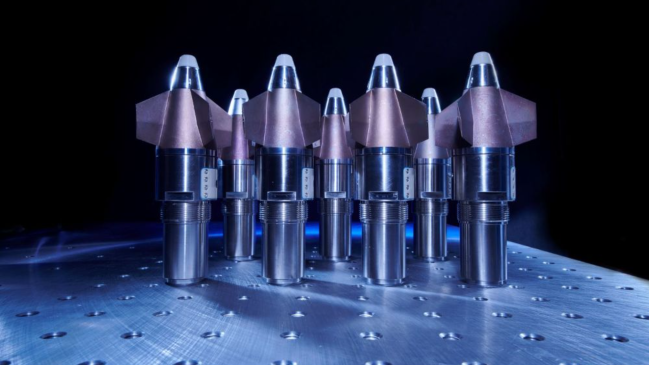
In recent years, Bruce Power expanded its medical program by installing an Isotope Production System (IPS) to generate therapeutic isotopes like Lutetium-177. Non-radioactive Ytterbium-176 targets are placed into the IPS, where neutron bombardment transforms them into Lutetium-177. Once extracted, the radioisotope must be promptly delivered to processing labs for chemical refinement and synthesis into radiopharmaceutical drugs. The regulatory approval reported by Prabhat Ranjan Mishra marks a major incremental update to this infrastructure, optimizing regulatory compliance and handling protocols to support higher operational efficiency.
Reaction
Although public statements from industry representatives or government regulators were not detailed in the original reporting by Prabhat Ranjan Mishra, health organizations, radiopharmaceutical developers, and nuclear safety bodies are expected to view the regulatory approval as a positive development. Oversight agencies, such as the Canadian Nuclear Safety Commission, conduct rigorous technical evaluations before approving changes to reactor operating procedures or isotope handling systems, prioritizing worker safety, radiological protection, and environmental safeguards.
Medical associations and oncology patient advocacy groups have routinely stressed the necessity of establishing secure, redundant supply chains for therapeutic radiopharmaceuticals. Demand for radioligand therapies has grown following positive clinical trial outcomes for advanced prostate cancer and neuroendocrine tumors. Industry analysts anticipate that stakeholders across the nuclear medicine sector will welcome the streamlined production guidelines, as reduced transport bottlenecks decrease the risk of shipping delays that can cause cancelled treatment sessions for patients.
What we don't know yet
The reporting by Prabhat Ranjan Mishra leaves several specific technical parameters unconfirmed. The exact identity of the oversight body that granted the approval was not named in the reporting, although nuclear power facilities in Canada operate under the authority of the Canadian Nuclear Safety Commission. Additionally, the coverage does not list the precise medical isotopes directly impacted by the new regulatory framework, nor does it quantify the expected reductions in transport mileage, transit time, or operational emissions.
It also remains unspecified whether implementing these streamlined processes requires physical modifications to Bruce Power’s hot cell facilities, upgrades to handling equipment, or formal amendments to existing site operating licenses. Furthermore, the timeline for when Bruce Power will fully integrate these streamlined methods into its daily routine remains unstated, leaving open the question of how quickly global markets will see measurable impacts on isotope availability.
What to watch
In the coming months, observers should track official public notices from Bruce Power and regulatory documents released by the Canadian Nuclear Safety Commission for details on the implementation schedule. Updates regarding target irradiation schedules and output capacity at the Bruce A and Bruce B plants will offer concrete indicators of operational progress.
Stakeholders should also watch for announcements from commercial radiopharmaceutical partners responsible for refining and distributing the isotopes harvested at the Ontario plant. Any expansion of distribution agreements, increases in weekly batch deliveries, or additions of new radioisotope lines—such as targeted alpha therapy agents—will demonstrate the practical impact of the regulatory clearance. Finally, monitoring future corporate sustainability disclosures will reveal whether transport-related carbon emissions and personnel radiation dose levels drop in line with expectations.
This report is based on original reporting published by Prabhat Ranjan Mishra.
How this story was produced
This report was written by The Global Wire newsroom from reporting first published by Prabhat Ranjan Mishra. We verify the core facts against the original report, write our own account, and add the background and consequences a short wire item leaves out. Drafting is AI-assisted inside an editor-supervised pipeline, and every story is checked for accuracy of attribution, structure and duplication before it appears — full detail in our AI and funding disclosure.
Spotted an error? Tell us at corrections@horizonglobalnews.com and read our corrections policy or editorial standards.

Reader comments
Loading comments…