

Alabama Jury Awards $9.25 Million Defamation Verdict Against The New York Times
An Alabama jury orders The New York Times to pay $9.25 million after finding the newspaper defamed a college basketball player by incorrectly linking him to a fatal shooting in Tuscaloosa.
By The Global Wire Newsroom · Reported from Associated Press
Link preview · horizonglobalnews.com
Alabama Jury Awards $9.25 Million Defamation Verdict Against The New York Times
An Alabama jury orders The New York Times to pay $9.25 million after finding the newspaper defamed a college basketball player by incorrectly linking him to a fatal shooting in Tuscaloosa.
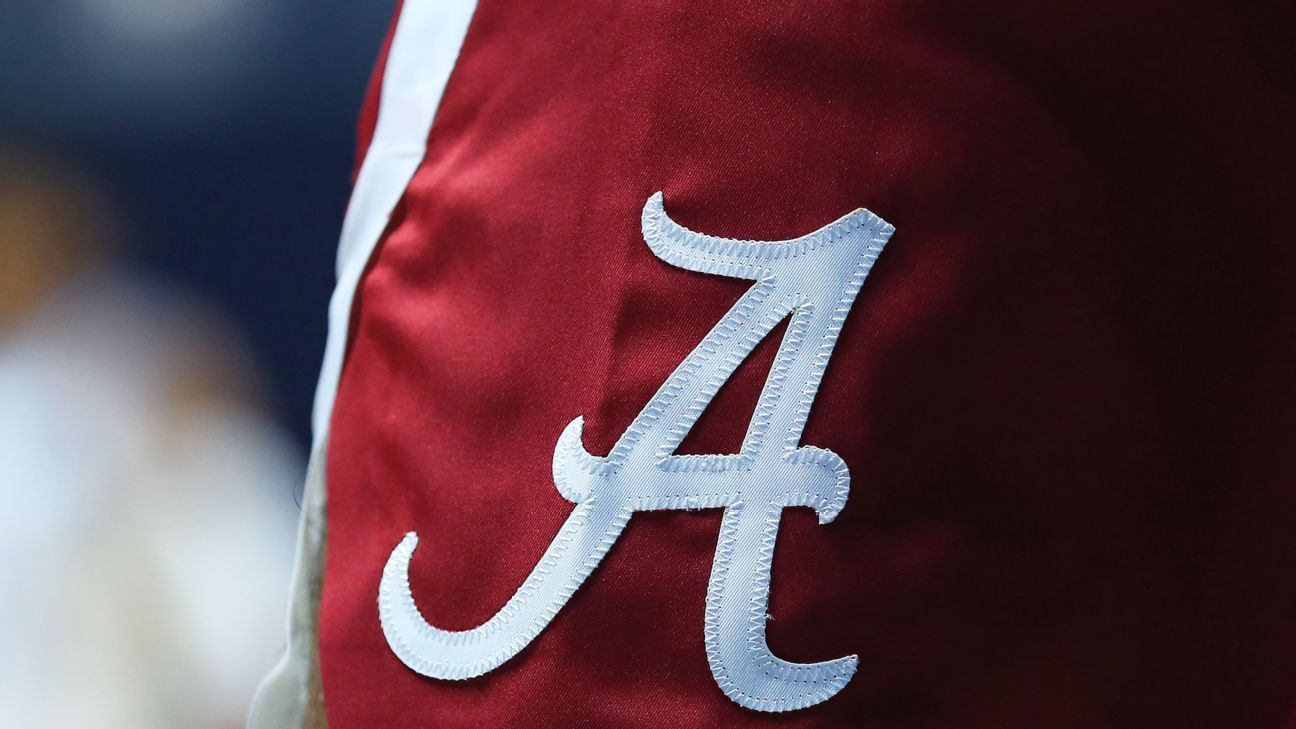
A state jury in Alabama delivered a landmark defamation verdict against The New York Times on Thursday, ordering the publisher to pay $9.25 million in damages to a University of Alabama basketball player. The civil judgment followed a courtroom trial centered on a news report that incorrectly identified the athlete as being present at the scene of a fatal shooting in Tuscaloosa, Alabama. The jury concluded that the false reporting crossed the legal threshold for libel, resulting in one of the most substantial financial awards against a national media organization in recent years.
Key facts
What happened
The lawsuit against The New York Times arose from news coverage concerning a fatal shooting incident in Tuscaloosa, Alabama, a college town dominated by the University of Alabama and its nationally prominent athletics program. In its coverage of the tragedy and subsequent law enforcement investigations, the newspaper published reports asserting that the player was physically present at the scene when the fatal shots were fired.
Subsequent investigations and factual reviews demonstrated that the player was not present at the location when the violence occurred. Contesting the accuracy of the publication, the athlete filed a civil defamation lawsuit in Alabama state court, alleging that the erroneous report severely damaged his personal reputation, standing, and potential professional prospects.
During the civil trial, the plaintiff's legal team presented evidence demonstrating that the published claims were factually incorrect and argued that the news organization failed to exercise adequate care and verification prior to disseminating the story to a global audience. The defense argued its reporting procedures and constitutional protections under media law, but the panel of local jurors ultimately found in favor of the plaintiff.
On Thursday, Aug. 20, 2026, the jury returned its verdict, finding The New York Times liable for defamation and determining that $9.25 million was the appropriate monetary figure to compensate the plaintiff for the reputational injury and associated damages caused by the erroneous coverage, according to reporting by the Associated Press.
Why it matters
The $9.25 million award represents a significant legal defeat for one of the world's premier news organizations and underlines the expanding exposure media outlets face in state-level jury trials. In recent years, high-dollar jury verdicts in libel and privacy cases have alerted publisher legal departments to the heightened financial risk of litigating claims before local juries, particularly when high-profile local institutions or figures are involved.
For the journalism industry, the verdict underscores the severe legal and financial risks of breaking news coverage surrounding criminal matters. In fast-moving news environments, publishing unverified or inaccurate assertions regarding an individual's presence at a crime scene can expose news outlets to immense liability. Modern digital publishing accelerates the dissemination of stories globally within seconds, amplifying the potential reputational harm and calculated damages when a factual error occurs.
The ruling also carries implications for collegiate athletics and student-athletes. As college sports undergo sweeping transformations—including the emergence of Name, Image, and Likeness (NIL) monetization and elevated media profiles for young competitors—the legal status of student-athletes in public discourse has grown increasingly complex. A multi-million-dollar jury award sends a clear signal that erroneous reporting linking young athletes to violent crimes will carry formidable consequences in court.
Furthermore, multi-million-dollar judgments against major publications can influence corporate risk tolerance, media liability insurance costs, and editorial workflow standards across newsrooms nationwide. Media law experts note that large damage awards may lead publishers to adopt more risk-averse legal review protocols, potentially delaying breaking news reporting while verification procedures are satisfied.
The background
Defamation law in the United States exists at the intersection of state tort law and First Amendment constitutional protections. To establish a claim for defamation, a plaintiff must prove that the defendant published a false statement of fact concerning the plaintiff, that the statement was communicated to a third party, that it caused harm to the plaintiff's reputation, and that the publisher acted with the requisite degree of fault.
A central element in American libel law is the distinction established by the United States Supreme Court between private individuals and public figures. In the landmark 1964 decision New York Times Co. v. Sullivan—a case that ironically also originated in Alabama—the Supreme Court held that public officials and public figures cannot recover damages for a defamatory falsehood unless they prove with clear and convincing evidence that the statement was made with "actual malice." Under the legal definition, actual malice requires demonstrating that the publisher knew the statement was false or acted with reckless disregard for whether it was true or false.
By contrast, private individuals pursuing defamation claims generally face a lower legal standard under state law, often requiring only a showing of ordinary negligence—meaning the publisher failed to exercise reasonable care in determining the truth or falsity of the statement.
In cases involving college athletes, courts have debated whether student-athletes should be categorized as private individuals, general-purpose public figures, or limited-purpose public figures who have voluntarily thrust themselves into the forefront of a particular public controversy. If a plaintiff is deemed a private individual, proving negligence is substantially less demanding than satisfying the rigorous actual malice standard required for public figures.
Alabama tort law permits juries to award both compensatory damages—designed to replace financial loss and address personal suffering or reputational injury—and punitive damages intended to punish egregious misconduct and deter future violations. When national media organizations face trials in state jurisdictions, local juries sometimes view errors by prominent distant institutions through a critical lens, leading to substantial monetary awards when liability is established.
Reaction
Following the verdict, responses are expected from across the legal, journalism, and academic sectors. The New York Times is anticipated to comment on the outcome and outline its legal options, which typically include requesting that the trial judge set aside the verdict or reduce the award amount, or filing a formal notice of appeal to higher state courts.
Press freedom advocates and media defense attorneys frequently monitor major defamation verdicts due to their broader implications for First Amendment jurisprudence. First Amendment organizations often express concern over large damage awards, arguing that multi-million-dollar verdicts can exert a chilling effect on investigative reporting and breaking news coverage of public controversies.
Conversely, legal commentators representing plaintiffs' rights and legal ethics scholars emphasize the importance of holding news organizations accountable for factual accuracy, particularly when errors falsely implicate individuals in violent criminal activity. University of Alabama community members and sports observers have followed the proceedings closely, noting the intense media scrutiny that accompanied the initial coverage of the Tuscaloosa shooting.
What we don't know yet
Several critical details and legal procedural nuances remain unconfirmed following the jury's announcement. The precise breakdown of the $9.25 million award between economic damages, non-economic damages for reputational harm and emotional distress, and potential punitive damages has not been detailed in initial reporting. Understanding this composition is vital because different legal standards and statutory caps under Alabama law can apply to distinct categories of damages during post-trial judicial review.
Additionally, the specific internal reporting breakdown that led to the publishing of the inaccurate claim remains a key open question. It is not yet publicly clear whether the error originated from reliance on an unverified law enforcement source, a misinterpretation of public records, or an internal editorial miscommunication during the production process.
Finally, it remains unknown whether the parties engaged in confidential settlement discussions prior to or during the trial, or whether they might negotiate a post-verdict settlement to resolve the matter and avoid years of appeals.
What to watch
In the immediate aftermath of the verdict, defense counsel for The New York Times is expected to file post-trial motions in the Alabama trial court. These motions typically ask the presiding judge to grant a judgment notwithstanding the verdict or order a remittitur, a judicial procedure in which the court reduces the jury's financial award on the grounds that it is excessive under applicable law.
If the trial court judge upholds the jury's verdict, the defendant will have a set statutory timeframe—typically 42 days under Alabama Rules of Appellate Procedure—to file a formal notice of appeal to the Supreme Court of Alabama or the appropriate state appellate court. An appeal would likely focus on legal questions regarding the proper fault standard applied at trial, jury instructions, evidentiary rulings, and the constitutionality or proportionality of the $9.25 million damages figure.
Observers will also be watching for any internal policy or editorial workflow updates within major national newsrooms. High-profile legal verdicts often prompt media organizations to reassess their source-verification protocols, correction procedures, and standards for named sourcing in breaking crime coverage.
This report is based on coverage by the Associated Press.
How this story was produced
This report was written by The Global Wire newsroom from reporting first published by Associated Press. We verify the core facts against the original report, write our own account, and add the background and consequences a short wire item leaves out. Drafting is AI-assisted inside an editor-supervised pipeline, and every story is checked for accuracy of attribution, structure and duplication before it appears — full detail in our AI and funding disclosure.
Spotted an error? Tell us at corrections@horizonglobalnews.com and read our corrections policy or editorial standards.



Reader comments
Loading comments…