

White House Directs Federal Contractors to Clear Congressional Inquiries with Administration
President Donald Trump has ordered federal contractors to seek White House clearance before answering inquiries from lawmakers as a Democratic-led Congress prepares to take power.
By The Global Wire Newsroom · Reported from pbs.org
Link preview · horizonglobalnews.com
White House Directs Federal Contractors to Clear Congressional Inquiries with Administration
President Donald Trump has ordered federal contractors to seek White House clearance before answering inquiries from lawmakers as a Democratic-led Congress prepares to take power.
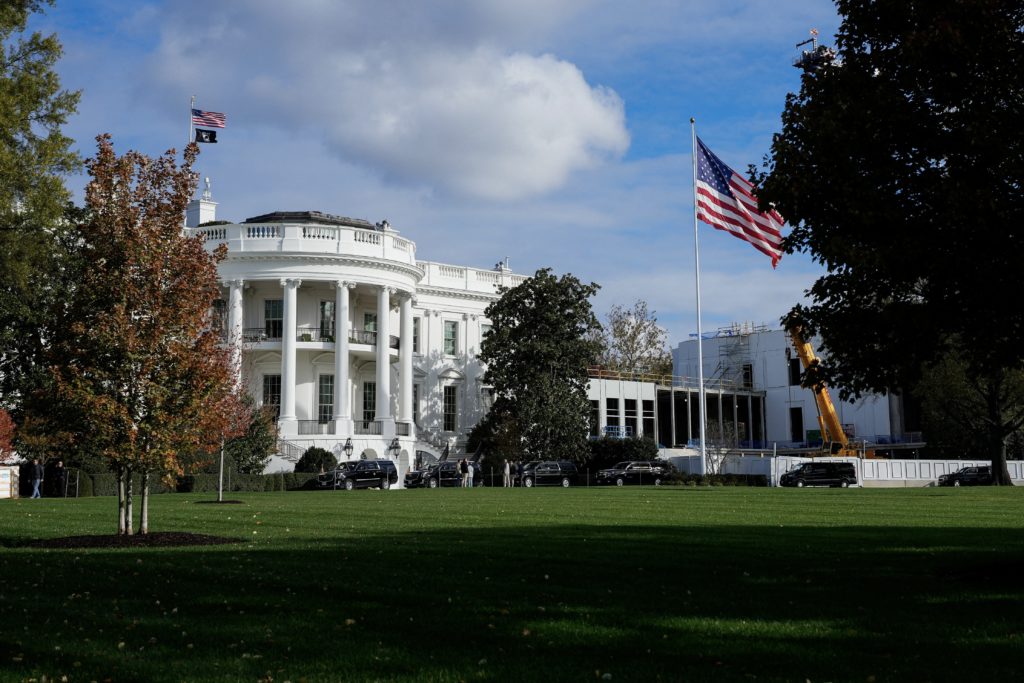
WASHINGTON — President Donald Trump has issued a directive ordering federal contractors and subcontractors to consult with the administration before responding to inquiries from Congress and to withhold any records or testimony the executive branch considers privileged, establishing an early perimeter against oversight as lawmakers prepare to convene under Democratic leadership in January. The mandate instructs private enterprises that provide goods, services, and technical expertise to the federal government to route legislative requests through executive branch reviewers prior to turning over information to congressional committees or individual members. By seeking to assert control over communications between legislative investigators and commercial vendors, the move lays the groundwork for a major constitutional and legal struggle between the executive branch and Capitol Hill over the boundaries of legislative inquiry and corporate compliance.
Key facts
What happened
According to reporting by ABC News and PBS, the administration instructed companies holding federal contracts and subcontracts to coordinate directly with administration officials whenever they receive formal or informal inquiries from members of Congress or legislative panels. Under the terms of the directive, vendors are prohibited from unilaterally releasing documents, data, internal communications, or employee testimony touching on their government work until executive branch lawyers assess whether the requested materials fall under recognized privileges.
When a contractor receives an informational demand from Capitol Hill, the vendor must notify executive officials and await guidance. If the White House determines that the requested records involve sensitive deliberative processes, national security assessments, proprietary agency information, or other matters it deems confidential, the contractor is directed to withhold the material from legislative investigators.
This policy establishes an institutional filter between private corporations and the oversight panels of the legislative branch. In previous administrations, congressional committees routinely reached out directly to commercial vendors, logistics providers, and consultants to obtain unvarnished corporate records, internal communications, and audit trails without requiring the vendor to secure advance permission from agency heads or White House counsel. By extending the administration's defensive perimeter directly to commercial partners, the Trump administration is seeking to close off a standard investigative avenue frequently utilized by lawmakers when executive agencies delay or refuse compliance with legislative document requests.
Why it matters
This policy carries profound operational and legal consequences for the federal procurement system, the separation of powers, and the corporate risk posture of thousands of commercial vendors. Every year, the United States government enters into contracts worth upwards of $600 billion with private enterprises ranging from multinational aerospace giants and management consultancies to small technical service providers and university research laboratories. These companies operate under strict contractual, regulatory, and statutory obligations governed by the Federal Acquisition Regulation (FAR), which balances proprietary business confidentiality against public accountability.
By commanding private vendors to withhold information deemed privileged by the president, the administration forces commercial contractors into a difficult conflict between two branches of government. Article I of the U.S. Constitution grants Congress broad authority to conduct inquiries, hold hearings, and issue subpoenas in aid of its legislative and spending oversight responsibilities. If a congressional committee issues a legally binding subpoena for contractor records or depositions, a company that complies with the committee risks violating an executive directive or alienating the procurement officials who award future federal business. Conversely, if a company complies with the White House directive and refuses to answer a congressional subpoena, it risks being held in contempt of Congress, facing public committee hearings, or enduring legislative retaliation against its statutory authorizations and agency budget lines.
Furthermore, the policy could impair the transparency of federal spending programs. Legislative oversight committees historically rely on contractor data to identify cost overruns, contractual non-performance, conflicts of interest, waste, and procurement fraud. When corporate vendors are required to obtain administrative pre-clearance, the discovery of procurement errors or agency mismanagement could be substantially delayed or concealed behind broad claims of privilege.
The background
Clashes over executive privilege and congressional oversight have defined relations between the Capitol and the White House for decades, but the battleground has traditionally centered on government personnel and official agency archives rather than third-party private contractors. Executive privilege is an implied constitutional doctrine, derived from the separation of powers and affirmed by the U.S. Supreme Court in cases such as the 1974 landmark *United States v. Nixon*, which protects certain confidential presidential communications and deliberative processes from disclosure to ensure candid internal advice.
However, the scope of that privilege has historically narrowed significantly when applied outside the immediate confines of the executive branch. In the 2020 decision *Trump v. Mazars USA, LLP*, the Supreme Court recognized that congressional subpoenas directed at third-party custodians holding records involving executive officials require a careful judicial balancing of legislative necessity against presidential autonomy. Yet commercial contractors generally operate at arms-length under standard commercial agreements rather than as constitutional officers of the executive branch.
During previous periods of divided government, congressional committees routinely used contractor testimony and vendor emails to bypass executive stonewalling. During the post-2006 Iraq War investigations, congressional panels frequently scrutinized defense contractors and private security firms directly, uncovering substantial logistics waste and procurement abuses without executive branch mediation. Similarly, during investigations into the Troubled Asset Relief Program in 2008 and the implementation of healthcare and pandemic relief measures over the past decade, lawmakers relied heavily on private technology and accounting contractors to reconstruct federal decision-making processes.
Throughout his political career and prior presidential term, Trump repeatedly adopted an expansive posture regarding presidential authority and the resistance of legislative subpoenas. The White House often directed current and former executive branch officials not to cooperate with congressional investigations, asserting broad immunity and privilege. Extending these restrictions explicitly to commercial contractors marks an expansion of that legal philosophy, moving executive oversight resistance from the civil service and political appointees into the commercial marketplace.
Reaction
Incoming Democratic leaders, who are set to assume leadership of key investigative panels in January following their election victories, are expected to forcefully challenge the administration's instructions. Standard legislative venues for this resistance include the House Committee on Oversight and Accountability, the House Committee on the Judiciary, and authorizing committees overseeing defense, financial services, and energy policy. Democratic committee staff and legal advisers are anticipated to argue that private corporate entities cannot assert executive privilege on behalf of the administration, nor can the president unilaterally shield corporate documents that are not presidential communications.
Republican lawmakers and administration allies are expected to defend the directive as a necessary measure to protect executive deliberations, trade secrets, sensitive defense technologies, and administrative privacy from partisan legislative investigations. In previous jurisdictional conflicts, conservative legal scholars have asserted that the executive branch has an inherent constitutional prerogative to safeguard information generated under its direct supervisory authority, regardless of whether that information resides on government servers or inside contractor databases.
Within the federal contracting sector, corporate legal teams, industry associations such as the Professional Services Council, and commercial law firms are likely to issue urgent compliance advisories. Defense and civilian contractors will be compelled to re-examine their master service agreements, non-disclosure clauses, and risk management strategies to determine their exposure to competing demands from executive contracting officers and congressional committee chairs.
What we don't know yet
Several fundamental operational and legal questions remain unanswered regarding the scope and enforcement of the directive. It is currently unclear whether the administration has issued this requirement through a formal Executive Order, a presidential memorandum directed to agency heads, an emergency modification to the Federal Acquisition Regulation, or informal guidance circulated by agency general counsels. The legal vehicle chosen will heavily influence how readily it can be challenged in federal district court by commercial entities or lawmakers.
Additionally, the reporting does not delineate the specific penalties or administrative sanctions that contractors would face if they choose to comply with a legislative subpoena against the White House's wishes. It remains unverified whether non-compliance could trigger contract termination, debarment proceedings, suspension from future bidding competitions, or contractual financial penalties.
Finally, the precise parameters of what the administration defines as "privileged" in the contractor context remain undefined. Whether the policy applies strictly to proprietary deliberative communications between senior corporate executives and White House policy officials, or extends downward to routine operational logs, financial invoices, sub-tier vendor audits, and technical project evaluations, will determine how severely it restricts standard congressional investigations.
What to watch
The immediate test of this policy will arrive when the new Congress convenes in January and Democratic committee chairs formally issue their initial tranches of oversight letters, document requests, and witness lists to major defense, technology, and health contractors. Observers should watch whether those committee leaders issue immediate committee subpoenas to vendors upon encountering executive delays, deliberately creating legal test cases.
Another critical development to monitor is the reaction of corporate leadership within the contracting sector. How major federal contractors respond to their first formal inquiries—whether they immediately notify administration liaisons, assert formal executive privilege claims on behalf of the government, or seek neutral declarations in federal court—will establish the procedural norms for the upcoming legislative session.
Finally, legal watchers must track whether the dispute triggers litigation in the U.S. Court of Appeals for the District of Columbia Circuit or eventual appeals to the Supreme Court. A judicial confrontation over third-party contractor records would force federal courts to define the constitutional boundaries between Congress's Article I investigatory power and the president's Article II executive authority when applied to commercial vendors operating with taxpayer funds.
This report is based on original reporting by PBS and ABC News.
How this story was produced
This report was written by The Global Wire newsroom from reporting first published by pbs.org. We verify the core facts against the original report, write our own account, and add the background and consequences a short wire item leaves out. Drafting is AI-assisted inside an editor-supervised pipeline, and every story is checked for accuracy of attribution, structure and duplication before it appears — full detail in our AI and funding disclosure.
Spotted an error? Tell us at corrections@horizonglobalnews.com and read our corrections policy or editorial standards.






Reader comments
Loading comments…