

Wastewater Bacteria Reveal Community Chronic Disease and Social Trends, Study Finds
Research from Ohio State University shows sewage microbial profiles can mirror local chronic illness rates and social determinants, broadening the scope of municipal effluent surveillance.
By The Global Wire Newsroom · Reported from news.osu.edu
Link preview · horizonglobalnews.com
Wastewater Bacteria Reveal Community Chronic Disease and Social Trends, Study Finds
Research from Ohio State University shows sewage microbial profiles can mirror local chronic illness rates and social determinants, broadening the scope of municipal effluent surveillance.
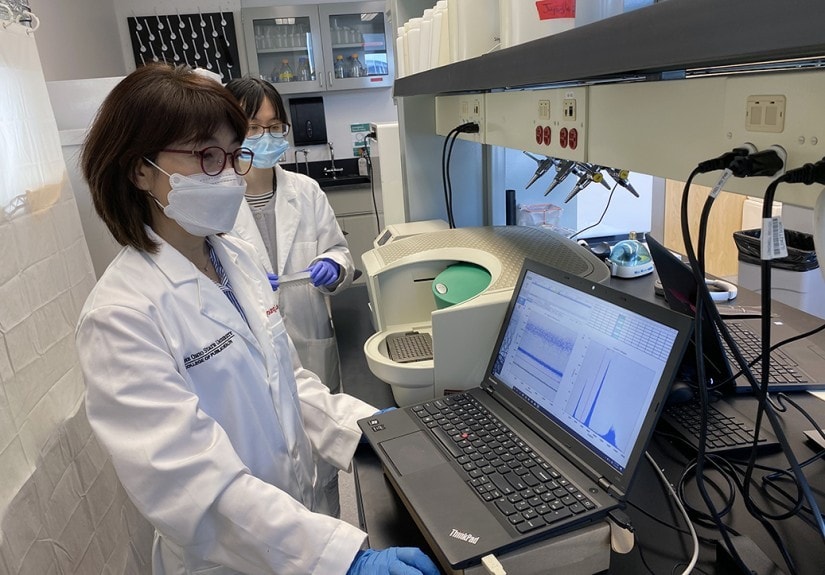
Municipal sewage systems may provide a comprehensive reflection of population-level wellness that extends far beyond infectious disease outbreaks, according to new research from scientists at Ohio State University. The findings, reported by news.osu.edu, indicate that bacterial communities detected within untreated wastewater correlate with broader community health indicators, including rates of chronic illness, individual lifestyle behaviors, and socioeconomic conditions. By evaluating the collective microbiome deposited across drainage networks, public health authorities may soon be able to assess neighborhood-scale health disparities, dietary patterns, and lifestyle-related disease burdens without relying exclusively on traditional clinical surveys or patient registries.
Key facts
What happened
Investigators at Ohio State University conducted an extensive assessment of bacterial signatures present in municipal wastewater networks to evaluate whether microbial composition could serve as an accurate proxy for public health status at the neighborhood level. While wastewater monitoring has historically been used to track transient pathogenic intrusions—such as viral shedding during viral epidemics—the Ohio State research team examined whether chronic baseline states leave distinct, readable traces in municipal sewer sheds.
According to reporting by news.osu.edu, the investigators identified distinct relationships between the diversity and relative abundance of specific bacterial taxa in wastewater and documented rates of chronic health conditions among the local population. These conditions include lifestyle-associated illnesses such as metabolic disorders, cardiovascular complications, and obesity-related health metrics. Furthermore, the analysis determined that the aggregate microbiome in wastewater reflects localized behavioral habits, such as general nutritional patterns, as well as broader social determinants of health, including community stress indices and socioeconomic vulnerability.
By comparing environmental sequencing data with epidemiological registers and demographic datasets, the researchers demonstrated that wastewater does not merely function as an indicator of acute infections. Instead, municipal wastewater serves as an integrated biological composite of community biology. The study outlines a methodology whereby public health planners can utilize existing sewer infrastructure to monitor ongoing shifts in population health, measure the efficacy of civic health programs, and identify geographic pockets where chronic disease prevention resources are most urgently needed.
Why it matters
Public health agencies around the world struggle with persistent data gaps when evaluating chronic diseases. Traditional surveillance relies almost entirely on self-reported surveys, insurance claims, hospital discharge records, and voluntary participation in clinical screenings. These conventional instruments suffer from severe structural limitations: they are expensive to administer, frequently lag by months or years, and systematically undercount marginalized populations who lack regular access to primary healthcare.
By establishing that bacterial profiles in wastewater mirror the prevalence of chronic illness and social determinants of health, the Ohio State research introduces a mechanism for passive, comprehensive health monitoring that covers entire catchment areas simultaneously. In practical terms, this allows municipal authorities to detect early signals of deteriorating community health—such as spikes in metabolic distress or widespread nutritional shifts—at the zip-code or neighborhood treatment plant level. Municipalities can assess the objective impact of policy measures, such as the introduction of subsidized grocery markets in food deserts or community exercise initiatives, by tracking changes in downstream microbial signatures over time.
Furthermore, this approach offers substantial fiscal efficiencies. Routine sample collection at centralized wastewater treatment facilities requires a fraction of the capital and administrative overhead associated with municipal-scale door-to-door health evaluations. For civic planners and epidemiologists, having access to rapid, passive population-level data provides an equitable diagnostic instrument that captures health patterns across insured and uninsured populations equally, directly illuminating systemic health disparities.
The background
Wastewater-based epidemiology has existed as an environmental science discipline for several decades, but its development was historically narrow in scope. The fundamental concept relies on the fact that human biological waste carries biomarkers, metabolites, pathogens, and microorganisms that reflect the internal biological state of the contributing population. During the mid-twentieth century, wastewater testing was occasionally employed to track the regional transmission of poliovirus, identifying persistent viral circulation in municipal water systems before symptomatic paralytic cases were admitted to medical facilities.
In the early 2000s, European and North American researchers expanded environmental wastewater surveillance into chemical epidemiology, refining methods to detect illicit drug consumption, prescription pharmaceutical residues, and environmental chemical exposures. By calculating the concentration of metabolic byproducts entering municipal treatment works, scientists generated accurate, real-time estimates of community-wide opioid, stimulant, and alcohol consumption without requiring personal interviews or law enforcement data.
The global onset of the COVID-19 pandemic in early 2020 transformed wastewater surveillance from a specialized academic methodology into a permanent public health fixture. Because infected individuals shed severe acute respiratory syndrome coronavirus 2 (SARS-CoV-2) RNA in their stool days before developing outward symptoms or seeking laboratory testing, municipal water testing provided health agencies with an early warning network. In September 2020, the United States Centers for Disease Control and Prevention launched the National Wastewater Surveillance System to coordinate sampling across hundreds of treatment plants nationwide. This institutional infrastructure demonstrated that municipal sewage utilities could serve as continuous epidemiologic watchtowers.
Concurrently, biomedical science has increasingly recognized the fundamental role of the human gut microbiome in mediating chronic illnesses, including type 2 diabetes, chronic inflammation, obesity, and cardiovascular disease. Microbial diversity in the human digestive system is heavily shaped by diet, socioeconomic position, chronic psychological stress, and physical living conditions. Until recently, aggregating individual microbiome profiles into a reliable population-wide assessment was considered technically unfeasible. The Ohio State University research bridges these disciplines by applying high-throughput genetic sequencing to sewage inflows, demonstrating that the community microbiome functions as an ecological indicator of municipal health.
Reaction
The expansion of sewage surveillance into non-communicable diseases and sociological metrics is expected to prompt responses from municipal public health officials, civil liberties organizations, and environmental engineers. While news.osu.edu did not detail external stakeholder comments in its initial release, municipal health leaders and epidemiologists have frequently advocated for passive diagnostic tools that can overcome systemic inequalities in standard clinical reporting. For health departments with constrained operational budgets, the capacity to monitor community health dynamics through existing treatment plants represents an appealing, cost-effective resource.
Conversely, bioethicists and digital privacy advocates are expected to scrutinize the regulatory boundaries of localized environmental sampling. Although wastewater collection at regional centralized plants aggregates contributions from hundreds of thousands of residents—preserving absolute individual anonymity—advances in localized sewer tracing could allow testing at the scale of single neighborhoods, public housing complexes, or institutional facilities. Regulatory authorities and privacy commissions will likely examine whether municipal profiling could lead to geographic stigmatization, altered municipal insurance underwriting, or unequal credit scoring if neighborhoods are publicly labeled as exhibiting high markers of chronic illness or systemic vulnerability.
What we don't know yet
Several substantive operational and technical questions remain unanswered by the initial findings. The reported summary does not specify the exact bacterial strains, microbial diversity indices, or metabolic pathways that served as the primary biomarkers for specific chronic conditions, nor does it disclose the mathematical sensitivity and specificity of the predictive models developed by the Ohio State team.
It is also unclear how environmental and infrastructural confounders affect the consistency of wastewater microbial data. Inflow systems are exposed to stormwater runoff, industrial discharges, chemical sanitizers, fluctuations in transit time within underground pipes, and variable ambient temperatures, all of which could selectively degrade or proliferate certain bacterial species before they reach sampling intake points. Additionally, the reporting leaves open the precise geographical boundaries of the study, the size of the sampled population, and whether the observed microbial correlations remain consistent across diverse geographic regions, varying urban layouts, and disparate climatic zones.
What to watch
The progression of this research into an operational public health tool will depend on several upcoming developments. Observers should watch for the publication of the team's complete, peer-reviewed methodology in a specialized environmental health or microbiological journal, which will detail the genomic sequencing depth, error margins, and statistical controls employed during data collection.
Subsequent steps will likely involve pilot programs conducted in partnership between academic institutions and municipal utility districts to test whether longitudinal sewage profiling can accurately detect measurable health shifts following targeted policy interventions, such as local dietary campaigns or municipal wellness programs. Observers should also track discussions within state and federal agencies, including the Centers for Disease Control and Prevention and the Environmental Protection Agency, regarding the potential standardization of non-infectious wastewater monitoring protocols. Finally, legislative and municipal policy committees may begin examining legal frameworks governing how aggregated neighborhood environmental data can be ethical, equitable, and legally deployed without penalizing vulnerable communities.
This article is based on original reporting published by news.osu.edu.
How this story was produced
This report was written by The Global Wire newsroom from reporting first published by news.osu.edu. We verify the core facts against the original report, write our own account, and add the background and consequences a short wire item leaves out. Drafting is AI-assisted inside an editor-supervised pipeline, and every story is checked for accuracy of attribution, structure and duplication before it appears — full detail in our AI and funding disclosure.
Spotted an error? Tell us at corrections@horizonglobalnews.com and read our corrections policy or editorial standards.






Reader comments
Loading comments…