

Voyager 1 Approaches One Light-Day Threshold at Outer Edge of Interstellar Space
NASA's historic deep-space probe nears a distance of nearly 26 billion kilometers from Earth, requiring radio signals to travel a full 24 hours in one direction.
By The Global Wire Newsroom · Reported from Monisha Ravisetti
Link preview · horizonglobalnews.com
Voyager 1 Approaches One Light-Day Threshold at Outer Edge of Interstellar Space
NASA's historic deep-space probe nears a distance of nearly 26 billion kilometers from Earth, requiring radio signals to travel a full 24 hours in one direction.
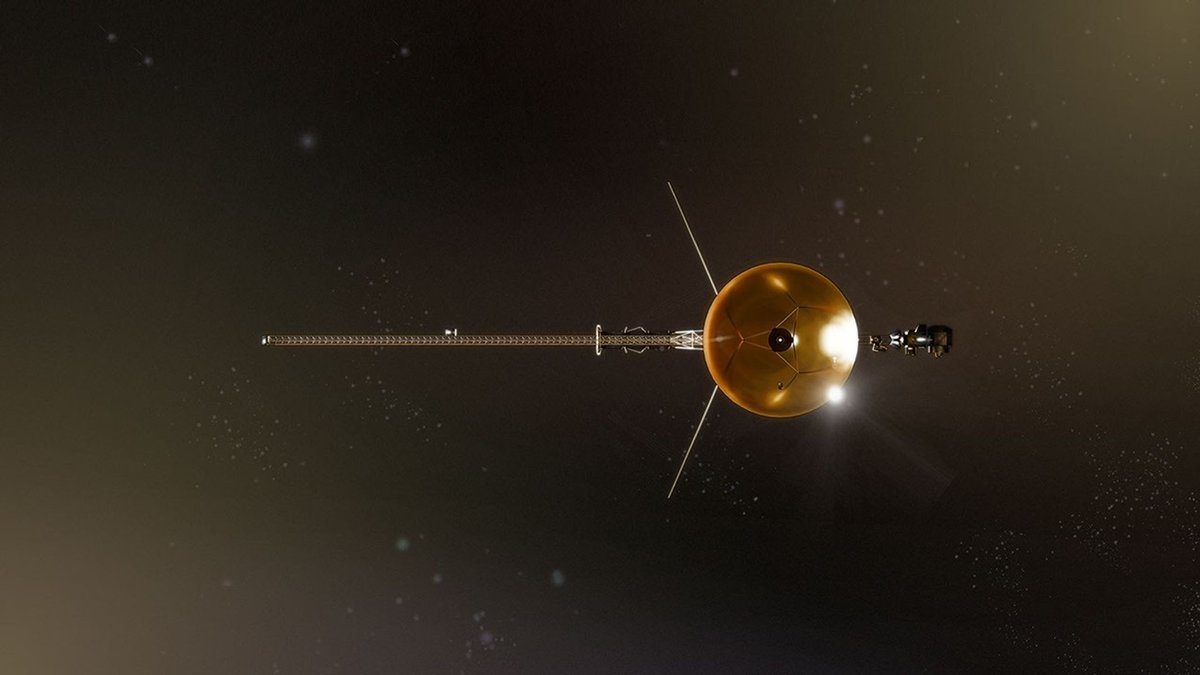
PASADENA, Calif. — Nearly half a century after leaving its launch pad in Florida, NASA's Voyager 1 spacecraft is approaching an unprecedented distance threshold: one light-day from Earth. As the robotic explorer speeds through the thin plasma of interstellar space, the physical gap separating it from ground controllers is nearing roughly 25.9 billion kilometers, or approximately 173 times the distance between the Earth and the sun. At this distance, an electromagnetic radio signal sent from NASA’s Deep Space Network must travel across the vacuum for a full 24 hours before reaching the probe's high-gain antenna, establishing a two-day minimum round-trip cycle for engineers attempting to transmit instructions and receive diagnostic data.
Key facts
What happened
According to reporting by Monisha Ravisetti, Voyager 1 is on track to cross the symbolic threshold of one light-day of separation from its home planet, setting an endurance and distance benchmark unmatched by any manufactured artifact. The transition reflects decades of uninterrupted travel following planetary encounters with Jupiter in March 1979 and Saturn in November 1980, which used gravitational assists to fling the craft northward out of the ecliptic plane at roughly 17 kilometers per second.
Reaching one light-day represents a logistical and navigational landmark rather than a sudden physical boundary. In the metric system, a light-day corresponds to slightly under 25.92 billion kilometers, calculated from the speed of light in a vacuum of 299,792.458 kilometers per second multiplied by the 86,400 seconds in a standard terrestrial day. For flight controllers stationed at NASA’s Jet Propulsion Laboratory (JPL) in Pasadena, California, the milestone crystallizes the operational reality of commanding deep-space hardware: a prompt command uplink transmitted on Monday morning cannot yield verification or telemetry downlinks until Wednesday morning.
The craft has maintained this trajectory while navigating the sparse environment beyond the heliopause—the outer bubble where the solar wind is arrested by the interstellar medium—which Voyager 1 formally crossed in August 2012. Despite severe hardware aging and occasional software anomalies, the probe continues to direct its 3.7-meter-diameter parabolic dish antenna toward Earth, tracking the position of the sun using its onboard fine sun sensor.
Why it matters
The achievement of a one-light-day separation serves as a working demonstration of deep-space communications at planetary-system scale. For space agencies, communications engineers, and astrophysicists, the continuing operation of Voyager 1 offers irreplaceable real-time data from an environment untouched by the sun's magnetic field. Operating a robotic vehicle across a 48-hour round-trip latency pushes the limits of telecommunications infrastructure, requiring high-power S-band and X-band transmitters and 70-meter dish antennas operated by the Deep Space Network in California, Spain, and Australia.
Beyond communications engineering, the milestone carries immediate scientific weight. Voyager 1 and its sibling probe, Voyager 2, are the only active human-made instruments directly sampling the pristine interstellar medium. The craft's plasma wave instrument, magnetometer, and cosmic ray subsystem provide measurements of galactic cosmic rays, interstellar magnetic field orientation, and plasma density that cannot be collected from within the protective shielding of the heliosphere. These data points refine theoretical models of how our solar system interacts with the local interstellar cloud.
Finally, operating a complex cybernetic machine across half a century provides critical engineering baselines for future interstellar concepts. The long survival of Voyager 1 demonstrates the durability of analog-to-digital circuitry designed in the mid-1970s and offers vital case studies on component degradation, cold welding in vacuum conditions, and radiation exposure over decades. Every additional week of operations yields empirical reliability data that future mission architects will draw upon when planning long-duration probes to the solar gravitational lens or nearby star systems.
The background
Conceived during the late 1960s as part of the ambitious "Grand Tour" concept, the Voyager program capitalized on a rare geometric alignment of the outer planets occurring once every 175 years. NASA approved the streamlined Mariner Jupiter/Saturn 1977 project, which was subsequently renamed Voyager. Voyager 2 launched first on August 20, 1977, followed sixteen days later by Voyager 1 on September 5, 1977, aboard a Titan IIIE-Centaur rocket from Cape Canaveral, Florida. Voyager 1 traveled on a faster, shorter trajectory designed specifically to optimize scientific reconnaissance of Saturn's large moon, Titan, sacrificing the possibility of subsequent flybys of Uranus and Neptune to study Titan’s dense atmosphere.
Power for the twin probes is generated by three radioisotope thermoelectric generators (RTGs), which convert the heat released by the natural radioactive decay of plutonium-238 into direct-current electricity via silicon-germanium thermocouples. At launch, the power system supplied approximately 470 watts of electrical power. However, due to the 87.7-year half-life of plutonium-238 and the progressive thermal degradation of the thermocouples, the usable electrical supply decreases steadily by roughly four watts each year, dropping below 230 watts in recent operational phases.
To keep the spacecraft operational, JPL engineers have executed complex conservation measures over the past two decades. The science platform’s optical cameras were permanently disabled in 1990 shortly after capturing the famous "Pale Blue Dot" composite mosaic, freeing memory and power. Over subsequent years, engineers turned off heaters for non-critical subsystems, powered down the ultraviolet spectrometer, and cycled auxiliary thruster branches that had remained idle for decades. In 2024, flight controllers overcame a major crisis when a corrupted memory chip in the flight data subsystem interrupted telemetry streams, successfully relocating the affected machine code across uncorrupted memory registers to restore scientific downlinks.
Reaction
While space agencies routinely treat distance milestones as administrative markers rather than sudden scientific breakthroughs, the threshold has drawn widespread attention across the international aerospace and scientific communities. Engineers and mission alumni at the Jet Propulsion Laboratory have long noted the sheer improbability of the spacecraft functioning through the late 2020s, given that its original primary mission was funded only through the Saturn encounter in 1980.
Scientific working groups focusing on heliospheric physics and interstellar exploration regularly highlight the irreplaceable nature of the probe's continuing transmissions. Community responses emphasize that when the Voyager probes eventually exhaust their operational power, there will be no operational spacecraft gathering in-situ measurements in interstellar space until advanced propulsion missions—none of which are currently funded for near-term launch—can reach comparable distances several decades from now.
What we don't know yet
Critical uncertainties remain regarding the precise operational lifespan of Voyager 1 as it enters this unprecedented regime. While mathematical models can project the steady thermal decay of the RTG plutonium cores, the real-world performance of surviving electrical components in severe cold remains unpredictable. JPL engineers must continuously balance electrical budgets by choosing which remaining scientific instruments or critical heaters to shut down next.
It is not yet known which scientific instrument will be deactivated next, nor precisely when the combined power draw of the attitude control systems and communications hardware will exceed the RTG output. Furthermore, unexpected hardware failures remain an ever-present risk; the 2023–2024 telemetry failure demonstrated that single-point circuit failures can jeopardize the mission without warning. Finally, because Voyager 1’s plasma spectrometer stopped functioning in 1980, the probe cannot directly measure solar wind velocity, relying instead on indirect plasma wave observations that depend on sporadic solar flare shocks propagating through the interstellar medium.
What to watch
The primary focus for flight controllers over the coming months will be the thermal management of the attitude control systems. As internal temperatures decline following previous heater deactivations, engineers must monitor fuel lines carrying hydrazine propellant to the attitude thrusters to ensure they do not freeze. Periodic thruster pulses are essential to keep the high-gain antenna oriented toward Earth within a tolerance of fractions of a degree.
Observers will also watch for the official planning milestones leading up to September 2027, when Voyager 1 is scheduled to mark 50 years of continuous operation in flight. Between now and that anniversary, NASA’s Science Mission Directorate will periodically review telemetry and instrument health to determine the sequencing of instrument shutdowns. In addition, scheduling pressure on the Deep Space Network will be a key variable, as competing demands from lunar missions, Mars orbiters, and outer-planet probes like Europa Clipper place heavy demands on the 70-meter dish availability needed to capture Voyager's faint, 160-attowatt downlinks.
This account draws upon reporting published by space journalist Monisha Ravisetti concerning the operational timeline and distance milestones of NASA's Voyager 1 spacecraft as it approaches one light-day of separation from Earth ahead of its 50th mission anniversary.
How this story was produced
This report was written by The Global Wire newsroom from reporting first published by Monisha Ravisetti. We verify the core facts against the original report, write our own account, and add the background and consequences a short wire item leaves out. Drafting is AI-assisted inside an editor-supervised pipeline, and every story is checked for accuracy of attribution, structure and duplication before it appears — full detail in our AI and funding disclosure.
Spotted an error? Tell us at corrections@horizonglobalnews.com and read our corrections policy or editorial standards.





Reader comments
Loading comments…