

Vance Navigates Divide Over Trump Iran Strikes, Sidestepping Endorsement of Future Action
Vice President JD Vance avoided committing to repeat Donald Trump's military strikes against Iran, highlighting tensions between administration loyalty and non-interventionist principles.
By The Global Wire Newsroom · Reported from India Today World Desk
Link preview · horizonglobalnews.com
Vance Navigates Divide Over Trump Iran Strikes, Sidestepping Endorsement of Future Action
Vice President JD Vance avoided committing to repeat Donald Trump's military strikes against Iran, highlighting tensions between administration loyalty and non-interventionist principles.
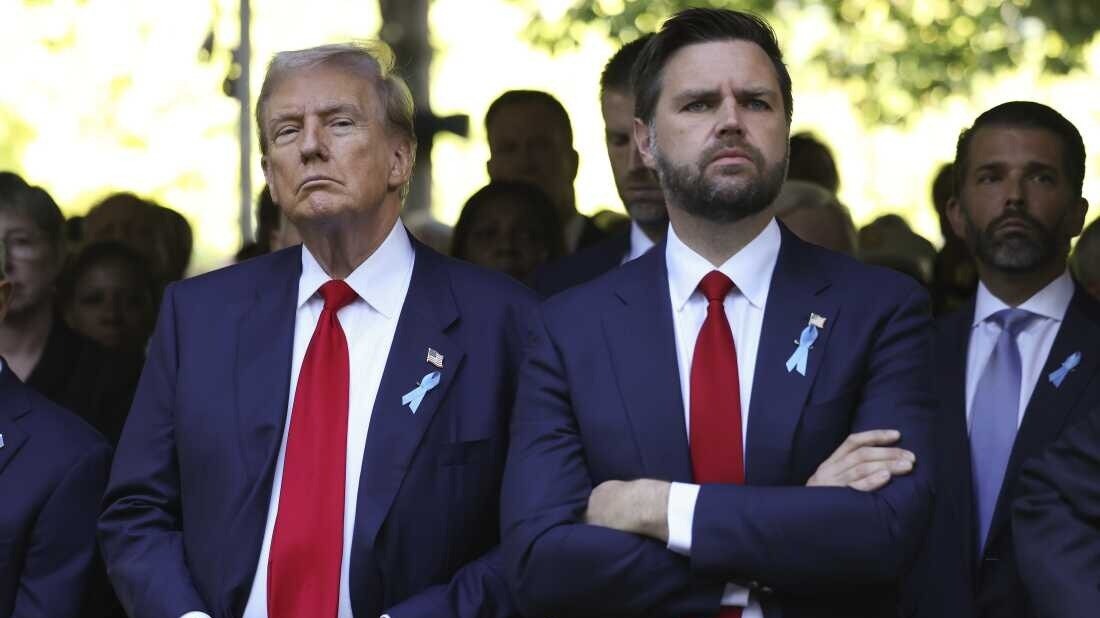
WASHINGTON — Vice President JD Vance declined to confirm whether he would endorse or replicate military strikes against Iran authorized by President Donald Trump, sidestepping questions that place his non-interventionist foreign policy record against loyalty to the administration, according to reporting by India Today. The exchange underscores the persistent ideological fault lines within the Republican foreign policy establishment, where traditional deterrence through unilateral force collides with an "America First" reluctance toward sustained overseas entanglements.
Key facts
What happened
In recent public questioning, Vice President JD Vance was asked directly whether he would authorize military strikes against Iran similar to those ordered under President Donald Trump's leadership. Rather than offering an unequivocal defense or committing to a hypothetical future strike, Vance declined to state that he would take such action, as reported by India Today.
His noncommittal stance effectively created distance between his personal foreign policy worldview and the assertive military precedents set by Trump. Trump's approach to Tehran has historically paired severe economic sanctions with decisive, high-profile kinetic operations when red lines were perceived to have been breached. Vance, while an ardent defender of Trump across domestic and legislative agendas, has consistently articulated skepticism regarding American military adventurism abroad.
By declining to endorse repeating such strikes, Vance exposed the delicate balance he maintains within the administration. On one side lies the expectation of total solidarity with Trump's record of projecting strength; on the other lies Vance's long-standing critique of the Washington national security consensus, which he has argued too frequently draws the United States into open-ended hostilities across the Middle East.
Why it matters
The ambiguity expressed by Vance matters because it reflects a structural struggle over the trajectory of United States grand strategy, with direct implications for international security alliances, global energy markets, and congressional oversight. For decades, American foreign policy in the Persian Gulf relied on forward-deployed deterrence, freedom of navigation enforcement, and a willingness to use airpower to counter adversarial state behavior. If the executive branch's second-in-command signals reluctance to employ kinetic measures against Iran, both allies and adversaries must recalibrate their calculations regarding American resolve and predictability.
In practical terms, any uncertainty in Washington's posture toward Tehran ripples immediately across maritime chokepoints such as the Strait of Hormuz, through which roughly 20 percent of global petroleum consumption passes. Commercial shipping firms, international insurance underwriters, and Gulf partners like Saudi Arabia and the United Arab Emirates base their operational security assessments on the certainty of the American defense umbrella. A visible split between a president willing to strike and a vice president hesitant to repeat such actions introduces strategic ambiguity into regional defense planning.
Domestically, the exchange signals how future foreign policy might be contested within the conservative movement. Vance represents a rising generation of populist leaders who view foreign military operations not as demonstrations of strength, but as costly distractions from domestic industrial and border priorities. By refusing to rubber-stamp past military strikes, Vance confirms that the internal debate over foreign intervention is active at the highest levels of executive power.
The background
Relations between Washington and Tehran have been defined by hostility since the 1979 Islamic Revolution and the subsequent seizure of the United States Embassy in Tehran. For over four decades, interactions have alternated between diplomatic overtures, covert operations, proxy warfare, and direct military clashes. A central pillar of modern interaction was the 2015 Joint Comprehensive Plan of Action (JCPOA), negotiated under President Barack Obama alongside five other world powers, which curbed Iran's nuclear enrichment activities in exchange for sanctions relief.
In May 2018, Donald Trump withdrew the United States from the nuclear agreement, implementing a "maximum pressure" campaign characterized by comprehensive economic sanctions targeting Iranian oil exports, banking institutions, and petrochemical sectors. Tensions escalated sharply over the following eighteen months, culminating in several maritime incidents in the Gulf of Oman, the downing of an unmanned American surveillance drone, and attacks on Saudi oil facilities at Abqaiq and Khurais.
The most consequential direct strike occurred on January 3, 2020, when a United States MQ-9 Reaper drone struck a convoy near Baghdad International Airport, killing Major General Qasem Soleimani, commander of the Islamic Revolutionary Guard Corps' Quds Force, along with Abu Mahdi al-Muhandis, the deputy head of Iraq's Popular Mobilization Forces. Trump defended the strike as a necessary defensive action to halt imminent attacks on American personnel, asserting constitutional authority under Article II as commander-in-chief. Tehran responded days later by launching ballistic missiles at Iraq's Ain al-Asad airbase, injuring more than 100 American service members with traumatic brain injuries.
Throughout his political ascent, including his election to the United States Senate representing Ohio in 2022, JD Vance positioned himself as a vocal critic of foreign military interventions. Drawing on his service in the United States Marine Corps, where he served as a combat correspondent deployed to Iraq in 2005, Vance frequently argued that post-9/11 military interventions depleted American resources, cost working-class lives, and destabilized the Middle East without yielding tangible security benefits for the American public. This ideological perspective often placed him at odds with traditional hawkish conservatives who favor assertive power projection.
Reaction
While formal responses from executive agencies were not immediate, the development touches directly on sensitive lines of authority among key political factions. Within the Republican Party, national security traditionalists have consistently argued that clear, credible military threats are the only effective deterrent against Iranian regional proxy networks and nuclear ambitions. Observers expect lawmakers aligned with traditional defense postures to seek clarification on whether Vance's comments represent personal philosophical reservations or an evolving administrative doctrine.
Conversely, anti-interventionist factions and populist conservative organizations generally view skepticism toward foreign strikes as a necessary correction to decades of overseas conflict. In Congress, members of the Senate Foreign Relations Committee and the House Armed Services Committee frequently scrutinize executive actions under the War Powers Resolution of 1973, which requires the president to notify Congress within 48 hours of introducing military forces into hostilities and limits deployments to 60 days without legislative authorization. Debates regarding executive discretion to strike foreign state actors without prior congressional sign-off remain an active forum for legislative pushback.
Diplomatic observers in the Middle East, including regional partners who coordinate air defense networks with United States Central Command (CENTCOM), monitor any rhetorical daylight between administration principals to evaluate how Washington would respond to potential provocations against commercial shipping or regional infrastructure.
What we don't know yet
Critical details surrounding Vance's remarks remain unspecified in current reporting. It is not clear whether his reluctance applied strictly to targeted decapitation strikes comparable to the 2020 Baghdad operation, or whether it extends to broader defensive actions against Iranian-backed maritime interdictions and drone launches in regional waters. The specific context of the questioning — including whether the scenario presented involved imminent threats to American personnel or speculative retaliatory options — was not detailed in the available account.
Furthermore, it remains unknown whether this position represents an agreed-upon strategic division within the administration, where Vance articulates domestic populist priorities while Trump preserves unilateral tactical options, or if it reflects an unresolved internal policy disagreement. The extent to which National Security Council advisers have established operational criteria for responding to future Iranian actions has not been disclosed, leaving open the question of how national security guidance would resolve conflicting impulses between deterrence and restraint.
What to watch
Moving forward, several key markers will determine the practical impact of Vance's statements. The first is any subsequent clarification or commentary from Donald Trump himself. Whether the president reasserts full authority to strike Iranian targets at will or validates Vance's restraint will define the administration's baseline foreign policy posture.
Second, upcoming oversight hearings before the Senate Foreign Relations Committee and House Foreign Affairs Committee will provide a venue for lawmakers to question senior defense and diplomatic officials regarding the administration's current rules of engagement in the Persian Gulf and Red Sea. Observers should track whether legislators introduce resolutions clarifying war powers constraints regarding Iran.
Finally, diplomatic and military activity in the Middle East — including International Atomic Energy Agency (IAEA) quarterly inspection reports on Iranian enrichment levels and CENTCOM posture adjustments in the Persian Gulf — will test whether Washington's stated deterrence remains intact or whether adversaries perceive executive division as a window for expanded regional leverage.
This report incorporates information first reported by the India Today World Desk.
How this story was produced
This report was written by The Global Wire newsroom from reporting first published by India Today World Desk. We verify the core facts against the original report, write our own account, and add the background and consequences a short wire item leaves out. Drafting is AI-assisted inside an editor-supervised pipeline, and every story is checked for accuracy of attribution, structure and duplication before it appears — full detail in our AI and funding disclosure.
Spotted an error? Tell us at corrections@horizonglobalnews.com and read our corrections policy or editorial standards.






Reader comments
Loading comments…