

USS George Washington Carrier Group Arrives in Middle East to Relieve Extended Deployment
The 100,000-ton USS George Washington carrier strike group has arrived in the Middle East to relieve the USS Abraham Lincoln after more than 250 days at sea.
By The Global Wire Newsroom · Reported from Prabhat Ranjan Mishra
Link preview · horizonglobalnews.com
USS George Washington Carrier Group Arrives in Middle East to Relieve Extended Deployment
The 100,000-ton USS George Washington carrier strike group has arrived in the Middle East to relieve the USS Abraham Lincoln after more than 250 days at sea.
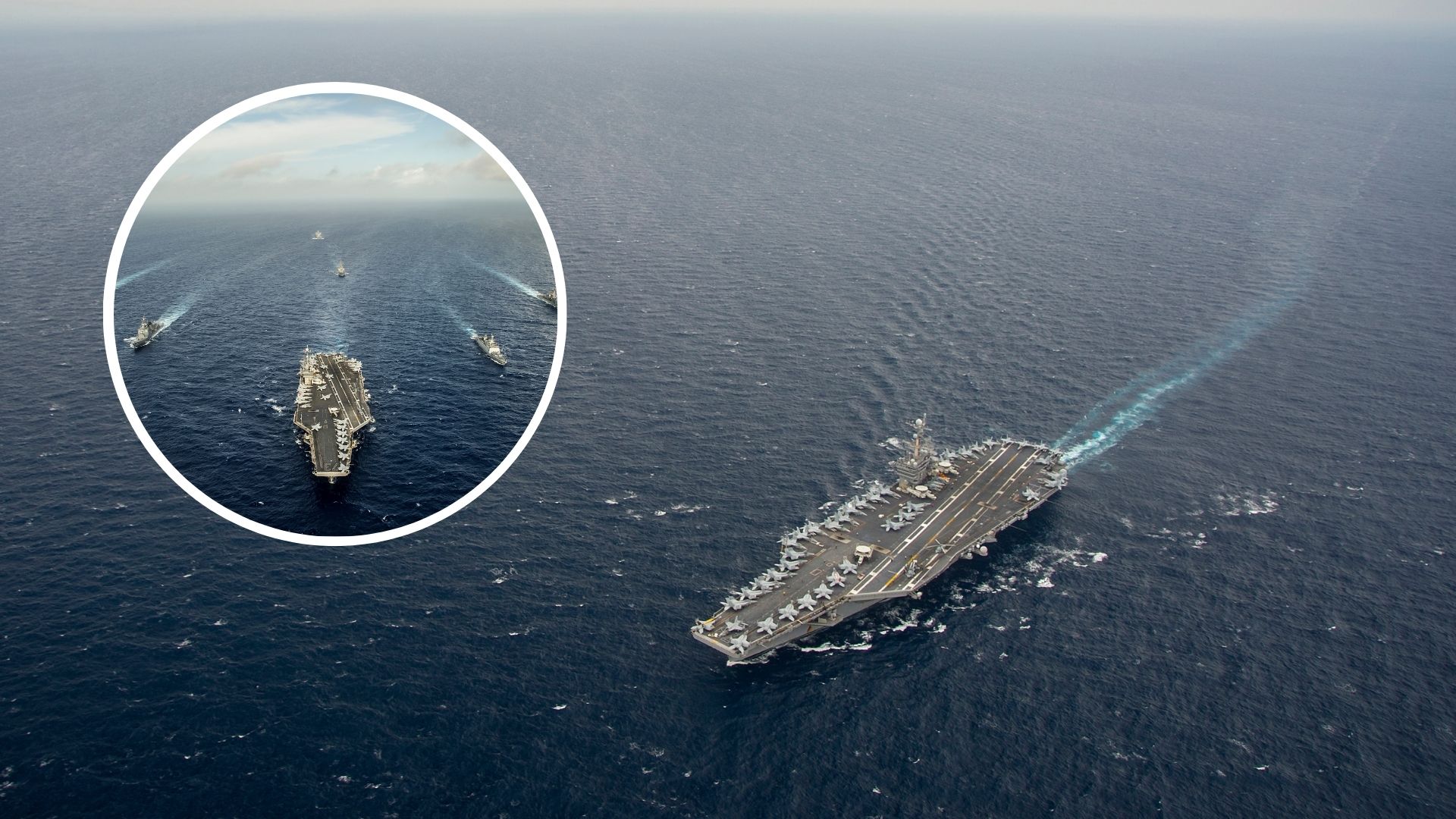
The United States Navy has deployed the USS George Washington, a nuclear-powered aircraft carrier with a displacement of nearly 100,000 tons, along with its carrier strike group to the Middle East, according to reporting by Prabhat Ranjan Mishra. The arrival of the capital warship is structured to relieve the USS Abraham Lincoln, a sister Nimitz-class aircraft carrier that has remained deployed at sea on operational duty for more than 250 days. The carrier rotation represents a strategic transition for U.S. Central Command, which maintains oversight of military operations across vital maritime corridors including the Persian Gulf, the Gulf of Oman, the Red Sea, the Gulf of Aden, and the Arabian Sea. By deploying the George Washington to assume operational duties from the long-serving Abraham Lincoln, military leaders seek to preserve persistent aerial and naval deterrence across the region while allowing the outgoing warship and its crew to return to homeport for overdue depot maintenance and operational reset.
Key facts
What happened
The movement of the USS George Washington into the Middle East introduces a fresh carrier strike group into an operational domain that requires constant aerial reconnaissance, strike capability, electronic warfare, and maritime security patrols. According to reporting by Prabhat Ranjan Mishra, the core assignment for the incoming George Washington strike group is to execute a formal operational handover with the USS Abraham Lincoln, which has endured a continuous deployment lasting more than 250 days.
During a carrier strike group rotation, the incoming and outgoing flagship strike groups execute an operational turnover phase. During this period, intelligence personnel transfer operational assessments, flight deck teams coordinate local air traffic procedures, and warfare commanders align battle-management systems. A standard U.S. Navy carrier strike group consists of the nuclear-powered aircraft carrier, an embarked carrier air wing operating multirole strike fighters, electronic attack aircraft, airborne early warning assets, and anti-submarine helicopters, as well as an escort screen of guided-missile cruisers and destroyers armed with Tomahawk cruise missiles and advanced Aegis combat systems.
The outgoing USS Abraham Lincoln had been operating continuously across U.S. Central Command's maritime domain to uphold security commitments, support counter-threat missions, and protect commercial shipping lanes. Having surpassed eight months at sea, the vessel and its crew were operating well beyond the standard six-month deployment target established by naval planners. The arrival of the USS George Washington enables the Abraham Lincoln to hand over primary theater responsibilities and begin its long homeward transit, bringing a high-intensity operational deployment to a close.
Why it matters
The seamless replacement of one 100,000-ton supercarrier with another underscores the vital role that naval aviation plays in American military strategy throughout the Middle East. Carrier strike groups act as mobile, floating airfields operating in international waters, eliminating the need for foreign basing permissions or diplomatic clearance for flight operations. In a geographic theater defined by critical maritime trade corridors—such as the Strait of Hormuz, the Bab el-Mandeb strait, and the approach to the Suez Canal—carrier strike groups provide multi-layered defense for commercial shipping, deter hostile regional actors, and supply rapid combat response options for national command authorities.
However, maintaining continuous carrier coverage through extended deployments exceeding 250 days imposes severe strains on physical hardware and naval personnel. Defense analysts and military readiness experts frequently point out that prolonged periods at sea accelerate structural wear and tear on essential warship machinery, including steam-powered catapults, arresting gear cables, auxiliary nuclear power systems, and specialized hull coatings. For the roughly 5,000 sailors and aviators aboard a deployed supercarrier, extended deployments lead to operational fatigue, strain personal and family well-being, and present long-term challenges for military retention across critical technical fields.
From a global fleet planning perspective, extending a carrier's deployment past its scheduled return window creates a compounding bottleneck throughout the U.S. Navy's repair and modernization infrastructure. Under the Navy's force-generation models, every month a ship spends beyond its planned operational schedule reduces the time available for mandatory shipyard maintenance, dry-dock overhauls, and pre-deployment combat training exercises for subsequent operational cycles. Relief for the USS Abraham Lincoln after more than 250 days at sea is therefore vital not only for immediate operational continuity in the Middle East but for safeguarding the overall operational readiness of the nuclear-powered carrier fleet.
The background
The United States Navy operates a fleet of 11 nuclear-powered aircraft carriers, consisting of ten Nimitz-class ships—including both the USS George Washington (CVN-73) and the USS Abraham Lincoln (CVN-72)—and one Gerald R. Ford-class vessel. Displacing nearly 100,000 tons fully loaded and spanning over 1,000 feet in length, Nimitz-class supercarriers are powered by two onboard A4W nuclear reactors, providing virtually limitless operating range and the ability to sustain speeds in excess of 30 knots without refueling. The operational endurance of these warships is limited primarily by onboard storage capacity for jet fuel, munitions, fresh water, and food provisions for the crew.
Historically, the U.S. Navy structured its fleet management under the Optimized Fleet Response Plan, which targeted predictable six-month (180-day) operational deployments within a 36-month readiness cycle. The framework was engineered to balance operational availability with structured maintenance windows at public and private shipyards, routine unit training, and surge capacity. However, persistent security demands across U.S. Central Command in the Middle East and U.S. Indo-Pacific Command in the Pacific have repeatedly driven defense leadership to extend deployment lengths to seven, eight, or nine months.
The U.S. Navy's operational presence in the Middle East is anchored by U.S. Naval Forces Central Command and the U.S. Fifth Fleet, headquartered in Bahrain. Since the Fifth Fleet's re-establishment in 1995, American aircraft carriers have maintained a regular presence in regional waters to safeguard international commerce, secure critical energy pathways, and support regional military coalitions.
The USS George Washington previously underwent an extensive Refueling and Complex Overhaul at Huntington Ingalls Industries' Newport News Shipbuilding facility in Virginia. The RCOH is a major mid-life modernization process performed once in a carrier's 50-year service life, involving the refueling of its nuclear reactor cores, comprehensive structural repairs, hull maintenance, and combat system upgrades. Following the completion of sea trials and deployment recertification, the George Washington returned to active operational status, positioning it to take over forward-deployed missions such as the current relief rotation in the Middle East.
Reaction
While specific tactical assignments remain operational secrets, the arrival and departure of carrier strike groups in major strategic theaters generate significant attention among military planners, regional governments, and international security analysts. U.S. Central Command typically issues formal public announcements following carrier strike group arrivals to reinforce public awareness of American defense commitments to regional stability and the protection of international shipping lanes.
Defense readiness advocates and military analysts often note that while the seamless substitution of supercarriers demonstrates the unmatched reach of U.S. sea power, reliance on extended deployments highlights deep-seated vulnerabilities in fleet maintenance infrastructure. Analysts regularly emphasize that shipyard delays, backlogs at maintenance depots, and workforce shortages across public shipyards limit the Navy's ability to maintain standard six-month rotation schedules.
For regional allies and foreign militaries in the Middle East, the arrival of the fresh USS George Washington carrier strike group serves as a clear signal of operational continuity. Allied nations view the presence of an American carrier strike group as an essential stabilizing factor for regional commerce and maritime navigation, while regional adversaries recognize that military readiness remains intact throughout the transition process between carrier strike groups.
What we don't know yet
Despite official confirmation of the supercarrier rotation, several key operational details remain unannounced in public reports:
What to watch
In the coming weeks, several key milestones will clarify how the operational transition unfolds across the theater:
This report is based on original reporting by Prabhat Ranjan Mishra.
How this story was produced
This report was written by The Global Wire newsroom from reporting first published by Prabhat Ranjan Mishra. We verify the core facts against the original report, write our own account, and add the background and consequences a short wire item leaves out. Drafting is AI-assisted inside an editor-supervised pipeline, and every story is checked for accuracy of attribution, structure and duplication before it appears — full detail in our AI and funding disclosure.
Spotted an error? Tell us at corrections@horizonglobalnews.com and read our corrections policy or editorial standards.





Reader comments
Loading comments…