

U.S. Intelligence Chief Defends Trump Stance on Russia in Sunday Broadcast Appearances
Director of National Intelligence Jay Clayton sparked concern after defending President Donald Trump's approach to Vladimir Putin across appearances on Fox News, CNN, and ABC.
By The Global Wire Newsroom · Reported from David McAfee
Link preview · horizonglobalnews.com
U.S. Intelligence Chief Defends Trump Stance on Russia in Sunday Broadcast Appearances
Director of National Intelligence Jay Clayton sparked concern after defending President Donald Trump's approach to Vladimir Putin across appearances on Fox News, CNN, and ABC.
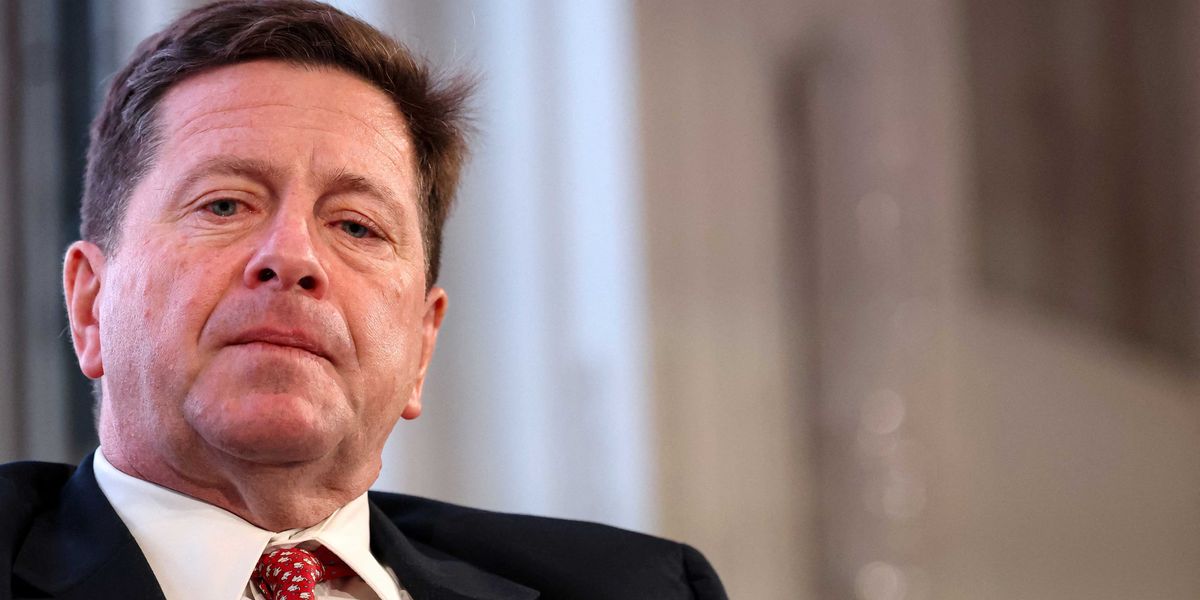
Director of National Intelligence Jay Clayton appeared across multiple national television broadcasts, defending President Donald Trump's diplomatic alignment with Russian President Vladimir Putin and sparking intense scrutiny over the administration's posture toward traditional intelligence assessments. In appearances broadcast on ABC, CNN, and Fox News, the nation's chief intelligence coordinator addressed the White House's foreign policy positions while declining to validate longstanding findings regarding Moscow's geopolitical objectives, according to reporting by David McAfee. The coordinated weekend media appearances marked a rare public intervention by a sitting intelligence chief directly into contentious executive foreign policy deliberations, drawing swift objections from national security specialists and congressional oversight figures concerned about the politicization of the country's intelligence apparatus.
Key facts
What happened
Director of National Intelligence Jay Clayton embarked on a high-profile Sunday television circuit, appearing consecutively on ABC, CNN, and Fox News, according to reporting by David McAfee. The primary subject of the interviews centered on President Donald Trump's approach toward Russia and his personal diplomatic interactions with Russian President Vladimir Putin.
Across the three major network appearances, Clayton offered a direct defense of the administration's posture toward Moscow, aligning the authority of the nation's highest intelligence office with the president's diplomatic strategy. Rather than presenting strictly neutral threat assessments or institutional briefings, Clayton defended the executive branch's engagement with the Kremlin, a stance that diverged sharply from the historically detached posture maintained by directors of national intelligence.
According to the reporting by David McAfee, the broadcasts immediately reverberated across the national security establishment due to both the assertions Clayton made and the institutional positions he declined to reinforce. Observers noted that the director avoided reaffirming established intelligence community consensus regarding Russian state behavior and geopolitical objectives, focusing instead on justifying the White House's diplomatic engagement. The public appearances generated immediate astonishment among institutional observers and oversight specialists, who characterized the defense as an unusual departure from the nonpartisan norms that have historically governed the Office of the Director of National Intelligence.
Why it matters
The public posture adopted by the Director of National Intelligence carries significant implications for the governance of American national security, the integrity of intelligence analysis, and relations with foreign partners. The Office of the Director of National Intelligence was designed specifically to serve as an objective clearinghouse of strategic information, synthesizing findings from across 18 disparate agencies and delivering unvarnished intelligence to the president, executive departments, and congressional leadership. When an intelligence chief functions as an overt defender of executive foreign policy on public broadcast networks, it risks eroding the institutional boundary separating objective analysis from partisan policy advocacy.
Within the intelligence community, analytical integrity relies on the assurance that career analysts can deliver rigorous, dispassionate findings without fear of political pressure or executive retaliation. If the director publicly endorses a diplomatic alignment that conflicts with or minimises career analysts' assessments regarding foreign adversaries, morale across the workforce can suffer, potentially leading to self-censorship or selective intelligence packaging. Analysts working on counterintelligence and Eurasian security portfolios face heightened uncertainty when institutional leadership appears unwilling to publicly stand behind verified findings concerning foreign influence and state aggression.
Furthermore, international intelligence-sharing agreements, particularly the Five Eyes alliance encompassing the United States, the United Kingdom, Canada, Australia, and New Zealand, depend entirely on mutual trust and the nonpartisan handling of sensitive material. Allied intelligence services share sensitive human intelligence and signals intercepts under the expectation that analytical conclusions are shielded from domestic political agendas. If foreign intelligence partners perceive that U.S. intelligence leadership is aligning its public assessments with diplomatic convenience rather than verified operational reality, their willingness to share highly sensitive raw intelligence could diminish, weakening collective security architectures.
Finally, congressional oversight mechanisms depend on candid, uncompromised testimony from the director. When public appearances indicate a reluctance to speak transparently about known geopolitical risks, the relationship between the intelligence branch and its legislative overseers becomes adversarial, complicating bipartisan consensus on critical national security legislation and reauthorizations.
The background
The Office of the Director of National Intelligence was established by Congress under the Intelligence Reform and Terrorism Prevention Act of 2004, signed into law following the recommendations of the bipartisan 9/11 Commission. The statutory purpose of creating the director position was to overcome systemic intelligence siloing, foster collaboration among disparate collection agencies, and provide unified, nonpartisan advice to the National Security Council and the president. Operating under Title 50 of the United States Code, the director manages the National Intelligence Program, coordinates an aggregate intelligence budget that surpasses $70 billion annually, and oversees agencies including the Central Intelligence Agency, the National Security Agency, the Defense Intelligence Agency, and the intelligence branches of the military services and civilian departments.
Historically, the individuals confirmed to head the intelligence community have sought to project a nonpartisan persona, deliberately insulating themselves from public policy debates. The institutional ethos of the modern intelligence community traces back to the Church Committee investigations of 1975 and 1976, which uncovered domestic spying abuses and political manipulation of intelligence under prior administrations, leading to the creation of the Senate Select Committee on Intelligence and the House Permanent Select Committee on Intelligence to enforce rigorous statutory oversight.
The question of Russian foreign policy and its interference in Western democratic institutions has been among the most politically sensitive topics within the American intelligence apparatus over the past decade. In January 2017, the Office of the Director of National Intelligence released a landmark declassified assessment concluding with high confidence that Russian President Vladimir Putin ordered an influence campaign aimed at undermining public faith in the U.S. democratic process. Subsequent bipartisan findings by the Senate Select Committee on Intelligence, detailed across five volumes, affirmed these core conclusions.
President Donald Trump has frequently challenged these analytical assessments, questioning the credibility of the intelligence agencies and pursuing a personal diplomatic dialogue with Putin, most notably during the 2018 summit in Helsinki, Finland, where Trump publicly cast doubt on U.S. intelligence findings. The appointment of leadership to the ODNI has consequently remained a focal point of domestic political dispute, with critics expressing perpetual concern that political appointees might suppress or alter analytical products to conform to the president's foreign policy worldview.
Reaction
The television appearances prompted immediate consternation among national security professionals, former intelligence officials, and political commentators, according to the reporting by David McAfee. Observers expressed bewilderment at the director's willingness to act as a public advocate for controversial foreign policy positions rather than maintaining the traditional reserve expected of the nation's top intelligence officer.
Congressional reaction is anticipated to focus heavily within the oversight committees responsible for intelligence and foreign relations. Members of the Senate Select Committee on Intelligence and the House Permanent Select Committee on Intelligence routinely demand transcribed briefings or public hearings following contentious public statements by agency leaders. Democratic lawmakers are expected to question whether Clayton's public statements reflect a formal shift in official intelligence community assessments or merely personal and political defenses of the president's agenda.
Within the foreign policy establishment, former intelligence officials frequently warn that public appearances of this nature damage the ODNI's institutional credibility. Although Clayton's television rounds aimed to bolster the administration's diplomatic credibility, critics argued that blurring the line between policy advocacy and intelligence reporting compromises the community's core mission to provide objective truth to power.
What we don't know yet
Several critical questions remain unresolved following the television blitz. The reporting by David McAfee outlines the critical reactions to Clayton's appearances on ABC, CNN, and Fox News, but specific transcripts and detailed transcripts of his responses to individual interview questions regarding operational intelligence matters were not fully detailed in the initial summary.
It is currently unknown whether Clayton's public positions reflect any formal revision to official National Intelligence Estimates or intelligence community memorandums concerning Russian strategic intentions. Furthermore, it remains unclear whether career analysts within the Office of the Director of National Intelligence or the Central Intelligence Agency were consulted before the director adopted these public positions on national television.
Additionally, the extent to which foreign intelligence partners have formally or informally registered concern with the ODNI regarding Clayton's statements has not been made public. Gaps also remain concerning whether the director's media appearances were coordinated in advance with the White House National Security Council or represented an independent communications strategy initiated by ODNI leadership.
What to watch
In the weeks ahead, several key developments will indicate the lasting operational and political impact of Clayton's media blitz. First, observers should monitor whether the Senate Select Committee on Intelligence or the House Permanent Select Committee on Intelligence calls Clayton to testify in open or closed session regarding the intelligence underlying his public comments. Such hearings would force the director to articulate under oath whether the formal intelligence community assessment of Russia has evolved.
Second, the forthcoming release of the intelligence community's Annual Threat Assessment and the accompanying worldwide threat hearings before Congress will serve as a crucial benchmark. These annual hearings, traditionally held in late winter or early spring, require the heads of the ODNI, CIA, FBI, NSA, and DIA to sit together and present their consensus evaluation of global security threats, providing an immediate test of analytical unity among agency heads.
Third, developments in bilateral U.S.-Russia diplomacy and the reactions of allied defense and intelligence leaders, particularly within NATO and Five Eyes forums, will indicate whether international partners are altering their intelligence-sharing protocols or expressing private reservations about American analytical neutrality.
This report is based on original reporting published by David McAfee detailing Director of National Intelligence Jay Clayton's appearances across Sunday news broadcasts on Fox News, CNN, and ABC.
How this story was produced
This report was written by The Global Wire newsroom from reporting first published by David McAfee. We verify the core facts against the original report, write our own account, and add the background and consequences a short wire item leaves out. Drafting is AI-assisted inside an editor-supervised pipeline, and every story is checked for accuracy of attribution, structure and duplication before it appears — full detail in our AI and funding disclosure.
Spotted an error? Tell us at corrections@horizonglobalnews.com and read our corrections policy or editorial standards.






Reader comments
Loading comments…