

Turkey, Saudi Arabia and Pakistan Set Framework to Expand Trilateral Security Pact
Senior diplomats and military officials from Ankara, Riyadh and Islamabad have agreed on admission guidelines for third countries seeking to join their emerging defense and political partnership.
By The Global Wire Newsroom · Reported from SECTIONS Turkey; Pakistan; Saudi Arabia agree principles
Link preview · horizonglobalnews.com
Turkey, Saudi Arabia and Pakistan Set Framework to Expand Trilateral Security Pact
Senior diplomats and military officials from Ankara, Riyadh and Islamabad have agreed on admission guidelines for third countries seeking to join their emerging defense and political partnership.
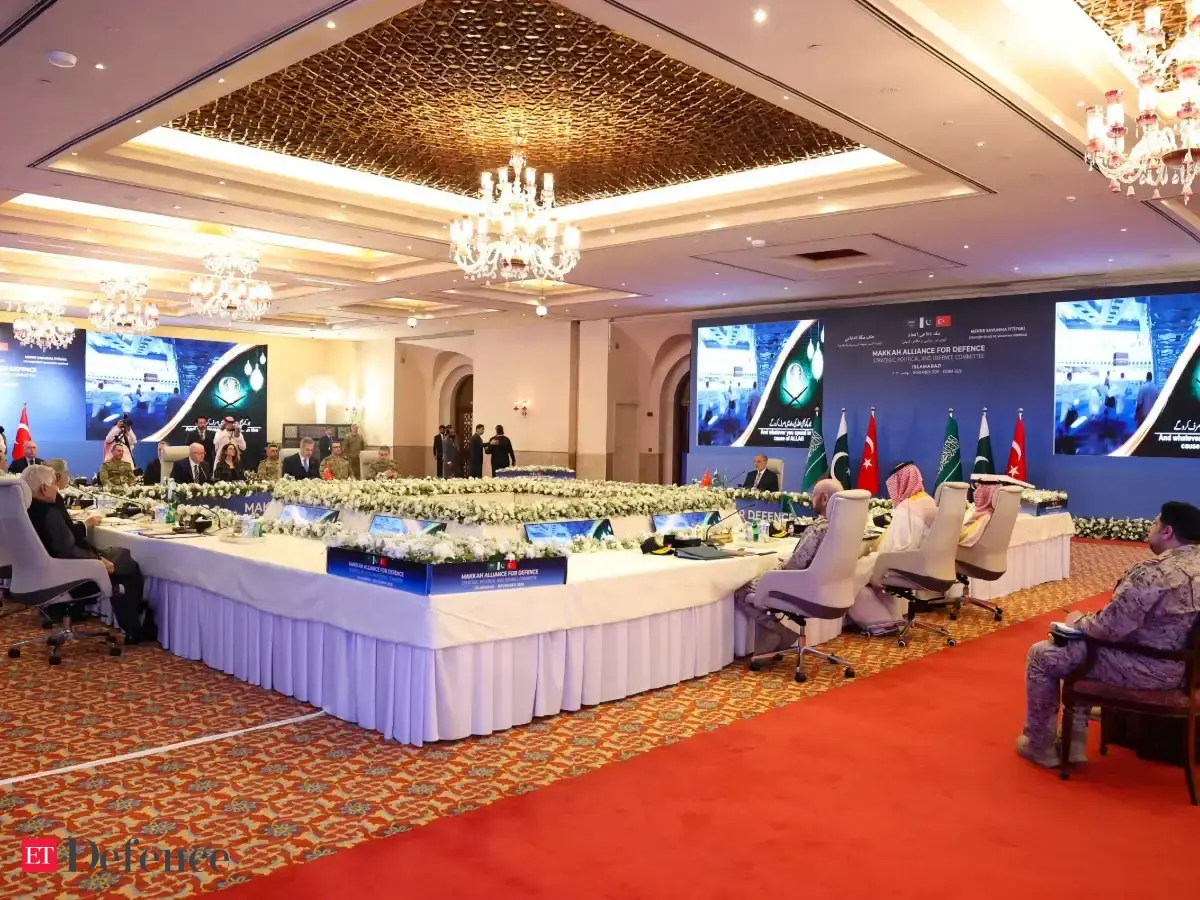
ANKARA — Diplomatic and defense leaders from Turkey, Saudi Arabia, and Pakistan have reached an agreement establishing formal accession criteria and a procedural roadmap for prospective new member states seeking to join their expanding security partnership, officials announced following high-level trilateral consultations. The negotiations, conducted with the participation of foreign ministers, defense ministers, and senior armed forces leadership from the three capitals, marked a concerted effort to formalize what participants have described as the Mecca alliance framework into a structured regional security mechanism.
Key facts
What happened
High-ranking civilian and military delegates from Ankara, Riyadh, and Islamabad convened to structure the institutional expansion of their emerging defense-oriented partnership, according to reporting by SECTIONS. The discussions culminated in a unified consensus on the standards that outside governments must meet before participating in the collaborative architecture.
Addressing the outcome of the diplomatic round, Turkish Foreign Minister Hakan Fidan stated that the delegations conducted detailed consultations regarding the administrative and strategic framework required to handle interest from third-party nations. Fidan observed that the three sovereign partners reached formal decisions concerning baseline accession principles, characterizing the negotiation process as having made substantive progress toward institutional cohesion.
Unlike traditional bilateral diplomacy, the meeting integrated foreign policy chiefs with defense ministers and senior defense establishment personnel from each country. This combined ministerial format indicates that the talks encompassed both political alignment and joint defense capability planning. The participants sought to transition an ad hoc diplomatic dialogue into a codified bloc capable of vetting, admitting, and integrating partner states without diluting the core strategic goals established by the three founding capitals.
Why it matters
Formalizing membership protocols for an alliance linking Turkey, Saudi Arabia, and Pakistan reflects a structural shift in Eurasian and Middle Eastern security architecture. Historically, regional defense pacts in the broader Islamic world have struggled to move beyond ceremonial communiques due to divergent geopolitical loyalties, competing regional patrons, and differing strategic doctrines. By introducing explicit admission principles, the three governments are attempting to construct a rules-based, sustainable bloc with practical military, industrial, and diplomatic teeth.
For international markets and strategic planners, the integration of these three states offers a rare synthesis of complementary capabilities. Turkey possesses an advanced, combat-proven domestic defense manufacturing base, notably in unmanned aerial vehicles, naval architecture, and precision munitions. Pakistan brings an experienced, highly mobilized military apparatus with nuclear deterrent capabilities, doctrine refined through decades of conventional readiness, and deep operational experience across difficult geographic theaters. Saudi Arabia supplies immense sovereign capital resources, expansive regional influence, and a stated mandate to diversify its domestic defense procurement under its economic transformation agendas.
If institutionalized successfully, an expanded pact could alter regional leverage dynamics with Washington, Beijing, and Brussels. Turkey remains a critical yet frequently friction-prone member of NATO, while Saudi Arabia has traditionally relied on United States security guarantees even as it pursues strategic diversification through ties with China and regional partners. Pakistan maintains a comprehensive strategic partnership with Beijing while balancing historic military interactions with Western partners. A formal mechanism that harmonizes procurement, joint training, and strategic signaling among these three actors creates an autonomous center of gravity that is not wholly dependent on traditional Western security architecture.
The background
Bilateral security ties among Turkey, Saudi Arabia, and Pakistan stretch back decades, but their trilateral coordination has experienced significant historical fluctuations driven by domestic changes and regional rivalries. During the mid-20th century, Turkey and Pakistan cooperated within the Western-backed Central Treaty Organization (CENTO), while Saudi Arabia and Pakistan formalized close military assistance agreements during the 1960s, with Pakistani armed forces personnel frequently providing training, logistics, and border security assistance to the Kingdom.
Over the past decade, however, conflicting geopolitical alignments occasionally disrupted cooperation. The 2017 diplomatic blockade of Qatar pitted Ankara against Riyadh, with Turkey establishing an expedited military footprint in Doha to support the Qatari government, while Islamabad adopted a neutral posture despite heavy financial overtures from Gulf monarchies. Similarly, relations experienced strain when Pakistan declined an invitation to provide direct combat forces to the Saudi-led coalition campaign in Yemen in 2015, following a unanimous vote in the Pakistani parliament favoring diplomatic mediation over foreign combat deployments.
A diplomatic reset gained momentum following the 2021 Al-Ula Declaration, which resolved the intra-Gulf rift and opened channels for rapid rapprochement between Ankara and Riyadh. Turkey’s ongoing economic vulnerabilities accelerated high-level outreach to Gulf capitals, resulting in billions of dollars in central bank deposit agreements, currency swaps, and landmark defense export deals, including Saudi Arabia's substantial acquisition of Turkish Baykar armed unmanned aerial platforms.
Parallel to these bilateral developments, Riyadh previously spearheaded the Islamic Military Counter Terrorism Coalition (IMCTC), formed in late 2015 with headquarters in the Saudi capital and former Pakistani army leadership appointed to guide its initial command. However, the IMCTC functioned primarily as an anti-extremism coordination body rather than a unified mutual defense alignment. The emergence of the Mecca alliance format, bringing together the political, military, and diplomatic leadership of Turkey, Saudi Arabia, and Pakistan, signifies a more ambitious attempt to construct an institutional platform capable of multilateral military exercises, defense industrial co-production, and collective diplomatic coordination.
Reaction
Official public statements following the trilateral talks remained tightly focused on institutional continuity and process. Turkish Foreign Minister Hakan Fidan delivered the primary public briefing on the consultations, stressing that deliberations proceeded systematically and achieved their immediate administrative benchmarks. Officials from Saudi Arabia and Pakistan did not release contradictory statements, underscoring a joint commitment to presenting a cohesive public front during the formative stages of the expansion process.
Regional observers expect targeted diplomatic scrutiny from neighboring capitals as further details emerge regarding the alliance's membership charter. The development is likely to draw close monitoring in New Delhi, where Indian strategic planners routinely track defense integration between Pakistan and foreign military powers, particularly regarding the transfer of sophisticated air, naval, or drone technology. Western defense establishments and NATO allies will also assess whether the accession guidelines create structural binding commitments that might conflict with Turkey’s existing obligations within the Atlantic Alliance or disrupt U.S. defense sales regulations governing Saudi hardware acquisitions.
What we don't know yet
Significant structural and operational details concerning the pact remain undisclosed. The participating governments have not published the explicit criteria adopted for prospective member states, leaving it unclear whether future admissions will be restricted to predominantly Muslim-majority nations, geographic neighbors within the Middle East, Central Asia, and South Asia, or states meeting specific defense modernization standards.
Furthermore, the precise institutional obligations of membership remain ambiguous. The parties have not clarified whether the framework incorporates a mutual assistance clause akin to NATO’s Article 5, or if it functions primarily as an alignment for interoperability, joint procurement, intelligence exchange, and combined military exercises. Additionally, while Fidan acknowledged external interest from nations seeking to join, the ministers refrained from identifying which specific governments have formally submitted requests or inquiries regarding accession, leaving the immediate geographical trajectory of the bloc open to assessment.
What to watch
The immediate indicator of progress will be the drafting and public release of the formal accession treaty or founding charter, which will reveal the legal threshold required to admit secondary member states. Observers will watch upcoming ministerial summits or defense expos in Istanbul, Riyadh, and Rawalpindi to see if draft defense contracts, joint drone manufacturing facilities, or co-development programs are formally rolled out under the coalition's umbrella.
Attention will also focus on the diplomatic reactions of key regional powers, including Iran, Egypt, and India, as well as the reactions of potential applicant nations such as Azerbaijan, Qatar, or Central Asian republics that maintain deep military partnerships with Ankara or economic linkages with Riyadh. A critical metric of the alliance's practical impact will be the scheduling of inaugural trilateral military maneuvers involving land, air, and naval assets, alongside the official establishment of a permanent joint secretariat to manage accession requests and coordinate defense manufacturing workflows across the three founding nations.
This account is based on news reporting by SECTIONS detailing the trilateral ministerial negotiations conducted by Turkish, Pakistani, and Saudi Arabian officials.
How this story was produced
This report was written by The Global Wire newsroom from reporting first published by SECTIONS Turkey; Pakistan; Saudi Arabia agree principles. We verify the core facts against the original report, write our own account, and add the background and consequences a short wire item leaves out. Drafting is AI-assisted inside an editor-supervised pipeline, and every story is checked for accuracy of attribution, structure and duplication before it appears — full detail in our AI and funding disclosure.
Spotted an error? Tell us at corrections@horizonglobalnews.com and read our corrections policy or editorial standards.





Reader comments
Loading comments…