

Trump Raises Possibility of Talks With Kim Jong Un During Trip to China
A potential encounter in Beijing would mark an unprecedented diplomatic setting for high-stakes talks between Washington and Pyongyang.
By The Global Wire Newsroom · Reported from Kathryn Watson
Link preview · horizonglobalnews.com
Trump Raises Possibility of Talks With Kim Jong Un During Trip to China
A potential encounter in Beijing would mark an unprecedented diplomatic setting for high-stakes talks between Washington and Pyongyang.
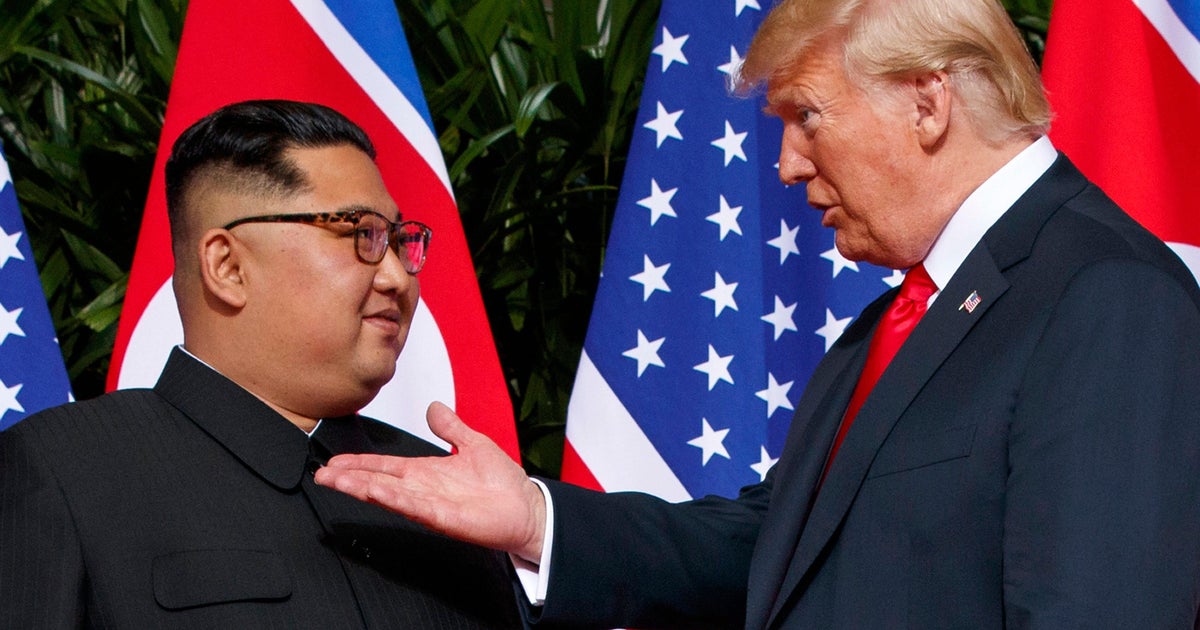
President Donald Trump announced he may hold talks with North Korean leader Kim Jong Un during an upcoming diplomatic mission to China, reopening the possibility of direct engagement between Washington and Pyongyang amid an extensive tour of the Asia-Pacific region that also includes a bilateral visit to the Philippines.
Key facts
What happened
President Donald Trump signaled potential face-to-face negotiations with North Korean Chairman Kim Jong Un, telling reporters that an encounter could occur during his upcoming trip to China. According to reporting by Kathryn Watson, Trump characterized the potential meeting with Kim as an open possibility rather than a finalized arrangement on his travel schedule.
Trump’s diplomatic itinerary for the week is concentrated on East and Southeast Asia, featuring official stops in the Philippines and China, according to reporting by Natalie Andrews. The Asia tour places the American administration in direct proximity to key regional partners and strategic competitors at a moment of heightened security friction across the Western Pacific.
Neither the White House nor the State Department has released an official logistical schedule specifying a date, city, or structured agenda for talks with North Korean officials. It remains unconfirmed whether formal diplomatic advances have been tendered through North Korea’s mission to the United Nations in New York—commonly referred to as the "New York channel"—or coordinated through Chinese intermediaries in Beijing. Nonetheless, Trump's public remarks immediately redirected international attention toward the prospect of renewed personal diplomacy between the two leaders, who previously engaged in three direct encounters during Trump's initial term in the White House.
Why it matters
Any renewed dialogue between the United States and North Korea carries profound security implications for the Indo-Pacific architecture, global nonproliferation regimes, and the broader geopolitical balance involving Washington, Beijing, and Moscow.
During Trump’s first term, direct summitry was premised on achieving the complete, verifiable, and irreversible denuclearization of the Korean Peninsula. Since the collapse of the February 2019 Hanoi summit, however, North Korea's strategic leverage and military inventory have transformed. Pyongyang has conducted dozens of ballistic missile tests, developed solid-fuel intercontinental ballistic missiles such as the Hwasong-18 capable of targeting the continental United States, and formally codified its nuclear doctrine into law, declaring its deterrent capability irreversible.
Furthermore, the physical venue of China introduces complex dynamics. Historically, Beijing has served as North Korea’s chief economic patron and treaty ally under the 1961 Sino-North Korean Treaty of Friendship, Co-operation and Mutual Assistance. However, China has typically acted as a host for multilateral frameworks—such as the Six-Party Talks in the 2000s—rather than serving as the backdrop for bilateral, leader-level American-North Korean summitry.
If Beijing facilitates or hosts an encounter between Trump and Kim, it would position Chinese President Xi Jinping as an indispensable geopolitical arbiter at a time when relations between the United States and China remain fraught over trade tariffs, semiconductor export controls, and security flashpoints in the South China Sea and Taiwan Strait. For treaty allies South Korea and Japan, any direct negotiation between Washington and Pyongyang that sidesteps their security guarantees risks reigniting fears of regional decoupling or bilateral arms agreements that do not address short- and medium-range tactical missile threats targeting Seoul and Tokyo.
The background
Direct presidential diplomacy between Washington and Pyongyang began in 2018 following a period of acute escalation in 2017, when North Korea conducted its sixth underground nuclear test and launched multiple intercontinental ballistic missiles, prompting warnings from Trump of "fire and fury."
The subsequent diplomatic thaw yielded the historic Singapore summit on June 12, 2018, at the Capella Hotel on Sentosa Island. The resulting joint statement pledged the establishment of new bilateral relations, mutual efforts toward a lasting peace regime, and a North Korean commitment to work toward the complete denuclearization of the Korean Peninsula. However, the agreement lacked specific implementation timelines, inspection protocols, or enforcement mechanisms.
A follow-up summit in Hanoi, Vietnam, held on February 27–28, 2019, collapsed abruptly when the two sides failed to reach consensus on the sequencing of sanctions relief and nuclear dismantling. North Korea offered to dismantle the Yongbyon Nuclear Scientific Research Center in exchange for the lifting of five United Nations Security Council sanctions resolutions enacted between 2016 and 2017. The United States rejected the proposal, demanding a broader scope of disarmament that included undeclared enrichment facilities, ballistic missile systems, and chemical and biological stockpiles.
The leaders met for a third time on June 30, 2019, at the Panmunjom Joint Security Area inside the Demilitarized Zone separating North and South Korea, where Trump briefly crossed the military demarcation line into North Korean territory. Despite the symbolic gesture, working-level negotiations in Stockholm in October 2019 broke down after a single day, and substantive diplomatic engagement ceased.
In the intervening years, Pyongyang shifted away from diplomatic engagement with the West. The country closed its borders during the COVID-19 pandemic and subsequently deepened its strategic cooperation with the Russian Federation. In June 2024, Kim Jong Un and Russian President Vladimir Putin signed the Treaty on Comprehensive Strategic Partnership in Pyongyang, which includes a mutual defense clause requiring each party to provide immediate military assistance in the event of armed aggression against the other. North Korea also formally renounced the goal of peaceful reunification with South Korea, classifying Seoul as its principal, immutable enemy.
Concurrent with the China visit, the Philippines leg of Trump's trip highlights an evolving defense theater. Manila and Washington have steadily reinforced their 1951 Mutual Defense Treaty, granting American forces expanded rotational access to strategic military installations under the Enhanced Defense Cooperation Agreement (EDCA), largely to counter Chinese maritime activities in the South China Sea.
Reaction
Official international reaction to Trump's statement has remained guarded as governments verify whether the remarks indicate planned diplomatic engagement or an impromptu foreign-policy proposal.
In Washington, members of the foreign policy establishment and congressional committees on armed services and foreign relations are expected to demand clarity on the administration's negotiation goals. Lawmakers historically critical of direct summitry are likely to emphasize the risk of legitimizing North Korea’s nuclear program without secured preconditions, while supporters argue that direct leader-to-leader interaction remains the only viable path to avert miscalculation between nuclear-armed states.
Regional partners are closely monitoring the developments. South Korea’s presidential office and the Ministry of Foreign Affairs have routinely maintained that any dialogue with Pyongyang must be pursued in close consultation with Seoul, ensuring that deterrence frameworks and trilateral security cooperation among Washington, Seoul, and Tokyo remain uncompromised.
In Beijing, the Chinese Ministry of Foreign Affairs routinely uses daily press briefings to reiterate its standard support for political settlements on the Korean Peninsula through dialogue, while emphasizing the need to address North Korea’s "legitimate security concerns" alongside sanctions relief.
Pyongyang has not issued an immediate response through its state-run Korean Central News Agency (KCNA). Kim Jong Un's government typically calibrates public statements carefully, reserving official announcements for high-level meetings of the Workers' Party of Korea or designated statements from senior foreign ministry figures, such as Vice Foreign Minister Choe Son Hui or Kim’s sister, Kim Yo Jong.
What we don't know yet
Significant operational and strategic details remain unconfirmed:
What to watch
Key checkpoints in the coming days will reveal whether an encounter materializes:
*This report synthesizes original reporting from Kathryn Watson and Natalie Andrews.*
How this story was produced
This report was written by The Global Wire newsroom from reporting first published by Kathryn Watson. We verify the core facts against the original report, write our own account, and add the background and consequences a short wire item leaves out. Drafting is AI-assisted inside an editor-supervised pipeline, and every story is checked for accuracy of attribution, structure and duplication before it appears — full detail in our AI and funding disclosure.
Spotted an error? Tell us at corrections@horizonglobalnews.com and read our corrections policy or editorial standards.






Reader comments
Loading comments…