

Township Reading Club Fosters Young Authors Amid South Africa's Literacy Crisis
A grassroots reading initiative in a Johannesburg township is empowering children to write their own books as the country confronts deep childhood literacy deficits.
By The Global Wire Newsroom · Reported from Kate Bartlett
Link preview · horizonglobalnews.com
Township Reading Club Fosters Young Authors Amid South Africa's Literacy Crisis
A grassroots reading initiative in a Johannesburg township is empowering children to write their own books as the country confronts deep childhood literacy deficits.
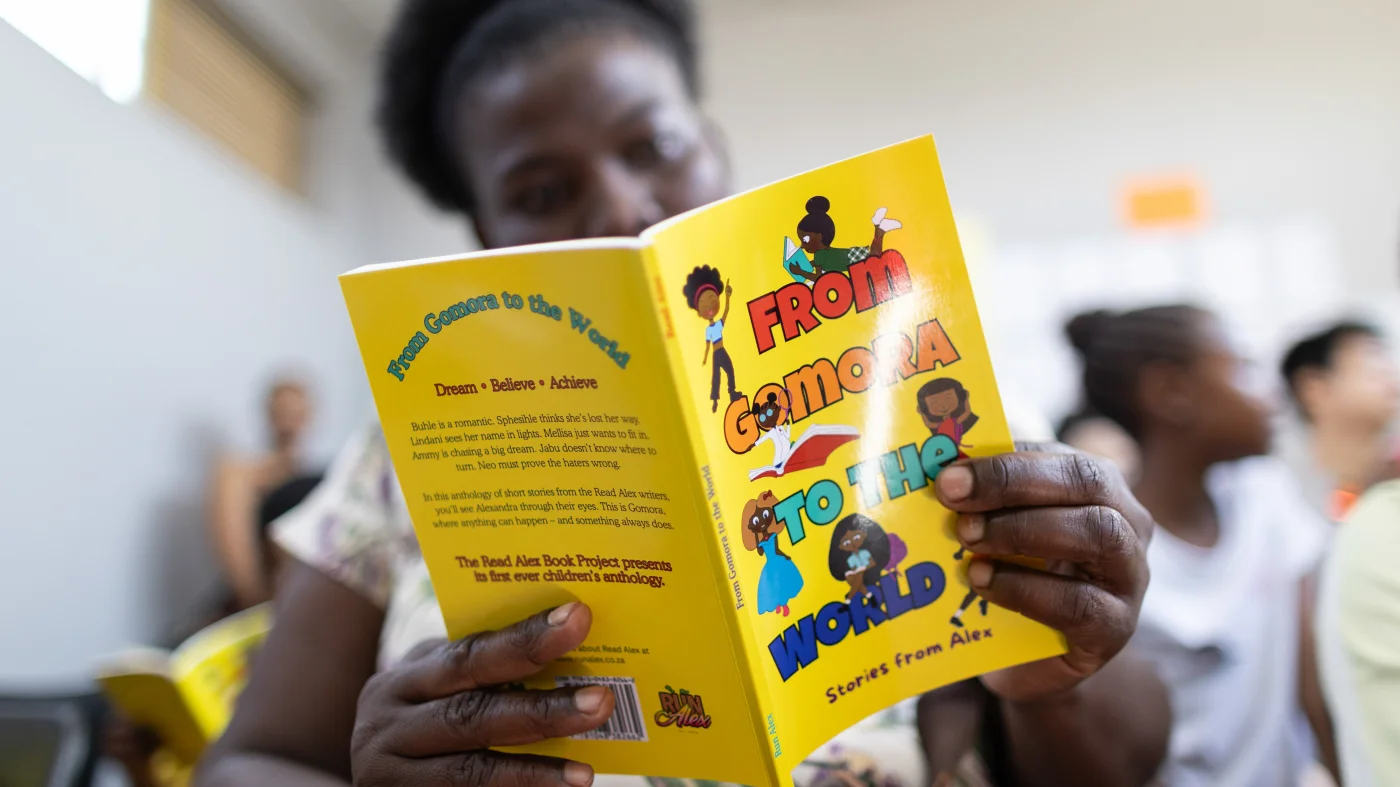
A community reading club operating in a Johannesburg township is providing children with foundational literacy support and encouraging them to write their own original books, according to reporting by Kate Bartlett. The initiative represents an emergent grassroots model addressing South Africa's systemic early-grade reading challenges by turning young learners from passive readers into published storytellers. Set against the backdrop of a prolonged national educational struggle in which a significant majority of primary school learners struggle to read for meaning, the local intervention highlights the growing role of non-state and neighborhood-level programs in bridging literacy divides within historically disadvantaged urban communities.
Key facts
What happened
In an urban township within the Johannesburg metropolitan area, community educators and literacy advocates established a specialized reading club aimed at reversing early learning deficits, according to reporting by Kate Bartlett. The program was designed to introduce children to regular, structured reading sessions in an environment outside the formal, often overcrowded classroom.
Rather than restricting instruction to rote comprehension drills, organizers structured the club around interactive engagement with stories. Facilitators encouraged children to analyze narratives, explore literary themes, and express their own life experiences through creative writing. As part of this curriculum, children participating in the sessions were guided through the mechanics of storytelling, character design, and narrative drafting, ultimately inspiring and equipping them to author their own works.
Township educational environments in Gauteng province often experience significant resource pressure, including large pupil-to-teacher ratios that limit individualized reading instruction. By establishing a dedicated reading circle, the initiative offers local youth a safe, well-resourced space to access print materials. According to the reporting, the initiative seeks not merely to build remedial decoding skills, but to fundamentally alter children's relationships with books, positioning creative authoring as an achievable pursuit for children growing up in township settings.
Why it matters
The persistence of acute reading deficits among primary school learners represents one of South Africa's most urgent developmental and economic bottlenecks. When children fail to acquire fluent reading comprehension in their foundational school years, their ability to absorb more complex subject matter across science, mathematics, and humanities in later grades is severely compromised. Educational economists have long demonstrated that foundational literacy is the single strongest predictor of whether a student will complete secondary education, matriculate successfully, or enter the formal labor market. In an economy where youth unemployment consistently hovers around 60 percent, early literacy interventions are not merely pedagogical exercises; they are essential structural interventions against intergenerational poverty.
Furthermore, empowering township youth to write their own stories directly tackles the acute shortage of culturally representative children's literature in South Africa. The overwhelming majority of commercial children's books published in the country have historically catered to affluent, English- or Afrikaans-speaking demographics, leaving children from townships with limited access to stories that reflect their linguistic realities, neighborhoods, and everyday social environments. Transforming learners into authors helps demystify the creation of literature, building psychological agency and reinforcing language acquisition. When children see their peers and themselves as creators of print culture rather than peripheral consumers, academic motivation and self-efficacy improve substantially.
The background
South Africa's early-grade literacy crisis is documented extensively through both domestic diagnostics and international benchmarking assessments. In the 2021 cycle of the Progress in International Reading Literacy Study (PIRLS), an international assessment that evaluates reading comprehension among fourth-grade learners, South Africa ranked last among 43 participating countries and jurisdictions. The results revealed that 81 percent of South African Grade 4 learners were unable to read for meaning in any language, whether in English or in their respective home languages. This marked a severe setback from the 2016 PIRLS assessment, in which the figure stood at 78 percent, with disruptions caused by the COVID-19 pandemic between 2020 and 2022 drastically worsening early foundational skills due to lost instructional time.
This crisis is structurally rooted in the historical legacies of apartheid-era education. Under the Bantu Education Act of 1953, the state systematically underfunded schools serving Black South Africans, intentionally restricting curriculum depth, teacher training, and physical infrastructure. Decades after the transition to democracy in 1994, public schooling remains largely bifurcated along socio-economic lines. While a minority of wealthy public and independent schools operate with state-of-the-art libraries and low teacher-student ratios, the vast majority of no-fee township and rural schools face infrastructural backlogs. According to data compiled by educational advocacy groups such as Equal Education, fewer than 20 percent of public schools across South Africa feature fully functional, stocked libraries.
Compounding these structural deficits is South Africa's complex linguistic landscape. South Africa recognizes 12 official languages following the constitutional recognition of South African Sign Language in 2023. Under national policy established by the Department of Basic Education, the vast majority of Black African learners are taught in their home language—such as isiZulu, isiXhosa, or Sesotho—from Grade 1 through Grade 3. In Grade 4, the language of learning and teaching abruptly shifts to English in most public schools. This linguistic transition occurs precisely at the developmental stage where children are expected to transition from "learning to read" to "reading to learn." Without adequate mother-tongue reading materials or robust bilingual bridges, millions of learners fall behind permanently at this crucial juncture.
In response to these systemic failures, the Department of Basic Education launched frameworks such as the National Reading Coalition and the Early Grade Reading Study (EGRS). However, implementation has remained uneven, leaving non-governmental organizations, philanthropic trusts, and neighborhood volunteers to establish community-level reading clubs, book boxes, and after-school initiatives to plug the instructional gap.
Reaction
While state officials at the national Department of Basic Education and provincial departments such as the Gauteng Department of Education have not issued direct public statements regarding this specific Johannesburg initiative, educational policy analysts and non-governmental literacy organizations have repeatedly stressed the necessity of localized reading clubs. Civil society networks, including the Nal'ibali National Reading-for-Enjoyment Campaign and the Read Educational Trust, have consistently advocated for expanding community-based literacy hubs as vital supplements to conventional classroom schooling.
Education specialists frequently emphasize that formal classroom reform must be accompanied by community-led reading cultures. Without access to books outside school hours and without parents or mentors reading with children, classroom-based interventions yield limited results. Literacy organizations and teacher unions are expected to continue monitoring how grassroots models can be integrated into municipal libraries, early childhood development centers, and after-school sports and cultural programs across Gauteng's township belts.
What we don't know yet
Several substantive operational and structural details regarding the Johannesburg township program remain unverified. The initial report does not specify the precise township in which the club operates, leaving it unconfirmed whether the intervention is situated in established urban townships such as Soweto or Alexandra, or in newer, more peri-urban settlements such as Diepsloot or Orange Farm. These distinctions carry important implications regarding local municipal infrastructure and existing community library resources.
Additionally, the reporting does not disclose the specific institutional identity behind the club—whether it operates under the auspices of an established educational non-profit organization, a local school governing body, or an unaffiliated volunteer resident. Crucial pedagogical parameters also remain undocumented, including the exact ages and grades of the participating children, the languages in which they are reading and writing, the total number of learners enrolled, and how the books produced by the young authors are published, printed, or distributed within the community. Finally, the long-term funding mechanism and sustainability of the program remain unspecified.
What to watch
In the coming months, observers will watch whether the young authors' completed works are published in print or digital formats, and whether local community centers or municipal libraries in Johannesburg acquire and circulate them. The development of physical collections authored by local children would represent a measurable benchmark for the program's creative output.
On the policy front, the Department of Basic Education is scheduled to continue implementing its foundational literacy initiatives, with independent researchers tracking whether community-based interventions receive increased state or philanthropic grant funding. Educational analysts will also monitor preparations for future international reading assessments, including subsequent cycles of PIRLS and national systemic evaluations, to gauge whether localized reading initiatives across Gauteng and other provinces are beginning to shift aggregate comprehension trajectories among primary school learners.
Additional points to watch include whether similar creative writing workshops expand into other townships across the Johannesburg metropolitan municipality, and whether local schools establish formal partnerships with the reading club to track participant academic progress over time.
This article includes reporting originally gathered and published by Kate Bartlett.
How this story was produced
This report was written by The Global Wire newsroom from reporting first published by Kate Bartlett. We verify the core facts against the original report, write our own account, and add the background and consequences a short wire item leaves out. Drafting is AI-assisted inside an editor-supervised pipeline, and every story is checked for accuracy of attribution, structure and duplication before it appears — full detail in our AI and funding disclosure.
Spotted an error? Tell us at corrections@horizonglobalnews.com and read our corrections policy or editorial standards.






Reader comments
Loading comments…