

Tim Cook Legacy Comments Highlight Era of Growth and Transition at Apple
Apple Chief Executive Tim Cook addressed questions regarding his executive legacy, prompting fresh evaluation of his more than decade-long tenure leading the technology company.
By The Global Wire Newsroom · Reported from Lance Ulanoff
Link preview · horizonglobalnews.com
Tim Cook Legacy Comments Highlight Era of Growth and Transition at Apple
Apple Chief Executive Tim Cook addressed questions regarding his executive legacy, prompting fresh evaluation of his more than decade-long tenure leading the technology company.
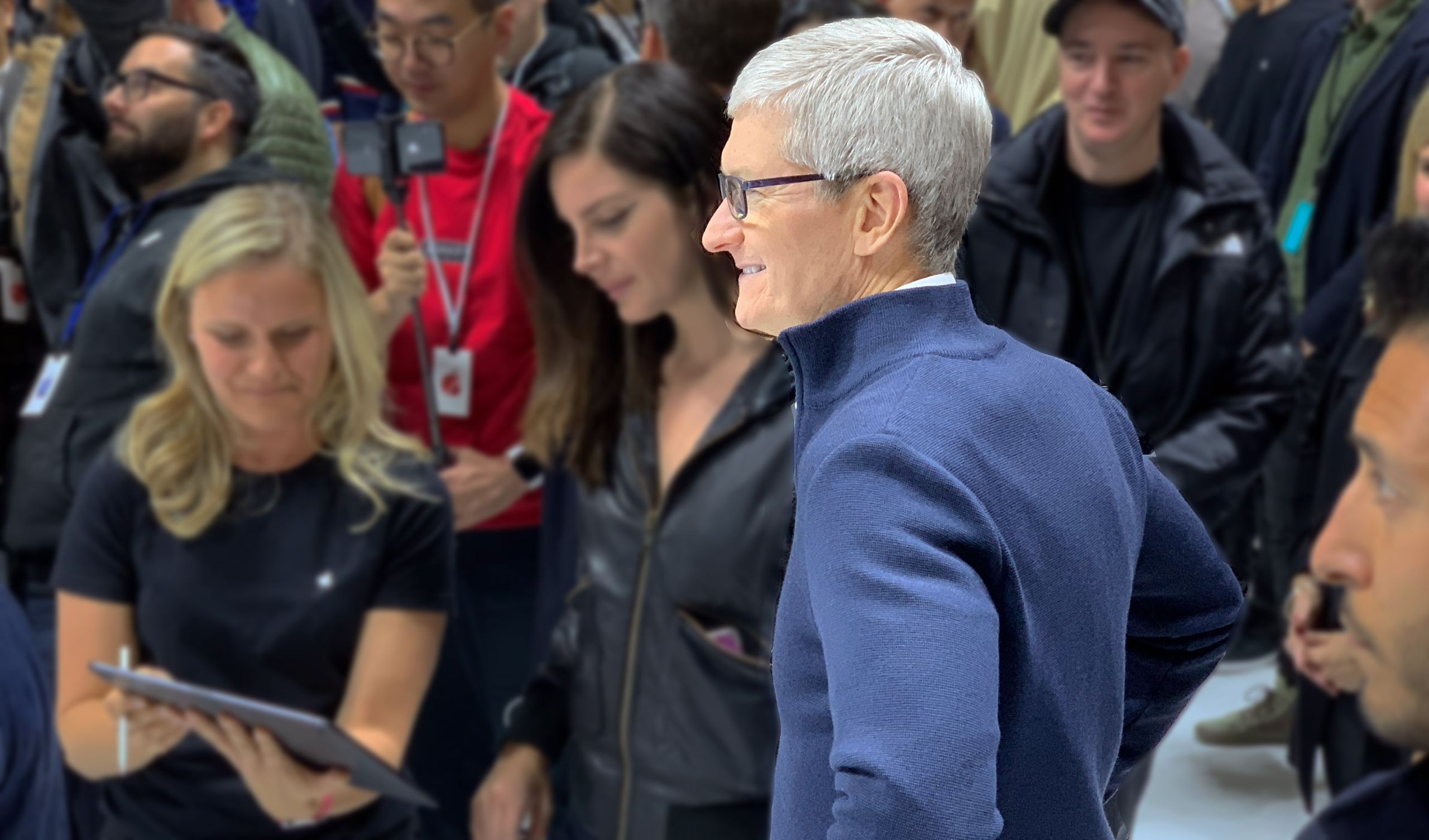
CUPERTINO, Calif. — Apple Inc. Chief Executive Officer Tim Cook has addressed questions concerning his legacy leading the multinational technology company, according to reporting published by technology journalist Lance Ulanoff. The discussion regarding Cook’s long-term impact on the enterprise highlights ongoing interest from investors, industry analysts, and consumers about the trajectory of Apple’s executive leadership and its broader corporate direction.
Cook, who stepped into the role of chief executive in August 2011 following the resignation of co-founder Steve Jobs, has managed the company through more than a decade of significant industry change and corporate expansion. As Cook’s tenure extended past the ten-year mark, public commentary surrounding executive leadership at Apple has increasingly focused on how his stewardship will be evaluated in comparison to his predecessor, as well as how the company prepares for eventual future leadership transitions.
Addressing executive stewardship
The question of executive legacy often arises during the later stages of a chief executive officer's tenure at major publicly traded corporations. According to reporting by Lance Ulanoff, Cook's response to inquiries about his personal legacy provided insight into how the executive views his ongoing role and responsibilities at Apple.
Evaluating the legacy of a corporate leader typically involves examining both financial metrics and operational shifts executed during their tenure. Under Cook, Apple transitioned from a business primarily defined by flagship consumer hardware releases into a multifaceted corporate enterprise with extensive global supply chains, an expanding high-margin services portfolio, and significant capital return programs for shareholders.
While founding leaders are frequently judged by product invention and disruptive innovation, long-serving chief executives who follow founders are often evaluated on operational resilience, organizational scaling, geographic expansion, and long-term financial performance.
Shift from product founder to operational scale
When Cook succeeded Jobs in 2011, technology commentators and financial analysts raised questions regarding whether a leader with a background in operations could maintain Apple’s momentum. Prior to becoming chief executive, Cook served as Apple's chief operating officer, where he was credited with restructuring the company's global supply network, reducing inventory overhead, and establishing strategic manufacturing partnerships across Asia.
During Cook's leadership, Apple achieved financial milestones previously unseen in the corporate technology sector. The company reached a market capitalization of $1 trillion, later crossing $2 trillion and $3 trillion thresholds in subsequent years, driven by sustained global demand for the iPhone product line and the introduction of new hardware categories and digital subscription services.
Rather than radically departing from the product architecture established prior to 2011, Cook focused on scaling production, optimizing profit margins, and deepening ecosystem integration. Under his leadership, Apple expanded its flagship smartphone line into multiple tier levels and sizes, broadened the reach of the iPad and Mac product lines, and successfully introduced new wearable device segments.
Expansion into services and hardware ecosystems
A defining characteristic of Apple’s corporate strategy during Cook's tenure has been the aggressive growth of its Services division. Recognizing potential saturation in mature hardware markets, Apple built an infrastructure of recurring revenue streams centered around digital content, cloud storage, financial services, and application distribution.
Offerings such as Apple Music, iCloud, the App Store, Apple Pay, Apple TV+, and Apple Fitness+ converted a global active device installed base measuring in the billions into a steady stream of recurring subscription revenue. This strategic shift helped insulate Apple's financial balance sheet from seasonal fluctuations in hardware sales and positioned the company as a major player in digital media and financial technology services.
Simultaneously, Apple introduced key hardware categories under Cook’s leadership, including the Apple Watch and AirPods. These devices established dominant positions within the wearable technology and wireless audio markets, creating an integrated hardware ecosystem that incentivized consumer retention within the Apple software environment.
In addition, the company executed a major technical transition by replacing third-party processors in its personal computer lineup with in-house Apple Silicon chips. This hardware engineering initiative improved battery efficiency and processing performance across Mac and iPad lines while further integrating Apple's hardware and software development pipelines.
Corporate governance and succession planning
As corporate leaders approach long tenures, governance experts and institutional shareholders place heightened focus on succession planning and executive continuity. For a company of Apple's scale, managing executive leadership transitions requires balancing internal institutional knowledge with the need for strategic adaptation.
Throughout Cook's time as chief executive, Apple has maintained a relatively stable executive team across hardware engineering, software development, operations, services, and corporate marketing. Key leadership positions have frequently been filled by long-time internal executives, ensuring operational continuity across product cycles and corporate initiatives.
Discussion regarding executive legacy at major technology firms frequently intersects with corporate governance priorities, including corporate social responsibility, environmental targets, and data privacy policies. Under Cook, Apple set public corporate goals aimed at reaching carbon neutrality across its supply chain and product lifecycles, while positioning user data privacy as a core brand differentiator in the tech industry.
Regulatory pressures and global headwinds
Cook’s executive tenure has also been marked by complex global challenges and increasing regulatory oversight from international governments. As Apple grew into a dominant market participant, regulators in the United States, the European Union, and other international jurisdictions increased scrutiny on its business practices.
Antitrust inquiries have targeted Apple's control over the App Store, software distribution mechanisms, payment processing systems, and interoperability policies. Legal and regulatory mandates, such as the European Union's Digital Markets Act, have forced structural changes to how Apple operates its mobile ecosystem in certain regions, presenting strategic hurdles for the company’s services business model.
Furthermore, global supply chain vulnerabilities—highlighted by geopolitical tensions and international trade disruptions—have required Apple to re-evaluate its manufacturing infrastructure. Under Cook's direction, Apple has initiated efforts to diversify its manufacturing footprint outside of historical production hubs, expanding operations in regions such as India and Vietnam.
Looking ahead
The ongoing commentary surrounding Cook’s legacy underscores the broader challenge facing mature technology giants as they balance legacy product lines with emerging technological shifts. As computing paradigms evolve toward artificial intelligence, immersive interfaces, and advanced automation, executive leadership across the sector faces the task of guiding legacy organizations through fundamental industry transformations.
Whether Cook's legacy is ultimately defined by corporate financial growth, supply chain management, ecosystem consolidation, or corporate governance policy, his tenure remains a central case study in modern corporate executive leadership.
Reporting for this story was originally published by Lance Ulanoff.
How this story was produced
This report was written by The Global Wire newsroom from reporting first published by Lance Ulanoff. We verify the core facts against the original report, write our own account, and add the background and consequences a short wire item leaves out. Drafting is AI-assisted inside an editor-supervised pipeline, and every story is checked for accuracy of attribution, structure and duplication before it appears — full detail in our AI and funding disclosure.
Spotted an error? Tell us at corrections@horizonglobalnews.com and read our corrections policy or editorial standards.





Reader comments
Loading comments…