

Texas Solar Project Deploys Rapid Robotic Assembly for 457-Megawatt Facility
A utility-scale solar installation in Navarro County, Texas, is turning to automated robotic systems capable of mounting panels in two minutes to accelerate construction of a 457-megawatt array.
By The Global Wire Newsroom · Reported from Muskan Bhatia
Link preview · horizonglobalnews.com
Texas Solar Project Deploys Rapid Robotic Assembly for 457-Megawatt Facility
A utility-scale solar installation in Navarro County, Texas, is turning to automated robotic systems capable of mounting panels in two minutes to accelerate construction of a 457-megawatt array.
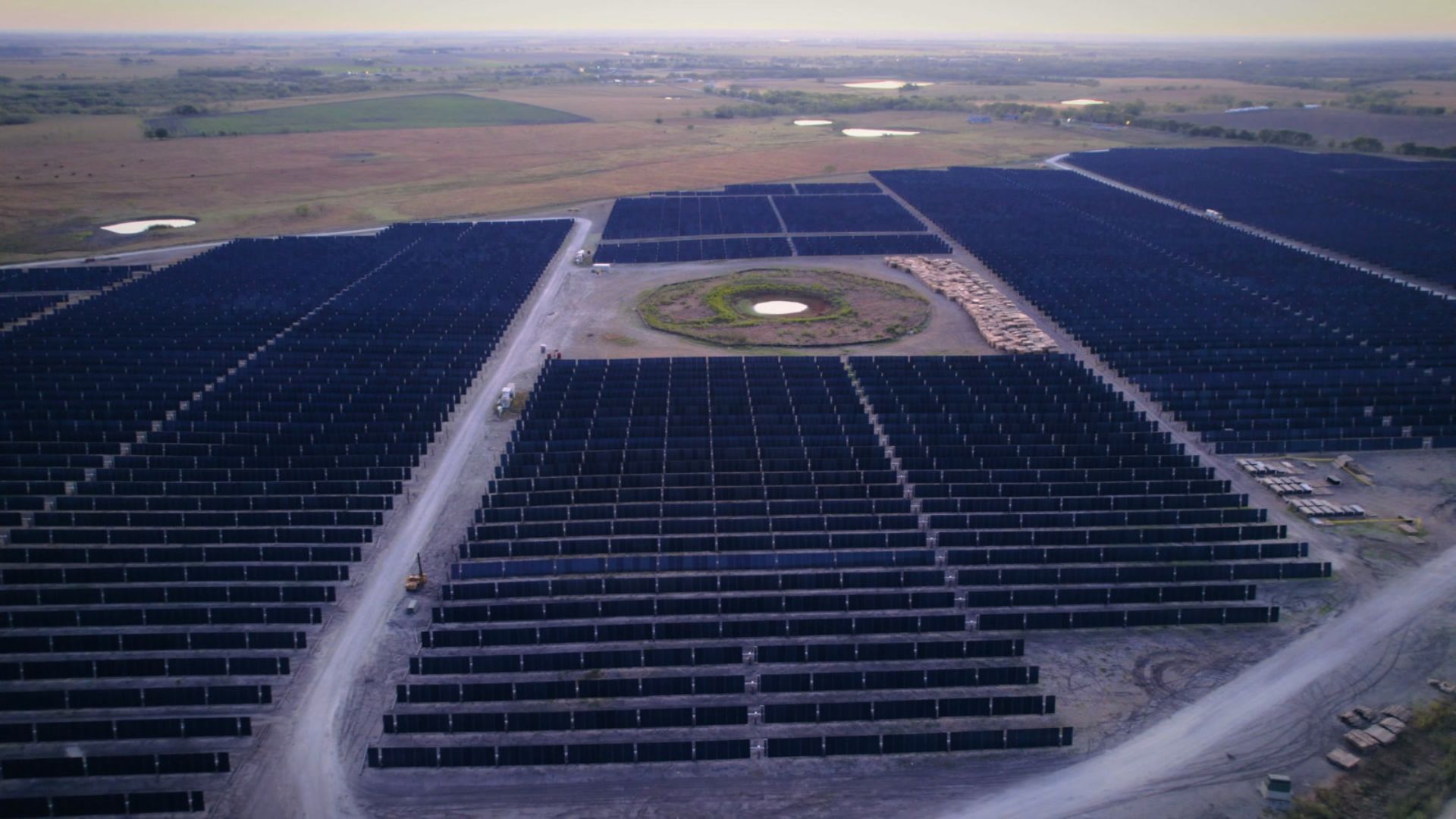
Developers of a major utility-scale solar installation in Navarro County, Texas, have turned to an automated robotic platform to mount photovoltaic modules, aiming to accelerate the delivery of a 457-megawatt clean energy facility, according to reporting by Muskan Bhatia. Under the new deployment model, specialized automated systems are being integrated into the construction process to assemble solar panel units at a pace of roughly one module every two minutes. The operational shift reflects a growing drive across the utility-scale renewable energy sector to counter persistent construction bottlenecks, severe craft labor shortages, and rising capital expenditure by deploying field robotics on large-scale solar project sites.
Key facts
What happened
Engineering, procurement, and construction teams working on the 457-megawatt solar facility in Navarro County, Texas, have reconfigured field operations to introduce automated assembly machinery into the panel installation phase. According to reporting by Muskan Bhatia, the platform relies on specialized robotic hardware engineered to lift, position, align, and secure solar panels onto their structural racking systems in rapid succession, achieving cycle times of approximately two minutes per unit.
Traditional utility-scale solar installation involves human labor crews manually unboxing panels, carrying them across uneven terrain, positioning them on single-axis tracker torque tubes, and fastening mechanical hardware and electrical connections under direct exposure to extreme heat and harsh weather. By contrast, the automated platform introduced at the Navarro County site establishes an industrialized, mechanized workflow directly in the field. Mechanical arms and automated alignment sensors handle the heavy lifting and precise placement of the heavy photovoltaic modules, significantly reducing the cycle time required for each module while standardizing the mechanical torque applied to mounting fasteners.
The deployment was undertaken specifically to expedite the overall project timeline. For a facility rated at 457 megawatts, hundreds of thousands of individual solar panels—typically numbering between 800,000 and one million modules depending on individual panel wattage—must be erected across thousands of acres of rural land. Shifting this mechanical assembly to a two-minute automated cycle represents a fundamental change in how the physical build phase of the facility is being executed.
Why it matters
The adoption of field robotics at a 457-megawatt site marks a significant milestone in the industrialization of renewable energy construction. Utility-scale solar power has expanded at an unprecedented pace across the United States, yet the physical methods used to install panels on ground-mounted racking have remained largely unchanged for decades, relying heavily on manual, labor-intensive assembly lines stretched across vast open fields. In regions like Texas, where summer temperatures regularly exceed 100 degrees Fahrenheit, physical fatigue and heat stress pose continuous risks to construction crews, leading to elevated turnover rates, quality control variances, and chronic schedule slippage.
Automating the mechanical placement of modules addresses several systemic vulnerabilities in the clean energy supply chain. First, it directly mitigates the acute shortage of skilled and semi-skilled construction laborers that has constrained renewable energy developers across rural America. As hundreds of gigawatts of new clean energy projects enter development pipelines, engineering and construction contractors routinely report difficulties staffing multi-gigawatt portfolios.
Second, automating installation directly influences project economics. High interest rates and volatile financing costs mean that every month of construction delay adds substantial debt service carrying costs to an asset before it can generate revenue. Achieving a consistent two-minute assembly rhythm allows developers to de-risk construction schedules, meet tight interconnection milestones, and commence power generation on predictability curves demanded by institutional infrastructure investors. Furthermore, standardized robotic installation limits human error in panel fastening, reducing micro-cracking and mechanical racking failures that can degrade solar plant output over decades of commercial operation.
The background
Navarro County, situated south of the Dallas-Fort Worth metropolitan area, has become a prominent hub for utility-scale solar development due to its expansive agricultural topography, high solar irradiance, and proximity to major electrical load centers served by the Electric Reliability Council of Texas, or ERCOT. The ERCOT grid operates independently from the eastern and western national interconnects and has experienced explosive growth in renewable energy capacity over the past decade, driven by rapid population growth, industrial manufacturing reshoring, and the expansion of energy-intensive data center clusters.
Historically, utility-scale solar construction has relied on manual work crews numbering in the hundreds for each multi-hundred-megawatt project. Workers must haul modules weighing between 60 and 80 pounds apiece, fasten bolts at repetitive ergonomic angles, and ensure delicate crystalline silicon cells are not cracked during handling. Over recent years, a small cohort of robotics startups and equipment suppliers has developed prototype field automation technologies, including automated mobile transport rovers, GPS-guided trenching machines, autonomous pile-driving rigs, and robotic module-lifting end-effectors.
Industry momentum toward automation has been further accelerated by federal policy frameworks, notably the prevailing wage and registered apprenticeship provisions established under the U.S. Inflation Reduction Act of 2022. While the legislation unlocked lucrative investment tax credits and production tax credits, it tied their maximum value to stringent workforce standards. In rural areas with limited resident labor pools, contractors have faced intense competition for qualifying labor, incentivizing firms to deploy technological workarounds that allow smaller, highly trained supervisory teams to manage automated equipment rather than attempting to recruit massive, transient manual workforces.
Reaction
The reporting by Muskan Bhatia has generated interest across the clean energy engineering and construction sector, where operational metrics from large-scale field deployments of robotics remain closely guarded. Industry analysts and independent engineering firms frequently evaluate whether automated construction systems can deliver on their promised speed and cost savings under unforgiving outdoor conditions, where dust, wind, mud, and uneven terrain have historically caused mechanical failures in robotic prototypes.
While neither the project owner nor the automated platform vendor has issued public statements detailing the specific commercial terms or labor contracts at the Navarro County installation, organized labor groups and renewable energy associations are anticipated to monitor such developments closely. Workforce representatives typically emphasize the need to maintain safe, high-paying jobs and apprentice training opportunities on federally incentivized projects, watching carefully to ensure that robotic automation acts as an ergonomic aid that enhances worker safety and productivity rather than eliminating local construction employment. Engineering firms, meanwhile, are awaiting third-party performance verifications to determine whether robotic assembly can withstand real-world field conditions at competitive per-watt installation costs.
What we don't know yet
Despite the significant technological shift reported at the Navarro County project, several key operational and financial details remain undisclosed in the available reporting. It is not currently verified which development company owns the 457-megawatt asset, nor which engineering, procurement, and construction contractor is managing the build. The specific proprietary robotics manufacturer supplying the automated assembly platform is likewise unnamed in the initial account.
Crucially, it is not yet known whether the two-minute assembly time refers to an isolated mechanical placement step or encompasses the entire mechanical fastening and electrical wire-harness connection process. The extent of the robotic deployment—whether automated units are handling the entirety of the 457-megawatt build or operating in tandem with manual crews on select project blocks—has not been established. Furthermore, the commercial operational date for the facility, its grid interconnection agreement status within the ERCOT queue, and the total capital investment involved in deploying the automated platform remain unconfirmed.
What to watch
The coming months will provide concrete indicators of whether the automated assembly strategy achieves its intended delivery goals in Navarro County. Observers will be watching ERCOT's monthly generation interconnection status reports, which track project progress, preliminary engineering milestones, and projected commercial operation dates for all grid-connected generation assets in Texas. Any formal updates to the Navarro County project's target energization window will demonstrate whether the automated system delivered measurable time savings.
In addition, industry conferences and technical publications will be monitored for formal case studies, technical white papers, or vendor disclosures naming the automated platform deployed at the site. Future filings with the Navarro County Commissioners Court or local school district tax abatement registries could also yield documentation detailing capital expenditure, workforce headcounts, and equipment declarations for the 457-megawatt solar development. Finally, the broader utility-scale engineering sector will watch whether peer developers adopt similar robotic platforms on other multi-hundred-megawatt projects across the American Southwest, signaling whether field automation is transitioning from experimental pilot programs to standard utility practice.
This report is based on original reporting published by Muskan Bhatia.
How this story was produced
This report was written by The Global Wire newsroom from reporting first published by Muskan Bhatia. We verify the core facts against the original report, write our own account, and add the background and consequences a short wire item leaves out. Drafting is AI-assisted inside an editor-supervised pipeline, and every story is checked for accuracy of attribution, structure and duplication before it appears — full detail in our AI and funding disclosure.
Spotted an error? Tell us at corrections@horizonglobalnews.com and read our corrections policy or editorial standards.





Reader comments
Loading comments…