

TCL Introduces C2R Full HD Projector Equipped With Roku TV and Swivel Stand
TCL has unveiled the C2R Full HD LED projector, combining a flexible 285-degree stand and a 10-watt Dolby Audio sound system with built-in Roku streaming software.
By The Global Wire Newsroom · Reported from David Chien
Link preview · horizonglobalnews.com
TCL Introduces C2R Full HD Projector Equipped With Roku TV and Swivel Stand
TCL has unveiled the C2R Full HD LED projector, combining a flexible 285-degree stand and a 10-watt Dolby Audio sound system with built-in Roku streaming software.
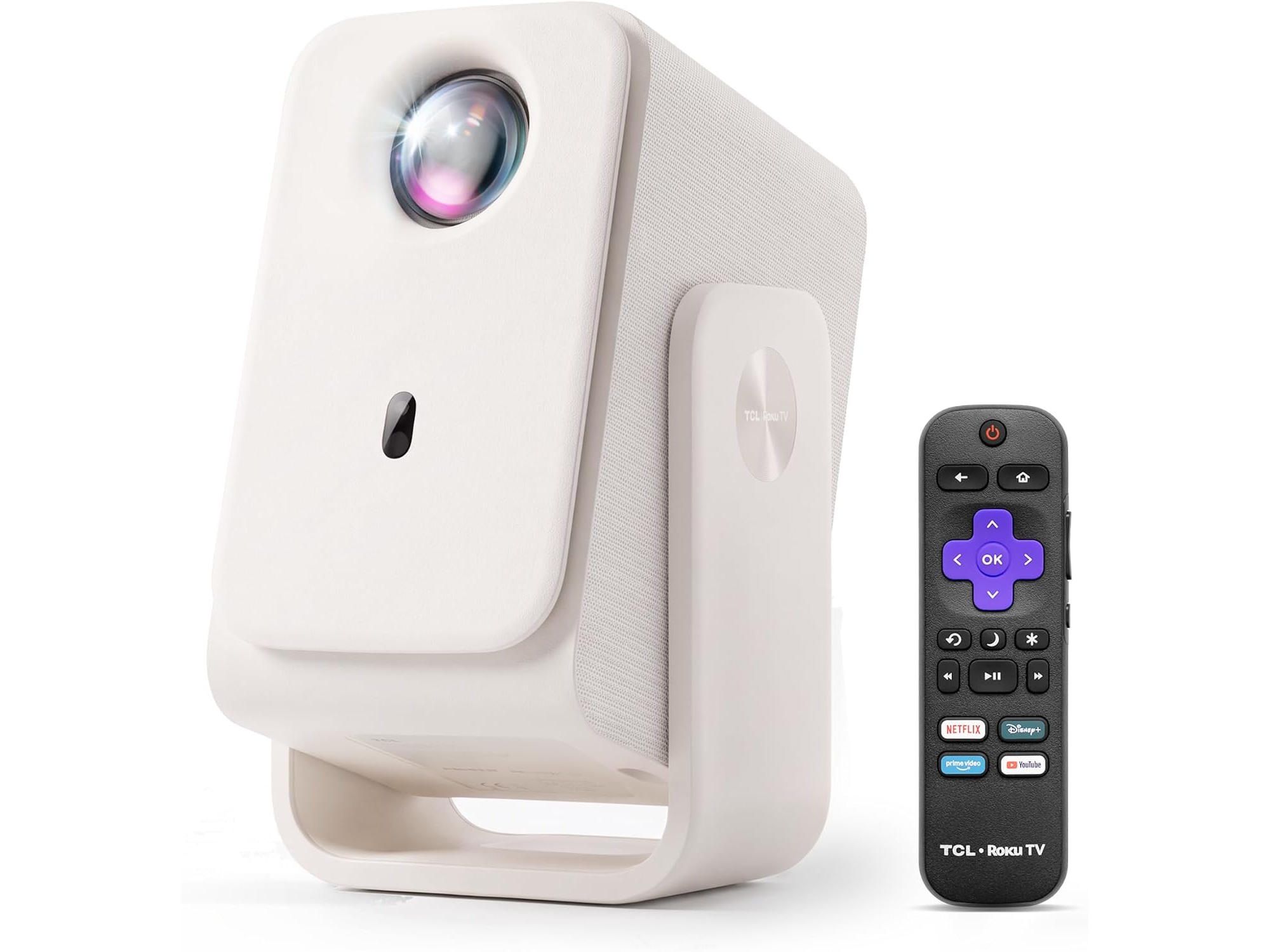
Consumer electronics manufacturer TCL has expanded its projection portfolio with the unveiling of the TCL C2R Full HD LED projector, integrating Roku TV software directly into a portable entertainment device. The compact projector features an adjustable mechanical mounting bracket capable of rotating through 285 degrees, an integrated 10-watt sound driver tuned for Dolby Audio, and direct software support for major digital streaming applications. The release marks a continuing diversification for TCL, which has historically focused on traditional flat-panel liquid crystal displays and mini-LED televisions, into the increasingly competitive lifestyle and versatile projection category.
Key facts
What happened
According to reporting by technology journalist David Chien, TCL has formally debuted the C2R Full HD LED projector, targeting home entertainment and portable media playback. The new unit utilizes a solid-state light-emitting diode (LED) light engine capable of delivering a native or standardized 1080p Full HD video output. Designed to serve as a standalone, all-in-one audiovisual hub, the C2R is outfitted with an internal 10-watt audio driver supported by Dolby Audio processing algorithms, eliminating the absolute necessity for external audio peripherals during casual viewing sessions.
Mechanically, the projector distinguishes itself through a dedicated multi-angle stand. The support mechanism enables the optical cylinder to articulate across an arc of 285 degrees. This broad range of movement allows users to project media onto standard vertical walls, angled partitions, or directly upward onto ceilings without requiring auxiliary tripods or improvised wedges.
On the software side, TCL has opted to license and embed Roku TV OS directly into the C2R projector's firmware. This operating system provides users with an integrated interface identical to that found on dedicated Roku-powered television sets. By utilizing an officially certified deployment of the platform, the C2R offers out-of-the-box navigation and native streaming playback across licensed digital video platforms, specifically including Netflix, alongside hundreds of other on-demand channels and ad-supported content libraries.
Why it matters
Direct integration of a mature operating system like Roku TV addresses one of the persistent structural pain points in the budget and mid-tier smart projector sector. For years, portable and lifestyle projectors produced by a wide variety of hardware manufacturers have relied on rudimentary, open-source Android operating software or heavily modified mobile operating system forks. These implementations frequently lack Widevine L1 cryptographic certification, creating friction where users are unable to stream high-definition content from tier-one providers or find that crucial streaming applications, notably Netflix, fail to install or require awkward third-party mouse-emulation workarounds.
By licensing Roku TV OS for the C2R, TCL circumvents these software hurdles. Roku maintains rigorous licensing standards and dedicated application developer agreements, ensuring that digital rights management systems work seamlessly and streaming applications receive regular maintenance updates. This software stability makes the projector substantially more accessible to everyday consumers who expect the plug-and-play simplicity of a living room television set rather than the troubleshooting routines often associated with enthusiast projection gear.
Furthermore, the announcement emphasizes an intensifying competitive battle within the portable lifestyle display market. Compact, swiveling projection cylinders have gained substantial consumer traction over recent product cycles, allowing individuals to quickly convert bedrooms, dormitories, backyards, and temporary rental spaces into dynamic viewing environments. By entering this form factor with the backing of its manufacturing scale, TCL is positioning itself to challenge incumbents across both Western and Asian consumer electronics channels.
The background
Over the past decade, TCL has transformed from an original equipment manufacturer producing displays for other global labels into one of the world's highest-volume television brands. Central to its ascent in key markets, particularly North America, was an aggressive, early partnership with Roku Inc. Beginning in 2014, TCL released some of the first mass-market smart televisions featuring Roku OS fully embedded as the primary user interface. That collaborative strategy proved mutually advantageous: it allowed Roku to bypass hardware manufacturing overhead while securing millions of active households, and it provided TCL with an intuitive, highly regarded software platform that appealed directly to cord-cutting consumers.
While flat panels have grown progressively larger, thinner, and more affordable, physical screen sizes above 85 or 98 inches remain difficult to transport, install, and price within mainstream household budgets. This ceiling has driven renewed consumer interest in solid-state projection equipment. Historically, home theater projectors relied on high-intensity ultra-high-pressure (UHP) metal halide lamps. These older designs suffered from high power consumption, significant thermal output, loud cooling fans, and relatively brief bulb lifespans that typically required costly replacement after 2,000 to 5,000 hours of operation.
The advent of high-output solid-state LED illumination and compact digital light processing (DLP) or liquid crystal display (LCD) imaging modules has fundamentally altered consumer projection economics. Solid-state LED light sources regularly provide maintenance-free operational life spans ranging from 20,000 to 30,000 hours, virtually eliminating ongoing consumer maintenance costs. Furthermore, LED engines generate considerably less heat, enabling engineers to shrink enclosure dimensions and integrate internal speakers without compromising acoustic performance or thermal stability.
The lifestyle projector segment experienced an acceleration in consumer awareness following the 2022 introduction of Samsung's The Freestyle, an upright, cylindrical projector with a rotating cradle that normalized the concept of dynamic ceiling and wall projection. Competitors such as XGIMI, Anker's Nebula sub-brand, JMGO, and Formovie rapidly expanded their own portable portfolios, mostly deploying versions of Google TV or Android TV. TCL's introduction of the C2R provides an alternative hardware foundation built on the Roku software ecosystem, which retains deep market penetration, particularly across the United States, Canada, and parts of Latin America and Europe.
Reaction
Neither TCL nor Roku issued an immediate joint public statement elaborating on broader production targets or regional sales quotas at the time of the initial reporting. Within consumer electronics and home theater circles, industry observers have frequently argued that Roku's relative absence from the standalone projector market left a significant commercial opening that Google TV largely dominated. Hardware reviewers and retail analysts are expected to monitor whether the C2R serves as a one-off experimental unit or the vanguard of a broader line of Roku-powered projection devices from TCL.
Retailers that have historically moved significant volumes of TCL Roku TV flat panels are anticipated to view the C2R as an intuitive retail shelf companion. For sales associates, marketing a projector that mirrors the familiar graphical user interface, channel organization, and remote-control philosophy of standard Roku televisions significantly lowers the customer service overhead and return rates commonly driven by consumer confusion over complex projector settings.
What we don't know yet
While the core operational framework of the TCL C2R has been established, several pivotal technical and commercial details were omitted from the initial release information. Crucially, TCL has not yet publicly confirmed the retail manufacturer's suggested retail price (MSRP) or the precise schedule for regional commercial availability. Pricing remains the single most critical factor in determining whether the C2R will compete as an accessible entry-level option or position itself against established premium lifestyle projectors that frequently retail between $500 and $800.
On the technical side, the optical brightness rating—measured via standardized ANSI lumens or ISO lumens—remains unstated. Illumination levels dictate whether the C2R is strictly confined to dark-room environments or capable of overcoming ambient lighting in standard living spaces. Additionally, details concerning physical input ports, such as HDMI ARC, optical audio out, or USB-C power delivery, have not been clarified. It is also not yet clear whether the device relies solely on an external AC wall adapter or features an internal rechargeable lithium-ion battery for true off-grid portability, nor have the automated keystone correction and auto-focus specifications been published.
What to watch
Moving forward, consumer electronics observers will look for formal retail listings across major global e-commerce channels, electronics distributors, and TCL's regional web portals to verify pricing structures and regional SKU distribution. Confirmation of whether the C2R will be distributed internationally or restricted to markets where Roku maintains localized streaming rights agreements will be a central indicator of TCL's deployment strategy.
Technical evaluations will follow once production units reach independent testing laboratories. Reviewers will examine real-world color gamut coverage, thermal noise metrics from the internal cooling apparatus, latency figures for casual gaming, and the acoustic performance of the 10-watt Dolby Audio speaker under various projection orientations. Observers will also track whether competing projector manufacturers seek closer software ties with Roku, or whether Google TV continues to command the overwhelming majority of smart projector design partnerships.
Reporting for this account is based on initial hardware disclosures and coverage compiled by technology correspondent David Chien.
How this story was produced
This report was written by The Global Wire newsroom from reporting first published by David Chien. We verify the core facts against the original report, write our own account, and add the background and consequences a short wire item leaves out. Drafting is AI-assisted inside an editor-supervised pipeline, and every story is checked for accuracy of attribution, structure and duplication before it appears — full detail in our AI and funding disclosure.
Spotted an error? Tell us at corrections@horizonglobalnews.com and read our corrections policy or editorial standards.




Reader comments
Loading comments…