

Super El Niño Pressures Cop31 Talks as Compounding Disasters Hit Vulnerable States
The strongest El Niño in centuries is intensifying climate shocks worldwide, confronting negotiators at the UN climate summit with severe humanitarian and financial strains.
By The Global Wire Newsroom · Reported from Oliver Milman
Link preview · horizonglobalnews.com
Super El Niño Pressures Cop31 Talks as Compounding Disasters Hit Vulnerable States
The strongest El Niño in centuries is intensifying climate shocks worldwide, confronting negotiators at the UN climate summit with severe humanitarian and financial strains.
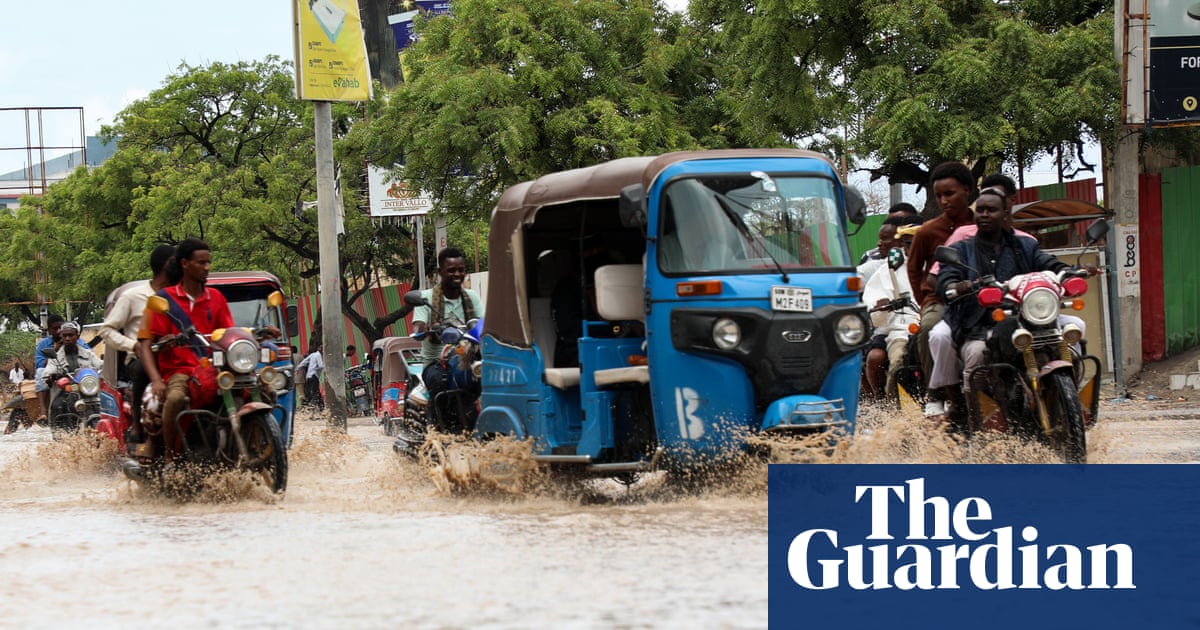
An intensifying climate disruption described as the strongest El Niño weather pattern in centuries is compounding natural disasters across the globe and exerting severe pressure on delegations gathering for the United Nations Cop31 climate summit, according to reporting by Oliver Milman. The phenomenon, acting as a powerful risk multiplier, is driving overlapping humanitarian and economic emergencies in developing and vulnerable countries already struggling with baseline warming. As delegates assemble under the framework of the United Nations Framework Convention on Climate Change (UNFCCC), the meteorological disruption is exposing widening deficits in international disaster response, climate finance, and loss and damage mechanisms designed to support communities on the front lines of extreme ecological instability.
Key facts
What happened
According to reporting by Oliver Milman, climate scientists and humanitarian monitors have recorded a rapid escalation in the strength of the current El Niño–Southern Oscillation cycle, pushing equatorial Pacific sea-surface anomalies to magnitudes not documented in centuries. The emergence of this super El Niño has unleashed cascading meteorological instability, disrupting monsoon cycles, amplifying tropical storms, and suppressing rainfall across traditionally fertile agricultural belts.
Rather than manifesting as isolated seasonal disruptions, the meteorological pattern is functioning as a broad risk multiplier. In multiple regions across the global South, prolonged dry spells have diminished major river systems, crippled hydroelectric generating capacity, and degraded municipal water supplies, while adjacent regions have experienced unseasonal, catastrophic rainfall leading to severe riverine flooding and infrastructure collapse.
These physical impacts are colliding directly with the international political process at Cop31. Delegations from the most climate-vulnerable states report that their domestic capacities are exhausted. The concurrent arrival of multi-front disasters—ranging from ruined grain harvests to the physical destruction of transport corridors and public health infrastructure—has forced governments to divert domestic capital from development initiatives into emergency relief. Within the negotiating rooms, representatives of affected nations are citing these immediate on-the-ground crises to press industrialized economies for urgent structural interventions, arguing that existing multilateral financial instruments were not built to withstand concurrent planetary-scale extremes.
Why it matters
When a super El Niño converges with elevated baseline temperatures driven by anthropogenic greenhouse gas emissions, the resulting disruptions are not merely additive; they are systemic and compounding. For global agricultural commodity markets, synchronized crop failures across disparate production zones—such as Southeast Asian rice belts, southern African maize corridors, and South American soybean regions—threaten severe supply shocks, driving food price volatility that disproportionately harms low-income households. Moreover, the simultaneous degradation of hydroelectric reservoirs forces energy grids onto expensive, diesel- and coal-fired backup generation, compounding fiscal stress while temporarily increasing domestic emissions.
At the level of sovereign finance, compounding climate events cause severe credit deterioration. Emerging economies battered by simultaneous floods and droughts face steep increases in the cost of capital as credit rating agencies downgrade sovereign debt due to rising disaster vulnerability. For municipal and regional authorities, the continuous burden of reconstruction prevents long-term capital allocation toward education, healthcare, and economic diversification. The operational consequence at Cop31 is that the traditional compartmentalization of climate negotiations—treating adaptation, mitigation, and loss and damage as sequential, distinct pillars—is collapsing under the weight of simultaneous, real-time emergencies.
The background
The El Niño–Southern Oscillation (ENSO) is a recurring, naturally occurring ocean-atmosphere phenomenon centered in the equatorial Pacific Ocean, characterized by irregular shifts between warm El Niño phases and cooler La Niña phases, typically on cycles lasting between two and seven years. During an El Niño event, prevailing trade winds weaken or reverse direction from east to west, allowing a massive pool of warm ocean water to migrate eastward across the central and eastern Pacific. This thermal redistribution fundamentally alters upper-atmosphere jet streams, shifting global atmospheric circulation cells and reconfiguring weather patterns across continents.
Meteorological records maintained by institutions such as the United States National Oceanic and Atmospheric Administration (NOAA) and the World Meteorological Organization (WMO) classify an El Niño event using the Oceanic Niño Index (ONI), which measures three-month running averages of sea-surface temperature departures in the Niño 3.4 region of the east-central Pacific. Historical benchmark events occurred in 1982–1983, 1997–1998, and 2015–2016. The 2015–2016 event, previously regarded as among the most powerful on record, lifted the Oceanic Niño Index to 2.6 degrees Celsius above baseline averages, contributing to unprecedented coral bleaching across the Great Barrier Reef, extensive forest fires in Indonesia, and historic drought throughout southern and eastern Africa.
In international diplomacy, the 1992 UNFCCC treaty established annual Conference of the Parties (COP) gatherings to negotiate multilateral responses to environmental changes. Landmark benchmarks include the 1997 Kyoto Protocol and the 2015 Paris Agreement, which committed 196 parties to hold global average temperature increases well below 2.0 degrees Celsius above pre-industrial levels, with an aspirational ceiling of 1.5 degrees Celsius. Subsequent summits, including Cop27 in Sharm el-Sheikh in 2022 and Cop28 in Dubai in 2023, progressively formalized mechanisms to address economic and non-economic harm in vulnerable states, leading to the establishment and initial capitalization of a dedicated Loss and Damage Fund. Despite these institutional advances, the operational funds pledged remain far below the hundreds of billions of dollars in annual damages documented by international financial institutions.
Reaction
The findings reported by Oliver Milman coincide with mounting friction between negotiating blocs at the summit. While official ministerial plenary statements will emerge over the course of the Cop31 session, long-standing negotiating alliances have signaled entrenched positions. The Alliance of Small Island States (AOSIS) and the Least Developed Countries (LDC) negotiating group consistently argue in plenary sessions that historical carbon emitters bear legal and moral responsibilities to provide non-debt-creating grant funding to address climate shocks. Representatives from these coalitions point out that commercial loans for post-disaster reconstruction trap vulnerable economies in perpetual debt cycles.
Conversely, delegations from developed economies, including the United States, the European Union member states, and other members of the Umbrella Group, have traditionally emphasized the need to broaden the contributor base to include high-emitting emerging economies with large sovereign balance sheets. Major donor states also frequently emphasize private sector capital mobilization, risk-pooling insurance mechanisms, and structural domestic policy reforms in recipient countries over direct public treasury grant disbursements. Multilateral development banks, including the World Bank and the International Monetary Fund, are facing continued calls from civil society networks to accelerate the implementation of climate-resilient debt clauses, which temporarily pause sovereign debt service repayments during catastrophic meteorological emergencies.
What we don't know yet
Several critical scientific, economic, and diplomatic questions remain unresolved amid the current crisis. First, atmospheric scientists are continuing to study the exact proportion of current temperature extremes and extreme weather severity attributable specifically to the internal natural variability of the El Niño cycle versus the underlying baseline accumulation of anthropogenic greenhouse gases. Precise event attribution studies, which rely on high-resolution ensemble modeling, often require months to determine the exact influence of climate change on specific regional floods or droughts.
Second, the available reporting does not specify the precise monetary shortfall currently facing international humanitarian relief agencies responding to the ongoing El Niño cycle. Major United Nations humanitarian response plans have historically experienced structural funding deficits, with agencies such as the World Food Programme frequently forced to cut caloric rations due to budget constraints, but comprehensive aggregate deficit figures for the current season have not yet been finalized.
Third, it remains uncertain whether the pressure generated by this meteorological event will translate into binding, codified breakthroughs at Cop31. While acute physical disasters often elevate moral rhetoric in plenary chambers, past summits have demonstrated that immediate climate crises do not automatically overcome deep-seated geopolitical disagreements over financial targets, governance of loss and damage facilities, or binding timelines for the phase-out of fossil fuels.
What to watch
The trajectory of both the climate crisis and the diplomatic summit will depend on several concrete milestones over the coming months:
This report incorporates reporting published by Oliver Milman regarding the impact of the ongoing super El Niño phenomenon on global disasters and the international negotiations at the Cop31 climate summit.
How this story was produced
This report was written by The Global Wire newsroom from reporting first published by Oliver Milman. We verify the core facts against the original report, write our own account, and add the background and consequences a short wire item leaves out. Drafting is AI-assisted inside an editor-supervised pipeline, and every story is checked for accuracy of attribution, structure and duplication before it appears — full detail in our AI and funding disclosure.
Spotted an error? Tell us at corrections@horizonglobalnews.com and read our corrections policy or editorial standards.






Reader comments
Loading comments…