

Sheikh Hasina Proposes Dec. 16 Bangladesh Return as Extradition Standoff Deepens
The ousted prime minister has announced plans to fly from New Delhi to Dhaka aboard the state carrier, defying a domestic death sentence and an active extradition warrant.
By The Global Wire Newsroom · Reported from India Today News Desk
Link preview · horizonglobalnews.com
Sheikh Hasina Proposes Dec. 16 Bangladesh Return as Extradition Standoff Deepens
The ousted prime minister has announced plans to fly from New Delhi to Dhaka aboard the state carrier, defying a domestic death sentence and an active extradition warrant.
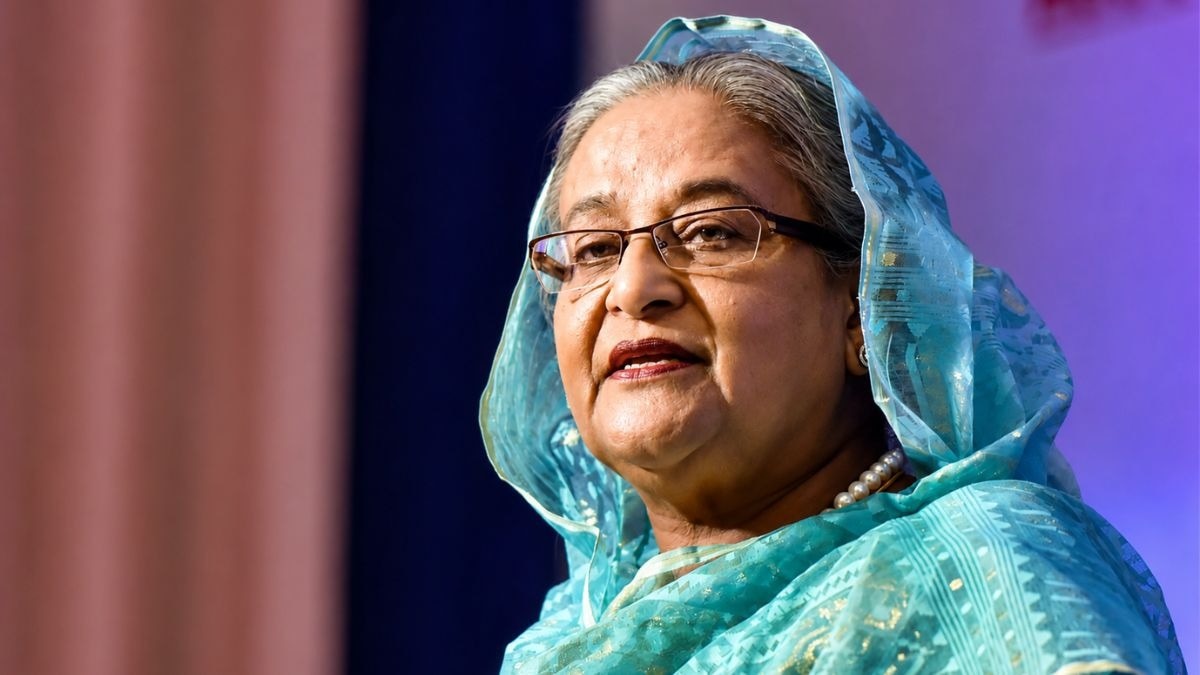
Former Bangladesh Prime Minister Sheikh Hasina has stated her intention to return to Dhaka on Dec. 16 aboard a commercial flight operated by the national carrier Biman Bangladesh Airlines from New Delhi, according to reporting by India Today. The self-selected date coincides with Bangladesh's national Victory Day, setting the stage for an acute political and security confrontation between the exiled former leader and the interim administration led by Chief Adviser Muhammad Yunus. Hasina's planned arrival comes despite her facing a death sentence, outstanding arrest warrants, and an active extradition request lodged by Bangladeshi authorities with the Indian government.
Key facts
What happened
According to reporting by India Today, Sheikh Hasina disclosed her objective to end her exile in India by boarding a scheduled or chartered Biman Bangladesh Airlines flight originating in New Delhi on Dec. 16. The declaration represents the former prime minister's most direct public effort to reenter the country since her abrupt resignation and departure more than two years prior.
Hasina was forced from office on Aug. 5, 2024, after weeks of escalating civil unrest organized by student groups and civil society organizations overwhelmed her administration's security apparatus. Accompanied by her younger sister, Sheikh Rehana, she boarded a Bangladesh Air Force transport aircraft that landed at Hindon Air Force Station near Ghaziabad, outside New Delhi. She has since remained in India under the protection of Indian security agencies, with the Ministry of External Affairs in New Delhi declining to disclose the precise details of her residency while confirming that she was granted temporary shelter on short notice on humanitarian grounds.
In her absence, Bangladesh's judicial system underwent sweeping restructuring under the interim administration. The International Crimes Tribunal (ICT) in Dhaka, originally established under Hasina's tenure to prosecute crimes committed during the 1971 Liberation War, was reconstituted to examine atrocities allegedly committed by state forces during the July and August 2024 demonstrations. The tribunal, alongside civil courts across the country, registered dozens of cases against Hasina, her cabinet members, and senior figures in the Awami League, charging them with crimes against humanity, murder, and unlawful detention.
Those judicial proceedings culminated in capital punishment sentences and warrants for her detention. Acting on those court orders, Bangladesh's Ministry of Foreign Affairs delivered formal diplomatic notes to the Indian High Commission in Dhaka, invoking the 2013 India-Bangladesh Extradition Treaty to demand her immediate arrest and repatriation. By announcing a commercial flight reservation on the state carrier, Hasina has attempted to bypass conventional diplomatic extradition channels, effectively challenging both the interim government's willingness to enforce its warrants at Dhaka's international airport and India's control over her movements.
Why it matters
The proposed return carries profound implications for Bangladesh's domestic stability, bilateral relations between New Delhi and Dhaka, and the regional geopolitical balance across South Asia. The selection of Dec. 16 is freighted with intense political symbolism. Known as Bijoy Dibos, Victory Day marks the formal surrender of Pakistani armed forces in 1971, an event that Hasina's Awami League has long claimed as the foundational narrative of its political identity through her father, independence leader Sheikh Mujibur Rahman. Arriving on that specific date is widely viewed as a deliberate effort to rally loyalists and challenge the legitimacy of the interim authorities during a major national holiday.
For Muhammad Yunus's interim government, the announcement creates an immediate security crisis. Bangladesh's police forces, military, and intelligence agencies remain in a protracted phase of institutional rebuilding following the collapse of the Awami League's security architecture. An arrival by Hasina at Hazrat Shahjalal International Airport would force law enforcement agencies to execute an arrest warrant against an entrenched former head of government while preventing potentially catastrophic physical clashes between Awami League supporters, student organizations, and rival political factions such as the Bangladesh Nationalist Party (BNP) and Jamaat-e-Islami.
For India, the maneuver introduces an acute diplomatic dilemma. Prime Minister Narendra Modi's administration maintains strong historical ties with Hasina, whose 15-year rule was marked by close counterterrorism, transit, and trade cooperation with New Delhi. However, relations between India and Bangladesh have deteriorated since August 2024 over border security, minority rights, and Dhaka's demands for Hasina's return. Facilitating her departure on a state-run commercial carrier without coordinating with Dhaka could rupture formal ties with Bangladesh's current leadership. Conversely, detaining her or barring her departure would expose New Delhi to accusations of directly participating in her confinement.
The background
Sheikh Hasina served as Prime Minister of Bangladesh from 1996 to 2001 and returned to power in January 2009, winning consecutive elections in 2014, 2018, and January 2024. While her tenure delivered significant economic expansion, infrastructure development, and an expansion of the ready-made garment export sector, it was also characterized by human rights organizations as increasingly authoritarian. Opposition parties faced widespread detentions, political boycotts, and the suppression of critical media, while state security agencies, notably the Rapid Action Battalion (RAB), were subjected to international sanctions for alleged extrajudicial killings and enforced disappearances.
The unrest that brought down her administration erupted in July 2024 as a protest movement against reinstated civil service quotas, which reserved 30 percent of government posts for descendants of veterans of the 1971 war. When student-led demonstrations at Dhaka University were met with lethal force by police and armed members of the Awami League's student wing, the Bangladesh Chhatra League, the movement expanded into a nationwide campaign demanding Hasina's resignation. Human rights monitors estimated that more than 1,000 individuals were killed during the government crackdown.
Following Hasina's flight on Aug. 5, 2024, the military facilitated the appointment of an interim advisory council headed by Yunus, a Nobel Peace Prize laureate. The new administration quickly moved to dismantle the Awami League's governance structures, revoking diplomatic and official passports issued to former lawmakers, launching anti-corruption investigations, and suspending various party-affiliated bodies.
Extradition between the two nations is governed by the bilateral pact signed in January 2013 and amended in 2016 to simplify the exchange of fugitive criminals. Under Article 8 of the treaty, extradition may be refused if the offense is deemed by the requested state to be of a political nature. However, the treaty explicitly states that offenses involving murder, assault, and crimes against humanity cannot be classified as political exceptions. New Delhi has not formally invoked Article 8, leaving Hasina's long-term legal standing in India ambiguous.
Reaction
Neither the interim government in Dhaka nor the Indian government has issued a formal joint statement addressing Hasina's specific travel declaration. However, past statements from both administrations provide a clear framework for their anticipated actions.
In Dhaka, officials within the Chief Adviser's Office and the Ministry of Home Affairs have previously maintained that any return by Hasina would result in her immediate custody. Law enforcement agencies operate under explicit court mandates to execute arrest warrants upon her presence within Bangladeshi sovereign territory or airspace. Representatives of the Anti-Discrimination Student Movement, which spearheaded the August 2024 uprising, have consistently demanded that Hasina face public trial before the International Crimes Tribunal and have warned against any administrative compromise that would grant her safe passage.
The Ministry of External Affairs in New Delhi has historically resisted commenting on Hasina's operational plans or daily arrangements, reiterating only that she was granted entry on emergency grounds. Indian diplomatic officials are expected to assess the legality of permitting an individual with revoked travel documentation and active capital sentences to board a foreign flag carrier operating from an Indian international terminal.
What we don't know yet
Significant operational and legal uncertainties surround Hasina's proposed return. Chief among them is the current status of her travel documentation. Following her ouster, Bangladesh's Department of Immigration and Passports announced the invalidation of diplomatic and official passports held by Hasina, her cabinet members, and members of the dissolved parliament. It is not currently known whether she possesses a valid standard passport or if Indian authorities have issued her temporary travel credentials that would permit international boarding.
Furthermore, it remains unverified whether Biman Bangladesh Airlines, a state-owned entity subject to the directives of the Civil Aviation Authority of Bangladesh (CAAB), has received or processed an official flight booking for Hasina. Aviation regulations empower the carrier and destination civil aviation regulators to deny boarding to passengers who lack valid destination visas or who are subject to judicial exclusion orders. Finally, it remains unclear whether Hasina's announcement is intended as a genuine logistical plan or a symbolic political maneuver designed to gauge the strength of her domestic support network.
What to watch
The primary indicator of how this situation will evolve is whether India's Directorate General of Civil Aviation or the Ministry of External Affairs permits Hasina to clear immigration at Indira Gandhi International Airport in New Delhi. If the Indian government declines to clear her for departure, the initiative will stall at the boarding gate without necessitating operational intervention from Dhaka.
In Bangladesh, observers will monitor the Ministry of Home Affairs and the CAAB for formal notices, such as an Advance Passenger Information alert, instructing commercial carriers not to transport Hasina without prior security clearance. Statements from the Chief Adviser's Office outlining airport security preparations ahead of Dec. 16 will signal whether authorities are preparing for an imminent detainee transfer. Additionally, any public organizational calls by the Awami League's diaspora or underground domestic branches in the days leading up to Victory Day will demonstrate whether the party can still mount street mobilization under the interim regime's security measures.
This account draws on reporting originally published by India Today.
How this story was produced
This report was written by The Global Wire newsroom from reporting first published by India Today News Desk. We verify the core facts against the original report, write our own account, and add the background and consequences a short wire item leaves out. Drafting is AI-assisted inside an editor-supervised pipeline, and every story is checked for accuracy of attribution, structure and duplication before it appears — full detail in our AI and funding disclosure.
Spotted an error? Tell us at corrections@horizonglobalnews.com and read our corrections policy or editorial standards.






Reader comments
Loading comments…