

Senate Antitrust Inquiry Targets Nvidia Leadership Turmoil and White House Contact
Senator Cory Booker has asked Nvidia to explain the brief departure and return of CEO Jensen Huang, probing potential White House influence and market concentration.
By The Global Wire Newsroom · Reported from SECTIONS Nvidia faces questions
Link preview · horizonglobalnews.com
Senate Antitrust Inquiry Targets Nvidia Leadership Turmoil and White House Contact
Senator Cory Booker has asked Nvidia to explain the brief departure and return of CEO Jensen Huang, probing potential White House influence and market concentration.
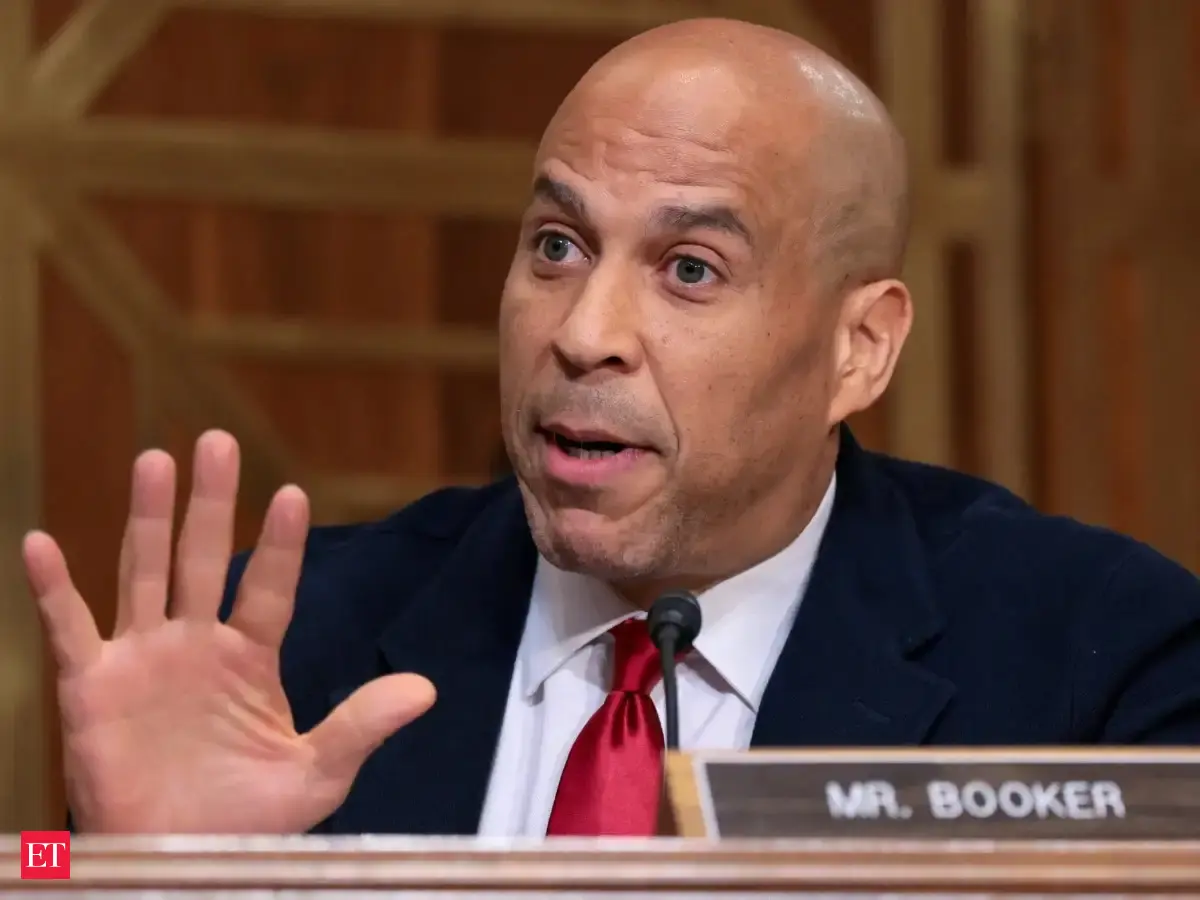
WASHINGTON — A senior congressional lawmaker has opened an inquiry into Nvidia Corporation following a period of executive instability at the world's most valuable semiconductor company, demanding explanations regarding the abrupt resignation and subsequent reinstatement of Chief Executive Officer Jensen Huang. Senator Cory Booker of New Jersey, the senior Democrat on the Senate Judiciary Subcommittee on Competition Policy, Antitrust, and Consumer Rights, submitted a series of formal questions to the chipmaker on November 25, focusing on whether officials connected to the administration of President Donald Trump communicated with members of Nvidia's board of directors during the leadership crisis, while renewing scrutiny over the company's commanding share of the artificial intelligence computing sector.
Key facts
What happened
According to reporting by SECTIONS, the congressional move follows an unprecedented sequence of governance events at Nvidia, during which co-founder and longtime chief executive Jensen Huang briefly stepped down from his position before being rapidly reinstated to the helm of the company. The sudden corporate disruption sent shockwaves through the technology industry and financial markets, given Huang's central role in steering the company from a specialized graphics processor designer into the preeminent supplier of hardware for the global artificial intelligence boom.
In his communication to the company, Booker questioned the transparency and integrity of the board’s handling of the episode. Central to the inquiry is whether executive branch officials exerted pressure on Nvidia's board members or engaged in backchannel communications that precipitated Huang's brief departure or conditioned his return. Lawmakers on the antitrust panel have asked Nvidia to turn over an itemized timeline of board deliberations, all written records of contacts with federal officials or political representatives, and any documentation regarding agreements that may have been discussed between the company and Washington policymakers.
Beyond corporate governance, Booker leveraged the episode to reassert antitrust concerns. His letter highlighted the systemic importance of Nvidia's hardware and proprietary software ecosystem, questioning whether the company's near-monopoly on advanced AI accelerators creates an unacceptable concentration of economic and technological power that leaves critical national infrastructure vulnerable to erratic boardroom and political maneuvers.
Why it matters
The inquiry carries significant consequences for corporate governance, securities regulation, and the geopolitical landscape of artificial intelligence. Nvidia is not merely a major technology firm; with a market capitalization that has frequently crossed three trillion dollars, it functions as the central supplier of the computing infrastructure that powers sovereign AI programs, cloud computing hyperscalers, and national defense applications. Any suggestion that executive transitions at such a company could be influenced by political interference strikes at foundational principles of corporate oversight and fiduciary independence under United States corporate law.
Under corporate governance standards established by the Securities and Exchange Commission and state corporate statutes—predominantly the Delaware General Corporation Law under which most major American corporations are organized—boards of directors owe strict fiduciary duties of care and loyalty solely to the corporation and its shareholders. If political considerations or administration pressures played a documented role in board deliberations over the chief executive's tenure without full, timely disclosure on SEC Form 8-K filings, Nvidia could face severe regulatory exposure, shareholder derivative litigation, and heightened scrutiny from institutional investors.
Economically, the development magnifies the regulatory overhang surrounding artificial intelligence infrastructure. Hyperscale cloud providers, including Microsoft, Amazon, Alphabet, and Meta, have committed tens of billions of dollars in capital expenditure toward data centers built primarily around Nvidia architectures. Any structural challenge to Nvidia's leadership stability, or an escalation into formal antitrust enforcement, threatens to disrupt deployment schedules, alter procurement strategies, and accelerate customer efforts to design in-house custom silicon or adopt rival platforms.
The background
Jensen Huang co-founded Nvidia in 1993, pioneering the graphics processing unit (GPU) for video gaming before orchestrating a decades-long strategic bet on parallel computing. The introduction of CUDA—Nvidia's proprietary software development platform—in 2006 locked developers into its hardware architecture long before the emergence of modern deep learning. When commercial breakthroughs in generative AI emerged in late 2022, Nvidia stood uniquely prepared to satisfy global demand, capturing nearly the entire high-end accelerator market with its Hopper and Blackwell architecture chips.
This unprecedented concentration of market share quickly drew the attention of global antitrust regulators. In late 2023 and throughout 2024, the United States Department of Justice, the Federal Trade Commission, and the European Commission initiated preliminary investigations into whether Nvidia engaged in anti-competitive bundling practices, penalized customers who explored competing hardware, or restricted access to networking components like its Mellanox-derived InfiniBand technology. Regulatory bodies have also closely reviewed Nvidia's strategic venture investments and acquisitions, such as its purchase of Run:ai.
Simultaneously, the semiconductor industry has become deeply entangled in federal trade and national security policy. Through successive presidential administrations, the White House has weaponized export controls managed by the Department of Commerce's Bureau of Industry and Security, barring Nvidia from shipping its most capable processors to China. These geopolitical restrictions have placed semiconductor executives in constant, direct negotiation with the executive branch over licensing, compliance, and custom hardware designed to comply with performance thresholds. Interactions between technology leadership and the White House have historically intensified during transitions between administrations, creating unique pressures on multinational corporate boards seeking regulatory relief, federal procurement contracts, or exemptions from international tariff and trade barriers.
Reaction
Nvidia has not yet issued a detailed public defense or released the full internal records requested by the subcommittee. Publicly traded companies facing congressional inquiries of this nature typically engage specialized legal counsel to manage document production, balance confidentiality obligations, and determine the extent of voluntary compliance versus formal committee subpoenas.
In Washington, the development underscores deepening partisan and institutional divisions over the regulation of Big Tech and the limits of executive authority. Democratic members of the Senate Judiciary Committee have signaled that they intend to use their oversight platform to guard against corporate consolidation and investigate any executive branch attempts to dictate corporate leadership or reward favored executives. Committee Republicans, who oversee or share jurisdiction depending on the legislative calendar and chamber control, have historically offered mixed stances, with some populist conservatives supporting antitrust measures against technology giants while traditional business conservatives caution against government intervention in private corporate governance.
Industry analysts and corporate governance specialists expect institutional investor groups, including major pension funds and asset managers, to monitor the proceedings closely. Investors will seek clarity regarding whether the board maintained independence during the executive leadership crisis or compromised internal succession planning under external pressure.
What we don't know yet
Significant gaps remain in the public record regarding the underlying mechanics of the executive shuffle. It remains unclear precisely what triggered Jensen Huang's temporary resignation, how many days or hours elapsed between his exit and reinstatement, and whether a formal vote of the board of directors was executed in both instances. The identity of any interim executive appointed during the interregnum, or whether the board ever formally named an acting successor, has not been publicly documented.
Furthermore, the exact nature of the alleged communications between the Trump administration and Nvidia's board remains undisclosed. It is not yet known which government officials or transition figures participated in talks, what specific policy levers or commercial considerations were discussed, or whether the communications pertained to trade export controls, antitrust enforcement, or federal manufacturing incentives under the CHIPS and Science Act. It also remains unverified whether other federal agencies, such as the SEC or the Department of Justice, have initiated parallel non-public investigations into the matter.
What to watch
The immediate focus shifts to Nvidia's response deadline to Senator Booker's inquiry, which will determine whether the company intends to comply voluntarily or contest the committee's scope of authority. If the company declines to furnish internal emails, board minutes, and visitor logs, the dispute could escalate into a vote over congressional subpoenas, potentially leading to public hearings before the Senate Judiciary Committee.
Market watchers will also scrutinize upcoming regulatory filings. Nvidia's mandatory quarterly disclosures with the Securities and Exchange Commission, specifically periodic Form 10-Q or Current Report Form 8-K filings, must disclose material risks, ongoing governmental inquiries, and any binding governance covenants entered into by the board. Any formal acknowledgment of an executive branch probe or changes to executive employment contracts will provide concrete details on legal exposure.
Finally, observers should watch for potential policy announcements from the White House regarding semiconductor export controls and antitrust enforcement priorities. Any shift in the administration's stance toward Nvidia's overseas licensing applications or ongoing antitrust inquiries following this leadership episode will offer critical clues regarding the geopolitical and regulatory forces shaping the world's leading chipmaker.
This report is based on original reporting by SECTIONS.
How this story was produced
This report was written by The Global Wire newsroom from reporting first published by SECTIONS Nvidia faces questions. We verify the core facts against the original report, write our own account, and add the background and consequences a short wire item leaves out. Drafting is AI-assisted inside an editor-supervised pipeline, and every story is checked for accuracy of attribution, structure and duplication before it appears — full detail in our AI and funding disclosure.
Spotted an error? Tell us at corrections@horizonglobalnews.com and read our corrections policy or editorial standards.






Reader comments
Loading comments…