

Screen-Vibrating Audio Seeks to Fix Sound Disconnect on Large Consumer Displays
New engineering advances in display-vibrating audio technology aim to align sound origin directly with on-screen action, addressing a long-standing compromise in modern flat-panel televisions.
By The Global Wire Newsroom · Reported from Etiido Uko
Link preview · horizonglobalnews.com
Screen-Vibrating Audio Seeks to Fix Sound Disconnect on Large Consumer Displays
New engineering advances in display-vibrating audio technology aim to align sound origin directly with on-screen action, addressing a long-standing compromise in modern flat-panel televisions.
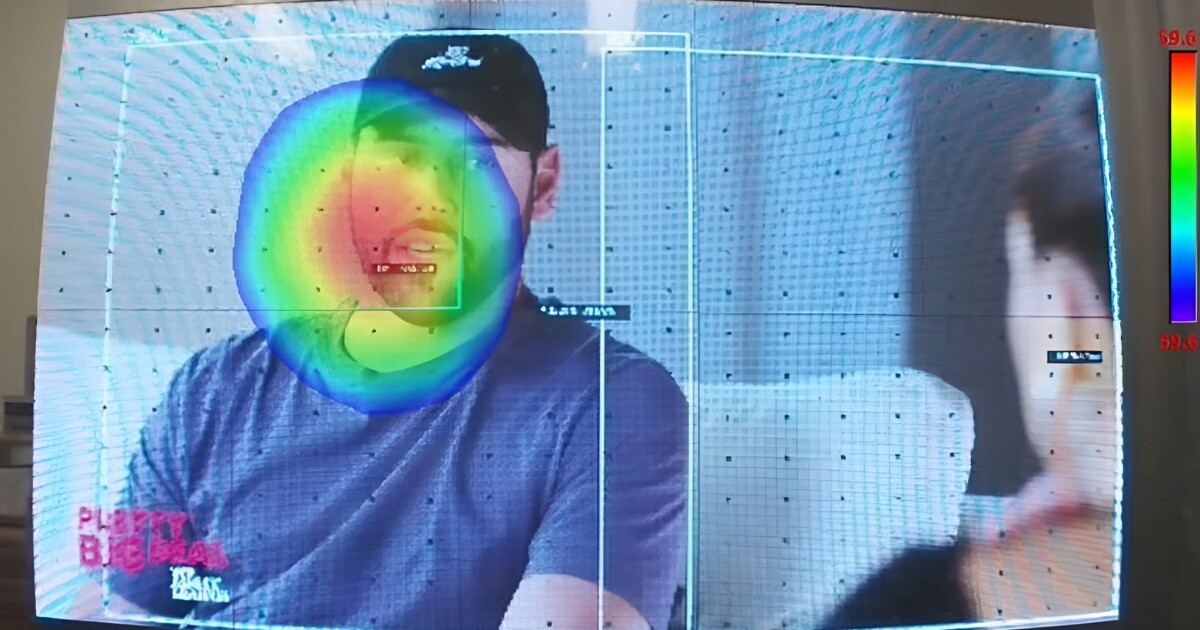
Engineers and display manufacturers are advancing screen-vibration acoustic systems designed to emit sound directly from specific locations on a television display, tackling a long-running perceptual mismatch where on-screen voices appear physically disconnected from speakers located around the chassis, according to technical reporting published by Etiido Uko on November 14, 2026. The technology, which transforms the physical surface of the display into an acoustic transducer, seeks to ensure that when a character speaks on one side of a large panel, the dialogue originates precisely from their mouth rather than from downward-firing drivers or external speaker bars positioned along the bottom edge of the frame.
Key facts
What happened
Modern television industrial design has prioritized minimal bezel widths and panel profiles measuring only fractions of an inch. As a direct consequence, hardware engineers have been forced to eliminate forward-facing speaker cones from the front of the television, relocating them to the underside or rear panel. On screens measuring 75, 85, or 98 inches diagonally, this layout introduces a substantial physical gap: an actor's face may appear five feet off the ground in the upper third of the panel, while the audio reproducing their voice emanates from downward-firing speakers positioned two or three feet below, bouncing sound off a credenza or floor before reaching the listener.
While human brains routinely compensate for modest discrepancies between sensory inputs, larger displays stretch this tolerance beyond its threshold. According to technical reporting by Etiido Uko, screen-vibrating technology directly resolves this spatial discordance by turning the glass or polymer panel of the television itself into the acoustic driver. Instead of housing conventional cone speakers inside the perimeter of the cabinet, the mechanism uses electromechanical actuators bonded to the rear of the display panel. These actuators produce controlled micro-vibrations across designated zones of the screen, creating sound waves that project directly forward into the room from the precise coordinates of the on-screen action.
Recent developments detailed in the coverage highlight refinements in multi-point actuation, allowing independent acoustic zones on a single panel. This configuration enables a system to track multiple dialogue sources across the screen in real time. If two characters engage in dialogue on opposite edges of an 85-inch display, the actuators can drive separate micro-vibrations behind each figure, emitting distinct audio tracks from their exact spatial positions without visible image disruption or perceptible blurring of the picture.
Why it matters
The persistence of poor built-in audio remains one of the most prominent consumer grievances in the global consumer electronics sector, where television panel sizes have steadily increased even as consumer satisfaction with native acoustic performance has declined. In 2023, market research from industry tracking firms indicated that televisions measuring 65 inches and larger accounted for more than a quarter of all global display shipments by revenue. As panel sizes continue to grow toward 85 inches and beyond, spatial audio displacement becomes impossible to overlook, forcing consumers to spend hundreds or thousands of dollars on external audio equipment.
For general consumers, screen-vibrating audio eliminates the compulsory purchase of soundbars or multi-speaker surrounds simply to achieve intelligible, spatially coherent dialogue. In compact living spaces where dedicated center-channel speakers cannot be placed at ear level, an acoustic display acts as its own center channel. This has direct structural benefits for home theater integration, as professional installations have historically required acoustically transparent projection screens with speakers positioned behind the fabric—a setup previously unattainable on solid glass or liquid crystal displays.
Beyond entertainment, the technology carries practical implications for professional video conferencing and commercial collaboration displays. In corporate boardrooms and telemedicine facilities utilizing large interactive screens, natural conversation depends heavily on directional audio cues. When a remote participant's voice emanates from their displayed face rather than an offset microphone-speaker pod on a conference table, cognitive fatigue decreases and conversational turn-taking becomes more natural. Additionally, for individuals with hearing impairments or processing difficulties, aligning auditory and visual stimuli at identical spatial origins significantly improves speech comprehension.
The background
Television audio was not always plagued by severe spatial misalignment. During the era of cathode-ray tube (CRT) displays, televisions were bulky enclosures with ample front-facing cabinet space on either side of the curved glass tube. Manufacturers routinely embedded substantial forward-facing cone drivers with large magnets directly beside the screen, providing balanced stereo imaging and direct projection toward the audience.
The widespread transition to flat-panel liquid crystal displays (LCD) and plasma panels during the early 2000s, followed by the commercialization of OLED technology in the 2010s, fundamentally disrupted this acoustic architecture. Consumer demand for ultra-thin profiles and borderless frames eliminated cabinet depth and bezel width. Standard moving-coil speakers require physical air volume to resonate; deprived of cabinet volume, engineers downsized drivers to narrow oval transducers and directed them downward or backward, relying on room boundaries to reflect high and mid-range frequencies toward the viewer.
Efforts to vibrate flat surfaces to create sound date back to distributed mode loudspeaker (DML) technology pioneered by Britain's New Transducers Limited (NXT) in the late 1990s. Commercial implementation in consumer televisions emerged prominently in January 2017, when Sony introduced its Acoustic Surface Audio technology on the Bravia A1E OLED television at the Consumer Electronics Show in Las Vegas. LG Display developed a comparable platform branded as Crystal Sound OLED (CSO), demonstrating panels capable of vibrating to produce sound at trade exhibitions throughout 2017 and 2018.
However, early implementations of acoustic surface displays faced technical boundaries. They relied on two or four actuators providing broad left-and-right stereo separation rather than pinpoint localized positioning. Furthermore, the technology remained largely restricted to premium OLED panels. OLED screens do not require a separate backlight unit, allowing actuators to couple directly to the rear of the thin emissive layer. Conventional LCDs, by contrast, incorporate multi-layered optical diffusers, polarizers, and dense light guide plates, which dampen vibrations and risk creating optical distortion or mechanical fatigue under continuous acoustic stress.
Underpinning this engineering effort is the psychological phenomenon known as the ventriloquism effect, established in sensory research through foundational studies by psychologists such as Ian Howard and William Templeton in 1966. The human brain prioritizes sharp visual cues over less precise auditory spatial localization, unconsciously adjusting perceived sound direction to match visual motion. However, psychoacoustic experiments have repeatedly demonstrated that when the angular discrepancy between sound and image exceeds approximately four to ten degrees, the illusion fails, leaving the listener conscious of the sensory mismatch.
Reaction
While primary audio equipment manufacturers have not issued formal policy statements regarding the recent reporting, the broader audiovisual engineering community has long debated the trade-offs inherent in screen-vibrating acoustic systems. Dedicated home theater traditionalists and professional sound engineers often caution that flat-panel transducers cannot match the acoustic dispersion and dynamic range of dedicated multi-way speaker cabinets. In particular, low-frequency reproduction requires moving significant volumes of air, a task that panel-vibrating actuators cannot perform without risking severe physical excursion that could damage delicate electronic backplanes. Consequently, these systems still require independent subwoofers to handle low-end bass frequencies.
Conversely, industrial designers and architectural audiovisual installers have greeted advances in screen actuation with strong enthusiasm. In modern open-plan residential architecture, clients frequently resist visible soundbars, wall-mounted center speakers, and external cabling. System integrators frequently note that an ultra-slim display capable of radiating clear dialogue directly from its surface solves the aesthetic friction between interior designers and audiovisual technicians.
What we don't know yet
Despite the promising capabilities described in the reporting by Etiido Uko, substantial technical and commercial details remain unverified. It is not yet clear which display manufacturers intend to adopt the newest multi-actuator designs or how soon the technology will migrate from research laboratories into retail distribution. Production yields and long-term durability metrics have not been disclosed; it remains unproven whether subjecting microscopic solder joints, thin-film transistors, and organic emissive materials to continuous acoustic vibrations over five to ten years causes panel delamination or pixel failure.
Furthermore, the engineering feasibility of applying this technology cost-effectively to mass-market LCD panels remains an open question. Because LCDs continue to hold more than 80 percent of the global television market due to lower manufacturing costs, acoustic surface technology will remain confined to affluent consumers unless developers overcome the physical dampening caused by rigid optical backlight stacks. Finally, detailed specifications regarding power draw, heat generation from high-output actuators, and compliance with emerging energy efficiency standards have not been made public.
What to watch
The trajectory of localized screen-vibrating audio will depend on several upcoming industry milestones. Observers will be closely watching major international electronics exhibitions, including the Consumer Electronics Show in Las Vegas each January and the IFA trade show in Berlin in September, where display vendors traditionally debut next-generation panel architectures and prototype television lineups.
Key indicators of commercial viability will include patent filings from primary display fabricators such as LG Display, Samsung Display, and BOE Technology Group, particularly regarding actuator isolation brackets that prevent panel fatigue. Observers should also track software partnerships with major spatial audio formats, such as Dolby Laboratories' Dolby Atmos and DTS:X. If panel manufacturers can map object-based audio metadata directly to coordinate-specific actuator arrays on the screen, content creators and streaming platforms will have strong incentives to optimize film and television soundtracks specifically for vibrating-display reproduction.
This report is based on coverage by technology writer Etiido Uko.
How this story was produced
This report was written by The Global Wire newsroom from reporting first published by Etiido Uko. We verify the core facts against the original report, write our own account, and add the background and consequences a short wire item leaves out. Drafting is AI-assisted inside an editor-supervised pipeline, and every story is checked for accuracy of attribution, structure and duplication before it appears — full detail in our AI and funding disclosure.
Spotted an error? Tell us at corrections@horizonglobalnews.com and read our corrections policy or editorial standards.





Reader comments
Loading comments…