

Scotland's Wild Beaver Population Reaches Record Levels Across Tayside and Forth Catchments
A landmark survey by the Beaver Trust and the University of Exeter confirms 349 active territories, marking a major ecological milestone alongside persistent land management tensions.
By The Global Wire Newsroom · Reported from TOI Science Desk
Link preview · horizonglobalnews.com
Scotland's Wild Beaver Population Reaches Record Levels Across Tayside and Forth Catchments
A landmark survey by the Beaver Trust and the University of Exeter confirms 349 active territories, marking a major ecological milestone alongside persistent land management tensions.
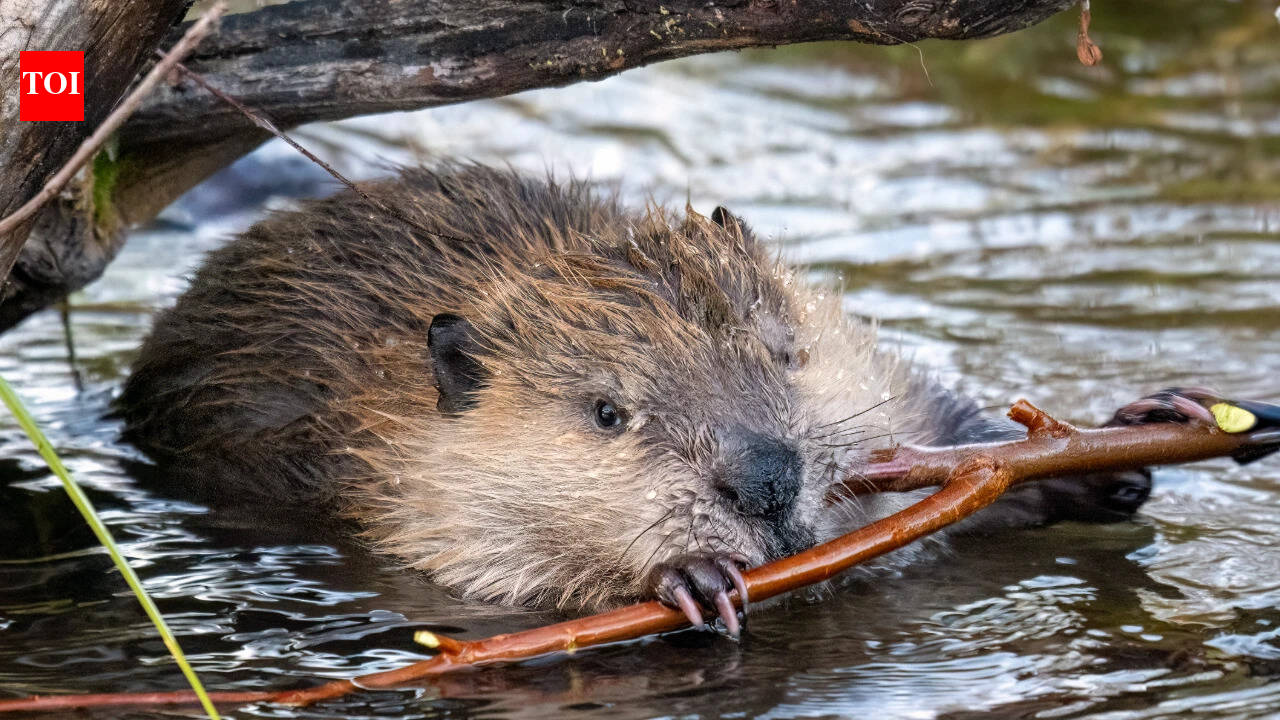
EDINBURGH — The wild beaver population across east-central Scotland has expanded to record levels, with confirmed territories rising nearly ninefold over the past fourteen years, according to findings from the most comprehensive survey of the species ever undertaken in the country. The research, carried out jointly by the conservation charity Beaver Trust and the University of Exeter, documented 349 confirmed active beaver territories across the river catchments of Tayside and the Forth, with an additional 56 sites identified as probable or possible territories. The figures, reported by TOI Science Desk, illustrate an extraordinary demographic resurgence for an indigenous mammal that was hunted to extinction in Britain hundreds of years ago, while also intensifying ongoing policy debates over land use, drainage management, and wildlife coexistence across Scotland's agricultural heartlands.
Key facts
What happened
Field teams working across hundreds of linear kilometers of riverbanks, drainage ditches, lochs, and wetlands throughout the Tay and Forth basins spent months systematically mapping physical evidence of beaver activity. Utilizing standard field survey protocols, researchers logged feeding signs, felled timber, scent mounds, burrows, lodges, canals, and dam complexes to establish distinct home ranges. Each territory typically represents a family group comprising a monogamous breeding pair, kits, and sub-adult offspring from previous seasons.
According to reporting by TOI Science Desk, the investigation confirmed 349 active territories across the surveyed territory, alongside 56 potential territories where field signs indicated recent presence or exploratory colonization without definitively meeting the criteria for fully established, resident breeding groups. The results demonstrate sustained demographic acceleration since formal monitoring commenced. In 2012, an initial coordinated survey identified just 39 territories across the region. Subsequent assessments demonstrated steady territorial accretion, leading to the latest findings which confirm that beavers have consolidated their presence across nearly all major sub-catchments of the Tay and Forth networks.
Unlike controlled scientific releases where every animal carries telemetry equipment, the population across Tayside and the Forth originated largely from unsanctioned releases and escapes from private collections dating back to the early 2000s. The animals adapted rapidly to the rich riparian forage and fertile valley bottoms of east-central Scotland. The new census conducted by the Beaver Trust and the University of Exeter establishes that the population has moved firmly beyond the initial establishment phase, developing into a self-sustaining regional metapopulation that continues to disperse along waterways connecting Perthshire, Angus, Fife, Stirlingshire, and the Lothians.
Why it matters
The documented expansion of beavers carries profound ecological and economic ramifications for Scotland. As keystone ecological engineers, Eurasian beavers alter hydrology and woodland composition in ways that no other native British animal can replicate. By constructing dams from wood, mud, and stones, beavers create complex wetland mosaics that store millions of liters of water in upper catchments. These ponds slow the velocity of surface runoff during heavy precipitation events, functioning as natural flood attenuation buffers that can protect downstream infrastructure and urban settlements from flash flooding.
Simultaneously, beaver ponds act as sediment traps, filtering agricultural runoff, capturing nitrogen and phosphorus, and clarifying watercourses. The resulting habitat heterogeneity provides critical breeding grounds and refuges for a broad spectrum of aquatic invertebrates, amphibians, waterfowl, and declining bat species. Studies of European reintroductions have shown that the structural diversity introduced by beaver coppicing and impoundments substantially elevates local biodiversity.
However, this ecological restoration intersects directly with modern, intensive agriculture. In productive arable districts such as Strathmore and the Carse of Gowrie, the very behaviors that make beavers effective ecosystem engineers create friction with farmers. Beaver dams frequently block subsurface drainage networks, elevating the water table and waterlogging prime agricultural soil planted with high-value crops like soft fruits, potatoes, and winter wheat. Burrows excavated into earthen flood banks and river levees can destabilize flood defenses, risking levee collapse during high-flow conditions. Additionally, beaver foraging can fell commercial timber, destabilize road infrastructure adjacent to culverts, and inundate walking tracks, creating localized economic liabilities that require ongoing management, technical intervention, or compensation.
The background
Eurasian beavers were once widespread throughout the freshwater networks of mainland Britain, playing an integral role in post-glacial landscape formation. By the sixteenth century, however, intense commercial hunting across Scotland wiped the species out. Hunters sought beavers primarily for their dense, water-repellent pelts, prized for hatmaking and clothing; their meat, which ecclesiastical authorities permitted during Lent; and castoreum, an oily gland secretion extensively employed in traditional medicine and perfumery.
For more than four centuries, Scotland's freshwater ecosystems functioned in the complete absence of this keystone species. Modern efforts to examine the feasibility of their return culminated in the official Scottish Beaver Trial at Knapdale in Argyll, launched in 2009 under the scientific oversight of the Scottish Wildlife Trust, the Royal Zoological Society of Scotland, and NatureScot (then Scottish Natural Heritage). While the five-year Knapdale trial monitored a small, regulated cohort in an enclosed, heavily forested western loch system, an unauthorized, parallel population was quietly expanding throughout the expansive, agriculturally intensive catchment of the River Tay.
Following years of scientific review, political debate, and legal ambiguity, the Scottish Government granted beavers European Protected Species status under the Conservation (Natural Habitats, &c.) Regulations 1994 on May 1, 2019. The designation made it illegal to deliberately capture, kill, disturb, or harass beavers, or to damage or destroy their breeding sites and resting places without a statutory license issued by NatureScot.
To balance species conservation with land management, NatureScot established a licensing framework that permitted land managers facing severe economic hardship to deploy non-lethal deterrents, manipulate dams under license, or, as a last resort, utilize licensed lethal control. Between 2019 and 2021, dozens of beavers were culled under license in high-conflict areas, sparking legal challenges from environmental charities like Trees for Life, which argued that the government was issuing cull permits without sufficiently exhausting translocation alternatives. In late 2021, the Scottish Government updated its national strategy, committing to support the active expansion of beavers across Scotland and prioritizing live trapping and translocation to suitable catchments over lethal control.
Reaction
While the survey results have not yet generated published responses from statutory agencies, conservation organizations and agricultural representatives have historically maintained well-defined positions regarding beaver recovery in Scotland.
Environmental charities, including rewilding advocacy groups and wildlife trusts, are expected to welcome the data as definitive proof that ecological restoration can succeed at a regional scale. Conservationists will likely argue that 349 confirmed territories across Tayside and Forth demonstrate that beavers are permanently reclaiming their historical niche, urging the government to accelerate translocations to other Scottish catchments, such as the Cairngorms and the western Highlands, to prevent local carrying capacity limits from causing unnecessary conflict.
Conversely, farming and land management bodies, most notably the National Farmers Union Scotland (NFUS) and Scottish Land & Estates, are anticipated to view the sharp upward trajectory with concern. Agricultural organizations have consistently expressed distress over the localized economic burdens borne by farmers whose drainage networks are impaired by beaver activity. In parliamentary evidence sessions and sector statements, land managers have repeatedly stressed that statutory support mechanisms—including fully funded mitigation schemes, streamlined licensing for dam removal, and rapid-response technical assistance—must expand alongside the beaver population to avoid placing unreasonable financial strain on farming families.
What we don't know yet
Despite the rigorous scope of the Beaver Trust and University of Exeter survey, several key biological and socioeconomic metrics remain unquantified in the available reporting. Most fundamentally, the total individual animal count is not definitively known; territory counts provide an index of family groups, but average group sizes can range from two to six or more animals depending on forage availability, mortality, and reproductive rates. Whether the 349 territories equate to roughly 1,000 animals or closer to 1,500 individuals remains an estimate subject to ongoing statistical modeling.
Additionally, the geographical distribution across specific sub-catchments has not been fully disaggregated in the summary data. It is currently unclear how many territories occupy steep, forested upland streams—where beaver dams deliver maximum hydrological benefits without harming arable land—versus low-gradient, intensively drained agricultural floodplains where conflict is acute. Furthermore, the report does not indicate how many of the 56 potential territories represent single wandering dispersing sub-adults rather than newly established pairs, which will dictate how rapidly those sites transition into permanent territories over the next two breeding cycles.
What to watch
The trajectory of Scottish beaver management over the coming months will hinge on several key regulatory, administrative, and ecological inflection points. Observers should track NatureScot’s forthcoming statutory reporting on wildlife licensing, which will reveal whether the expansion in territories has coincided with an increase in landowner applications for lethal control licenses or if translocation initiatives have successfully absorbed surplus animals.
A critical factor will be the rate of official translocations. Following successful releases in the Cairngorms National Park and private estates elsewhere in Scotland, statutory authorities will face pressure to approve additional release sites in river catchments that currently lack beavers, such as the Spey, the Dee, and catchments in the south of Scotland. Observers should also watch for updates to the Scottish Government’s Beaver Mitigation Scheme, particularly whether public funding will be increased to subsidize non-lethal infrastructure—such as flow devices, culvert protectors, and riparian fencing—for arable farmers operating in the Tay and Forth basins.
Finally, subsequent monitoring reports from academic consortia will be vital to gauge genetic diversity among the population. Because the Tayside population originated from a relatively narrow founder group of captive escapees, long-term genetic health and resilience against pathogens will require periodic scientific review as the population expands toward carrying capacity.
This report incorporates independent analysis alongside factual reporting by TOI Science Desk regarding the population survey conducted by the Beaver Trust and the University of Exeter.
How this story was produced
This report was written by The Global Wire newsroom from reporting first published by TOI Science Desk. We verify the core facts against the original report, write our own account, and add the background and consequences a short wire item leaves out. Drafting is AI-assisted inside an editor-supervised pipeline, and every story is checked for accuracy of attribution, structure and duplication before it appears — full detail in our AI and funding disclosure.
Spotted an error? Tell us at corrections@horizonglobalnews.com and read our corrections policy or editorial standards.





Reader comments
Loading comments…