

Sanders Prepares Legislative Drive for Universal Healthcare via Senate Committee
Independent Sen. Bernie Sanders aims to use his leadership of a key Senate panel to test Democratic resolve on universal healthcare and systemic reform.
By The Global Wire Newsroom · Reported from pbs.org
Link preview · horizonglobalnews.com
Sanders Prepares Legislative Drive for Universal Healthcare via Senate Committee
Independent Sen. Bernie Sanders aims to use his leadership of a key Senate panel to test Democratic resolve on universal healthcare and systemic reform.
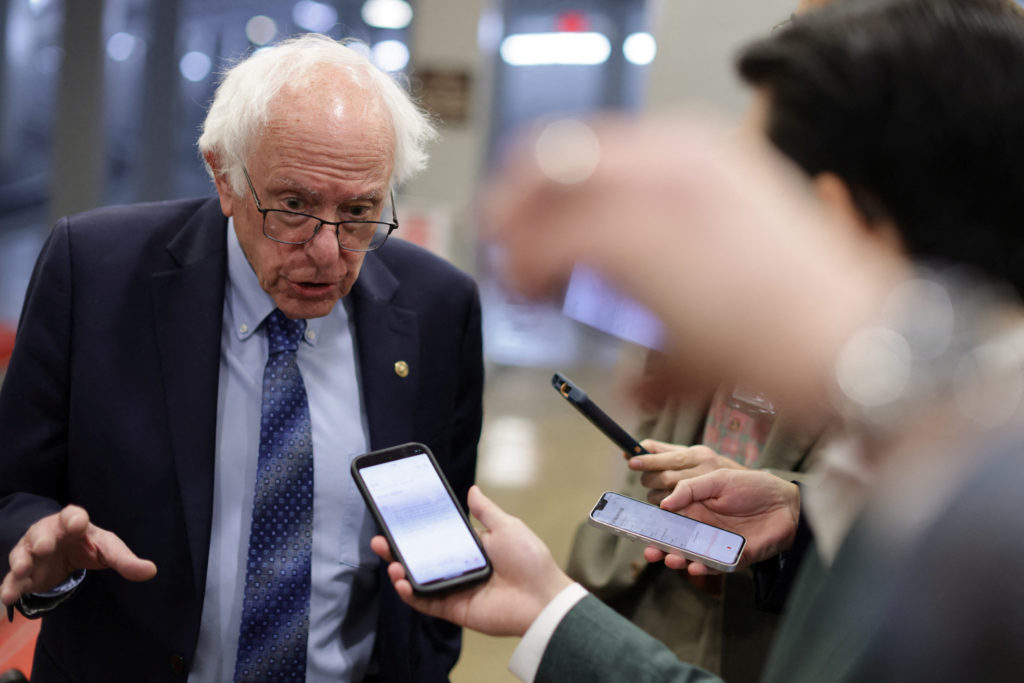
WASHINGTON — Sen. Bernie Sanders is outlining plans to leverage his position at the helm of a major Senate committee to mount an aggressive campaign for universal healthcare, positioning single-payer legislation and broad health sector reforms as immediate tests for congressional Democrats, according to reporting by The Associated Press published by PBS NewsHour. The Vermont independent, who caucuses with Senate Democrats, is preparing to deploy the gavel of the Senate Committee on Health, Education, Labor and Pensions, commonly known as the HELP Committee, to press forward his signature Medicare for All proposal alongside targeted measures aimed at lowering pharmaceutical prices and expanding federal healthcare programs.
Key facts
What happened
Sanders signaled an operational blueprint to revive national debate over structural healthcare transformation, according to reporting by The Associated Press. As he prepares to exercise authority over the committee agenda, the senator intends to place single-payer healthcare, drug pricing limits, and hospital transparency at the forefront of committee oversight and legislative drafting.
Under committee procedures, the chair controls the schedule for hearings, determines which witnesses appear before the panel, drafts committee-mark legislation, and decides when measures proceed to a full committee vote. Sanders plans to use these procedural mechanisms to spotlight coverage gaps, medical bankruptcies, and rising out-of-pocket costs under the existing multi-payer framework.
While previous legislative sessions have seen Medicare for All introduced largely as a symbolic progressive marker, Sanders' strategy involves leveraging public committee hearings to build legislative pressure on party leadership. The approach is designed to force members of Congress on both sides of the aisle to engage formally with statutory proposals to replace commercial employment-based health insurance with an expanded, universal public system administered by the federal government.
Why it matters
Healthcare remains one of the largest single components of the domestic economy, representing roughly 17 to 18 percent of gross domestic product in the United States and consuming more than four trillion dollars annually across public and private channels. Any formal effort to shift toward a single-payer model carries profound implications for patients, employers, commercial insurers, hospital systems, and municipal budgets.
For working families and patients, the central premise of Sanders' proposal is the elimination of premiums, copayments, and deductibles, replacing them with a comprehensive benefits package covering primary, specialty, inpatient, prescription, dental, and vision care. Under current arrangements, tens of millions of insured Americans remain underinsured, facing catastrophic out-of-pocket costs when severe illnesses occur.
However, the structural reorganization of the health sector would also directly affect hundreds of thousands of administrative jobs in the private insurance sector and require substantial adjustments for medical providers. Commercial insurers typically reimburse hospitals and physicians at significantly higher rates than the traditional Medicare program. Transitioning all patient revenue to federal fee schedules or global budgets would require health systems to adjust operating models or secure higher baseline public reimbursement rates.
Politically, the push tests the ideological unity of congressional Democrats. Moderate lawmakers representing competitive states and suburban districts have historically distanced themselves from single-payer proposals, arguing that eliminating employer-sponsored coverage alienates voters who are satisfied with their current plans. By forcing hearings and potential committee votes, Sanders' strategy will require lawmakers to define their positions, shaping primary and general election dynamics for the party.
The background
Sanders has championed a single-payer national healthcare system for more than three decades, introducing versions of the proposal in the House of Representatives during the 1990s and subsequently in the Senate. The concept gained massive national visibility during his 2016 and 2020 presidential primary campaigns, transforming Medicare for All from a marginal progressive aspiration into a central litmus test within national Democratic politics.
Historically, modern federal healthcare policy has followed an incremental rather than structural path. The enactment of the Social Security Amendments of 1965 established Medicare for elderly citizens and Medicaid for low-income individuals under President Lyndon B. Johnson. Decades later, the 2010 Affordable Care Act, signed by President Barack Obama, expanded access by regulating private insurance, establishing subsidized state marketplaces, and expanding Medicaid eligibility, rather than displacing private insurers.
In recent legislative sessions, statutory single-payer proposals have faced formidable institutional hurdles in the Senate. Under the Senate's traditional rules, most substantive legislation requires a 60-vote threshold to overcome a filibuster and advance to final passage. Even during periods when Democrats have held operational majorities, the caucus has contained ideological divisions between progressive advocates like Sanders and Sen. Elizabeth Warren, and moderate institutionalists like Sen. Joe Manchin and Sen. Kyrsten Sinema, who resisted sweeping interventions.
Past analyses by the Congressional Budget Office of single-payer systems have detailed the enormous financial mechanics involved. While single-payer structures can lower overall system costs by reducing administrative complexity and lowering pharmaceutical prices through government negotiation, they shift vast sums from private payments into the federal ledger, requiring substantial tax increases on corporations, high-income earners, or payrolls to offset trillions in new federal outlays.
Reaction
While Sanders' strategy is poised to invigorate progressive organizations, labor unions, and grassroots advocacy groups, it is certain to draw intense pushback from industry stakeholders and congressional conservatives. Major healthcare lobbying associations, including the American Hospital Association, the American Medical Association, and America's Health Insurance Plans, have historically spent tens of millions of dollars opposing single-payer bills, arguing that a public monopoly would restrict patient choice and strain provider solvency.
Republican members of the HELP Committee are expected to present united opposition, framing the initiative as a government takeover that would increase wait times, reduce medical innovation, and require disruptive tax burdens. When committee hearings commence, ranking members and conservative senators will likely challenge Sanders on provider payment cuts and the feasibility of replacing private plans covering more than 150 million Americans.
Democratic leaders in the Senate, meanwhile, will face the challenge of managing intra-party divisions. While leadership frequently welcomes committee-level scrutiny of corporate pharmaceutical profits and high executive compensation in healthcare networks, committee chairs and leadership figures will seek to avoid internal floor fights that could complicate the passage of annual appropriations bills or must-pass reauthorizations.
What we don't know yet
Several substantive details remain unverified regarding how Sanders will translate his committee power into binding law. It is unclear whether Sanders intends to force a full committee markup and vote on the complete text of the Medicare for All Act, or if he will focus primarily on incremental components that possess broader caucus consensus.
Such narrower measures might include extending Medicare's authority to negotiate drug prices under the Inflation Reduction Act to commercial health plans, capping out-of-pocket insulin costs for all Americans, or expanding traditional Medicare to include dental, hearing, and vision benefits without fully abolishing commercial insurance. The exact legislative sequencing and whether Sanders has secured preliminary commitments from Democratic leadership to bring healthcare bills to the Senate floor remain unresolved.
Furthermore, the precise financing framework Sanders intends to append to any committee draft remains an open question. Previous legislative drafts left specific revenue-raising options open for discussion, and the distribution of proposed tax increases across corporate income, high-net-worth individuals, and broad-based payroll taxes will determine the extent of opposition among moderate lawmakers.
What to watch
The initial indicator of how Sanders' healthcare push will proceed will be the public calendar of the Senate HELP Committee. Observers should watch for announcements of formal investigative hearings examining corporate profits in the insurance industry, private equity ownership of regional hospitals, and list prices for breakthrough therapies. These hearings will establish the evidentiary record Sanders seeks to compile before introducing updated statutory language.
Another decisive factor will be the co-sponsorship list on Sanders' forthcoming healthcare legislation. During the 2017 to 2019 legislative cycles, Sanders secured roughly a third of the Democratic Senate caucus as co-sponsors, including several colleagues who later mounted presidential bids. The number and ideological breadth of co-sponsors on an updated bill will reveal whether progressive momentum has expanded or contracted amid post-pandemic inflation concerns and heightened fiscal scrutiny.
Finally, observers must monitor how the Senate parliamentarian rules on any healthcare-related reconciliation instructions if Democrats attempt to advance components of the agenda through the budget reconciliation process. While full regulatory restructuring typically requires 60 votes to overcome a filibuster, provisions tied strictly to federal revenue and outlays can pass with a simple majority, making the technical drafting of Sanders' proposals a critical battleground in the months ahead.
This report is based on reporting published by PBS NewsHour from an initial account by The Associated Press.
How this story was produced
This report was written by The Global Wire newsroom from reporting first published by pbs.org. We verify the core facts against the original report, write our own account, and add the background and consequences a short wire item leaves out. Drafting is AI-assisted inside an editor-supervised pipeline, and every story is checked for accuracy of attribution, structure and duplication before it appears — full detail in our AI and funding disclosure.
Spotted an error? Tell us at corrections@horizonglobalnews.com and read our corrections policy or editorial standards.






Reader comments
Loading comments…