

Samsung 9100 Pro and 990 Pro SSD Price Gap Narrows to $10 in Storage Market Shift
A minimal price difference between Samsung's top solid-state drives offers professionals higher performance for a negligible premium, provided system hardware can support it.
By The Global Wire Newsroom · Reported from Steve Clark
Link preview · horizonglobalnews.com
Samsung 9100 Pro and 990 Pro SSD Price Gap Narrows to $10 in Storage Market Shift
A minimal price difference between Samsung's top solid-state drives offers professionals higher performance for a negligible premium, provided system hardware can support it.
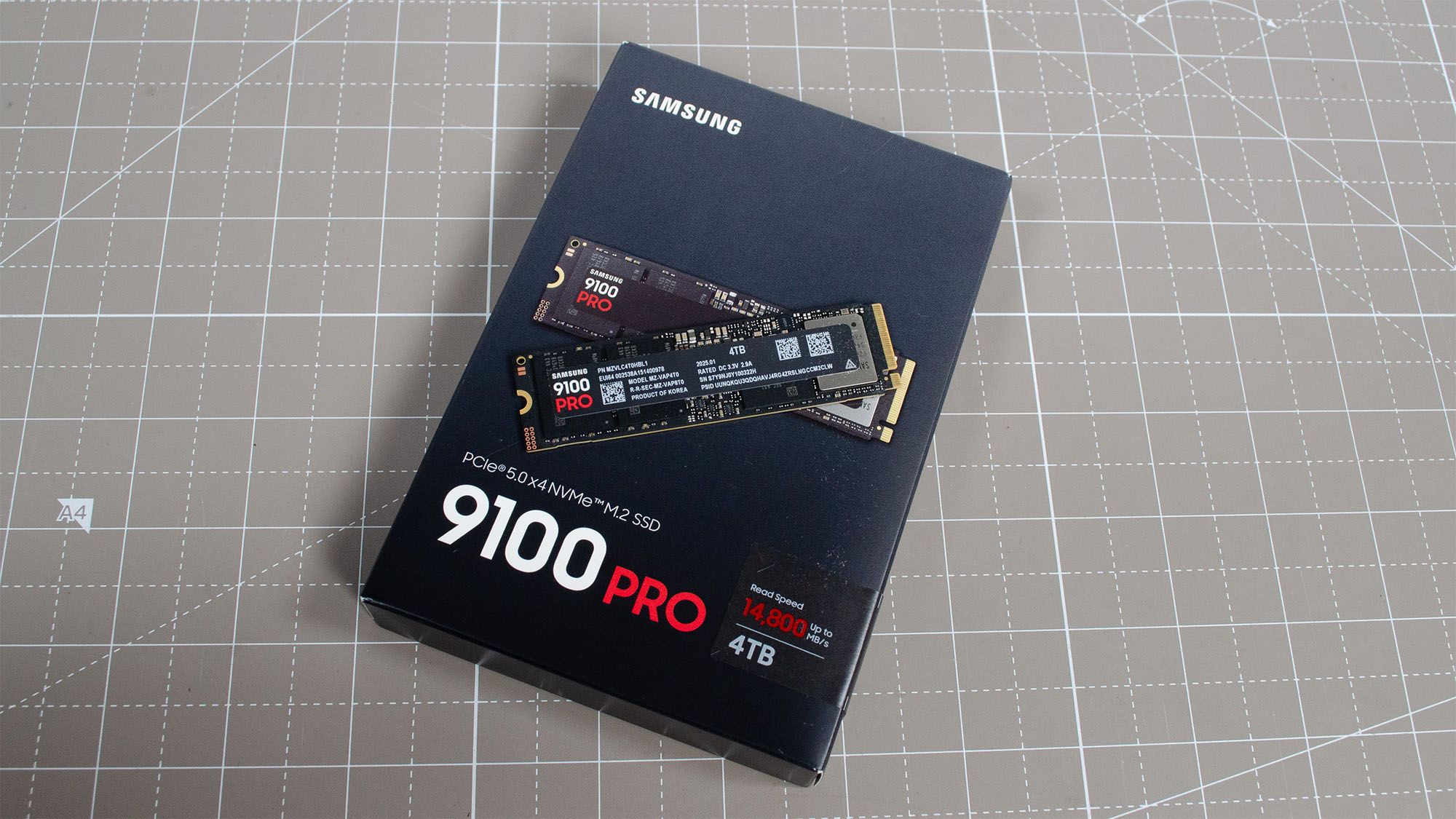
High-performance solid-state storage pricing has reached a notable point of convergence in the computer hardware market, as the cost differential between Samsung's top-tier drive offerings has narrowed significantly. According to reporting by Steve Clark, professional users evaluating high-end storage options face a price gap of just $10 between the Samsung 990 Pro and the advanced Samsung 9100 Pro solid-state drive (SSD).
The marginal price distinction presents an immediate consideration for system builders, creative professionals, and enterprise workstation operators looking to maximize data transfer rates. While top-tier hardware upgrades traditionally command a sizeable premium, the minimal cost delta between these two performance drives shifts the economic decision-making process for users who possess compatible motherboard architecture and system infrastructure.
Narrow price gap alters hardware acquisition logic
In the personal computer component industry, flagship products typically maintain distinct price brackets designed to segment mainstream consumers from professional power users. However, as reported by Steve Clark, the $10 price difference between the Samsung 990 Pro and the Samsung 9100 Pro effectively collapses that standard pricing tiering.
For buyers operating within strict hardware budgets, a $10 variance represents a negligible fraction of the overall cost of a modern workstation or custom PC build. This price parity means that financial constraints are no longer the primary deciding factor when choosing between the two drives. Instead, purchasing decisions hinge on system compatibility, thermal capabilities, and specific operational requirements.
Pricing dynamics in the NAND flash memory market frequently experience shifts due to supply chain cycles, manufacturing yields, and the introduction of next-generation controller technologies. When newer performance models enter the market at prices nearly identical to existing high-end models, consumers gain the opportunity to acquire higher theoretical bandwidth without incurring the heavy early-adopter tax usually associated with top-tier hardware releases.
Technical prerequisites and system compatibility requirements
Although the narrow price gap makes the Samsung 9100 Pro an attractive option, realizing the benefits of higher-end solid-state drives depends entirely on the host system's hardware capabilities. As noted in the reporting by Steve Clark, the advantages of choosing the premium option apply primarily to professional users equipped with appropriate hardware architecture.
Modern NVMe (Non-Volatile Memory Express) SSDs rely on modern Peripheral Component Interconnect Express (PCIe) bus standards to transport data between the storage drive, system memory, and the central processing unit. To utilize the full data throughput capability of an advanced drive like the 9100 Pro, a computer must feature a compatible motherboard equipped with appropriate PCIe M.2 expansion slots.
Placing a high-throughput SSD into a system with an older or bandwidth-constrained PCIe interface causes the drive to operate at reduced speeds dictated by the legacy motherboard standard. In such scenarios, the performance difference between high-end drives becomes imperceptible, as the host system creates a hardware bottleneck. Furthermore, top-tier SSDs generate significant thermal energy during sustained heavy workloads, requiring motherboards with dedicated M.2 heatsinks or active cooling setups to prevent thermal throttling.
Demands of professional computational workloads
The operational distinction between standard consumer drives and top-tier professional SSDs manifests primarily during intensive computational tasks. While everyday applications, operating system booting, and video gaming show marginal practical differences between high-speed drives, specialized professional workflows place heavy demands on storage subsystem architecture.
Data-intensive applications such as 8K video post-production, multi-layer uncompressed audio editing, 3D animation rendering, and large-scale software compilation require sustained high sequential read and write speeds. Similarly, tasks involving database management, artificial intelligence model training, and complex scientific simulations rely heavily on high random input/output operations per second (IOPS).
Professional drives are engineered to maintain high transfer rates over extended periods without suffering severe performance degradation as internal buffer caches fill up. For professional operators, reduced file transfer times and faster scratch-disk rendering translate directly to lower project completion times, making even slight performance increments economically valuable over the lifespan of a workstation.
Strategic dynamics in the solid-state drive market
Samsung's positioning of the 9100 Pro alongside the established 990 Pro reflects broader competitive strategies across the storage semiconductor industry. As a vertically integrated manufacturer, Samsung develops its own NAND flash memory chips, internal DRAM cache, and custom memory controllers, allowing the company tight control over production pricing and product differentiation.
When new drive architectures are introduced to the market, manufacturers often adjust retail pricing to transition power users toward newer product platforms. By pricing the 9100 Pro within $10 of the 990 Pro, the company incentivizes hardware enthusiasts and workstation buyers to adopt its top-of-the-line hardware ecosystem.
This strategy also helps streamline inventory management across retail distribution channels, encouraging high-demand users to select current-generation flagships while maintaining established drive models for standard consumer markets and system integrations.
Evaluating the upgrade path for power users
For prospective buyers, the choice between the Samsung 990 Pro and the Samsung 9100 Pro comes down to a clear assessment of hardware infrastructure and daily usage requirements. Based on the pricing environment documented by Steve Clark, spending the additional $10 yields clear long-term value for users whose system motherboards support full bandwidth utilization and provide adequate cooling.
For users operating older hardware platforms without plans for an immediate motherboard or processor upgrade, the extra investment provides little practical gain, as performance will be capped by existing system limitations. However, for professionals building new workstations or upgrading systems capable of supporting higher storage standards, the minimal cost difference makes the higher-tier drive a straightforward selection.
Original reporting on the pricing comparison between the Samsung 9100 Pro and 990 Pro SSDs was conducted by Steve Clark.
How this story was produced
This report was written by The Global Wire newsroom from reporting first published by Steve Clark. We verify the core facts against the original report, write our own account, and add the background and consequences a short wire item leaves out. Drafting is AI-assisted inside an editor-supervised pipeline, and every story is checked for accuracy of attribution, structure and duplication before it appears — full detail in our AI and funding disclosure.
Spotted an error? Tell us at corrections@horizonglobalnews.com and read our corrections policy or editorial standards.





Reader comments
Loading comments…