

Russia and Ukraine Open Talks in Abu Dhabi Under US Mediation and Indian Diplomacy
Negotiators convene in the United Arab Emirates to discuss security frameworks, humanitarian steps, and a potential path to ending the conflict.
By The Global Wire Newsroom · Reported from India Today Video Desk
Link preview · horizonglobalnews.com
Russia and Ukraine Open Talks in Abu Dhabi Under US Mediation and Indian Diplomacy
Negotiators convene in the United Arab Emirates to discuss security frameworks, humanitarian steps, and a potential path to ending the conflict.
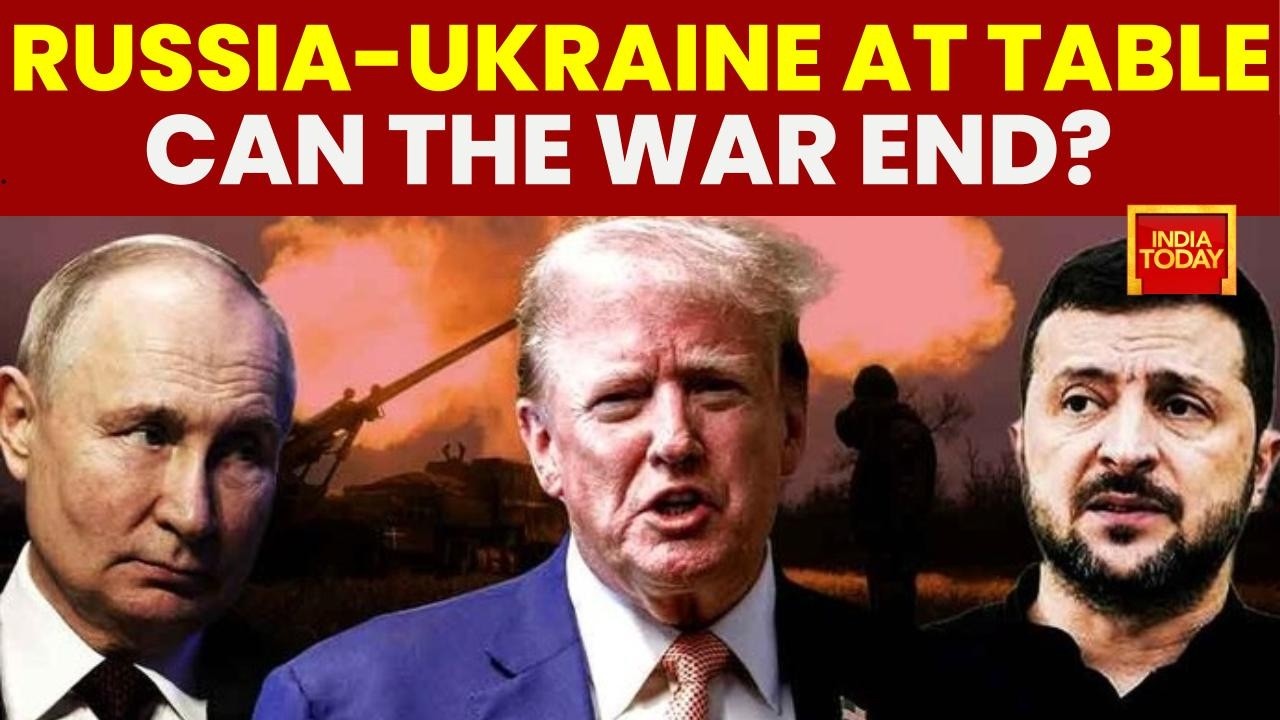
Envoys from the Russian Federation and Ukraine have convened in Abu Dhabi to open direct peace negotiations supported by the United States, marking a fresh attempt at diplomatic engagement after years of grueling conventional warfare. The discussions in the capital of the United Arab Emirates represent a significant coordination between Western diplomacy and Gulf mediation, focusing on foundational security guarantees, immediate humanitarian measures, and broad terms for sustainable conflict resolution. The diplomatic initiative coincides with an intensification of parallel diplomatic contacts led by India, whose senior leadership has stepped up consultations across international capitals to facilitate an end to the hostilities.
Key facts
What happened
According to reporting by India Today, negotiators representing Moscow and Kyiv arrived in Abu Dhabi to commence peace negotiations mediated with direct support from the United States. The venue places the discussions in the Gulf region, where the host government of the United Arab Emirates has cultivated functional diplomatic and economic ties with both Western partners and the Kremlin.
The framework of the discussions brings together three central thematic pillars: the development of binding security guarantees to avert future military aggression, the implementation of urgent humanitarian measures, and broader parameters for general conflict resolution. While the exact composition of the negotiating teams has not been publicly released, the inclusion of formal security arrangements signifies that the dialogue extends beyond the technical and localized swaps that characterized earlier contacts between the two warring states.
In parallel with the Washington-backed initiative in the Emirates, Indian diplomats and political leaders have elevated their engagement on the file. New Delhi has actively consulted with key international stakeholders to push forward political solutions to the war. Indian leadership has framed its engagement as a non-aligned bridge-building effort, communicating across both Western capitals and Moscow to build momentum toward an enduring cessation of hostilities.
Why it matters
Direct negotiations between belligerents engaged in an active, industrial-scale war carry immediate geopolitical, financial, and strategic repercussions. For global commodity markets, any verifiable progress toward a stabilization framework directly affects global energy prices, fertilizer trade, and agricultural supply chains. Both Russia and Ukraine remain essential producers of grain, seed oil, and basic industrial inputs. Although the Black Sea maritime corridor established by Ukraine has partially restored maritime shipping since the collapse of the formal United Nations-brokered Black Sea Grain Initiative in July 2023, lasting stability in the basin depends entirely on an overarching reduction in hostilities.
For European security architecture, the emergence of talks centering on security guarantees directly addresses the most intractable question of the war: how to establish a durable deterrent framework that preserves Ukrainian sovereignty without triggering renewed systemic escalation across NATO's eastern flank. Any negotiated arrangement would necessitate unprecedented mechanisms for international verification, border monitoring, and enforcement guarantees that would bind Western capitals for decades.
For the Global South, the involvement of the United Arab Emirates as a host venue and India as an active diplomatic interlocutor highlights a structural shift in international conflict resolution. Middle-power states are increasingly displacing traditional European multilateral forums as primary conveners of peace diplomacy. If Abu Dhabi and New Delhi successfully establish a durable negotiating track, it will reinforce the role of non-Western powers as indispensable mediators in systemic international disputes.
The background
Since the Russian Federation launched its full-scale invasion of Ukraine on February 24, 2022, sustained direct peace negotiations have been rare. Initial talks held in Belarus in late February 2022 yielded little substantive progress, moving subsequently to Istanbul in March and April 2022 under Turkish auspices. Those early negotiations collapsed amid revelations of civilian atrocities in liberated areas such as Bucha, Ukrainian battlefield counteroffensives in Kharkiv and Kherson, and fundamental disagreements over Ukrainian neutrality, military caps, and the territorial status of occupied regions including Crimea and the Donbas.
In the subsequent years, communication between Moscow and Kyiv was largely restricted to discrete humanitarian agreements and operational matters. The United Nations and Turkey successfully brokered the Black Sea Grain Initiative in July 2022, which allowed the export of more than 32 million metric tons of agricultural produce before Moscow declined to renew it one year later. Bilateral discussions on prisoner swaps, repatriation of deceased soldiers, and civilian crossings were managed primarily through third-party intermediaries, notably Qatar, Turkey, Saudi Arabia, and the United Arab Emirates. Abu Dhabi distinguished itself through repeated, successful prisoner-of-war exchanges, including swaps involving hundreds of combatants brokered across 2023 and 2024.
Diplomatic efforts to organize a broader peace process previously faced competing visions. Ukraine formulated a ten-point peace plan emphasizing the total withdrawal of Russian forces to its 1991 borders, war crimes tribunals, and reparations. That vision served as the centerpiece for the June 2024 Bürgenstock peace summit in Switzerland, which drew delegations from over 90 states but omitted Russian participation. Moscow consistently rejected that framework, insisting that any settlement must reflect what it termed "realities on the ground," referring to its claimed annexation of the Ukrainian regions of Donetsk, Luhansk, Zaporizhzhia, and Kherson, alongside Crimea, and demanding ironclad pledges that Ukraine never join NATO.
India has maintained a delicate diplomatic position throughout the conflict. While New Delhi has refrained from voting in favor of United Nations General Assembly resolutions explicitly condemning Moscow, it has repeatedly affirmed the principles of the UN Charter, sovereignty, and territorial integrity. Prime Minister Narendra Modi conducted official visits to Moscow in July 2024 and Kyiv in August 2024, explicitly declaring that the modern era is not an era of war and signaling India's readiness to assist in constructive peace initiatives.
Reaction
Official statements from the participating parties regarding the Abu Dhabi talks have remained tightly controlled, reflecting the acute operational sensitivity of the opening sessions. Major diplomatic observers expect formal feedback to emerge through key international bodies, including the United Nations Security Council and regional groupings such as the European Union and the G7.
Western partners, led by Washington, face the challenge of reconciling mediation support with established pledges not to negotiate Ukraine's future over Kyiv's head. European capitals, particularly those bordering Russia such as Poland and the Baltic states, are anticipated to closely evaluate any preliminary security frameworks to ensure that territorial concessions are not legitimized or rewarded. In Moscow, state media and parliamentary figures are expected to assess whether the US-mediated format aligns with the Kremlin's longstanding preference for direct negotiations with Washington on European security spheres of influence. In Kyiv, domestic political scrutiny remains high, with civil society, military commanders, and parliament demanding that any diplomatic track rigorously uphold Ukrainian sovereignty and prevent a frozen conflict that permits Russian forces to regroup.
What we don't know yet
Significant operational and structural details regarding the Abu Dhabi negotiations remain undisclosed. It has not yet been clarified at what level of seniority the delegations are operating—whether the talks are being led by special presidential envoys, deputy foreign ministers, national security advisers, or career intelligence officers. The exact mandate granted to the negotiators by Russian President Vladimir Putin and Ukrainian President Volodymyr Zelenskyy has not been revealed.
Furthermore, the precise nature of the proposed security guarantees remains unverified. It is unclear whether the negotiators are discussing bilateral Western treaties, multilateral demilitarization zones, UN-backed observer missions, or conditional non-aggression pacts. Finally, the degree to which current front-line positions might be frozen or adjusted remains unknown, as does the timeline for any formal joint communiqués or working-group roadmaps emerging from the initial Abu Dhabi sessions.
What to watch
Several concrete milestones will indicate whether the Abu Dhabi track possesses genuine momentum or represents an exploratory session. The primary indicator will be the announcement of specific working groups dedicated to technical implementation, particularly regarding the release of all remaining prisoners of war, the return of displaced children, or local ceasefires around critical infrastructure.
Observers will monitor upcoming multilateral gatherings, including regional summits and United Nations sessions, where Indian and Emirati officials may brief international partners on the discussions. The public rhetoric from senior officials in Washington, Moscow, and Kyiv over the coming days will provide critical signals: any abrupt hardening of conditions or public disavowal of the format will indicate severe friction, whereas restrained messaging or confirmation of subsequent rounds of talks in Abu Dhabi will confirm that an active diplomatic channel has been successfully established.
This account is based on original reporting by the India Today Video Desk.
How this story was produced
This report was written by The Global Wire newsroom from reporting first published by India Today Video Desk. We verify the core facts against the original report, write our own account, and add the background and consequences a short wire item leaves out. Drafting is AI-assisted inside an editor-supervised pipeline, and every story is checked for accuracy of attribution, structure and duplication before it appears — full detail in our AI and funding disclosure.
Spotted an error? Tell us at corrections@horizonglobalnews.com and read our corrections policy or editorial standards.






Reader comments
Loading comments…