

Richard Kelly Writes 'Donnie Darko' Sequel Novel to Launch New Film Franchise
Filmmaker Richard Kelly has authored a direct prose continuation of his 2001 cult classic Donnie Darko, intending to adapt the book into a new feature film series.
By The Global Wire Newsroom · Reported from Germain Lussier
Link preview · horizonglobalnews.com
Richard Kelly Writes 'Donnie Darko' Sequel Novel to Launch New Film Franchise
Filmmaker Richard Kelly has authored a direct prose continuation of his 2001 cult classic Donnie Darko, intending to adapt the book into a new feature film series.
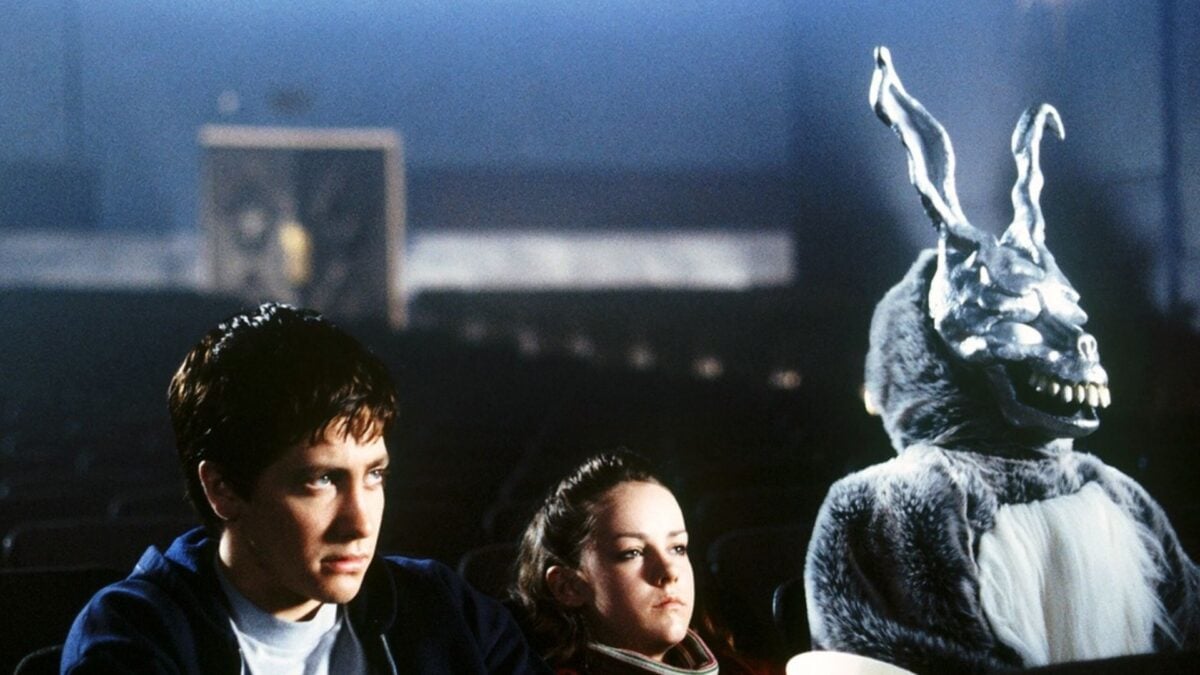
Filmmaker Richard Kelly has written a novel that serves as a direct sequel to his landmark 2001 psychological science-fiction film Donnie Darko, establishing a literary foundation that he intends to adapt into a multi-picture cinematic franchise, according to reporting by entertainment journalist Germain Lussier. The upcoming book marks Kelly's first canonical return to the surreal universe he created a quarter-century ago. Rather than launching immediately into a feature film production, Kelly has chosen to expand the story first through prose, laying out a broader mythology designed to generate new motion pictures under his direct creative oversight.
Key facts
What happened
According to reporting published by Germain Lussier, writer-director Richard Kelly has authored a new book conceived as a direct continuation of his 2001 cult classic Donnie Darko. The literary project is structured not merely as a standalone novel, but as the blueprint for an expanded film franchise that Kelly envisions bringing to cinemas.
By executing the sequel first as a published book, Kelly is utilizing a strategy increasingly employed by filmmakers seeking to maintain narrative control and establish intellectual property in the publishing sector before entering studio negotiations for high-budget film adaptations. The manuscript is designed to re-engage the original film's complex sci-fi concepts—including wormholes, tangent universes, divine intervention, and existential dread—while broadening the scope to support multiple cinematic chapters.
The initiative represents Kelly's most concrete step toward expanding the Donnie Darko brand since he released a director's cut of the original movie in 2004. Details regarding whether the prose narrative directly picks up after the fatal climax of the 1988-set original film or focuses on a new generation of characters dealing with metaphysical disturbances remain closely guarded. However, the reporting makes clear that Kelly's overarching objective is to translate this literary foundation into a series of feature films, aiming to reignite his filmmaking career through the universe that originally established his reputation in independent cinema.
Why it matters
Kelly's pivot to prose as a staging ground for a cinematic universe highlights significant shifts in how auteur-driven intellectual property is developed in the contemporary media landscape. In an era dominated by corporate franchise revivals, independent creators face mounting hurdles when attempting to finance original sci-fi or secure greenlights for complex, mid-budget theatrical releases. By publishing a novel first, a filmmaker can establish a copyrighted literary property, cultivate a readership, and demonstrate audience demand without incurring the tens of millions of dollars required for film pre-production.
For the film industry, a legitimate, Kelly-penned continuation of Donnie Darko offers a major test case for early-2000s cult IP expansion. Donnie Darko achieved its iconic status primarily through word-of-mouth recommendations, midnight screenings, and the booming DVD rental market of the early 2000s—a distribution ecosystem that has largely vanished in favor of streaming algorithms. Testing whether that legacy can anchor a modern multi-film franchise will signal whether middle-tier cult movies from the indie film boom can be converted into enduring media universes. Furthermore, Kelly's return to his signature creation represents a notable career event; after direct access to studio financing slowed following his subsequent features, revitalizing his debut work through literature provides a direct path back to feature-length director credits.
The background
Premiering at the Sundance Film Festival in January 2001, Donnie Darko was Richard Kelly's feature directorial debut, written when he was 23 years old. Set in October 1988 in the fictional suburban town of Middlesex, Virginia, the film starred Jake Gyllenhaal as a troubled teenager who escapes a fatal jet engine crash through sleepwalking, guided by a figure in a monstrous rabbit suit named Frank who informs him the world will end in 28 days. The cast also featured Jena Malone, Drew Barrymore, Maggie Gyllenhaal, Mary McDonnell, Holmes Osborne, and Patrick Swayze.
The film's initial theatrical release in October 2001, distributed by Newmarket Films, coincided with the immediate aftermath of the September 11 terrorist attacks. Because the plot prominently featured a jet engine falling from the sky, promotional campaigns were muted, and the movie grossed approximately $517,000 domestically and $7.5 million worldwide against a production budget of $4.5 million. However, following its home video release in 2002, Donnie Darko transformed into a global cult phenomenon, generating tens of millions of dollars in DVD sales, merchandising, and soundtrack streams fueled by Michael Andrews and Gary Jules's cover of Tears for Fears' "Mad World."
In 2004, Kelly released a Director's Cut that added 20 minutes of footage and explicit text excerpts from the in-universe fictional book The Philosophy of Time Travel by character Roberta Sparrow. Following his debut, Kelly directed Southland Tales (2006), an ambitious ensemble sci-fi satire that premiered at the Cannes Film Festival, and The Box (2009), a psychological thriller starring Cameron Diaz and James Marsden adapted from a Richard Matheson short story.
Despite Kelly's critical standing as a visionary director, he experienced prolonged developmental hurdles that kept him out of the director's chair after 2009. Meanwhile, in 2009, a low-budget sequel titled S. Darko was produced by 20th Century Fox Home Entertainment and directed by Chris Fisher. Focusing on Donnie's younger sister Samantha, played by Daveigh Chase, the direct-to-video production was created without Kelly's participation, consent, or writer credit. Kelly publicly disavowed any association with S. Darko, noting that he had no legal control over the sequel rights at that time. Over the subsequent decade, Kelly consistently expressed interest in creating a true, canonical continuation of the original story whenever legal rights and financial backing could be properly aligned.
Reaction
News of Kelly's manuscript and franchise ambitions is expected to generate significant interest across both the publishing and entertainment sectors. Hollywood talent agencies, independent production companies, and streaming services routinely track literary manuscripts written by established directors, particularly those tied to recognizable legacy titles. Book publishers specializing in speculative fiction and pop culture properties are likely to compete for the printing rights to a novel bearing Kelly's name and the Donnie Darko trademark.
Among film critics and cinephiles, reaction will likely focus on Kelly's long-awaited return to creative storytelling after a multi-year absence from feature directing. While fans of the original 2001 film have expressed caution regarding legacy sequels—especially given the poor critical reception of the unauthorized 2009 spin-off S. Darko—the prospect of an authentic continuation authored directly by Kelly provides a level of creative legitimacy that previous attempts lacked. Industry analysts will also monitor how the original cast members react to the news, as any potential film adaptation will inevitably face questions regarding their participation or cameo appearances.
What we don't know yet
Crucial details surrounding the book and its planned cinematic adaptations remain unannounced. Germain Lussier's reporting did not specify the novel's official title, its target publication date, or the publishing house that secured the print and digital distribution rights. It also remains unclear whether the manuscript has been formally completed or if Kelly is currently shopping the finished text to literary agents and film studios.
From a narrative perspective, it is unknown whether the story serves as a chronological follow-up set years after the 1988 events or if it explores alternative timelines created by the Primary Universe and Tangent Universe mechanics introduced in the first film. Additionally, the precise status of the film rights is unconfirmed. The original movie was produced by Pandora Cinema and Flower Films and distributed by Newmarket. Whether Kelly currently holds full legal authority to greenlight feature films based on the new literary IP or if he must negotiate co-production terms with legacy rights holders remains an open legal question.
What to watch
In the coming months, several key milestones will indicate the progress of Kelly's literary and cinematic venture. Observers should monitor official announcements from major publishing houses regarding acquisition rights, publication schedules, and international translation deals for the manuscript. Any registration of new trademarks or production entities associated with Kelly's production company will offer clues about the legal framework being assembled for the project.
On the screen side, film trade publications will be watching for reports of option sales, studio bidding wars, or co-financing partnerships aimed at adapting the book into a feature film. Announcements regarding Kelly's attachment as director, screenwriter, or producer for a prospective film adaptation will serve as the definitive test of whether this publishing strategy successfully transitions back into theatrical or streaming film production.
This report is based on original reporting by journalist Germain Lussier, who broke the news regarding Richard Kelly's new Donnie Darko sequel book and his broader cinematic franchise plans.
How this story was produced
This report was written by The Global Wire newsroom from reporting first published by Germain Lussier. We verify the core facts against the original report, write our own account, and add the background and consequences a short wire item leaves out. Drafting is AI-assisted inside an editor-supervised pipeline, and every story is checked for accuracy of attribution, structure and duplication before it appears — full detail in our AI and funding disclosure.
Spotted an error? Tell us at corrections@horizonglobalnews.com and read our corrections policy or editorial standards.





Reader comments
Loading comments…