

Researchers Propose 'Chronogeneity' Model to Map Diverse Autism Trajectories
A perspective in Nature Mental Health argues that mapping how autism unfolds across time can explain major differences in diagnosis age and psychiatric outcomes.
By The Global Wire Newsroom · Reported from Johnson; Mark H; Charman; Tony; Warrier; Varun; Jones; Emily J H
Link preview · horizonglobalnews.com
Researchers Propose 'Chronogeneity' Model to Map Diverse Autism Trajectories
A perspective in Nature Mental Health argues that mapping how autism unfolds across time can explain major differences in diagnosis age and psychiatric outcomes.
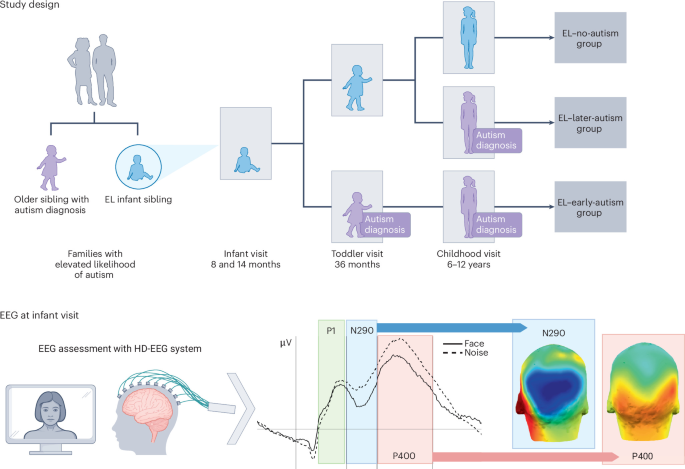
A team of leading developmental cognitive neuroscientists has proposed a new conceptual framework termed "chronogeneity" to resolve one of the most persistent challenges in psychiatric medicine: explaining why autism spectrum conditions present with such vast differences across individuals. In a perspective paper published on Nov. 18, 2026, in the journal Nature Mental Health, researchers Mark H. Johnson, Tony Charman, Varun Warrier, and Emily J. H. Jones argue that clinical and biological variations in autism are fundamentally rooted in distinct developmental trajectories over time. By shifting scientific focus away from static, single-point diagnostic assessments toward longitudinal pathways, the authors suggest that researchers and clinicians can better understand why individuals receive diagnoses at vastly different ages and experience markedly divergent mental health outcomes across their lifespans.
Key facts
What happened
For decades, clinical research into autism spectrum conditions has struggled to account for the extraordinary variance in how autism manifests across the population. In their paper published in Nature Mental Health, Johnson, Charman, Warrier, and Jones synthesize years of longitudinal research to introduce "chronogeneity"—a term blending chronology and heterogeneity—as a formal paradigm for understanding phenotypic variance.
Under conventional diagnostic protocols, clinicians evaluate individuals against standardized behavioural criteria at a single point in childhood, adolescence, or adulthood. According to the authors' analysis, this cross-sectional approach creates an artificial snapshot that obscures the underlying mechanisms driving neurodivergence. Instead, the authors argue that autism is defined by divergent developmental cascades that evolve dynamically from infancy onward.
The framework draws heavily on findings from prospective longitudinal investigations, particularly elevated-likelihood infant family studies where younger siblings of autistic children are tracked from birth. These empirical cohorts demonstrate that early neurodevelopmental markers, including atypical visual orienting, sensorimotor integration, neural connectivity patterns, and attentional allocation, emerge months before classic social communication differences stabilize into a clinical profile.
By categorizing these shifting developmental curves, the authors illustrate how chronogeneity correlates directly with diagnostic timing. Some children exhibit early, rapid-onset trajectories that result in identification before age three, often accompanied by significant intellectual or language support needs. Other individuals follow more subtle, protracted developmental curves where overt diagnostic features remain masked or compensated for until social environments become significantly more complex in adolescence or adulthood. Furthermore, the paper demonstrates that these distinct developmental paths are tightly coupled to secondary psychiatric profiles, explaining why certain developmental trajectories carry elevated vulnerabilities to internalizing conditions such as depression and anxiety, while others do not.
Why it matters
The introduction of the chronogeneity model carries significant implications for clinical practice, public health policy, and the design of neurodevelopmental research trials. Worldwide, health agencies and clinical registries have recorded steady increases in autism prevalence over the past two decades. In the United States, data from the Centers for Disease Control and Prevention's Autism and Developmental Disabilities Monitoring Network estimated autism prevalence at 1 in 36 eight-year-old children in its 2023 surveillance summary, up from 1 in 150 children in 2000. Similar upward trends have been documented across the United Kingdom, Canada, and the European Union, driven largely by wider diagnostic criteria and heightened recognition of adult and female presentations.
Despite this expansion, support systems remain encumbered by rigid diagnostic pathways designed around early childhood presentations. When clinical paradigms evaluate autism as a fixed state rather than a fluid developmental process, individuals whose atypical developmental paths diverge later in life frequently experience severe diagnostic delays. A longitudinal framework allows healthcare systems to anticipate these diverging paths rather than waiting for individuals to reach crisis points.
Moreover, the chronogeneity framework offers a concrete mechanism to address the mental health crisis affecting autistic adolescents and adults. Epidemiological research has long shown that autistic individuals experience substantially higher rates of major depressive disorder, generalized anxiety disorder, and suicidal ideation compared to non-autistic peers. By identifying specific early-life developmental trajectories that correlate with subsequent psychiatric vulnerability, clinicians could deploy targeted, preventative psychological supports years before secondary mental health conditions become acute.
In psychiatric drug development and clinical trials, phenotypic heterogeneity has repeatedly undermined promising therapeutic candidates. Clinical trials that enroll broadly defined autistic cohorts without accounting for trajectory subgroups often wash out positive treatment effects. Stratifying clinical cohorts by developmental timing and trajectory rather than static symptom checklists could provide pharmaceutical and behavioural researchers with the homogeneous subgroups needed to measure real intervention efficacy.
The background
The medical understanding of autism has undergone continuous revision since American child psychiatrist Leo Kanner published his landmark 1943 case series describing "infantile autism," and Austrian pediatrician Hans Asperger published his observations of social atypicality in 1944. Historically, psychiatric diagnostic manuals categorized these presentations into distinct subcategories. The fourth edition of the American Psychiatric Association's Diagnostic and Statistical Manual of Mental Disorders (DSM-IV), published in 1994, recognized multiple pervasive developmental disorders, including Autistic Disorder, Asperger's Disorder, and Pervasive Developmental Disorder Not Otherwise Specified (PDD-NOS).
In 2013, the release of the DSM-5 eliminated these categorical boundaries in favor of a single overarching diagnosis: Autism Spectrum Disorder (ASD). This umbrella approach was mirrored internationally by the World Health Organization when it published the 11th revision of the International Classification of Diseases (ICD-11), approved in 2019 and entering into global clinical use in January 2022. While the spectrum concept acknowledged that autism exists across a wide continuum of language, cognitive, and sensory presentations, it simultaneously created an immense scientific paradox: individuals who require 24-hour physical care and those who live entirely independent lives with specialized careers share the exact same top-level clinical classification.
To unpack this heterogeneity, developmental scientists shifted in the early 2000s toward prospective longitudinal cohorts. Research consortia, including the British Autism Study of Infant Siblings (BASIS) in the United Kingdom and the Infant Brain Imaging Study (IBIS) in North America, began tracking infants with an older autistic sibling. Because genetic epidemiology demonstrates that having an autistic first-degree relative significantly increases the statistical likelihood of autism—estimates place recurrence likelihood between 10 and 20 percent compared to roughly 2 percent in the general population—these cohorts allowed scientists to record neurodevelopmental changes prospectively, long before clinical symptoms emerged.
Concurrently, large-scale genomic initiatives such as the Autism Sequencing Consortium and the Psychiatric Genomics Consortium have uncovered hundreds of distinct genetic risk factors, spanning rare de novo monogenic mutations and thousands of common polygenic variants. However, these genetic findings have rarely mapped cleanly onto static behavioural presentations observed in clinics. The researchers contributing to the Nature Mental Health perspective—based at prominent British research institutions including the University of Cambridge, King's College London, and Birkbeck, University of London—have spent decades leading these infant sibling consortia and neurogenomic analyses, providing the empirical foundation that culminated in the chronogeneity framework.
Reaction
Because the framework was published in a specialized academic journal, immediate formal institutional responses from bodies such as the UK National Institute for Health and Care Excellence (NICE), the American Academy of Pediatrics, or international psychiatric associations remain pending. However, the publication has prompted focused discussion within developmental neurobiology and clinical psychology circles.
In academic forums, research methodology specialists are expected to debate how easily the chronogeneity model can be translated from high-resource prospective research consortia into frontline pediatric and primary care environments. Pediatricians operating within publicly funded systems such as the UK National Health Service or resource-constrained community clinics in North America often face substantial backlogs for baseline diagnostic evaluations, raising operational questions about how systems can support multi-timepoint, longitudinal tracking over several years.
Autism advocacy groups, neurodiversity organizations, and clinical psychologists who work with late-diagnosed adults are expected to engage heavily with the framework. Patient-led organizations have long criticized static diagnostic definitions for failing individuals whose neurodevelopmental differences manifest differently across stages of educational and occupational transition. A scientific model that validates diagnostic divergence as an inherent feature of neurodevelopmental timing aligns closely with priorities long articulated by late-diagnosed individuals.
What we don't know yet
While the perspective outlines a compelling conceptual architecture, several empirical questions remain unresolved. The paper sets out a broad framework rather than an exhaustive catalog of every developmental pathway, leaving the precise number of distinct developmental trajectories within the autism spectrum unquantified. It is not yet established whether these trajectories represent discrete, mathematically definable subgroups or continuous multidimensional curves.
Furthermore, the exact biological and environmental mechanisms that cause one trajectory to diverge from another remain unclear. While the framework incorporates data from family and neurodevelopmental studies, the field still lacks definitive data showing how specific polygenic score thresholds interact with prenatal biology, early sensory processing, and postnatal caregiving environments to alter developmental timing. Crucially, the diagnostic utility of chronogeneity has not yet been demonstrated in clinical settings outside research cohorts. It remains unproven whether longitudinal trajectory mapping can reliably predict an individual child's adult psychiatric profile with the statistical accuracy required to guide medical intervention.
What to watch
The impact of the chronogeneity model will depend on several upcoming developments in neurodevelopmental science and clinical guidelines. A primary milestone to monitor will be how longitudinal research consortia deploy the framework in empirical studies over the next 12 to 24 months. Watch for computational modeling studies using machine learning to parse existing large-scale longitudinal datasets—such as those from the European AIMS-2-TRIALS consortium and the North American SPARK research initiative—to test whether data-driven clustering supports the chronogeneity hypotheses.
Another critical signal will be whether international nosology working groups incorporate trajectory-based thinking into future revisions or clinical practice parameters associated with the DSM-5-TR and ICD-11. Observers should track whether pediatric healthcare bodies begin recommending repeated neurodevelopmental check-ins rather than single-event discharge assessments for children flagged with early behavioral or sensory differences.
Finally, watch for developments in psychiatric clinical trial designs. If upcoming clinical trials targeting co-occurring mental health conditions in autistic adolescents begin stratifying participant cohorts by developmental trajectory, it will signal that the pharmaceutical and psychiatric research sectors have formally adopted chronogeneity as an operational standard.
This report is based on original research and scientific perspectives published by Mark H. Johnson, Tony Charman, Varun Warrier, and Emily J. H. Jones in Nature Mental Health.
How this story was produced
This report was written by The Global Wire newsroom from reporting first published by Johnson; Mark H; Charman; Tony; Warrier; Varun; Jones; Emily J H. We verify the core facts against the original report, write our own account, and add the background and consequences a short wire item leaves out. Drafting is AI-assisted inside an editor-supervised pipeline, and every story is checked for accuracy of attribution, structure and duplication before it appears — full detail in our AI and funding disclosure.
Spotted an error? Tell us at corrections@horizonglobalnews.com and read our corrections policy or editorial standards.






Reader comments
Loading comments…