

Razer Adds Magnetic Switches to Huntsman Keyboard Lineup, Review Finds Gaming Gains
An evaluation by Lewis Maddison reveals Razer's magnetic Huntsman offers top-tier gaming responsiveness, though non-gaming typing comfort requires further refinement.
By The Global Wire Newsroom · Reported from Lewis Maddison
Link preview · horizonglobalnews.com
Razer Adds Magnetic Switches to Huntsman Keyboard Lineup, Review Finds Gaming Gains
An evaluation by Lewis Maddison reveals Razer's magnetic Huntsman offers top-tier gaming responsiveness, though non-gaming typing comfort requires further refinement.
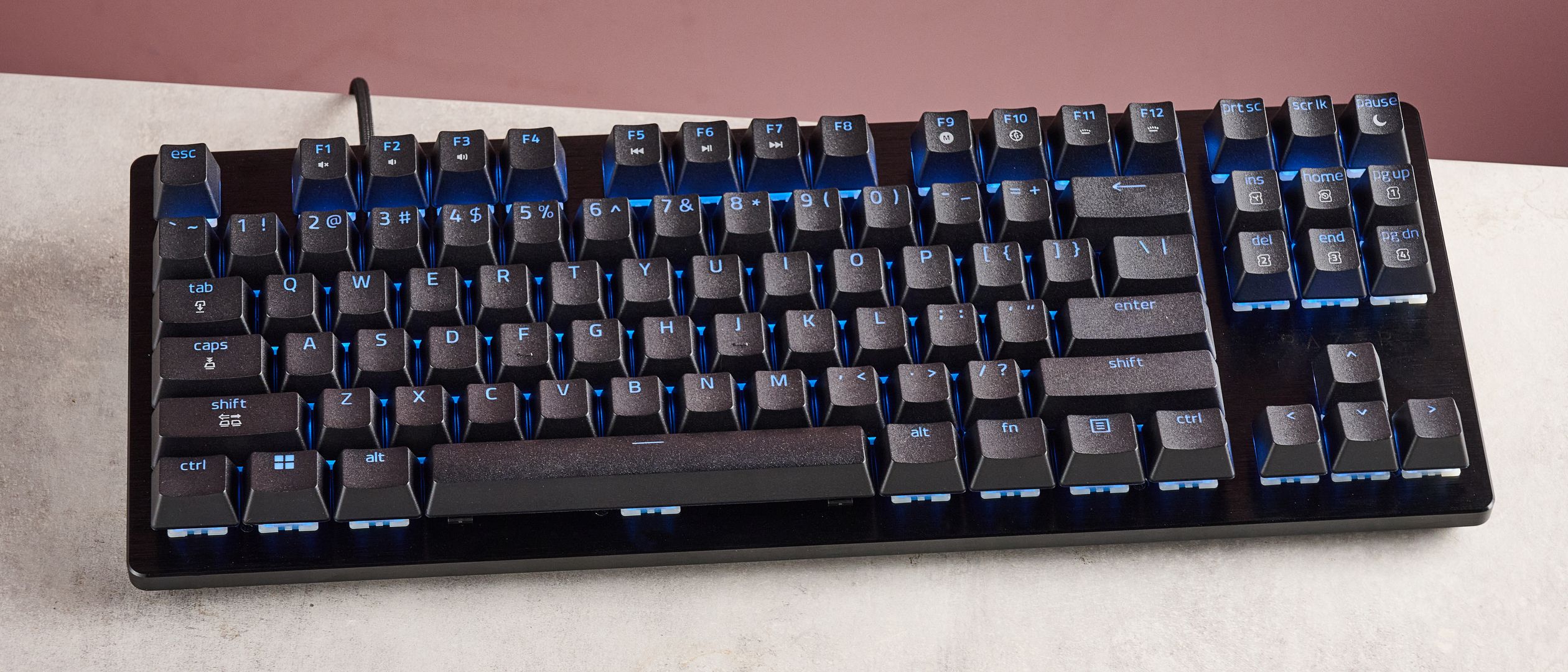
PC hardware manufacturer Razer has expanded its flagship Huntsman line with magnetic analog switches, according to an evaluation published on September 5, 2026, by technology writer Lewis Maddison. The updated keyboard platform incorporates Hall effect magnetic sensing technology designed to deliver precise key actuation depth and instantaneous resetting for high-performance computer gaming. While testing confirmed that the magnetic switch mechanism provides superior responsiveness and fluid control during competitive gaming scenarios, the evaluation highlighted key shortcomings in everyday typing comfort and key-feel, noting that additional design refinements are required before the device can serve as a well-rounded option for general productivity. The release highlights an ongoing hardware transition across the PC gaming peripheral sector, as major manufacturers shift away from traditional binary mechanical contacts in favor of customizable magnetic sensors.
Key facts
What happened
In an assessment published on September 5, 2026, technology reviewer Lewis Maddison evaluated the performance characteristics of Razer's updated Huntsman keyboard featuring magnetic analog switch technology. The evaluation focused on testing whether replacing standard key actuation systems with magnetic sensors yields tangible performance gains in real-world applications.
During testing, Maddison observed that the magnetic switches provided exceptional performance during intensive gaming sessions. The continuous position tracking offered by the analog mechanism allowed for precise keystroke registration, smooth actuation curves, and rapid key resets. In high-speed gaming environments where micro-adjustments and swift directional changes are critical, the keyboard delivered a noticeable operational advantage over conventional binary inputs. Maddison rated the overall analog feel among the best switch implementations currently available on the market.
However, the evaluation revealed a distinct imbalance between gaming functionality and general typing utility. Maddison noted that while the board excels at fast-paced inputs, the overall typing experience remains compromised. The switch feel, bottom-out response, and acoustic properties did not match the refinement expected from top-tier typing instruments, leading to the conclusion that Razer needs to implement additional structural or switch-level modifications to make the keyboard equally compelling for daily writing and office tasks.
Why it matters
The transition to magnetic switch technology in high-end PC gaming keyboards represents a fundamental shift in peripheral design. Historically, keyboard switches functioned as binary digital switches: a key press was registered only when metallic contacts touched or when a physical light beam was broken, operating on a strictly on-or-off state. Magnetic switches, powered by Hall effect sensors, measure the strength of a magnetic field as a key is depressed, allowing the keyboard's internal controller to determine the exact position of the key stem throughout its entire travel distance.
For competitive PC gamers, particularly those participating in tactical first-person shooters and fast-paced esports titles, this technological evolution provides distinct physical advantages. Analog sensing enables features such as dynamic actuation points—allowing users to set ultra-shallow registration depths for faster response times—and rapid trigger capability, where keys reset the instant they begin moving upward rather than needing to cross a fixed physical reset point. Additionally, analog travel allows key presses to emulate analog controller joysticks, granting granular control over character movement speeds in supported games.
However, the trade-offs highlighted in Maddison's evaluation reflect a persistent engineering challenge within the gaming peripheral industry. Designing switches optimized for ultra-low resistance, high-frequency double-tapping, and near-zero travel delay often results in a key feel that lacks tactile feedback, sound dampening, or cushioned impact mitigation desired for long typing sessions. As major hardware makers compete to capture both competitive gamers and everyday computer users, balancing high-frequency gaming execution with acoustic and tactile ergonomics has become a central point of differentiation in the desktop market.
The background
The desktop keyboard industry has undergone several major architectural transitions over the past two decades. For years, mechanical keyboards relied on physical metal contact points. Companies like Cherry GmbH established industry standards with their Cherry MX line of mechanical switches. Following the expiration of key Cherry patents in 2014, a wide array of manufacturers began producing alternative mechanical switches, introducing varied tactile feedback profiles, spring weights, and sound signatures to a growing enthusiast market.
In 2018, Razer introduced optical switch technology within its original Huntsman series. Optical switches replaced mechanical leaf contacts with infrared light beams, removing physical contact friction and reducing actuation debounce delays. While optical switches delivered improved durability and faster signal transmission, they remained binary in nature, registering inputs at a fixed point in key travel.
The shift toward analog input gained significant momentum in 2022 when Dutch manufacturer Wooting released the Wooting 60HE, a compact keyboard featuring Hall effect magnetic switches. Hall effect sensors—originally discovered by physicist Edwin Hall in 1879—operate by detecting voltage variations across an electrical conductor when placed within a magnetic field. In keyboard applications, a small permanent magnet is mounted inside the key stem, while a Hall sensor is mounted directly onto the printed circuit board beneath the key. As the stem moves down, the sensor measures changes in magnetic flux density, continuously converting physical key depth into digital location values.
Recognizing the competitive advantage of magnetic actuation, major hardware manufacturers, including SteelSeries, Corsair, and Razer, began developing proprietary magnetic key implementations. Razer, founded in 2005 and co-headquartered in Irvine, California, and Singapore, has historically used its flagship Huntsman line to introduce its latest switch innovations. The addition of magnetic analog switches to the Huntsman platform reflects the broader industry trend toward converting elite gaming keyboards from binary devices into fully customizable analog control surfaces.
Reaction
The published evaluation by Lewis Maddison has drawn attention from both the gaming hardware industry and the mechanical keyboard enthusiast community. Maddison's assessment reflects a growing consensus among hardware reviewers: while magnetic actuation marks a significant technical leap forward for competitive esports performance, physical ergonomics and typing acoustics remain critical factors for general consumers.
Industry observers expect peripheral reviewers, competitive esports athletes, and custom keyboard builders to closely scrutinize Razer's implementation. Within competitive gaming circles, players are increasingly prioritizing keyboards with rapid trigger functionality to gain microsecond advantages in games like Valorant, Counter-Strike 2, and Apex Legends. Conversely, the mechanical keyboard enthusiast community—which places heavy emphasis on switch lubrication, sound dampening foam, keycap stabilization, and spring weight distribution—typically views mainstream gaming boards critically if key travel feels harsh or hollow during sustained typing.
Razer has not publicly issued an immediate engineering update in direct response to Maddison's review, but market analysts anticipate the company will address typing acoustics and switch feedback in future firmware releases or secondary hardware revisions, as mainstream adoption depends heavily on multi-use versatility.
What we don't know yet
While the initial report confirms the integration of high-performing magnetic switches into the Huntsman line, several key technical and commercial details remain unconfirmed. The available summary does not specify the exact model variant tested, such as whether the device represents a full-sized desktop layout, a tenkeyless format, or a 60-percent compact form factor. Furthermore, specific technical metrics—including the full range of configurable actuation depths and the maximum polling rate frequency—were not detailed in the summary copy.
Additionally, questions remain regarding the exact mechanical component causing the sub-optimal typing experience noted in Maddison's report. It is currently unclear whether the typing limitation is caused by excessive stem wobble, lack of internal sound-dampening foam, unlubricated key stabilizers, or the inherently linear resistance profile of the magnetic switches. Long-term reliability metrics, such as sensor tolerance to ambient temperature variations and magnetic interference from nearby devices, also require extended real-world testing.
What to watch
In the coming months, several key milestones will clarify the impact of Razer's magnetic Huntsman release on the broader computer hardware landscape:
This report is based on original evaluation and reporting conducted by technology writer Lewis Maddison, published on September 5, 2026.
How this story was produced
This report was written by The Global Wire newsroom from reporting first published by Lewis Maddison. We verify the core facts against the original report, write our own account, and add the background and consequences a short wire item leaves out. Drafting is AI-assisted inside an editor-supervised pipeline, and every story is checked for accuracy of attribution, structure and duplication before it appears — full detail in our AI and funding disclosure.
Spotted an error? Tell us at corrections@horizonglobalnews.com and read our corrections policy or editorial standards.





Reader comments
Loading comments…