

Pope Leo Shrugs Off Health Worries Aboard Papal Plane Following 12-Day Americas Visit
Returning from an arduous South American itinerary weeks after thoracic surgery, the pontiff brushed aside concerns regarding his stamina during an inflight press conference.
By The Global Wire Newsroom · Reported from Joshua McElwee
Link preview · horizonglobalnews.com
Pope Leo Shrugs Off Health Worries Aboard Papal Plane Following 12-Day Americas Visit
Returning from an arduous South American itinerary weeks after thoracic surgery, the pontiff brushed aside concerns regarding his stamina during an inflight press conference.
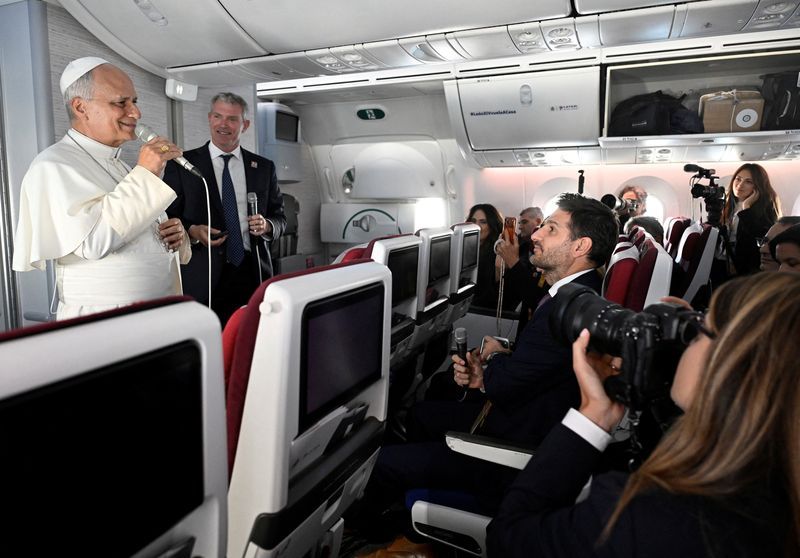
ABOARD THE PAPAL FLIGHT — Pope Leo brushed aside questions regarding his physical endurance on Tuesday following a demanding 12-day tour of South America, speaking with journalists during his return flight to Rome barely a month after undergoing surgery for lung cancer. Addressing the traveling press corps aboard the papal aircraft on Nov. 17, the pontiff lightheartedly suggested that the accompanying reporters appeared more exhausted than he was, asserting that divine grace had provided him with the necessary stamina to complete the lengthy transcontinental journey.
Key facts
What happened
According to reporting by Reuters correspondent Joshua McElwee, the exchange unfolded during the customary informal question-and-answer session held aboard the shepherd's aircraft—traditionally designated as Shepherd One by aviation observers—at the conclusion of an international apostolic journey. International reporters who accompanied the pontiff throughout the 12-day South American tour had closely monitored his physical condition, watching for any outward signs of respiratory distress, vocal strain, or physical fatigue following his major surgical procedure the previous month.
In October, the pope underwent an operation to treat lung cancer, an intervention that initially prompted widespread questions within the Catholic hierarchy regarding whether an extensive overseas pilgrimage would proceed as planned. Despite those medical concerns, the tour was maintained, subjecting the pontiff to multiple time zone adjustments, domestic flights across South American nations, high-density public liturgies, and formal state engagements with regional leaders.
When questioned by members of the Vatican press corps about the physical strain of the itinerary and how his respiratory system had managed the workload so soon after oncological surgery, Pope Leo reacted with laughter. Deflecting worries about his recovery, the pontiff joked that the journalists trailing him through the demanding schedule appeared noticeably more fatigued than he was, adding that God had granted him robust stamina to carry out the mission.
Why it matters
Papal health is never merely a private medical matter; it carries immediate operational, theological, and geopolitical consequences for the governance of the world's 1.4 billion Roman Catholics. The bishop of Rome exercises absolute executive, legislative, and judicial authority within the Holy See and the universal Catholic Church under the provisions of the Code of Canon Law. When a reigning pontiff undergoes surgical treatment for a life-threatening illness such as cancer, the global ecclesiastical apparatus invariably monitors his public appearances for signals of vitality or decline, mindful of the administrative paralysis that can emerge during prolonged papal infirmity.
Demonstrating vigor on a demanding international stage offers reassurance to diocesan bishops, curial officials, and national governments that institutional governance remains firmly under the pope's active direction. International apostolic visits require immense physical fortitude, often demanding that an octogenarian or septuagenarian church leader deliver multiple formal addresses daily, navigate extreme shifts in climate and altitude, and engage with massive crowds in open-air venues. By completing a nearly two-week itinerary and concluding it with a sharp, lighthearted public performance before the international media, Pope Leo sought to dispel speculation that his oncological diagnosis might curtail his global ministry or force an early retreat from public visibility. Furthermore, in Latin America—a region home to over 40 percent of the world's Catholic population—the successful completion of the tour reinforces direct pastoral ties at a moment when the Church faces intense competitive pressures from burgeoning Pentecostal and evangelical communities as well as growing secularism.
The background
Over the past century, Vatican protocols regarding the disclosure of papal health have evolved from strict secrecy toward cautious transparency, driven in part by modern round-the-clock media coverage. For much of the twentieth century, the physical ailments of pontiffs were closely guarded state secrets, disclosed only in heavily managed medical bulletins or post-mortem accounts. That precedent began to shift noticeably during the 26-year pontificate of Pope John Paul II, whose hospitalizations at Rome's Agostino Gemelli University Policlinic—following a 1981 assassination attempt, tumor resections, and the advancing stages of Parkinson's disease—were documented in unprecedented public detail.
Respiratory vulnerabilities have historically been of acute concern for modern occupants of the chair of Saint Peter. In 1957, at the age of 21, the young Jorge Mario Bergoglio—later Pope Francis—underwent surgery in his native Argentina to excise part of his right lung due to severe pleurisy, a pre-existing condition that repeatedly complicated his later papacy when he suffered from acute bronchitis, influenza, and abdominal operations. During Francis's reign, the Vatican press office under director Matteo Bruni adopted a practice of releasing regular updates on medical procedures, hospital admissions, and surgical recoveries, reflecting modern governance expectations.
Under Canon 332, Paragraph 2 of the Code of Canon Law, a Roman Pontiff retains the right to freely resign his office, a prerogative famously exercised by Pope Benedict XVI in February 2013 when he cited his declining physical and mental strength as the justification for his historic abdication. Benedict's departure established a contemporary precedent that physical decline does not inevitably necessitate remaining in office until death. Consequently, any serious surgical intervention involving a reigning pope immediately revives questions among canonical jurists and Vatican analysts regarding whether the pontiff possesses the endurance to govern effectively, or whether circumstances could trigger a voluntary retirement.
The tradition of holding an open-microphone inflight press conference dates back to the reign of John Paul II and was substantially expanded under Francis, who turned the return legs of papal journeys into candid, unscripted news conferences. These sessions regularly serve as an unofficial barometer of a pope's cognitive agility, stamina, and psychological outlook, allowing the traveling press corps to engage directly with the head of the Holy See without the filter of curial spokespersons.
Reaction
Official curial reactions to the pontiff's performance on the return flight are typically restrained, as Holy See officials prefer to let the pope's own public statements stand without supplementary commentary. However, diplomatic observers and local conference bishops across the South American countries visited during the tour are expected to welcome the successful conclusion of the itinerary as an affirmation of the pontiff's pastoral commitment to the region. Regional church leaders had anticipated that an illness-shortened trip might leave critical pastoral priorities unaddressed, particularly surrounding indigenous rights, environmental stewardship in the Amazonian basin, and ongoing economic volatility.
Medical commentators, while not directly involved in the pontiff's post-operative care, frequently observe that recovering from major thoracic surgery, especially for oncological indications, typically requires months of sustained pulmonary rehabilitation and careful energy management. Patient advocacy groups and healthcare professionals tracking public figures often view demonstrations of active recovery as morale-boosting for cancer patients, though specialists consistently note that public appearances must be balanced against the risk of secondary infections and respiratory exhaustion.
What we don't know yet
Despite the pope's reassuring tone aboard the aircraft, substantial factual details regarding his clinical condition remain undisclosed to the public. The Vatican has not published comprehensive post-operative medical reports specifying the histological grade or stage of the lung cancer treated during his October surgery, nor has it clarified whether the intervention involved a wedge resection, a segmentectomy, or a formal lobectomy. Furthermore, church authorities have not detailed whether the surgical intervention was considered fully curative on its own or whether the pontiff will require adjuvant therapies, such as targeted pharmaceutical treatments, immunotherapy, or radiation cycles, in the months ahead.
It is also unclear how the physical toll of the South American tour will influence the Vatican's scheduling for the coming liturgical year. The Holy See has not released medical benchmarks determining whether Pope Leo will maintain an equally rigorous slate of international travels in the forthcoming calendar year or if his physician team will advise restricting his travel commitments primarily to the Italian peninsula and the Vatican city-state.
What to watch
The immediate focus of Vatican observers will turn to the pontiff's upcoming liturgical commitments upon his arrival in Rome, including his weekly general audience in Saint Peter's Square and the demanding slate of ceremonies accompanying the upcoming liturgical calendar. Observers will closely monitor his vocal projection, breathing patterns during public deliveries, and mobility during extended standing rituals.
In addition, analysts will scrutinize the official announcements issued by the Prefecture of the Papal Household regarding future international apostolic journeys. Confirmation of tentative overseas trips scheduled for the upcoming spring and summer will provide the clearest institutional evidence of whether his medical team considers the post-surgical pulmonary recovery complete. Lastly, any forthcoming statements from the Holy See press office detailing post-trip medical evaluations at the Gemelli hospital or within the Vatican's internal health care directorate will be examined for signs of follow-up treatments.
This account is based on original reporting from aboard the papal aircraft by Joshua McElwee of Reuters.
How this story was produced
This report was written by The Global Wire newsroom from reporting first published by Joshua McElwee. We verify the core facts against the original report, write our own account, and add the background and consequences a short wire item leaves out. Drafting is AI-assisted inside an editor-supervised pipeline, and every story is checked for accuracy of attribution, structure and duplication before it appears — full detail in our AI and funding disclosure.
Spotted an error? Tell us at corrections@horizonglobalnews.com and read our corrections policy or editorial standards.






Reader comments
Loading comments…