

Peruvian Cacao Study Links Bird and Bat Habitats to Substantial Yield Gains
A field evaluation across 28 cacao farms in Peru reveals that shade trees hosting insect-eating wildlife nearly doubled crop output, generating an extra $1,640 per hectare annually.
By The Global Wire Newsroom · Reported from TOI Lifestyle Desk
Link preview · horizonglobalnews.com
Peruvian Cacao Study Links Bird and Bat Habitats to Substantial Yield Gains
A field evaluation across 28 cacao farms in Peru reveals that shade trees hosting insect-eating wildlife nearly doubled crop output, generating an extra $1,640 per hectare annually.
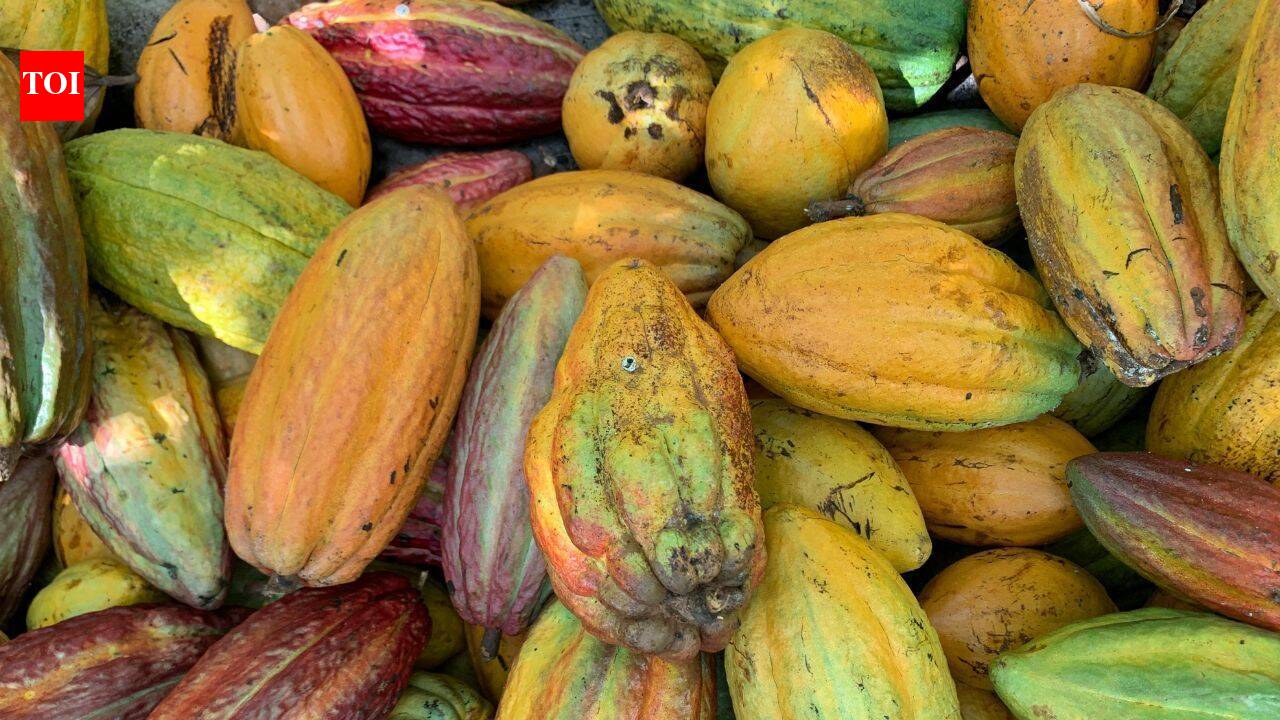
A comprehensive study conducted across 28 cacao plantations in Peru has demonstrated that integrating canopy trees that attract insectivorous birds and bats can nearly double annual crop yields through biological pest suppression. The biological dynamic, which relies on flying predators rather than chemical applications to contain insect damage, delivered an estimated $1,640 per hectare in added production value each year, according to reporting by TOI Lifestyle Desk. The findings provide empirical economic validation for agroforestry practices at a time when commercial cocoa cultivation worldwide faces escalating environmental, climatic, and cost-related headwinds.
Key facts
What happened
Agricultural researchers evaluated production dynamics and ecological interactions across 28 cacao farms situated in Peru, examining how structural diversity within farm canopies influences crop volume and quality. In tropical agroecosystems, cacao (*Theobroma cacao*) is traditionally cultivated either under clear-cut, full-sun monoculture regimes or beneath partial forest canopies known as agroforestry systems. The researchers observed that plantations retaining or introducing specific shade trees maintained higher densities and species richness of native avian and chiropteran (bat) fauna.
By tracking crop outcomes across the participating holdings, the study measured the direct ecosystem services rendered by these vertebrates. Birds actively forage for herbivorous caterpillars, beetles, and hemipteran bugs during daylight hours, while insectivorous bats patrol canopy gaps and understory layers at night, targeting nocturnal moths, beetles, and other common pests. The continuous, diurnal-nocturnal predation pressure drastically reduced pest infestations that typically bore into cacao pods, damage young foliage, or vector plant pathogens.
As reported by TOI Lifestyle Desk, this suppression mechanism translated directly into harvest volume: cacao yields on plots with robust bird and bat habitats were nearly twice the size of yields recorded in less diverse environments. When quantified in terms of commercial agricultural output, this biological protection added an estimated $1,640 per hectare annually to the value of the harvested cocoa beans, demonstrating that preserving biodiversity directly bolsters smallholder enterprise profitability.
Why it matters
The economic implications of this finding are substantial for global tropical agriculture. Smallholder farmers manage approximately 85 to 90 percent of the world's cocoa supply, often operating on plots of fewer than five hectares with razor-thin operating margins. In many producing nations, including Peru, Ecuador, Ivory Coast, and Ghana, producers have routinely faced escalating expenditures for imported synthetic fertilizers, fungicides, and chemical insecticides. A biological intervention that increases yields while reducing reliance on costly chemical inputs offers a structural mechanism to lift net agricultural household incomes.
Beyond direct farm economics, the result bears relevance for global supply chains governed by tightening environmental regulations. In jurisdictions such as the European Union, the European Union Deforestation Regulation (EUDR) has established stringent traceability and sustainability mandates for commodities entering the single market, penalizing deforested monocultures and rewarding verifiably sustainable land management. Demonstrating that shade-grown, biodiverse cacao generates an extra $1,640 per hectare alters the traditional economic calculus that historically drove farmers to strip forest cover in pursuit of short-term monoculture yield spikes.
Furthermore, the finding addresses widespread pest resilience issues. Decades of heavy organophosphate and pyrethroid pesticide applications across tropical zones have led to documented insecticide resistance among key cacao pests, including mirid bugs and stem borers, while simultaneously suppressing beneficial predator populations. Biological predation by vertebrates provides an adaptive, self-sustaining control regime that does not induce chemical tolerance in targeted pest populations.
The background
Peru occupies a distinctive position in the global cocoa market. While West African nations—principally Ivory Coast and Ghana—account for roughly 60 percent of global bulk cocoa volume, Latin America is the ancestral home of *Theobroma cacao* and leads global production of premium fine-flavor and organic-certified varieties. Over the past two decades, Peru has expanded its export profile, leveraging geographic diversity across its Amazonian basin and Andean foothills, including regions such as San Martín, Junín, and Cusco, to serve premium European and North American confectionery markets.
Historically, modern agriculture pursued yield intensification through the Green Revolution model: high-yielding genetic lines supported by mechanized clearing, synthetic nitrogen fertilizers, and intensive chemical pest suppression. In cocoa, this approach led to wide-scale deforestation in major growing regions, where farmers felled multi-tiered primary and secondary rainforests to establish open-canopy monocultures. While full-sun cacao frequently generates high initial harvests due to unfiltered solar radiation, the absence of natural forest microclimates accelerates soil degradation, increases plant water stress during drought cycles, and eliminates natural pest and disease buffers.
In contrast, agroforestry systems incorporate diverse companion trees—ranging from timber and fruit varieties such as cedar, mahogany, inga, and plantain—above the cacao layer. Ecologists have long posited that multi-strata canopies enhance ecological resilience by preserving soil moisture, moderating extreme ambient temperatures, and cycling organic matter through leaf litter. However, historical adoption of agroforestry has often met resistance from producers who feared that shade trees would compete with cacao trees for sunlight, water, and soil nutrients, ultimately dampening total yield.
Earlier foundational studies in tropical agroecology—such as trials conducted in Central America and Southeast Asia during the 2000s and 2010s—established that birds and bats consume significant insect biomass in coffee and cacao landscapes. However, earlier projects frequently struggled to isolate the exact dollar-value contribution of this predation to smallholder bottom lines. The documentation of a near doubling of output and a quantified gain of $1,640 per hectare provides concrete financial benchmarking that agroforestry advocates previously lacked.
Reaction
While the primary reporting does not record formal public statements from government ministries or multilateral trade bodies, the publication of such agricultural findings routinely prompts evaluation from international development organizations, certification schemes, and agricultural extension agencies. Agronomists working within Latin American cooperatives and agencies such as the International Cocoa Organization (ICCO) are expected to review the methodologies to assess whether the yield improvements can be replicated across divergent microclimates and soil conditions.
Conservation finance entities and environmental non-governmental organizations are also expected to take note of the data. For programs offering payments for ecosystem services (PES) or carbon-offset credits linked to agroforestry, a documented $1,640 per hectare market dividend strengthens the case for combining public climate finance with private supply-chain investments. Farmer cooperatives, which frequently negotiate directly with European chocolate manufacturers seeking verifiable deforestation-free and low-chemical sourcing, are likely to utilize these findings to advocate for enhanced technical assistance and planting stock for native shade-tree species.
What we don't know yet
Despite the significant reported yield and revenue figures, several technical parameters of the study remain unaddressed in the initial account. The report does not disclose the specific institutional affiliation of the research team, the specific administrative regions within Peru where the 28 farms were situated, or the academic journal in which the complete study underwent peer review. Cacao production conditions in Peru vary widely between arid northern irrigated valleys like Piura and humid rainforest zones such as San Martín and the VRAEM (Valley of the Apurímac, Ene, and Mantaro rivers), leaving open the question of how local baseline climates influenced the results.
Additionally, the available reporting leaves open the precise composition of the shade tree species utilized to attract the target wildlife. It is not clear whether the studied plots relied on native forest remnants, intentionally planted leguminous shade trees like *Inga edulis*, or commercial timber species. Information is also lacking on whether the calculated $1,640 per hectare benefit represents gross revenue gains or net profit after accounting for the labor costs associated with managing shade canopies and pruning overstory branches.
What to watch
Key indicators will determine how widely these research insights are translated into agricultural policy and farm-level implementation across the cocoa sector:
This account is based on original reporting published by TOI Lifestyle Desk.
How this story was produced
This report was written by The Global Wire newsroom from reporting first published by TOI Lifestyle Desk. We verify the core facts against the original report, write our own account, and add the background and consequences a short wire item leaves out. Drafting is AI-assisted inside an editor-supervised pipeline, and every story is checked for accuracy of attribution, structure and duplication before it appears — full detail in our AI and funding disclosure.
Spotted an error? Tell us at corrections@horizonglobalnews.com and read our corrections policy or editorial standards.





Reader comments
Loading comments…