

Pentagon Documents Reveal Contractor Proposal for Underground Vault to Hold Exotic Materials
Newly released defense records reveal an aerospace contractor designed an underground facility intended to secure unidentified physical samples and biological specimens.
By The Global Wire Newsroom · Reported from Stefan Becket
Link preview · horizonglobalnews.com
Pentagon Documents Reveal Contractor Proposal for Underground Vault to Hold Exotic Materials
Newly released defense records reveal an aerospace contractor designed an underground facility intended to secure unidentified physical samples and biological specimens.
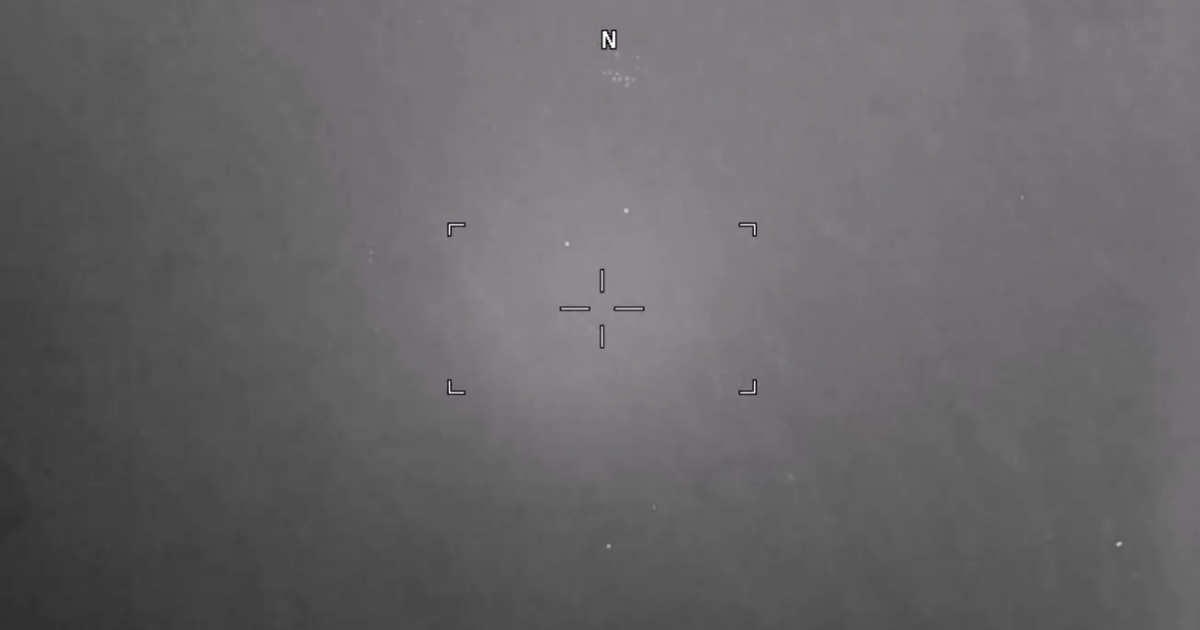
Newly declassified aerospace records released by the Department of Defense show that a federal defense contractor prepared structural blueprints and programmatic plans for a fortified subterranean vault designed to house and analyze "exotic material or tissue" the organization sought to acquire. The documentation, disclosed as part of the Pentagon's ongoing public release of files related to unidentified anomalous phenomena (UAP), provides the clearest documentary view to date of how private contractors bidding on defense intelligence initiatives structured theoretical facilities to handle anomalous physical samples.
Key facts
What happened
According to reporting by Stefan Becket, the newly published collection of Department of Defense files features an extensive technical submission prepared by a government contractor that outlines the design and operational concept for a specialized underground repository. Rather than a conventional secure compartmented information facility (SCIF) intended merely to protect classified documents or digital intelligence, the contractor's documentation detailed a physically reinforced containment vault intended specifically for physical items described in the texts as "exotic material or tissue."
Architectural outlines and programmatic descriptions within the dossier indicate that the contractor aimed to establish a dedicated, low-vibration, subterranean complex. The planned installation was engineered to meet rigorous defense-sector containment standards, integrating controlled atmospheric environments, radiation shielding, multi-layered biometric access controls, and laboratory suites equipped for high-precision metallurgical, chemical, and biological assays.
The project file specifies that the underground installation was intended to serve as a consolidated receiving, storage, and testing site for specimens that the enterprise hoped to acquire, locate, or receive from military and intelligence channels. The contractor detailed environmental handling protocols designed to prevent biological contamination, mitigate radiation hazards, and stabilize fragile chemical structures that could degrade in standard storage settings. The documents reflect an institutional appetite within contractor circles during the program's lifecycle to prepare logistical and physical infrastructure for hypothetical recovery scenarios, even as official assessments maintained that verified, off-world artifacts remained nonexistent.
Why it matters
The revelation of concrete contractor planning for specialized physical storage touches on long-running debates in Washington concerning national defense spending, transparency, and accountability in black-budget research programs. When defense agencies allocate public funds to study unconventional threats, the boundary between legitimate scientific risk assessment and speculative contracting has historically proven difficult to police. For policymakers on the House and Senate Armed Services and Intelligence committees, the existence of formal contractor blueprints to house exotic biological tissue and anomalous materials illustrates how deeply speculative research concepts penetrated the defense industrial base.
Beyond oversight mechanics, the release impacts public trust and defense governance. For decades, whistleblowers, civilian researchers, and certain members of Congress have alleged that private defense contractors maintained off-the-books hardware and biological materials recuperated from aviation incidents or recovered wreckage. While the newly public files demonstrate that a contractor actively planned an underground vault to secure such specimens, the documentation also reveals that these structural designs were drawn up for materials the contractor was actively seeking to obtain, rather than serving as proof that the facility ever housed non-terrestrial items. Distinguishing prospective architectural designs from actual physical possession is critical to maintaining a grounded, evidence-based assessment of national security programs.
Additionally, the release underscores the regulatory reach of recent congressional declassification mandates. By compelling the Pentagon to sift through legacy archives, evaluate historical contractor proposals, and present unredacted or minimally redacted files to the public, lawmakers have created a mechanism that slowly illuminates the perimeter of government-sponsored anomaly research, stripping away programmatic mythologies in favor of actual paper trails.
The background
To understand the context of the contractor's blueprint, it is necessary to examine the institutional evolution of the Pentagon's modern UAP inquiries, which began consolidating in the late 2000s. In 2007, under the legislative direction of then-Senate Majority Leader Harry Reid, a Democrat from Nevada, Congress earmarked $22 million for the Advanced Aerospace Weapon System Applications Program (AAWSAP), managed through the Defense Intelligence Agency (DIA). Much of that funding was awarded through a competitive solicitation to Bigelow Aerospace Advanced Space Studies (BAASS), a contractor based in Nevada that studied aerospace technologies, propulsion mechanisms, and anomalous materials.
During its operations, AAWSAP—and its subsequent informal incarnation, the Advanced Aerospace Threat Identification Program (AATIP)—commissioned dozens of Defense Intelligence Reference Documents (DIRDs) examining advanced physical concepts such as negative-energy space propulsion, warp drives, metamaterials, and unconventional biological effects. When the public first learned of AATIP's existence in December 2017 through reporting by major media organizations, former intelligence officials and program personnel hinted that certain private facilities were exploring physical materials collected from unexplained aviation encounters.
In response to escalating public and legislative interest, Congress steadily escalated institutional oversight. Through the National Defense Authorization Act (NDAA) for Fiscal Year 2022, signed into law in December 2021, and its successor for Fiscal Year 2023, lawmakers directed the creation of the All-domain Anomaly Resolution Office (AARO). Headquartered within the Office of the Under Secretary of Defense for Intelligence and Security, AARO was tasked not only with synchronizing operational reporting across military branches but also with conducting a comprehensive historical review of all United States government activities concerning anomalous phenomena dating back to 1945.
In March 2024, AARO published Volume I of its comprehensive historical report. The Pentagon watchdog concluded that across decades of archival research, witness interviews, and special access program audits, the agency found no empirical evidence that the United States government or private industry ever held extraterrestrial craft, non-human biological remains, or reverse-engineered off-world materials. The review noted that several rumors of physical retrieval programs were traceable to misinterpretations of genuine classified testing, unfulfilled contractor proposals, or private initiatives that sought defense funding to study theoretical concepts.
Reaction
Initial institutional reactions have largely fallen along established oversight divisions in Washington. The Department of Defense has framed the release of the contractor vault proposal as an exercise in statutory transparency, emphasizing that public disclosure of historical working files does not substantiate extraordinary technological claims. Defense officials routinely reiterate that archival filings often capture preliminary research proposals, speculative technical concepts, and standard contractor requests for infrastructure enhancements that were never executed or validated.
Members of the House Oversight and Accountability Committee, who have held bipartisan hearings examining government transparency regarding UAPs, are expected to press defense officials on the precise programmatic chain that authorized the contractor's study. Lawmakers who have previously demanded unredacted contract ledgers and facility access are likely to question whether any public funds were directly allocated toward subterranean construction, or if the vault remained an unbuilt proposal confined to conceptual paperwork.
Within the civilian scientific community, independent aerospace analysts have noted that the presence of phrases like "exotic material or tissue" in defense documentation points to the broad, sometimes speculative terms used in historical government research solicitations. Independent metallurgical and aerospace experts have emphasized that until physical specimens or verified isotopic test results are produced for open scientific scrutiny, architectural designs for storage facilities demonstrate intent and conceptual exploration rather than physical reality.
What we don't know yet
Significant gaps remain in the public record surrounding the newly disclosed contractor submission. First, the files do not make clear whether the proposed underground repository was ever formally funded by the Defense Intelligence Agency or any other military body, or whether it remained an unfunded engineering study prepared unilaterally by the contractor. The financial trail identifying total expenditures associated specifically with the vault design remains undisclosed.
Second, the documentation leaves unanswered the precise origin and nature of the "exotic material or tissue" referenced in the project plan. The files do not describe verified physical specimens already held in government inventory at the time of writing; rather, they detail protocols for acquiring and housing prospective specimens. It remains unknown whether the contractor had identified specific terrestrial metallurgical anomalies, purported biological samples from aviation incident crash sites, or if the design represented purely precautionary planning based on theoretical mission profiles.
Finally, the current batch of disclosures does not reveal the operational fate of the contractor's specialized division or whether any physical construction ever broke ground at an undisclosed site. Official defense reviews maintain that no secure site holding non-human physical evidence exists under federal jurisdiction, but the full administrative chain of custody regarding the contractor's physical files remains only partially declassified.
What to watch
The immediate next step will be the forthcoming legislative oversight cycles on Capitol Hill. The Senate Select Committee on Intelligence and the House Permanent Select Committee on Intelligence receive regular closed-door briefings from the Pentagon regarding historical UAP documentation, and staff members are anticipated to review the unredacted variants of the contractor's proposal to verify its funding classification.
Observers should also track the continuing public docket releases from the All-domain Anomaly Resolution Office and the National Archives and Records Administration (NARA). Under the declassification mandates passed in recent defense policy bills, federal agencies face rolling statutory deadlines to review, redact, and publicly issue historical files that touch upon unidentified aerospace phenomena, government contracting, and physical recovery programs.
Any upcoming public hearings before the House Oversight Committee will serve as a crucial test of whether current defense leadership is pressed to clarify the specific contractor involved, the scope of the architectural work, and the exact physical deliverables produced under the contract. Such proceedings will provide public clarity on where theoretical military research ends and verifiable aerospace logistics begin.
Reporting for this article is based on disclosures and original reporting by Stefan Becket.
How this story was produced
This report was written by The Global Wire newsroom from reporting first published by Stefan Becket. We verify the core facts against the original report, write our own account, and add the background and consequences a short wire item leaves out. Drafting is AI-assisted inside an editor-supervised pipeline, and every story is checked for accuracy of attribution, structure and duplication before it appears — full detail in our AI and funding disclosure.
Spotted an error? Tell us at corrections@horizonglobalnews.com and read our corrections policy or editorial standards.






Reader comments
Loading comments…