

Pentagon Directive Restricting Canada Military Ties Sparks Backlash in Washington
Defense Secretary Pete Hegseth faces mounting criticism from national security veterans following a classified directive curbing military cooperation with Canada.
By The Global Wire Newsroom · Reported from David McAfee
Link preview · horizonglobalnews.com
Pentagon Directive Restricting Canada Military Ties Sparks Backlash in Washington
Defense Secretary Pete Hegseth faces mounting criticism from national security veterans following a classified directive curbing military cooperation with Canada.
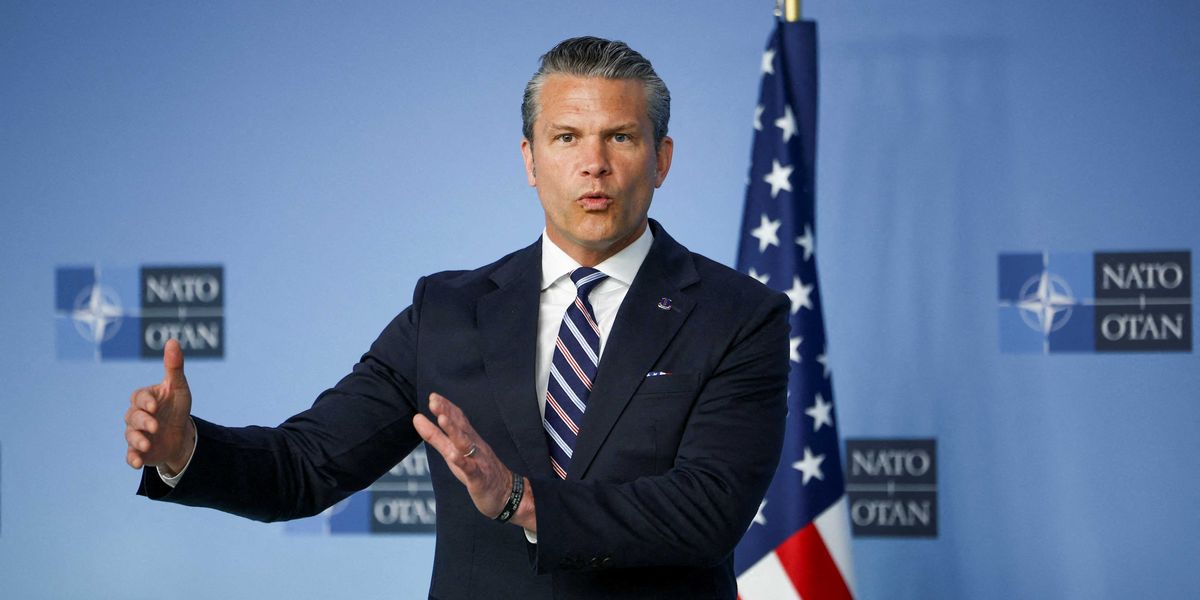
A classified directive issued by Defense Secretary Pete Hegseth that restricts bilateral military cooperation between the United States and Canada has triggered sharp condemnation across Washington's national security establishment. The internal memorandum, circulated within the Department of Defense, introduces unexpected operational curbs on one of America's oldest and most integrated mutual defense relationships, according to reporting by independent journalist David McAfee. The policy shift has drawn immediate pushback from former lawmakers, retired military commanders, and foreign policy veterans, who question the strategic rationale for distancing the United States from its northern neighbor and core continental defense partner.
Key facts
What happened
According to reporting by David McAfee, Defense Secretary Pete Hegseth quietly distributed a classified memorandum instructing senior defense officials to scale back aspects of the United States military's working relationship with Canada. The directive, which was circulated internally, immediately set off alarms among civilian and military officials accustomed to decades of seamless day-to-day integration between the two armed forces.
Word of the classified instruction quickly reached former national security officials, diplomats, and former members of Congress, provoking swift denunciation. Critics argued that constraining bilateral cooperation weakens joint defense readiness across North America at a time when Arctic, maritime, and aerospace surveillance requires greater coordination rather than political friction. Neither the Pentagon nor Canadian military authorities published the memo, leaving senior defense circles to debate the intent, scope, and operational consequences of the administrative order.
While the reporting establishes that the memorandum limits ties, the precise operational mechanisms targeted—such as intelligence sharing, combined staff postings, joint exercises, or command structures—remain shielded behind security classifications. However, the decision to circulate formal guidance curtailing cooperation marks a notable break from administrative routines that typically emphasize deepening interoperability with NATO allies.
Why it matters
The military relationship between the United States and Canada is unlike almost any other bilateral defense apparatus in the world. For more than six decades, the two nations have shared an integrated command for continental aerospace defense, maintaining combined operational rooms, reciprocal staff exchanges, and standardized logistics networks. Limiting ties between these armed forces risks injecting administrative friction and uncertainty into joint operational planning, shared Arctic domain awareness, and collaborative maritime patrol operations.
From a practical security standpoint, continental defense is inherently geographic. The Arctic and North Atlantic approaches to North America rely heavily on radar installations, airfields, and maritime surveillance bases located on Canadian territory. Any institutional mandate that discourages U.S. officers from closely coordinating with Canadian counterparts complicates the day-to-day execution of mutual defense protocols. It also sends destabilizing diplomatic signals to other partners in the North Atlantic Treaty Organization (NATO) and the Five Eyes intelligence-sharing alliance, which depends on unconditional baseline trust among its English-speaking partners: the United States, Canada, the United Kingdom, Australia, and New Zealand.
Furthermore, disruptions to military coordination can spill over into defense industrial cooperation. Under long-standing bilateral pacts, Canadian and U.S. defense contractors operate within a largely unified North American defense industrial base. Political efforts to draw boundaries between the two militaries threaten to disrupt joint procurement efforts, supply chain resilience, and shared investment in next-generation aerospace and sensor technologies.
The background
Institutional defense cooperation between Washington and Ottawa dates back formally to August 17, 1940, when President Franklin D. Roosevelt and Prime Minister W.L. Mackenzie King issued the Ogdensburg Agreement, creating the Permanent Joint Board on Defense. That body continues to meet semiannually to examine strategic questions affecting the defense of the northern half of the Western Hemisphere. Following World War II, this partnership deepened through the creation of the North Atlantic Treaty Organization in April 1949, where both countries were founding signatories.
The centerpiece of bilateral military operational integration was established on May 12, 1958, with the signing of the North American Aerospace Defense Command (NORAD) agreement. NORAD is a unique binational command structure headquartered at Peterson Space Force Base in Colorado Springs, Colorado. The command is led by a four-star U.S. general or admiral with a Canadian three-star general serving as deputy commander, and operational authority flows between officers of both nations seamlessly. Canadian and American personnel sit side by side monitoring radar data from the North Warning System, tracking aerospace and maritime approaches to the continent.
In addition to NORAD, the two countries participate in extensive personnel exchange programs. Hundreds of Canadian Armed Forces personnel serve in U.S. commands—including U.S. Northern Command, U.S. Indo-Pacific Command, and various service schools—while American personnel serve in Canadian joint operational headquarters. Canada is also an original member of the Five Eyes intelligence partnership, which traces its lineage to World War II signals intelligence pacts formalized in the 1946 British-U.S. Communication Intelligence Agreement.
In recent years, bilateral discussions have centered on modernizing NORAD to counter hypersonic cruise missiles, long-range stealth bombers, and advanced submarine threats, particularly across the Arctic corridor. In 2022, the Canadian government committed billions of dollars toward upgrading the North Warning System with over-the-horizon radar arrays and airfield infrastructure in the far north. Concurrently, political debates in Washington have occasionally surfaced over allied defense spending levels, as Canada has historically lagged behind NATO's benchmark target of allocating two percent of gross domestic product to defense expenditures. However, policy friction over spending has historically been addressed through diplomatic and ministerial channels rather than unilateral operational memos restricting staff-level military interaction.
Reaction
The disclosure of Hegseth's classified memorandum generated sharp condemnation from veteran foreign policy and military figures, who questioned the national security logic of marginalizing an indispensable neighbor. Critics highlighted that weakening working ties with Canada undermines the security of the American homeland without offering any strategic advantage.
While formal responses from serving Canadian cabinet ministers and Pentagon leadership have remained guarded due to the classified nature of the underlying document, established oversight bodies are expected to take up the issue. The House and Senate Armed Services Committees routinely review policy directives that alter combatant command relationships or disrupt long-standing alliance structures. Lawmakers with high concentrations of defense manufacturing or border security interests in their states—such as New York, Michigan, Washington, and Alaska—frequently monitor binational defense protocols, as their National Guard units and regional air defense sectors conduct routine real-world missions alongside the Royal Canadian Air Force.
In Ottawa, Parliament's Standing Committee on National Defence and senior leadership within the Department of National Defence and the Canadian Armed Forces are anticipated to assess whether any U.S. operational slowdown affects ongoing missions, joint exercises, or intelligence workflows. Allied defense analysts have warned that unnecessary tension between the Pentagon and Canadian defense headquarters risks providing tactical openings to geopolitical rivals, particularly Russia, which maintains extensive military installations and claims across the Arctic basin.
What we don't know yet
Significant operational and legal details regarding the directive remain undisclosed. The full text of the classified memorandum has not been made available to the public, leaving several central questions unresolved. It is not yet clear which specific offices, combatant commands, or collaborative programs are instructed to reduce contact with Canadian personnel. Whether the restriction encompasses joint air patrols, NORAD watchstanding duties, training exercises, or intelligence-sharing networks remains unconfirmed by official documentation.
Additionally, the reporting does not delineate whether the memorandum represents an administrative pause intended to force concessions on broader policy disputes, such as allied burden-sharing and NATO spending targets, or whether it reflects an ideological effort to realign Pentagon partnerships. It is also unknown whether senior military leadership, including the Joint Chiefs of Staff and the commander of NORAD and U.S. Northern Command, were consulted prior to the drafting of the instruction, or if the order originated purely within political appointee channels in the Office of the Secretary of Defense.
What to watch
The immediate development to monitor is whether members of the congressional armed services and intelligence committees demand a formal briefing on the memorandum. Closed-door oversight hearings or written inquiries from Capitol Hill often serve as the primary mechanism for compelling the Department of Defense to clarify the legal basis and intent of classified policy changes that affect foreign alliances.
Another critical indicator will be upcoming binational military schedules. Observers will be watching whether scheduled joint military exercises, such as annual cold-weather Arctic training or joint naval maneuvers, proceed as planned, face administrative cancellations, or suffer reduced U.S. troop participation. Statements from the Canadian Minister of National Defence and the Chief of the Defence Staff during parliamentary appearances in Ottawa will also provide clear signals regarding whether operational friction is being experienced on the ground.
Finally, observers will watch for diplomatic engagements between Washington and Ottawa, including bilateral meetings between defense ministers and discussions at NATO headquarters in Brussels, to determine whether the policy is maintained, modified, or quietly rescinded under institutional pressure.
This account is based on reporting by David McAfee.
How this story was produced
This report was written by The Global Wire newsroom from reporting first published by David McAfee. We verify the core facts against the original report, write our own account, and add the background and consequences a short wire item leaves out. Drafting is AI-assisted inside an editor-supervised pipeline, and every story is checked for accuracy of attribution, structure and duplication before it appears — full detail in our AI and funding disclosure.
Spotted an error? Tell us at corrections@horizonglobalnews.com and read our corrections policy or editorial standards.






Reader comments
Loading comments…