

Pentagon Directive Curbs Defense Cooperation With Canada in Classified Memo
A secret memorandum issued by U.S. Defense Secretary Pete Hegseth places new limits on military collaboration between the United States and Canada, according to reporting by The Washington Post.
By The Global Wire Newsroom · Reported from Matthew Chapman
Link preview · horizonglobalnews.com
Pentagon Directive Curbs Defense Cooperation With Canada in Classified Memo
A secret memorandum issued by U.S. Defense Secretary Pete Hegseth places new limits on military collaboration between the United States and Canada, according to reporting by The Washington Post.
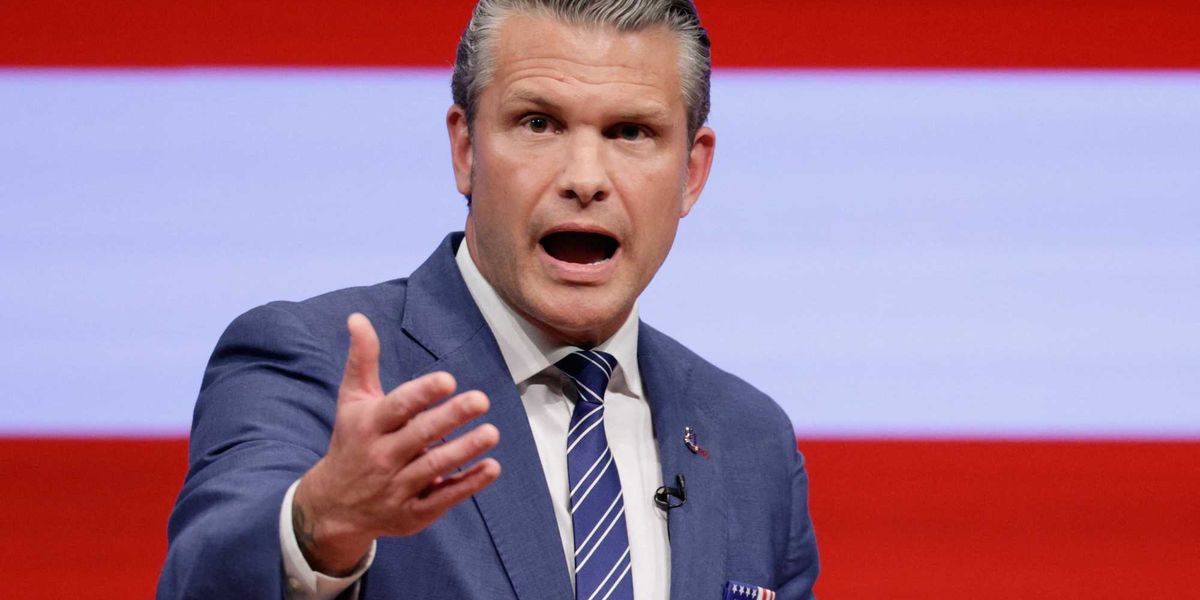
WASHINGTON — The United States Department of Defense has placed restrictions on its longstanding bilateral military relationship with Canada under a classified directive issued by Defense Secretary Pete Hegseth, according to official sources familiar with the matter. The internal memorandum, circulated across defense leadership in mid-November, curtails specific avenues of defense coordination between Washington and Ottawa, two founding members of the North Atlantic Treaty Organization that share the longest undefended international land border in the world. The policy pivot, revealed by U.S. officials speaking on condition of anonymity, marks an abrupt operational shift in an alliance that has anchored continental air, maritime, and land defense for more than eight decades.
Key facts
What happened
According to accounts provided by U.S. officials to The Washington Post, the memorandum was drafted at the highest levels of the Pentagon and quietly disseminated to senior military leadership. The document formally orders defense personnel to scale back or alter standard parameters of cooperation with the Canadian Armed Forces and Canada's Department of National Defence.
While the specific text of the document remains classified, officials confirmed that its instructions direct commanders to pull back on established routines of bilateral engagement. The memorandum caught multiple defense and diplomatic personnel off guard, prompting deep private concern among career national security officials who manage daily coordination with Canadian counterparts.
The disclosure indicates that the order was issued without public fanfare or preliminary diplomatic consultations with Ottawa. Internal sources who reviewed or were briefed on the memorandum noted that the sudden retrenchment leaves the future operational posture of several joint defense initiatives ambiguous. Officials familiar with the communication warned that Canadian officials would perceive the directive as a punitive rupture in an alliance that has historically stood apart from routine partisan shifts in Washington.
Why it matters
Any formal downgrade or restriction in defense cooperation between the United States and Canada carries direct repercussions for the security architecture of North America, the Arctic, and global intelligence operations. The bilateral partnership is not a standard diplomatic friendship; it is an integrated military apparatus with shared personnel, mutual access to critical infrastructure, and synchronized defense protocols.
At the operational core of this relationship is the North American Aerospace Defense Command, headquartered at Peterson Space Force Base in Colorado Springs, Colorado. NORAD is unique in global military affairs because a Canadian general officer routinely serves as the deputy commander, possessing legal operational authority to scramble U.S. and Canadian fighter jets to intercept threats approaching either nation's airspace. Restrictions on communication, staff integration, or joint planning could create command friction, degrade response times against aerospace incursions, and complicate surveillance across the vast Arctic approach corridor, an area seeing heightened strategic activity from both the Russian Federation and the People's Republic of China.
Beyond continental air defense, the two nations share deep ties across maritime defense, critical minerals supply chains, and specialized defense manufacturing. Under the 1956 Defense Production Sharing Agreement and the Defense Development Sharing Agreement, Canadian and U.S. defense industrial bases are treated largely as an integrated domestic entity, exempting Canadian suppliers from numerous Buy American restrictions. Regulatory or policy friction introduced by the Pentagon risks disrupting cross-border aerospace component manufacturing, joint procurement projects such as the F-35 Lightning II program, and critical mineral partnerships vital to modern military technology.
Furthermore, Canada is an essential partner in the Five Eyes intelligence-sharing alliance alongside the United States, the United Kingdom, Australia, and New Zealand. Any structural cooling within defense leadership introduces systemic uncertainty into multilateral military exercises, joint naval patrols in the Indo-Pacific, and reciprocal access to sensitive command posts.
The background
The military partnership between Washington and Ottawa traces its modern origin to the Ogdensburg Agreement of August 1940, negotiated between President Franklin D. Roosevelt and Prime Minister W.L. Mackenzie King. That historic accord established the Permanent Joint Board on Defense, which continues to meet semiannually to oversee continental security matters. When NATO was established in April 1949, Canada and the United States served as two of the original twelve founding signatories, committing to the collective defense principle embodied in Article 5.
In September 1957, escalating Cold War ballistic missile and long-range bomber threats prompted the formal establishment of NORAD, a bi-national operational command formalized by a treaty signed in May 1958. Through NORAD, Canadian personnel operate alongside American airmen and guardians inside the Cheyenne Mountain Complex and throughout radar networks spanning the High North, including the North Warning System.
Despite this deep integration, defense spending has long been a persistent irritant in bilateral relations. Under NATO agreements reaffirmed at the 2014 Wales Summit and reinforced at the 2023 Vilnius Summit, member states committed to allocating a minimum of 2 percent of their annual gross domestic product to defense expenditures. Canada has consistently fallen short of that target, spending approximately 1.3 to 1.4 percent of GDP on defense in recent years.
At the July 2024 NATO summit in Washington, Canadian Prime Minister Justin Trudeau committed Ottawa to reaching the 2 percent spending threshold by the 2032 fiscal year, pointing to planned investments in maritime patrol aircraft, Arctic offshore patrol ships, and cyber defense. However, critics in the United States, particularly within conservative national security circles and Donald Trump's political orbit, have repeatedly criticized that timeline as unacceptably slow. Defense Secretary Pete Hegseth, who has advocated for an aggressive "America First" military posture and demanded that allies rapidly boost defense contributions, has consistently argued that Washington should not subsidize the defense of wealthy allies who fail to meet basic financial thresholds.
Reaction
The revelation of the classified memorandum has triggered severe apprehension among veteran defense analysts and former national security officials, though formal public statements remain limited due to the classified status of the order. Sources who spoke to the press on condition of anonymity registered deep dismay, emphasizing that isolating Ottawa undermines northern hemisphere territorial defense.
In Ottawa, government ministers and the Department of National Defence have faced mounting pressure from domestic opposition parties to clarify whether they were notified of the memorandum and what operational programs are affected. The House of Commons Standing Committee on National Defence and Canada's diplomatic mission in Washington are expected to seek immediate clarity from the Pentagon.
Within the United States Congress, members of the House and Senate Armed Services Committees—particularly lawmakers from northern border states who rely on close cross-border security cooperation—are expected to demand briefings from Defense Secretary Hegseth regarding the statutory basis, scope, and strategic objectives of the restriction.
What we don't know yet
Key aspects of the directive remain undisclosed due to classification barriers. The most pressing unanswered question is the precise operational scope of the memo. It is currently unknown whether the restrictions apply across the entire spectrum of bilateral defense engagements, or if they are narrowly tailored to specific sectors, such as joint procurement, high-level strategic planning sessions, Arctic surveillance access, or intelligence-exchange protocols.
It is also unclear whether the directive was coordinated with the White House National Security Council or the Department of State, or if it represents an internal Pentagon policy enforcement initiative directed solely by Hegseth. Another critical unknown is whether the directive impacts Canadian military officers currently embedded inside U.S. commands, including those serving at NORAD headquarters in Colorado, U.S. Northern Command (NORTHCOM), or NATO Allied Command Transformation in Norfolk, Virginia.
Finally, the reporting does not yet establish whether the restrictions are intended to serve as permanent policy or as a temporary coercive measure designed to pressure Canada into accelerating its timeline for meeting NATO's 2 percent defense spending threshold.
What to watch
The trajectory of U.S.-Canada security relations will hinge on several key events and indicators in the coming weeks and months:
This report is based on original reporting published by The Washington Post, with additional coverage and details reported by Matthew Chapman.
How this story was produced
This report was written by The Global Wire newsroom from reporting first published by Matthew Chapman. We verify the core facts against the original report, write our own account, and add the background and consequences a short wire item leaves out. Drafting is AI-assisted inside an editor-supervised pipeline, and every story is checked for accuracy of attribution, structure and duplication before it appears — full detail in our AI and funding disclosure.
Spotted an error? Tell us at corrections@horizonglobalnews.com and read our corrections policy or editorial standards.






Reader comments
Loading comments…