

Pediatric Surgery Resolves Rare Congenital Vascular Ring After Decade of Symptoms
Surgical division of a constricting aortic malformation brought long-sought relief to patient Layla Witzen following years of severe breathing and eating difficulties.
By The Global Wire Newsroom · Reported from Penn State Health News
Link preview · horizonglobalnews.com
Pediatric Surgery Resolves Rare Congenital Vascular Ring After Decade of Symptoms
Surgical division of a constricting aortic malformation brought long-sought relief to patient Layla Witzen following years of severe breathing and eating difficulties.
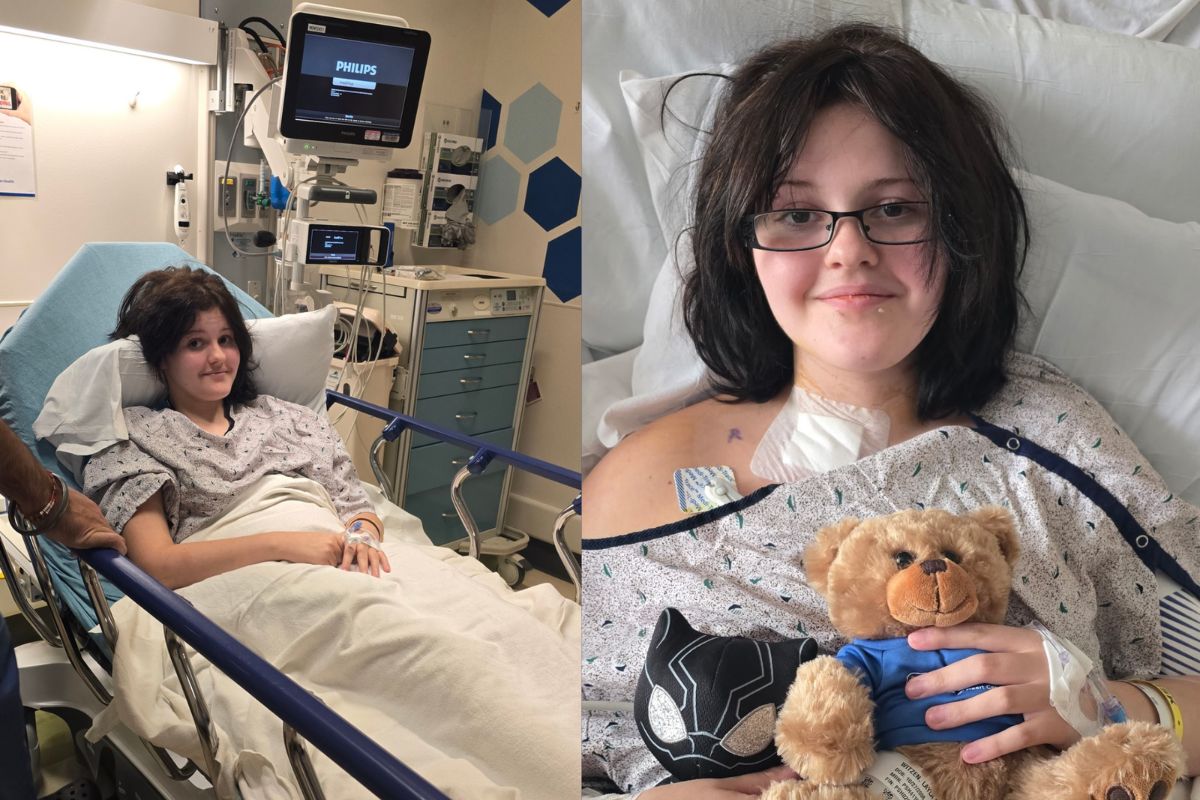
A pediatric patient who endured nearly a decade of debilitating respiratory and digestive impairment has undergone corrective surgery for a rare vascular ring anomaly, according to clinical reporting released by Penn State Health News. The patient, Layla Witzen, suffered from chronic airway constriction and swallowing difficulties that severely restricted normal childhood activities before clinicians identified the underlying cardiovascular malformation. Surgical intervention was subsequently performed to divide the anomalous blood vessels encircling her trachea and esophagus, alleviating the anatomical obstruction that had eluded definitive treatment for years.
Key facts
What happened
For approximately ten years, Layla Witzen experienced severe, chronic symptoms that disrupted her ability to breathe comfortably, consume solid food, and engage in daily physical activities, according to reporting by Penn State Health News. Because the symptoms of pediatric airway and esophageal compression often resemble common childhood ailments, the fundamental structural cause went unaddressed through much of her early life.
Following years of symptomatic presentation, clinical evaluations eventually uncovered a vascular ring, a congenital defect in which the aortic arch or its major branch vessels develop abnormally during embryonic gestation. Instead of forming a normal pathway across the mediastinum, the malformed vascular structures formed an encircling ring around both the trachea and the esophagus, physically squeezing the patient's airway and digestive canal.
Once the diagnosis was confirmed through specialized diagnostic evaluation, clinicians coordinated surgical intervention. The operation required pediatric thoracic and cardiovascular specialists to access the chest cavity, identify the constricting vascular components, and surgically divide the compressive ring. The procedure successfully released the mechanical tethering around the trachea and esophagus, allowing the compressed organs to expand and restoring functional airflow and swallowing capacity. Penn State Health News reported that following the surgical intervention, the patient experienced long-awaited symptomatic relief and a marked improvement in her overall quality of life.
Why it matters
The successful surgical resolution of Layla Witzen's condition underscores the profound diagnostic hurdles that surround rare congenital vascular anomalies, while illustrating the definitive efficacy of corrective pediatric cardiovascular surgery. Vascular rings represent a severe clinical challenge precisely because they occupy the intersection of pediatric pulmonology, gastroenterology, and cardiothoracic surgery. When a child presents with chronic stridor, recurrent wheezing, or dysphagia, front-line practitioners frequently treat the symptoms as asthma, recurrent croup, gastroesophageal reflux, or behavioral feeding difficulties.
When a diagnosis is delayed for nearly a decade, the sustained mechanical pressure exerted by hypertensive arterial tissue against the cartilaginous rings of the trachea can produce tracheomalacia, a structural weakening and flaccidity of the airway wall. Prolonged esophageal constriction similarly poses risks of malnutrition, chronic aspiration, and psychological aversion to eating. For healthcare systems and clinical training programs, cases such as this demonstrate the necessity of maintaining high clinical suspicion for anatomical anomalies when pediatric patients fail to respond to standard medical therapies for respiratory distress. Furthermore, the case highlights the life-altering clinical value of centralized pediatric surgical centers equipped with the multimodality imaging and surgical infrastructure required to reconfigure thoracic great vessels safely.
The background
In healthy human embryonic development, the cardiovascular system originates from six symmetrical pairs of branchial or aortic arches that connect the primitive ventral aorta to the paired dorsal aortas between the fourth and seventh weeks of gestation. Under normal developmental cues, selective regression of specific arch segments occurs, resulting in the standard left-sided aortic arch with three primary branching vessels: the brachiocephalic artery, the left common carotid artery, and the left subclavian artery.
When this complex regression fails or occurs along abnormal planes, a variety of vascular ring configurations can arise. Medical literature categorizes these anomalies into complete and incomplete rings. The most common complete forms include double aortic arch—in which both the right and left embryonic fourth arches persist, encircling the trachea and esophagus—and a right aortic arch accompanied by an aberrant left subclavian artery and a persistent left-sided ligamentum arteriosum. A third notable variant is the pulmonary artery sling, where the left pulmonary artery arises anomalously from the right pulmonary artery and traverses between the trachea and esophagus. Epidemiological studies estimate that vascular rings account for between 1% and 2% of all congenital cardiovascular malformations, occurring in approximately 1 in 10,000 live births.
The historical benchmark for identifying these anomalies historically relied on barium swallow esophagography, which reveals characteristic exterior indentations on the esophageal lumen. Over the past two decades, high-resolution cross-sectional imaging—specifically computed tomography angiography (CTA) and magnetic resonance angiography (MRA)—has transformed clinical practice by providing three-dimensional anatomical reconstructions of vascular branching and airway caliber. Surgical division of vascular rings has been performed since Robert Gross completed the first successful double aortic arch division at Boston Children's Hospital in 1945. Modern surgical approaches typically involve a left lateral thoracotomy or, increasingly, minimally invasive video-assisted thoracoscopic surgery (VATS) to transect the minor or non-dominant arch component or the ligamentum arteriosum, effectively opening the ring.
Penn State Health, which reported the intervention, operates the Milton S. Hershey Medical Center and Penn State Health Children's Hospital in Dauphin County, Pennsylvania. The facility serves as a major regional tertiary and quaternary referral destination in central Pennsylvania, providing multidisciplinary pediatric cardiothoracic surgical care.
Reaction
Neither independent clinical bodies nor regulatory agencies have issued external formal statements regarding the individual case, which reflects standard protocol for individual patient milestones documented through institutional healthcare channels. Within institutional reporting, patient clinical narratives serve primarily to educate community physicians, allied health professionals, and patient families regarding the subtle presentations of rare congenital anomalies.
Pediatric pulmonologists and cardiothoracic surgeons generally emphasize that timely case reporting reinforces diagnostic vigilance across primary care networks. Professional societies such as the Society of Thoracic Surgeons (STS) and the American Academy of Pediatrics (AAP) have consistently encouraged early utilization of cross-sectional thoracic imaging in pediatric patients presenting with unexplained, treatment-refractory stridor or severe dysphagia lusoria. Editorial reviews across pediatric literature note that sharing successful surgical outcomes validates current consensus guidelines advocating for early surgical decompression before irreversible tracheomalacia or secondary airway remodeling takes hold.
What we don't know yet
While Penn State Health News confirmed the diagnosis, surgical intervention, and successful symptomatic outcome, the published summary leaves several technical and clinical details unaddressed. The specific anatomical sub-classification of Witzen’s vascular ring—such as whether the defect presented as a classic double aortic arch, a right-sided arch with an aberrant subclavian vessel and tight ligamentum, or a less common sling variant—was not detailed in the release.
Additionally, the reporting did not specify the exact surgical technique utilized, leaving open whether the surgical team accessed the mediastinum via an open posterolateral thoracotomy or through minimally invasive thoracoscopic instrumentation. The precise clinical pathway that ultimately unlocked the diagnosis after nearly a decade—including which diagnostic modality provided the definitive view and what initial misdiagnoses were assigned during the preceding ten years—remains unstated. The long-term status of her tracheal cartilage, including whether secondary tracheomalacia persisted post-decompression and required airway stenting or observational follow-up, was also not documented.
What to watch
Moving forward, the primary clinical focus for patients recovering from vascular ring division centers on post-operative airway remodeling and functional respiratory tracking. While surgical division provides immediate mechanical decompression, full resolution of dynamic airway collapse or residual stridor can require months or even years as the compressed tracheal cartilage gradually stiffens and regains structural integrity. Clinical teams typically monitor such patients with periodic spirometry, cross-sectional imaging, and direct airway evaluation through flexible bronchoscopy if breathing sounds persist.
On a broader institutional level, observers will watch whether academic medical centers like Penn State Health continue expanding the adoption of robotic-assisted and video-assisted thoracic techniques for vascular ring division, which offer reduced post-operative pain and shorter hospital stays compared to traditional thoracotomies. Furthermore, the integration of prenatal fetal echocardiography screening protocols across regional obstetrics networks remains a critical development point; improved third-trimester three-vessel-and-trachea (3VT) ultrasound views are increasingly enabling clinicians to detect complete vascular rings prior to delivery, potentially eliminating multi-year diagnostic delays for future pediatric cohorts.
This report is based on reporting and clinical case documentation published by Penn State Health News.
How this story was produced
This report was written by The Global Wire newsroom from reporting first published by Penn State Health News. We verify the core facts against the original report, write our own account, and add the background and consequences a short wire item leaves out. Drafting is AI-assisted inside an editor-supervised pipeline, and every story is checked for accuracy of attribution, structure and duplication before it appears — full detail in our AI and funding disclosure.
Spotted an error? Tell us at corrections@horizonglobalnews.com and read our corrections policy or editorial standards.






Reader comments
Loading comments…