

Origin-of-Life Researchers Shift Away from Molecular Rivalries to Systems Chemistry
Scientists studying abiogenesis are moving past historic debates over whether genes or metabolism came first, turning to integrated chemical networks to explain how living matter emerged.
By The Global Wire Newsroom · Reported from Yasemin Saplakoglu November
Link preview · horizonglobalnews.com
Origin-of-Life Researchers Shift Away from Molecular Rivalries to Systems Chemistry
Scientists studying abiogenesis are moving past historic debates over whether genes or metabolism came first, turning to integrated chemical networks to explain how living matter emerged.
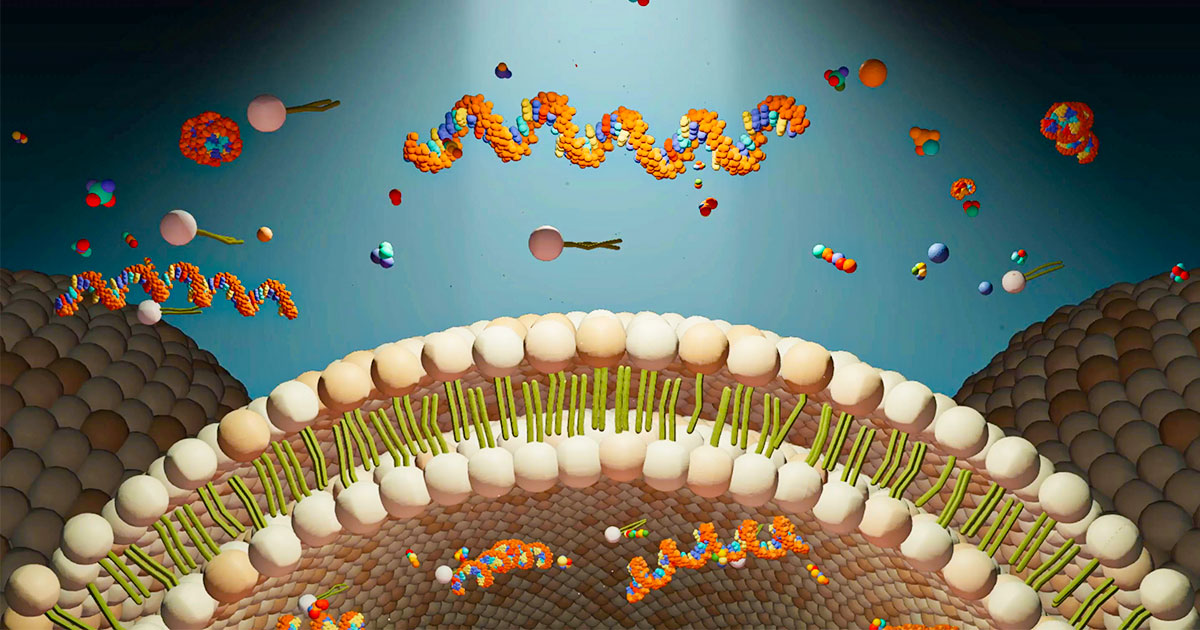
An emerging cohort of researchers studying the origin of life is moving beyond decades of entrenched disputes over which biological molecules arose first, pivoting instead toward integrated models of early chemistry, according to an extensive review published by Quanta Magazine on Nov. 12. The reporting by science journalist Yasemin Saplakoglu highlights a conceptual evolution across prebiotic chemistry, evolutionary biology, and astrobiology. Rather than attempting to isolate a single primordial precursor—such as genetic polymers or metabolic chains—investigators are increasingly conceptualizing abiogenesis as a collective transition in which diverse chemical components co-evolved, fundamentally altering scientific frameworks around what constitutes living systems.
Key facts
What happened
According to reporting by Quanta Magazine, the scientific discipline dedicated to unraveling the transition from inert chemistry to self-sustaining biology is experiencing a generational and conceptual realignment. For much of the late twentieth and early twenty-first centuries, origin-of-life research was characterized by competitive factionalism. Scientists split into distinct theoretical camps, with one group arguing that self-replicating information carriers arrived first, another asserting that cyclical energy-harvesting reactions preceded all else, and others maintaining that protective cellular compartments were the essential starting point.
That historical fragmentation is now giving way to an integrative perspective. As detailed in the Quanta Magazine account, newer researchers entering the field are dismantling the premise that a single molecular family must hold historical primacy. Instead of viewing early Earth as an arena where ribonucleic acid, peptides, or fatty vesicles competed for supremacy, researchers are increasingly investigating "systems chemistry"—the study of mixtures in which diverse organic compounds react cooperatively.
This evolving philosophy re-evaluates the foundational criteria used to define life itself. Rather than treating biology as a discrete switch that flipped once an exact molecular threshold was crossed, the emerging consensus views biogenesis as a continuous spectrum of increasing organizational complexity. Under this framework, life is understood not as an isolated chemical entity, but as a dynamic property of self-organizing chemical networks operating far from thermodynamic equilibrium.
Why it matters
The pivot toward systems-level prebiotic chemistry carries profound implications for multiple scientific disciplines, planetary exploration strategies, and biotechnology. For decades, academic funding and laboratory experiments were funneled into narrowly scoped attempts to synthesize pure genetic material or isolated metabolic cycles under simulated archaic conditions. These efforts frequently stalled when laboratory conditions proved too pristine or fragile to reflect the chaotic, contaminated environment of the prebiotic Earth. By shifting focus toward messy, cooperative mixtures, laboratories can design experiments that more accurately reflect geochemical reality, accelerating progress on one of science's most stubborn foundational questions.
Beyond basic academic research, these changing definitions directly govern how space agencies design and execute searches for extraterrestrial life. Historic missions have often relied on rigid biosignatures modeled closely on contemporary terrestrial biology, such as searches for specific nucleotide combinations or familiar lipid biomarkers. If life is understood as a broader thermodynamic process rather than a strict reliance on DNA, RNA, and standard proteins, astrobiological instruments must be reconfigured to detect anomalous energy flows, unexpected chemical disequilibria, and unfamiliar catalytic networks. Both NASA's Mars exploration roadmap and future missions targeting ocean worlds such as Jupiter's moon Europa and Saturn's moon Enceladus rely on these theoretical boundaries to determine what constitutes proof of a separate genesis.
Furthermore, deciphering how simple chemical systems bootstrap themselves into self-maintaining entities provides critical design principles for synthetic biology. Engineers seeking to create artificial cells or robust, self-healing materials from scratch can draw from prebiotic principles of self-assembly and kinetic control, potentially yielding industrial catalysts and bio-compatible platforms that operate outside the constraints of standard genetic engineering.
The background
Modern scientific inquiries into abiogenesis trace back to the early twentieth century, when Russian biochemist Alexander Oparin in 1924 and British geneticist J.B.S. Haldane in 1929 independently proposed the "primordial soup" hypothesis. They posited that Earth's reducing atmosphere, coupled with energetic inputs such as lightning or ultraviolet radiation, drove the spontaneous synthesis of organic monomers from inorganic gases.
This theoretical framework gained empirical support in 1953 through the landmark Miller-Urey experiment conducted at the University of Chicago. Chemist Stanley Miller and his mentor Harold Urey passed electrical discharges through a mixture of methane, ammonia, hydrogen, and water, rapidly synthesizing various amino acids. While the experiment proved that organic building blocks could form spontaneously, it did not demonstrate how those disparate units organized into functional biological architectures.
In the decades that followed, the field split into opposing paradigms. Following the 1982 discovery of ribozymes—RNA molecules capable of catalyzing chemical reactions—biologist Walter Gilbert popularized the "RNA World" hypothesis in 1986. Proponents argued that because RNA can both encode hereditary information and execute enzymatic catalysis, it resolved the classic "chicken-and-egg" paradox of whether nucleic acids or proteins came first. Conversely, proponents of "metabolism first" models, such as chemist Günter Wächtershäuser's iron-sulfur world hypothesis introduced in the late 1980s, maintained that autocatalytic chemical cycles on mineral surfaces preceded genetic code, providing the energetic foundation necessary to synthesize complex polymers.
Over time, both models encountered severe empirical hurdles. Laboratory synthesis of intact RNA under plausible prebiotic conditions proved extraordinarily difficult without tightly controlled human intervention. At the same time, isolated metabolic cycles lacked the high-fidelity inheritance mechanisms required for open-ended Darwinian evolution. Over the past decade, pioneering experiments in systems chemistry began demonstrating that RNA precursors, amino acids, and lipid building blocks could be synthesized simultaneously from common geochemical feedstocks, such as hydrogen cyanide and hydrogen sulfide, laying the empirical groundwork for the unified perspective highlighted in Quanta Magazine's coverage.
Reaction
The ongoing conceptual shift within the origin-of-life field has generated both momentum and rigorous debate across international research centers. Senior investigators who dedicated decades to refining specific, molecule-centric models have urged caution, noting that multi-component systems chemistry experiments run the risk of becoming intractable "black boxes" where individual reaction pathways are difficult to measure and verify. Proponents of traditional hypotheses contend that until an alternative network demonstrates self-sustained replication, well-defined molecular candidates remain the most testable avenues of research.
Conversely, early-career researchers and interdisciplinary scientists working across chemical physics, planetary geology, and complex systems theory have welcomed the move away from dogmatic camps. Scientific symposia convened by bodies such as the International Society for the Study of the Origin of Life (ISSOL) and working groups backed by the NASA Astrobiology Program are increasingly structured around cross-cutting phenomena—such as wet-dry environmental cycles, microfluidics, and mineral catalysis—rather than isolated macromolecular categories. Peer-reviewed literature across chemistry and evolutionary theory has mirrored this evolution, with rising citations dedicated to reciprocal catalysis and co-evolutionary reaction cascades.
What we don't know yet
Despite the enthusiasm surrounding systems-level prebiotic chemistry, fundamental questions about the emergence of life remain unanswered. Crucially, researchers have yet to produce an empirical laboratory demonstration of a fully non-living chemical mixture spontaneously organizing into an autonomously replicating, evolving system without continuous investigator intervention.
Significant gaps also remain regarding the precise geochemical settings of the Hadean Earth roughly 4 billion years ago. Scientists continue to debate whether life's earliest stages unfolded in deep-sea hydrothermal vents, subaerial geothermal hot springs subject to fluctuating dehydration and rehydration, or surface impact craters. Each geological environment offers starkly different thermal regimes, pH levels, and mineral catalysts, directly influencing which chemical pathways were viable. Furthermore, the transition from unguided physical-chemical self-assembly to true Darwinian natural selection—the point at which populations of entities begin accumulating adaptive mutations—remains theoretically elusive, representing one of the deepest unresolved boundaries in modern natural science.
What to watch
The evolution of origin-of-life science over the next several years will be shaped by specific experimental milestones and upcoming planetary exploration benchmarks. In academic laboratories, attention will center on automated synthesis platforms and high-resolution analytical tools, such as advanced mass spectrometry and nuclear magnetic resonance spectroscopy, designed to track complex chemical mixtures over thousands of reaction cycles without human bias.
Externally, observational data from space missions will supply vital real-world constraints on prebiotic possibilities. Ongoing analyses of pristine carbonaceous asteroidal material returned by missions like JAXA's Hayabusa2 and NASA's OSIRIS-REx continue to yield inventories of extraterrestrial organic compounds, providing direct benchmarks for what chemical complexity can emerge in non-planetary environments. Simultaneously, data from the James Webb Space Telescope characterizing the atmospheric compositions of nearby rocky exoplanets, along with the planned late-2020s and 2030s missions to ocean worlds in the outer solar system, will test whether the expanded, systems-level frameworks developed on Earth can successfully identify living or proto-living phenomena across the galaxy.
This report draws upon reporting originally published by Quanta Magazine.
How this story was produced
This report was written by The Global Wire newsroom from reporting first published by Yasemin Saplakoglu November. We verify the core facts against the original report, write our own account, and add the background and consequences a short wire item leaves out. Drafting is AI-assisted inside an editor-supervised pipeline, and every story is checked for accuracy of attribution, structure and duplication before it appears — full detail in our AI and funding disclosure.
Spotted an error? Tell us at corrections@horizonglobalnews.com and read our corrections policy or editorial standards.





Reader comments
Loading comments…