

Nvidia Volatility Sparks Record Speculative Wagers, Bringing Windfalls and Steep Losses
Traders are escalating high-risk bets on the semiconductor bellwether, magnifying both massive portfolio gains and abrupt market drawdowns.
By The Global Wire Newsroom · Reported from Vildana Hajric; Emma Haidar; Lu Wang
Link preview · horizonglobalnews.com
Nvidia Volatility Sparks Record Speculative Wagers, Bringing Windfalls and Steep Losses
Traders are escalating high-risk bets on the semiconductor bellwether, magnifying both massive portfolio gains and abrupt market drawdowns.
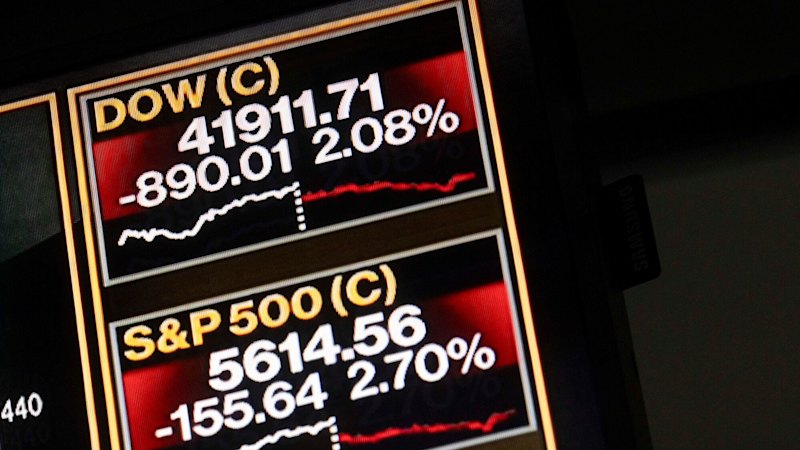
Financial markets are experiencing an unprecedented surge in speculative activity centered on Nvidia Corp., where rapid price fluctuations have generated historic windfalls for well-timed traders while inflicting severe losses on those caught on the wrong side of market swings. According to reporting by financial journalists Vildana Hajric, Emma Haidar, and Lu Wang, investors on Wall Street and across retail brokerages are aggressively doubling down on directional bets linked to the chipmaker. Through an expanding ecosystem of short-dated options contracts, margin-funded positions, and leveraged single-stock exchange-traded funds, participants are seeking magnified exposure to the artificial intelligence boom, turning one of the world's most valuable public enterprises into one of its most volatile trading arenas.
Key facts
What happened
Trading desks across the financial industry have seen a sharp escalation in high-octane positioning tied to Nvidia equity, driven by an appetite for asymmetric market returns. Investors seeking rapid capital appreciation have concentrated substantial resources in high-delta options, weekly call options, and daily leveraged exchange-traded funds (ETFs). As detailed in reporting by Vildana Hajric, Emma Haidar, and Lu Wang, these high-stakes trading strategies have yielded extraordinary windfalls for aggressive buyers during sustained rallies, but have simultaneously triggered catastrophic drawdowns when rapid market reversals catch overleveraged positions off guard.
In standard equity trading, an investor's downside is strictly bounded by the capital allocated to shares. However, the instruments increasingly favored in the market around Nvidia operate under entirely different mechanics. Speculators have turned heavily to short-dated call options—contracts that expire within days or even hours—which trade for small cash premiums but offer massive percentage returns if the underlying stock advances past predetermined strike prices. Conversely, when the stock consolidates or declines, these contracts lose value at an accelerating rate due to time decay, routinely wiping out 100 percent of an investor's allocated principal.
Simultaneously, retail and institutional participants have poured capital into leveraged single-stock products such as those offering double the daily move of Nvidia, alongside inverse counterparties designed to bet against the company. Because these funds reset their leverage ratios on a daily basis, compounding and volatility drag can severely erode investor principal over extended holding horizons, even if the underlying asset eventually moves in the expected direction. During abrupt downward corrections, highly concentrated holders of these products have seen capital bases deteriorate within a handful of trading sessions, while inverse traders and short-sellers have suffered comparable liquidations during sudden upside squeezes.
Why it matters
The consequences of extreme speculative behavior in a single mega-cap stock extend far beyond individual trading accounts, posing concrete structural implications for the broader United States financial system. Nvidia carries an immense weighting across capital-weighted benchmarks, regularly accounting for more than 6 percent of the S&P 500 and roughly 8 percent of the Nasdaq 100. Consequently, violent volatility originating in the derivatives market for a single chipmaker automatically dictates the daily performance of index-tracking funds, mutual funds, and pension portfolios held by tens of millions of ordinary retirement savers who engage in no direct options trading whatsoever.
Furthermore, the sheer volume of call options trading alters the microstructural plumbing of equity markets. When investors purchase massive quantities of out-of-the-money call options, market makers and institutional trading desks who sell those contracts must maintain delta-neutral positions. To hedge their exposure, these dealers are systematically forced to buy the underlying stock as its price climbs, creating a mechanical feedback loop often referred to as a gamma squeeze. When the underlying shares pause or decline, that dynamic rapidly reverses: dealers must rapidly unwind their long stock hedges, adding heavy downward selling pressure into falling prices. This mechanical dynamic introduces systemic fragility into passive market indices, increasing the probability of sudden, broad-based flash selloffs during periods of liquidity strain.
The background
Founded in 1993 and headquartered in Santa Clara, California, Nvidia historically generated the bulk of its revenue by engineering graphics processing units (GPUs) for personal computer gaming and 3D design workstations. Over the past decade, however, under the leadership of co-founder and Chief Executive Officer Jensen Huang, the firm pivoted its parallel-processing architecture toward high-performance computing, data center infrastructure, and deep learning algorithms. The public debut of large language models and generative artificial intelligence tools in late 2022 catalyzed an insatiable global demand for Nvidia's specialized hardware, including its Hopper-architecture H100 and H200 accelerators, and subsequently its Blackwell platform.
This industrial shift translated into an unprecedented surge in financial valuation. Nvidia's market capitalization expanded from under $400 billion in early 2023 to more than $3 trillion, briefly eclipsing long-standing market leaders Apple Inc. and Microsoft Corp. to become the most valuable publicly traded company in the world. As traditional valuation metrics became unmoored from historical norms, speculative interest followed rapidly.
This corporate ascendancy intersected with major structural transformations in United States capital markets. Following the retail trading boom of 2020 and 2021, brokerages expanded access to zero-commission derivative execution, while exchanges expanded the availability of weekly and daily option expirations. In 2022, the Securities and Exchange Commission paved the way for single-stock leveraged ETFs under standard regulatory frameworks, opening a mechanism for traders to capture leveraged daily returns without operating formal margin or futures accounts. The convergence of transformative corporate earnings growth, widespread accessibility to exotic derivatives, and a dominant market narrative created the ideal conditions for speculative excess, echoing past speculative waves seen in companies such as Cisco Systems during the late 1990s and Tesla during the early 2020s.
Reaction
While the reporting from Vildana Hajric, Emma Haidar, and Lu Wang documents the dual realities of rapid wealth creation and devastating drawdowns, professional market participants have voiced growing concern regarding the stability of this trading regime. Risk managers across institutional brokerages have increasingly adjusted margin requirements on concentrated single-stock derivatives, seeking to buffer clearing firms against counterparty defaults during sharp gap-down market openings.
Consumer advocates and regulatory bodies, including the Financial Industry Regulatory Authority (FINRA) and the Securities and Exchange Commission, have historically reiterated cautionary guidance regarding leveraged and inverse exchange-traded products, warning that complex derivatives are entirely unsuitable for buy-and-hold retail investors. Although market regulators have not intervened directly with new structural limits on single-stock trading in this specific cycle, options clearing organizations and risk committees continuously monitor open interest concentration to ensure that unexpected liquidity shocks do not overwhelm central clearing infrastructure.
What we don't know yet
Significant gaps remain regarding the precise scale and distribution of market participants driving this volatility cycle. Public market data aggregates gross trading volume on options exchanges such as Cboe Global Markets, but available figures do not delineate the exact split between retail day traders, quantitative systematic hedge funds, and institutional asset managers executing complex dispersion trades.
Additionally, the net financial balance of these speculative wagers remains unquantified across the financial sector. While documented individual accounts show single-session portfolio gains alongside total capital wipes, aggregate brokerage data showing whether net retail capital has expanded or contracted over the past twelve months remains closely guarded by private market makers and clearing firms. It is also unclear how resilient these highly leveraged speculative structures would remain in the event of an unexpected, prolonged decline in artificial intelligence capital expenditures by major corporate hyperscalers.
What to watch
Market observers tracking the trajectory of this speculative cycle are focusing on several key operational catalysts and calendar milestones:
This report draws upon original market reporting published by financial journalists Vildana Hajric, Emma Haidar, and Lu Wang, who documented the high-stakes trading environment and divergent financial outcomes surrounding Wall Street's engagement with Nvidia.
How this story was produced
This report was written by The Global Wire newsroom from reporting first published by Vildana Hajric; Emma Haidar; Lu Wang. We verify the core facts against the original report, write our own account, and add the background and consequences a short wire item leaves out. Drafting is AI-assisted inside an editor-supervised pipeline, and every story is checked for accuracy of attribution, structure and duplication before it appears — full detail in our AI and funding disclosure.
Spotted an error? Tell us at corrections@horizonglobalnews.com and read our corrections policy or editorial standards.






Reader comments
Loading comments…