

Nvidia Board Opens Inquiry After CEO Jensen Huang Discloses Affair to Staff
Nvidia's board has initiated an internal probe after chief executive Jensen Huang apologized to staff over an extramarital relationship amid heightened focus on his commercial ties to China.
By The Global Wire Newsroom · Reported from India Today World Desk
Link preview · horizonglobalnews.com
Nvidia Board Opens Inquiry After CEO Jensen Huang Discloses Affair to Staff
Nvidia's board has initiated an internal probe after chief executive Jensen Huang apologized to staff over an extramarital relationship amid heightened focus on his commercial ties to China.
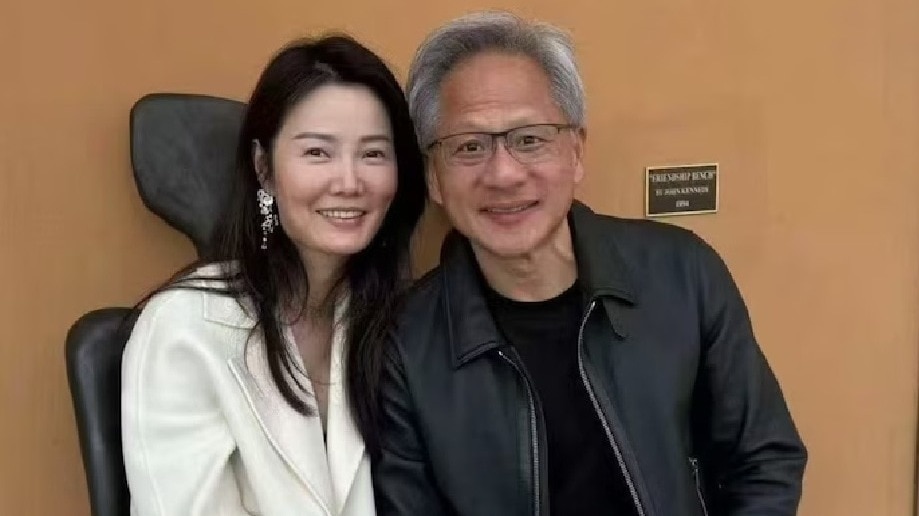
Nvidia Corporation co-founder and chief executive Jensen Huang has addressed company personnel to apologize following his disclosure of an extramarital relationship, prompting the semiconductor giant's board of directors to initiate a formal internal inquiry. The revelation, delivered during an internal company meeting, comes as scrutiny intensifies over Huang's extensive international commercial operations, particularly in China, where the Santa Clara, California-based chip designer has navigated complex regulatory and geopolitical pressures. According to reporting by India Today World Desk, Huang acknowledged the personal matter to staff while maintaining an emphasis on operational continuity, even as company directors launched an investigation into the circumstances surrounding the disclosure.
Key facts
What happened
During an all-hands address to Nvidia personnel, chief executive Jensen Huang revealed that he had engaged in an extramarital affair and offered an apology to the company's workforce, according to reporting by India Today World Desk. During the session, Huang framed the gathering around operational continuity, attempting to project stability across the technology firm's global divisions. However, when the forum opened for broader engagement, the executive avoided addressing detailed questions from personnel regarding the nature, duration, or parties involved in the personal relationship.
Following the disclosure, Nvidia's board of directors moved to open a formal internal investigation. While the reporting from India Today World Desk did not detail the specific parameters of the board mandate, corporate governance protocols in publicly traded American multinational firms typically direct such inquiries through independent directors or an audit and compliance committee. Such investigations generally examine whether company resources, reporting lines, procurement decisions, or security protocols were implicated by the relationship.
The disclosure has simultaneously brought renewed attention to Huang's international standing and his business engagements in China. While the wire report did not establish a direct causal mechanism between the disclosed affair and specific commercial contracts, it noted that the revelation has prompted heightened scrutiny of his commercial ties within the Chinese market, where Nvidia maintains critical commercial relationships and strategic revenue streams.
Why it matters
The initiation of a board-level inquiry into the co-founder and long-standing chief executive of Nvidia carries profound implications for global financial markets, the semiconductor supply chain, and corporate governance standards across Silicon Valley. Nvidia occupies a systemic position in the modern economy; as the dominant designer of graphics processing units (GPUs) that power generative artificial intelligence models, data centers, and advanced computing clusters worldwide, any turbulence at the apex of its leadership reverberates across thousands of institutional investors, hardware partners, and software developers.
For institutional shareholders, executive conduct inquiries represent a distinct category of operational and governance risk. In major publicly traded corporations incorporated in Delaware, directors owe strict fiduciary duties of care and loyalty. When a chief executive discloses an undisclosed personal relationship, boards must determine whether any violation of the corporate code of conduct, anti-harassment policies, or conflict-of-interest guidelines occurred. In past corporate episodes across the American technology and industrial sectors, board inquiries have focused heavily on whether personal relationships involved subordinates, vendors, or external parties with commercial interests before the company, as well as whether corporate funds, travel assets, or confidential proprietary information were compromised.
Furthermore, the intersection of executive scrutiny and commercial operations in China touches on acute national security and regulatory sensitivities. The semiconductor industry operates under intensive oversight from the United States government, specifically through export controls administered by the Bureau of Industry and Security within the U.S. Department of Commerce. Nvidia has had to re-engineer product lines to remain compliant with successive rounds of export limits enacted by Washington on high-performance computing silicon destined for Chinese buyers. Because technology chief executives must handle sensitive intellectual property, strategic international negotiations, and compliance audits, any personal vulnerability or governance irregularity draws immediate attention from regulatory bodies, market analysts, and national security monitors assessing counterintelligence and compliance risks.
The background
Jensen Huang co-founded Nvidia in 1993 alongside Chris Malachowsky and Curtis Priem, steering the enterprise from a specialized designer of 3D computer graphics accelerators for gaming into the preeminent architect of modern artificial intelligence infrastructure. Over more than three decades at the helm, Huang established one of the longest and most consequential tenures of any active technology chief executive in the United States, earning widespread renown for his hands-on management style, unconventional organizational structure with dozens of direct reports, and ubiquitous public presence.
As Nvidia's market capitalization expanded past historic multi-trillion-dollar milestones during the generative artificial intelligence boom, the company's operational dependence on Huang's strategic vision became a central theme among equity analysts. Historically, founder-led technology corporations often exhibit concentrated leadership authority, which can present acute succession and governance challenges when personal conduct controversies arise.
The American corporate landscape offers numerous precedents where personal conduct investigations prompted decisive board action regardless of operational performance. In June 2018, Intel Corporation chief executive Brian Krzanich resigned after an internal inquiry confirmed a past consensual relationship with an employee, which violated the semiconductor manufacturer's non-fraternization policies for managers. In 2019, McDonald's Corporation dismissed chief executive Steve Easterbrook over a consensual relationship with a staff member that violated company rules, leading to subsequent legal disputes and regulatory settlements regarding disclosure obligations. Similarly, in September 2023, Bernard Looney resigned as chief executive of British energy major BP after failing to fully disclose past personal relationships with company colleagues to the board.
Alongside domestic corporate governance precedents, Nvidia's global operational footprint has long required careful navigation of geopolitical friction between Washington and Beijing. Greater China, including Hong Kong, historically accounted for a substantial portion of Nvidia's worldwide revenues. Following restrictions imposed by the U.S. government in October 2022 and updated in October 2023 under the Export Administration Regulations, Nvidia was prohibited from shipping its premier data center processors, including the A100 and H100 accelerators, to mainland Chinese customers without specific licenses. The company subsequently designed modified processors, such as the A800, H800, and later the H20, specifically configured to comply with performance thresholds set by federal authorities. Throughout this period, Huang engaged directly with political figures, supply chain partners in Taiwan, and corporate clients in mainland China to preserve lawful commercial ties while upholding compliance with U.S. foreign policy objectives.
Reaction
Public reaction following the internal meeting has remained constrained as market participants and industry observers await formal disclosures from the company's governance bodies. Within the internal company address, employee responses were marked by attempts to seek clarity regarding the situation, though Huang avoided substantive discussion on the specifics of the relationship, according to India Today World Desk.
Neither Nvidia's investor relations division nor its board of directors has released a detailed public transcript or issued formal statements elaborating on the composition of the investigative committee. Market observers, institutional asset managers, and corporate governance watchdogs are expected to seek formal clarification regarding whether the board's inquiry is being overseen by independent legal counsel and whether the investigation involves outside forensic advisers. In comparable governance scenarios, major institutional proxy advisers such as Institutional Shareholder Services (ISS) and Glass Lewis typically monitor board inquiries closely to evaluate executive oversight, audit integrity, and whether any disclosures are required under federal securities regulations.
Regulatory authorities in the United States have not publicly commented on the matter. However, securities lawyers note that standard practice for publicly listed firms requires prompt evaluation under Regulation S-K and Form 8-K disclosure rules to determine whether executive developments constitute material information for public market participants.
What we don't know yet
Significant factual gaps remain regarding the scope, origin, and potential ramifications of the disclosed relationship. The reporting by India Today World Desk does not identify the other individual involved in the affair, nor does it establish whether that person is an employee of Nvidia, an external business partner, a foreign national, or an individual entirely unconnected to the enterprise. This distinction is critical from a corporate governance perspective: an internal relationship across reporting lines introduces potential human resources liabilities and violations of manager conduct codes, whereas an external relationship with an entity tied to corporate procurement, commercial partnerships, or foreign operations could raise conflict-of-interest and compliance concerns.
Furthermore, the precise nature of the connection between the relationship and scrutiny of Huang's business operations in China remains unexplained. The available information does not specify whether the scrutiny stems from regulatory inquiries, intelligence reviews, corporate whistleblower complaints, or external investigative reporting. It is also unknown what specific mandate the board of directors has given to its investigative team, what firm or special counsel has been retained to lead the fact-finding process, and what timeline directors have established for concluding their review.
What to watch
The trajectory of this governance challenge will depend on several upcoming institutional and regulatory milestones. First, market participants will watch for any official regulatory filing on Form 8-K submitted by Nvidia to the U.S. Securities and Exchange Commission, which would provide the first legally binding disclosure regarding board actions, committee formations, or material corporate updates.
Second, the composition and actions of Nvidia's board of directors require close attention. Investors will assess whether independent directors, such as the lead independent director or members of the audit and compensation committees, issue independent statements or alter executive authority while the inquiry proceeds. Third, any scheduling of special investor calls, appearances by Huang at scheduled industry conferences, or presentations at semiconductor supply chain summits will serve as indicators of whether executive duties remain fully operational or constrained.
Finally, observers will monitor whether congressional committees oversight bodies in Washington—particularly those focused on strategic competition with China and export compliance—seek briefings on the matter. If the board's investigation identifies any intersections between personal entanglements, foreign commercial activities, and compliance obligations, the findings could trigger formal reviews extending well beyond routine corporate governance.
This report is based on original reporting by India Today World Desk.
How this story was produced
This report was written by The Global Wire newsroom from reporting first published by India Today World Desk. We verify the core facts against the original report, write our own account, and add the background and consequences a short wire item leaves out. Drafting is AI-assisted inside an editor-supervised pipeline, and every story is checked for accuracy of attribution, structure and duplication before it appears — full detail in our AI and funding disclosure.
Spotted an error? Tell us at corrections@horizonglobalnews.com and read our corrections policy or editorial standards.






Reader comments
Loading comments…