

North American Nuclear Plants Deploy NVIDIA-Backed AI Platform NIVA for Data Management
Commercial nuclear reactors across North America are adopting NIVA, an Nvidia-backed search platform aimed at streamlining access to critical operational and regulatory archives.
By The Global Wire Newsroom · Reported from Aman Tripathi
Link preview · horizonglobalnews.com
North American Nuclear Plants Deploy NVIDIA-Backed AI Platform NIVA for Data Management
Commercial nuclear reactors across North America are adopting NIVA, an Nvidia-backed search platform aimed at streamlining access to critical operational and regulatory archives.
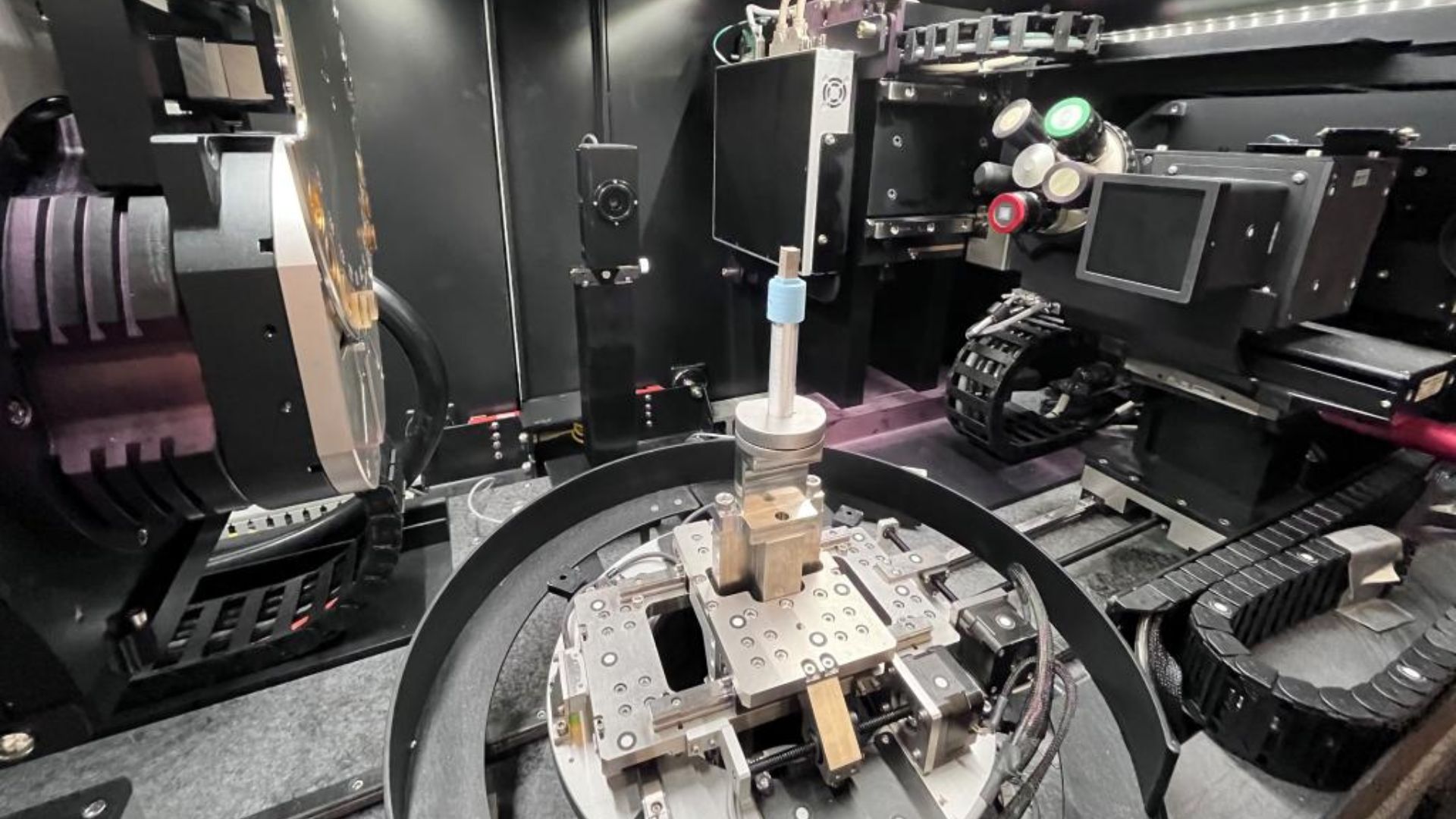
Commercial nuclear power plants across North America have begun deploying a specialized artificial intelligence search platform known as NIVA, designed to streamline data retrieval and management across decades of technical and regulatory documentation, according to reporting by Aman Tripathi. The technology, supported by chipmaker Nvidia, aims to address long-standing operational bottlenecks by enabling plant engineers, maintenance crews, and compliance officers to rapidly query vast repositories of historical operating logs, design specifications, and safety assessments across the continent's commercial reactor fleet.
Key facts
What happened
According to reporting published by Aman Tripathi, commercial nuclear facilities operating across North America have introduced a new digital search tool called NIVA to organize and query critical operational records. The system utilizes technology supported by Nvidia, the California-based semiconductor firm whose hardware and software architectures dominate advanced artificial intelligence deployments.
The introduction of NIVA is structured to alter how personnel at commercial nuclear facilities interact with historical and day-to-day documentation. Nuclear power stations maintain extensive archives comprising millions of physical and digital records. These include design basis documentation, corrective action reports, equipment maintenance logs, radiation monitoring data, vendor manuals, and formal regulatory filings submitted to governmental oversight bodies such as the U.S. Nuclear Regulatory Commission (NRC).
Under traditional workflows, retrieving specific historical information—such as the repair history of a specific valve model, prior root-cause evaluations for equipment anomalies, or legacy licensing commitments—often required manual searches across disparate databases, scanned image files, and physical paper records. The NIVA platform integrates modern machine learning models and high-performance retrieval technology to process unformatted and unstructured text, enabling staff to query complex technical archives using natural language prompts.
By aggregating disparate data silos across operating fleets, the system is designed to significantly reduce the administrative hours required for engineering reviews, outage planning, and regulatory reporting. The software leverages Nvidia's underlying compute architecture to accelerate document indexing and natural language processing, allowing real-time retrieval of cross-referenced operational histories.
Why it matters
The implementation of advanced search technology across North America's commercial reactor fleet addresses a critical bottleneck in plant economics and regulatory compliance. Commercial nuclear reactors are among the most heavily documented civil engineering assets in existence. A single power plant produces terabytes of documentation over its multi-decade operating lifecycle. As the average age of operating reactors in the United States exceeds 40 years, managing knowledge transfer between retiring veteran staff and incoming engineering personnel has become an urgent operational priority.
Efficient data retrieval directly impacts plant availability and capacity factors. During scheduled refueling and maintenance outages—which typically occur every 18 to 24 months and cost utilities hundreds of thousands of dollars per day in lost generation revenue—engineers must quickly verify component histories, cross-reference vendor specifications, and confirm safety evaluations. Delays in locating relevant engineering logs can extend downtime, driving up operational expenses and impacting regional grid reliability.
Furthermore, grid operators and technology corporations are increasingly looking to commercial nuclear power as a primary source of round-the-clock, carbon-free electricity to support energy-intensive infrastructure, including data centers dedicated to artificial intelligence training. Improving the operational efficiency and maintenance workflows of existing plants helps utilities maintain high capacity factors while managing operational costs.
From a regulatory standpoint, rapid access to accurate historical documentation is essential for demonstrating compliance with NRC mandates, supporting license renewal applications for 20-year operation extensions, and executing compulsory safety reviews. By reducing the time required to perform comprehensive document discovery, NIVA has the potential to enhance safety oversight while mitigating administrative overhead across utility balance sheets.
The background
The commercial nuclear power sector in North America operates under rigorous regulatory oversight established following the passage of the Atomic Energy Act of 1954 and the creation of the U.S. Nuclear Regulatory Commission under the Energy Reorganization Act of 1974. Operating licenses granted by the NRC require licensees to maintain detailed records regarding plant modifications, safety calculations, environmental qualifications, and component performance logs for the lifetime of the facility.
Over the past four decades, nuclear utility operators—including major power producers like Constellation Energy, Duke Energy, Southern Company, and TVA—accumulated massive troves of documentation. Much of this material originated as paper records, engineering blueprints, and microfiche prior to the digitalization initiatives of the late 1990s and 2000s. While many records were subsequently scanned into PDF format, they remained stored in isolated document management systems lacking semantic search capabilities or unified indexing protocols.
In recent years, industry groups such as the Nuclear Energy Institute (NEI) and the Electric Power Research Institute (EPRI) have advocated for digital transformation initiatives to streamline fleet operations. Concurrently, advances in artificial intelligence, specifically optical character recognition, natural language processing, and retrieval-augmented generation systems, have made it feasible to process legacy technical jargon and complex engineering diagrams at scale.
Nvidia's involvement reflects a broader strategic expansion by semiconductor firms into enterprise AI applications tailored for heavy industry, energy, and government sectors. While Nvidia is best known for supplying graphics processing units (GPUs) that train large language models, the company has increasingly built specialized software frameworks designed to accelerate data analytics, vector database queries, and secure search tools for air-gapped or highly restricted enterprise networks.
Reaction
Industry stakeholders, plant operators, and software analysts are monitoring the initial deployment of NIVA to evaluate its impact on operating efficiency and security compliance. While formal public statements from individual utility boards have not been detailed in initial reporting, nuclear utilities have generally favored technologies that reduce administrative burden without compromising cyber security or regulatory standards.
Regulatory authorities, including the NRC, have maintained a cautious stance regarding the integration of artificial intelligence tools within nuclear power operations. While administrative document retrieval systems do not directly control reactor safety systems, regulatory bodies expect utility operators to ensure that software tools used to support engineering decisions deliver verifiable, accurate output without hallucinating data or omitting critical historical records.
Labor organizations representing nuclear plant workers, such as the International Brotherhood of Electrical Workers (IBEW) and utility engineering unions, typically support tools that simplify complex reporting requirements, provided that automated search systems supplement rather than replace qualified engineering judgment. Independent energy analysts expect other industrial sectors with stringent record-keeping mandates, such as chemical processing and aerospace manufacturing, to watch the nuclear sector's experience with NIVA as a test case for enterprise AI adoption.
What we don't know yet
Several specific technical, operational, and commercial details surrounding the NIVA deployment remain unverified based on the available reporting. It is currently unclear which specific utility companies or individual nuclear generation stations have completed full integration of the software, and whether the tool is deployed across all commercial units in North America or phased in through pilot programs.
The exact financial arrangements between the platform developers, Nvidia, and participating nuclear utilities have not been disclosed. Additionally, the specific software architecture of NIVA—specifically whether it operates on localized, on-site server hardware at individual power plants to meet stringent cyber security isolation requirements or utilizes secure cloud architecture—remains unspecified.
It also remains to be seen how NIVA handles non-standardized legacy documentation, such as handwritten logs or degraded paper scans from the 1970s and 1980s, and what accuracy thresholds or human-in-the-loop verification processes are enforced before retrieved technical data is used in formal licensing actions or engineering evaluations.
What to watch
Key indicators will determine the ultimate impact and adoption rate of the NIVA search platform across the commercial energy sector:
This report is based on original reporting published by Aman Tripathi.
How this story was produced
This report was written by The Global Wire newsroom from reporting first published by Aman Tripathi. We verify the core facts against the original report, write our own account, and add the background and consequences a short wire item leaves out. Drafting is AI-assisted inside an editor-supervised pipeline, and every story is checked for accuracy of attribution, structure and duplication before it appears — full detail in our AI and funding disclosure.
Spotted an error? Tell us at corrections@horizonglobalnews.com and read our corrections policy or editorial standards.





Reader comments
Loading comments…