

Non-Tech Majors Flocking to AI and Coding Classes Across US Universities
American colleges are seeing a surge in humanities and social science students enrolling in artificial intelligence courses to build digital skills for an evolving job market.
By The Global Wire Newsroom · Reported from HEATHER HOLLINGSWORTH
Link preview · horizonglobalnews.com
Non-Tech Majors Flocking to AI and Coding Classes Across US Universities
American colleges are seeing a surge in humanities and social science students enrolling in artificial intelligence courses to build digital skills for an evolving job market.
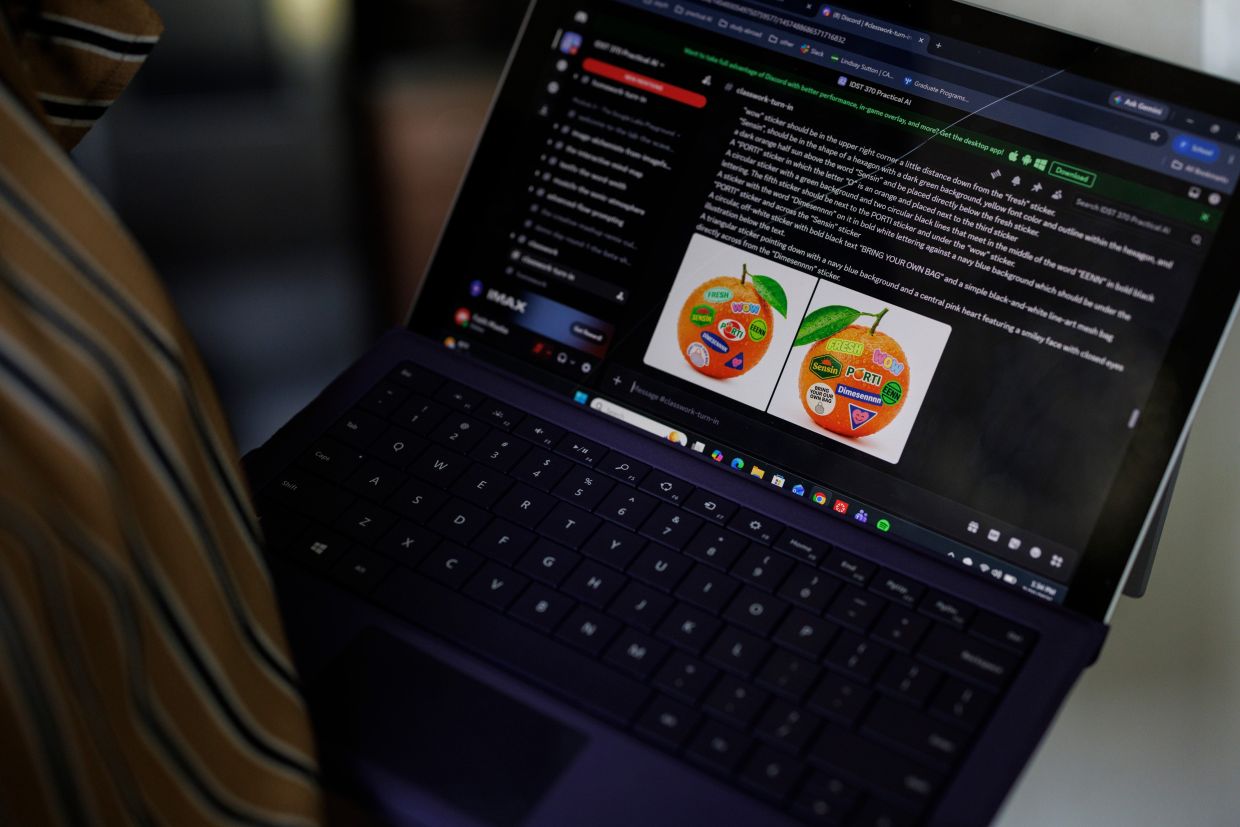
The rapid expansion of artificial intelligence applications across global industries is reshaping the academic priorities of students at colleges and universities across the United States. Higher education institutions are experiencing a notable surge in interest for computer science and technology courses from undergraduates pursuing non-technical degrees in fields such as the humanities, social sciences, and business. Driven by changing workforce expectations and widespread public engagement with generative software, students with little to no previous background in computer programming are seeking out foundational coursework in computational methods and machine learning concepts.
Emerging enrollment trends
Among those navigating this shifting educational environment is Faith Maeba, a psychology major who initially felt hesitation when considering technical coursework. According to reporting by Associated Press journalist Heather Hollingsworth, Maeba had no prior experience in computer coding when her mother recommended that she enroll in classes focused on artificial intelligence. Maeba’s initial reluctance highlights a broader, historically persistent dynamic on university campuses, where non-science and non-engineering students often viewed computer science departments as domain spaces reserved exclusively for software development specialists.
However, the rapid arrival of mainstream AI tools has significantly shifted those perceptions. Registrar records and departmental reporting across American higher education indicate that introductory computing classes are increasingly populated by students majoring in communications, political science, fine arts, and history. Academic advisors note that undergraduates are recognizing the role automated systems and data processing models play across nearly every professional sector, prompting them to seek structured university instruction rather than relying on informal self-study.
Cross-disciplinary integration
The movement toward broad-based AI literacy reflects a wider structural evolution in academic course design. Historically, university computer science programs operated with rigid, highly sequential curricula intended primarily to build technical proficiency over multiple years. Rigorous prerequisites, including advanced calculus, linear algebra, and discrete mathematics, often functioned as barrier entry points for students outside quantitative disciplines.
In response to expanding cross-campus interest, many colleges are developing tailored curricula designed specifically for non-computer science majors. These instructional offerings frequently emphasize practical application, conceptual understanding, and societal impact over low-level code construction. Courses offering targeted instruction on applied data analysis, computational humanities, and the mechanics of neural networks allow non-technical students to integrate computing principles directly into their primary majors.
For social science majors, including psychology students like Maeba, the intersection with artificial intelligence is especially relevant. Contemporary psychological research and behavioral analytics increasingly rely on computational modeling, natural language processing, and large datasets to track human behavior. Gaining a fundamental understanding of how algorithms process data assists students both in conducting academic research and in analyzing human interactions with digital systems.
Workforce expectations and market drivers
The growing demand for interdisciplinary technology instruction is largely fueled by changing dynamics in the modern labor market. Employers across corporate, non-profit, and public sectors are increasingly prioritizing job candidates who possess strong domain knowledge combined with basic technological capabilities. Rather than requiring every employee to build complex computational frameworks from scratch, organizations frequently seek staff capable of effectively utilizing AI platforms, auditing output accuracy, and translating organizational needs to technical teams.
Industry analyses indicate that basic competence in data concepts and artificial intelligence is transitioning from a specialized asset to a broad baseline requirement, similar to the mainstream adoption of general office productivity software in prior decades. As generative models and automated analytical tools become standard features in legal services, healthcare management, financial planning, and media production, graduates with dual exposure to technical and non-technical fields maintain a clear operational advantage during hiring processes.
These economic developments have prompted parents, career counselors, and academic advisors to encourage undergraduates to supplement traditional liberal arts coursework with technology credentials. As illustrated by Maeba’s decision to take AI coursework at her mother's urging, families are actively evaluating how degree paths align with future employment stability in a workforce undergoing technological automation.
Institutional challenges and faculty resources
While rising interest in technology among non-majors creates new avenues for interdisciplinary study, it also introduces operational challenges for higher education institutions. Computer science departments across the United States have faced persistent staffing limitations and classroom capacity constraints for several years. High demand from private sector technology firms often complicates efforts by universities to recruit and retain computer science faculty.
The influx of students from outside the discipline adds further demand to already constrained departmental resources. Universities are tasked with allocating additional teaching assistants, expanding computer laboratory infrastructure, and managing large lecture hall capacities. Instructors must also adapt their pedagogical approaches to effectively teach technical concepts to mixed-ability classrooms where students hold vastly different mathematical backgrounds and levels of familiarity with technology.
To address these capacity issues, several institutions are adopting blended learning models, expanding online course modules, and implementing joint teaching assignments that pair computer science professors with faculty from the humanities and social sciences. These collaborative instructional models aim to ensure that non-majors receive rigorous instruction without diminishing the depth or availability of courses required for core computer science majors.
Broader academic impact
The inclusion of non-technical majors in artificial intelligence coursework is also contributing to broader conversations regarding technology governance and design. When students from diverse academic disciplines participate in computer science education, they introduce varied analytical perspectives and ethical inquiries into the classroom.
Humanities and social science students regularly bring attention to questions surrounding algorithmic bias, data privacy, intellectual property rights, and the ethical implications of automated decision-making. By fostering regular dialogue between technical and non-technical disciplines, higher education programs aim to prepare graduates to manage both the technical execution and the ethical oversight of emerging technologies in their future careers.
This news article contains independent reporting based on original coverage provided by Heather Hollingsworth.
How this story was produced
This report was written by The Global Wire newsroom from reporting first published by HEATHER HOLLINGSWORTH. We verify the core facts against the original report, write our own account, and add the background and consequences a short wire item leaves out. Drafting is AI-assisted inside an editor-supervised pipeline, and every story is checked for accuracy of attribution, structure and duplication before it appears — full detail in our AI and funding disclosure.
Spotted an error? Tell us at corrections@horizonglobalnews.com and read our corrections policy or editorial standards.





Reader comments
Loading comments…