

Nationwide Emergency Phone Alert Scheduled in South Korea on High-Stakes Exam Day
Tens of millions of mobile phones across South Korea are set to sound an emergency alert on the morning of the annual Suneung college entrance test.
By The Global Wire Newsroom · Reported from thestar.com.my
Link preview · horizonglobalnews.com
Nationwide Emergency Phone Alert Scheduled in South Korea on High-Stakes Exam Day
Tens of millions of mobile phones across South Korea are set to sound an emergency alert on the morning of the annual Suneung college entrance test.
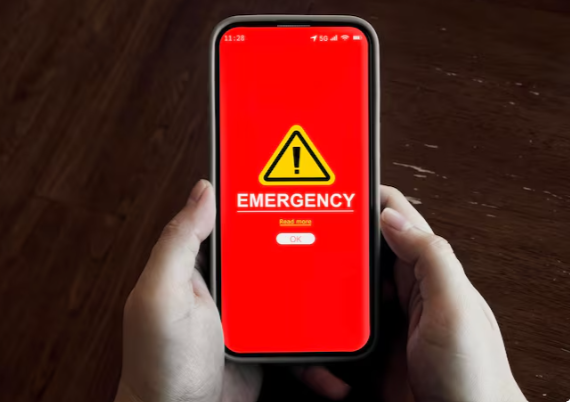
Millions of mobile devices across South Korea are scheduled to broadcast a loud emergency notification on Thursday, Nov. 19, coinciding with the morning administration of the country's high-stakes national university entrance examination, known locally as the Suneung. The alert, engineered to override standard silent and vibration settings on compatible mobile devices nationwide, is set to reach tens of millions of citizens across the country regardless of whether they have any direct connection to the annual testing process, according to reporting by The Star.
Key facts
What happened
Mobile cellular devices across South Korea are set to receive an automated emergency broadcast on Thursday morning, Nov. 19, an event that will trigger audible alarms across tens of millions of handsets simultaneously, according to reporting by The Star. The transmission will utilize the nation's public alert infrastructure, which bypasses individual device sound profiles, forcing handsets to emit a piercing chime regardless of whether a user has placed their device on silent, mute, or vibrate.
The timing of the broadcast places it directly on the day of the College Scholastic Ability Test (CSAT), an intensive, day-long standardized exam that serves as the central criterion for undergraduate admissions across South Korea. While the primary purpose of the alert directly impacts public awareness on an unprecedented scale, the broadcast will not be restricted to candidates, educational institutions, or proctors. Instead, the signal is designed to blanket the entire civilian population across municipal districts, metropolitan zones, and rural provinces.
In South Korea, mobile disaster notifications are handled through cellular base stations via dedicated broadcast frequencies. These automated transmissions do not rely on standard point-to-point text messaging protocols, enabling government agencies to dispatch simultaneous notifications across network towers without facing telecommunication bandwidth bottlenecks. Because these transmissions are routed through native operating system emergency alert modules, standard volume toggles and user-defined notification silencers are routinely overridden unless users take specialized administrative measures within device configuration menus.
Why it matters
The simultaneous chiming of tens of millions of mobile devices on the day of the Suneung carries extraordinary sensitivity in South Korea, where the annual examination is treated as a defining civic and economic milestone. Each November, roughly 500,000 high school seniors and repeat examinees sit for the eight-hour marathon assessment. Performance on the Suneung heavily influences admission into elite institutions—most notably the top-tier triumvirate of Seoul National University, Korea University, and Yonsei University—which in turn dictates long-term recruitment prospects at major industrial conglomerates, entry into top government ministries, and social mobility.
Because the test is administered under intense pressure and rigid time constraints, the testing environment is guarded with monastic seriousness. The intrusion of unexpected acoustic disruptions in or near examination halls poses a major concern for educational administrators, students, and proctors. A sudden, synchronized chime echoing across adjacent streets, commercial establishments, parked vehicles, or administrative offices could introduce severe psychological strain or situational confusion among students already operating under acute stress.
Beyond the examination centers, the universal broadcast impacts ordinary civilian commerce and transport. The fact that the alert reaches individuals who have no relation to the educational system illustrates the far-reaching scope of South Korea's public emergency alert mechanisms, highlighting an ongoing policy debate regarding the trade-offs between universal public alert compliance, civic disturbance, and persistent alert fatigue across the peninsula.
The background
Introduced in its modern form in 1994 to replace the previous state-run Preliminary College Entrance Examination, the Suneung is administered under the statutory oversight of the Ministry of Education and managed operationally by the Korea Institute for Curriculum and Evaluation (KICE). The test spans five core sections: Korean language, mathematics, English, Korean history and subordinate inquiry subjects, and a second foreign language or Chinese characters. The exam begins promptly at 8:40 a.m. and concludes in the late afternoon around 5:45 p.m. local time.
To ensure an uninterrupted environment for examinees, the South Korean state mobilizes an extensive logistical apparatus every year on test day. Public municipal offices, major commercial corporations, and the Korea Exchange (KRX) routinely delay their morning operational hours by one hour, opening at 10:00 a.m. instead of 9:00 a.m. to clear arterial roads and public transit for arriving students. Subway and municipal bus services dramatically increase morning departure frequencies, while local police agencies mobilize hundreds of patrol cruisers and two-wheeled response units to transport students delayed by traffic directly to their testing gates.
Acoustic control on Suneung day is enforced at the highest levels of government. During the critical 25-minute English listening comprehension module in the early afternoon—typically between 1:05 p.m. and 1:40 p.m.—the Ministry of Land, Infrastructure and Transport places a nationwide freeze on all domestic and international aircraft operations. Commercial flights are barred from taking off or landing at South Korean airports, and planes already airborne must maintain a holding pattern at or above an altitude of 3,000 meters (roughly 10,000 feet). Heavy construction work, military exercises involving artillery or low-flying aircraft, and municipal vehicle sirens are strictly prohibited from operating within auditory range of test centers.
South Korea's emergency broadcast system has historically collided with Suneung operations during sudden crises. In November 2017, a magnitude 5.4 earthquake struck the southeastern coastal city of Pohang on the afternoon before the scheduled examination. The seismic event caused structural fissures in designated test facilities and triggered immediate cell broadcast alarms across the country. In response to safety concerns and damaged venues, the Ministry of Education made the unprecedented decision to postpone the national examination by one full week.
South Korea's Cell Broadcast Service (CBS), managed primarily by the Ministry of the Interior and Safety in cooperation with telecom carriers SK Telecom, KT, and LG Uplus, categorizes alerts into Civil Defense Warnings, Emergency Disaster Alerts, and Public Safety Alerts. The higher tiers transmit sound profiles between 40 and 60 decibels that actively bypass local handset mute functions to ensure urgent public safety instructions are received immediately.
Reaction
While specific statements regarding the scheduled Nov. 19 alert were not detailed in the initial report, previous nationwide emergency transmissions have consistently elicited strong public reactions from civic groups, educational figures, and telecommunications users. In South Korea, where the volume of public safety alerts surged significantly during public health crises and severe weather seasons, public sentiment has frequently oscillated between appreciation for rapid official transparency and frustration over recurring, loud audio disruptions.
Educational authorities and test administration bodies are expected to reinforce strict regulatory compliance among all personnel assigned to the test sites. South Korea's Ministry of Education maintains a zero-tolerance policy regarding electronic devices within testing halls. Every year, examinees are formally warned that carrying any unauthorized electronic device—including smartphones, smartwatches, digital tablets, Bluetooth earphones, or electronic dictionaries—constitutes an immediate testing violation, resulting in the nullification of the candidate's scores and, in some cases, a suspension from taking the exam the following year. Examinees are required to surrender all electronic items to proctors prior to the start of the first test period.
What we don't know yet
Key administrative and operational details regarding the broadcast remain unresolved in available reporting. The source material does not specify the originating government entity behind the alert—such as the Ministry of the Interior and Safety, the Korea Meteorological Administration, or the Ministry of Education—nor does it delineate the explicit subject matter and operational objective contained within the text of the emergency transmission.
Furthermore, the exact transmission timestamp on Thursday morning has not been publicly clarified, leaving it uncertain whether the chime will trigger during morning commute windows as students enter test centers or after testing rooms have officially commenced testing at 8:40 a.m. Additionally, it remains unclear whether telecommunication carriers or administrative authorities have enacted specialized localized geographical exclusions to prevent signal transmission from triggering alarms in peripheral spaces immediately adjacent to designated secondary schools.
What to watch
In the hours leading up to and following the Nov. 19 examination, observers should monitor official administrative releases from South Korea's Ministry of Education and regional metropolitan offices of education. These bodies will likely issue public reminders detailing how proctors and test site supervisors should manage auditory boundaries around school facilities.
Attention will also focus on the performance of telecommunications networks and cellular broadcast relays on the morning of the exam. Following the completion of the five-stage testing schedule in the late afternoon, educational observers and test-monitoring organizations will review whether any disruptions occurred in test rooms nationwide. Finally, examinees will await the publication of official answer keys by the Korea Institute for Curriculum and Evaluation, which precedes the formal score report distributions scheduled for the weeks following the examination.
This report incorporates news reporting originally published by The Star.
How this story was produced
This report was written by The Global Wire newsroom from reporting first published by thestar.com.my. We verify the core facts against the original report, write our own account, and add the background and consequences a short wire item leaves out. Drafting is AI-assisted inside an editor-supervised pipeline, and every story is checked for accuracy of attribution, structure and duplication before it appears — full detail in our AI and funding disclosure.
Spotted an error? Tell us at corrections@horizonglobalnews.com and read our corrections policy or editorial standards.






Reader comments
Loading comments…