

NASA Solicits Student Solutions for Lunar Base Construction With $1 Million Purse
The space agency is tapping academic innovators to tackle the acute engineering and environmental barriers standing in the way of permanent settlements on the Moon.
By The Global Wire Newsroom · Reported from TOI Science Desk
Link preview · horizonglobalnews.com
NASA Solicits Student Solutions for Lunar Base Construction With $1 Million Purse
The space agency is tapping academic innovators to tackle the acute engineering and environmental barriers standing in the way of permanent settlements on the Moon.
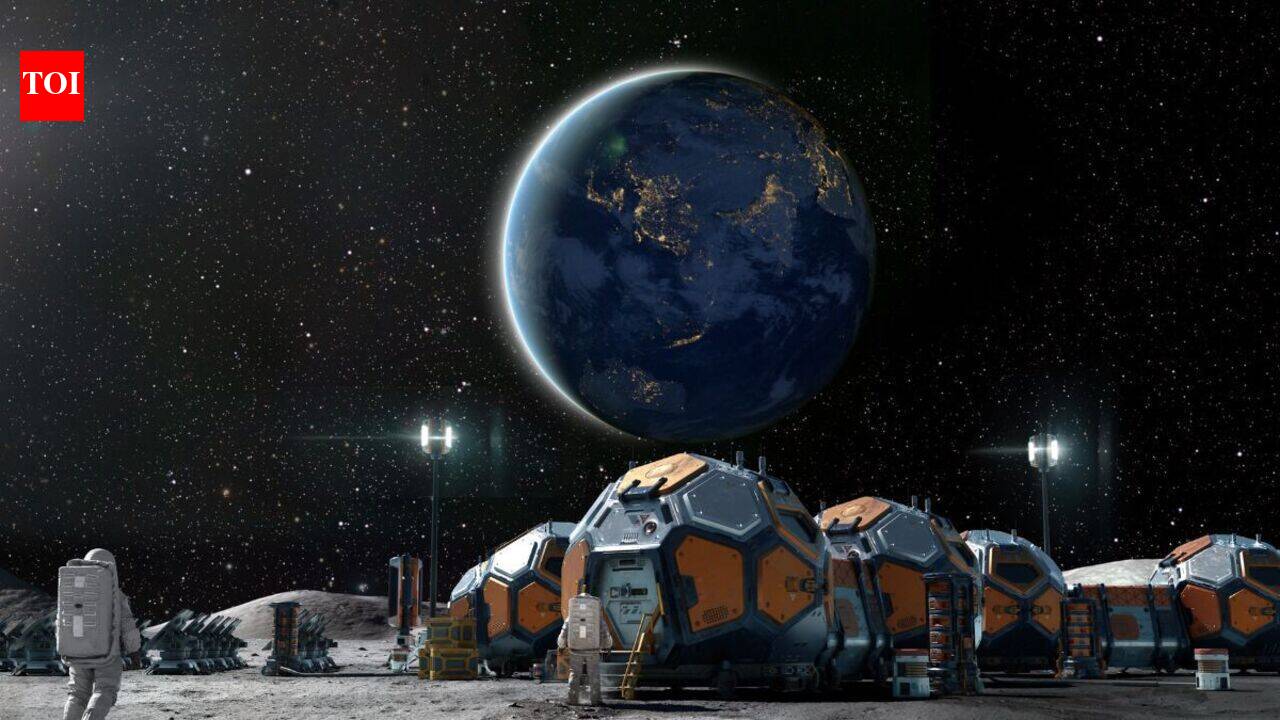
The National Aeronautics and Space Administration has opened a $1 million incentive competition aimed at university and student innovators to solve core technical barriers associated with constructing human habitats on the Moon, according to reporting by TOI Science Desk. The initiative seeks engineering concepts capable of converting theoretical off-world architecture into viable physical structures, as space agencies transition their long-term planning from brief exploratory visits toward permanent, multi-decade surface infrastructure.
Key facts
What happened
Facing substantial technical bottlenecks in building permanent infrastructure beyond low Earth orbit, NASA has turned to non-traditional problem-solvers. According to reporting by TOI Science Desk, the agency is offering $1 million in prize money to student teams that can present viable solutions to the central challenges of building lunar homes.
Rather than relying exclusively on established aerospace prime contractors, the prize framework invites universities and student researchers to address the structural, mechanical, and logistical realities of lunar base construction. The operational brief focuses on the fundamental mechanics of establishing survivable, pressurized, and self-sustaining living spaces on an extraterrestrial surface where conventional terrestrial building techniques cannot function.
Historically, NASA prize programs use phased competitions to down-select competitors. While full operational details and stage gates for this specific purse were not fully detailed in the initial report, such competitions typically divide prize purses across conceptual design phases, digital simulation, and physical fabrication of scale prototypes or sub-scale components.
Why it matters
Building sustainable habitats on the Moon represents a fundamentally different engineering paradigm than operating in low Earth orbit. For more than two decades, the International Space Station has hosted continuous human crews at an altitude of roughly 400 kilometers (250 miles), relying on pressurized metallic and composite modules manufactured on Earth and delivered via chemical rockets. Transporting equivalent mass to the Moon—some 384,400 kilometers away—is governed by the uncompromising physics of the rocket equation.
Every kilogram launched from Earth requires significant propellant mass to achieve escape velocity and lunar orbital insertion. Current launch vehicle economics make transporting bulk building supplies, such as structural beams, radiation shielding, and concrete equivalents, fiscally and operationally impossible for sustained bases. A single long-duration lunar outpost will require hundreds of metric tons of mass to protect crews from deep-space hazards. If habitats cannot be manufactured or reinforced using native materials found directly on the lunar surface—a methodology known in aerospace engineering as in-situ resource utilization (ISRU)—permanent human occupation cannot become economically viable.
By engaging university engineering departments and young innovators, NASA aims to stimulate novel approaches unburdened by legacy aerospace design habits. The academic sector has repeatedly demonstrated capacity for breakthroughs in additive manufacturing, autonomous robotics, materials science, and civil engineering. Furthermore, the contest operates as a specialized workforce pipeline, training the next generation of aerospace engineers in lunar-specific disciplines before permanent infrastructure programs are officially contracted.
The background
NASA’s focus on habitat development falls within the institutional framework of the Artemis campaign, which was established to return astronauts to the lunar surface and build a permanent footprint. During the Apollo program between 1969 and 1972, missions were short-duration excursions; the longest stay, Apollo 17, saw astronauts Eugene Cernan and Harrison Schmitt spend approximately 75 hours on the surface, sleeping inside the Apollo Lunar Module.
Artemis seeks permanent infrastructure, primarily focused around the lunar South Pole, where permanently shadowed craters contain verified deposits of water ice. However, the surface environment of the Moon presents hazards that destroy conventional building materials. Without a protective atmosphere or global magnetic field, surface structures face unobstructed galactic cosmic radiation and solar particle events, which present severe long-term cancer and sickness risks to crews.
Thermal conditions are equally punishing. Outside of polar microclimates of constant sunlight or shadow, the lunar surface experiences equatorial and mid-latitude diurnal cycles lasting 28 Earth days—consisting of roughly 14 Earth days of direct, unfiltered sunlight followed by 14 days of total darkness. Temperatures swing dramatically, rising to approximately 120 degrees Celsius (248 degrees Fahrenheit) during the lunar day and plunging to minus 130 degrees Celsius (minus 202 degrees Fahrenheit) during the lunar night. Deep within polar craters, temperatures drop further, reaching below minus 240 degrees Celsius.
Compounding these threats is lunar regolith: a fine, abrasive dust created by billions of years of meteorite bombardment unsoftened by atmospheric erosion. Regolith grains are jagged and electrostatically charged, causing severe wear on mechanical seals, bearings, spacesuit fabrics, and human pulmonary tissue.
To bypass these obstacles, NASA has repeatedly used incentive prizes. Under the authority of the America COMPETES Act, first enacted in 2007, federal agencies can offer competitive cash prizes to spur technological innovation. NASA's Centennial Challenges program previously held multi-stage contests, such as the 3D-Printed Habitat Challenge running from 2015 to 2019, which awarded millions of dollars to teams developing automated additive construction technologies using recyclable materials and simulated indigenous rock for Martian and lunar use.
Reaction
While public statements from aerospace trade associations and specific university departments were not included in the initial report, academic research bodies and collegiate engineering programs routinely welcome federal challenge grants. Forums such as the American Institute of Aeronautics and Astronautics (AIAA) and Students for the Exploration and Development of Space (SEDS) typically view prize architectures as vital funding mechanisms that allow student researchers to secure federal validation and seed capital for laboratory work.
In policy and budget circles, congressional appropriators historically favor prize competitions due to their cost efficiency: the federal government pays out capital only when competitors successfully satisfy strict, predetermined technical criteria, shifting developmental financial risk away from taxpayers onto competitors.
Aerospace analysts note, however, that prize purses in the $1 million range serve primarily to finance early-stage research and development (Technology Readiness Levels 1 through 4). Transitioning successful laboratory concepts into flight-qualified hardware rated for vacuum and radiation requires institutional backing, venture financing, or integration into NASA's formal procurement schedules, such as the Commercial Lunar Payload Services (CLPS) program.
What we don't know yet
Several substantive operational parameters remain undefined in the preliminary reporting. The exact administration of the $1 million purse—whether it represents a single grand prize or will be divided among multiple conceptual tiers, regional rounds, and finalist awards—has not been clarified.
Crucially, the regulatory eligibility criteria have not been fully specified. NASA prize programs frequently impose restrictions under United States export control regimes, including the International Traffic in Arms Regulations (ITAR) and Export Administration Regulations (EAR). It remains unconfirmed whether non-U.S. students or international academic institutions can participate as primary competitors, or if foreign nationals are restricted to secondary advisory roles.
Additionally, the technical constraints of the testing phases are not yet public. It is unclear whether applicants will be evaluated purely on digital architectural simulations, or if successful teams must demonstrate real-world hardware, such as sintering regolith simulants in thermal vacuum chambers or deploying automated robotics in simulated lunar terrains.
What to watch
The immediate next development will be NASA's formal publication of the challenge rules, evaluation rubrics, and registration calendars through official federal prize repositories such as Challenge.gov and the NASA Tournament Lab portal. These documents will establish the exact submission deadlines, technical benchmarks, and intellectual property terms governing competitor submissions.
Observers should also track how winning concepts interface with scheduled Artemis hardware milestones. As uncrewed and crewed missions progress through orbital testing and eventual landing attempts, NASA will face firm deadlines to finalize surface habitat specifications. Any structural techniques developed under this challenge will need to coordinate with autonomous precursor missions managed by private lander contractors under the CLPS framework, which serve as testbeds for delivering industrial payloads to the Moon before humans arrive for extended stays.
This account incorporates reporting originally published by TOI Science Desk.
How this story was produced
This report was written by The Global Wire newsroom from reporting first published by TOI Science Desk. We verify the core facts against the original report, write our own account, and add the background and consequences a short wire item leaves out. Drafting is AI-assisted inside an editor-supervised pipeline, and every story is checked for accuracy of attribution, structure and duplication before it appears — full detail in our AI and funding disclosure.
Spotted an error? Tell us at corrections@horizonglobalnews.com and read our corrections policy or editorial standards.





Reader comments
Loading comments…